
Why Dandy matters.
Dandy is a contemporary Montréal brunch restaurant where Old Montréal's historic financial district meets Michael Tozzi's Italian-influenced cooking, the city's independent café culture and a distinctive interpretation of refined daytime dining.
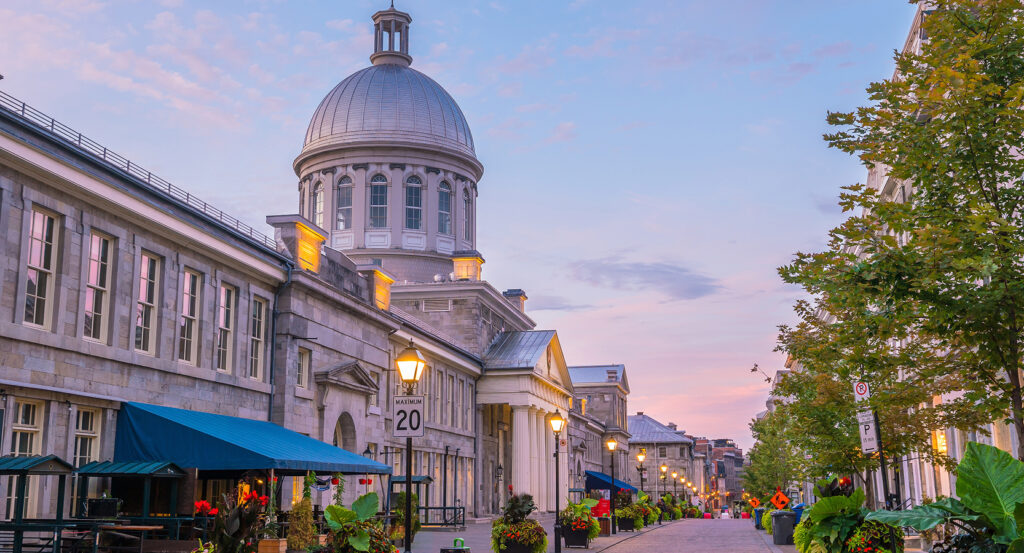
Positioned along Rue Saint-Jacques west of Place d'Armes, the restaurant occupies a historic commercial building between the former headquarters of Montréal's major financial institutions, the narrow streets surrounding Rue Saint-François-Xavier and the architectural landmarks of the city's colonial center. Its substantial street-facing windows introduce natural light into an interior designed by Montréal firm BlazysGérard. Curving architectural openings, sculptural light fixtures and upholstered banquettes establish a restrained contemporary atmosphere, with warm materials and carefully arranged seating softening the building's historic proportions. The dining room accommodates sixty guests, maintaining the intimacy of a neighborhood café within a substantial commercial property. A prominent coffee counter supports the restaurant's daytime service, and the open arrangement allows guests to observe the movement between kitchen, bar and dining room. The result is a sophisticated yet approachable restaurant setting whose historic architecture and contemporary design connect Montréal's established commercial heritage with its evolving brunch culture.
What defines Dandy.
Dandy is best known for chef-owner Michael Tozzi's transformation of professional fine-dining experience into an independent daytime restaurant distinguished by carefully prepared comfort food, Italian influences and an ambitious beverage program. Tozzi studied hospitality and culinary arts before beginning his professional career in Montréal's restaurant industry. His early appointments included Le Club Chasse et Pêche, the influential Old Montréal restaurant established by Claude Pelletier and Hubert Marsolais. The experience introduced him to a demanding professional kitchen organized around French culinary technique, ingredient quality and precise execution. He subsequently joined Olive et Gourmando, the established Old Montréal bakery and café founded by Dyan Solomon and Eric Girard. Rising to lead its kitchen, Tozzi developed substantial experience in the preparation of breakfast, lunch and baked goods for a demanding urban clientele. His work at the restaurant strengthened his understanding of the relationship between sophisticated cooking and the informal hospitality of a busy neighborhood establishment. Tozzi also contributed food writing to the Montréal newspaper Le Devoir, extending his professional involvement into the city's broader culinary conversation. In early 2018, he began developing an independent restaurant concept centered on the character of contemporary daytime dining. The project combined the technical discipline of his professional background with a more relaxed interpretation of breakfast and lunch. His Italian heritage contributed an additional culinary influence, particularly through fresh pasta, carefully prepared breads and Mediterranean ingredients. Tozzi selected premises at 244 Rue Saint-Jacques, previously occupied by the short-lived bar SafeHouse, establishing the new enterprise within the historic commercial center of Montréal. He commissioned designers Alexandre Blazys and Benoit Gérard of BlazysGérard to develop the restaurant's interior. Their professional portfolio included Les Cavistes, Bistro Brasserie Les Soeurs Grises and projects associated with the Casino de Montréal. The design introduced contemporary architectural elements into the existing commercial building, creating a recognizable visual character for Tozzi's first independent restaurant. Dandy opened in March 2019, attracting immediate attention for its combination of refined daytime cooking, contemporary design and informal hospitality. Sommelier Kaitlin Doucette, whose professional background included the Olive et Gourmando restaurant group and Foxy, contributed to the original natural-wine program. Her involvement introduced an important beverage dimension to a restaurant primarily associated with breakfast and lunch. Early menus incorporated fresh pasta, Italian-inspired flatbreads and substantial brunch preparations, establishing the culinary direction that would define the business. The restaurant subsequently developed a reputation for its ricotta pancakes and buttermilk fried chicken sandwich, attracting regular attention in Montréal's competitive brunch market. Its early development was interrupted by the COVID-19 pandemic, which substantially reduced the office workers and visitors supporting Old Montréal's daytime restaurant economy. Tozzi briefly experimented with takeout service before suspending regular operations during periods of public-health restrictions. Occasional pasta-focused pop-ups maintained a connection with the restaurant's customers through the disruption. Dandy subsequently resumed its established daytime format, extending brunch service across the week and consolidating its position among Montréal's recognized breakfast destinations. Its development reflects Tozzi's ability to translate the standards of professional restaurant cooking into an accessible independent establishment, contributing to the continuing transformation of Old Montréal's daytime dining culture.
Michael Tozzi's cooking develops through the relationship between familiar breakfast preparations, Italian culinary influences and the technical precision associated with professional restaurant kitchens. His approach emphasizes substantial flavors and carefully balanced textures, transforming recognizable dishes through the quality of their individual components. Ricotta pancakes provide a defining expression of this philosophy, incorporating the delicate richness of fresh cheese into a preparation distinguished by its soft interior and lightly browned exterior. Maple brown butter sauce introduces a distinctly Québécois sweetness, with the toasted character of the butter contributing depth to the finished dish. Lemon cream supplies a complementary acidity, balancing the richness of the pancakes and preserving the freshness of the overall composition. The buttermilk fried chicken sandwich develops another expression of Tozzi's cooking through the contrast between crisp breading, tender poultry and a carefully prepared house brioche bun. Apple remoulade introduces freshness and texture, and chimichurri mayonnaise contributes an aromatic herbal character. The preparation demonstrates the restaurant's approach to substantial comfort food through the careful integration of contrasting ingredients. Fresh cavatelli provides a direct connection with Tozzi's Italian heritage, combining handmade pasta with sausage, zucchini, cherry tomatoes and a sauce developed from white wine, butter and Parmesan. Basil and crisp breadcrumbs introduce complementary aromas and textures, preserving the character of a traditional pasta preparation through restrained contemporary execution. Smoked salmon toast contributes a lighter expression of the breakfast program, combining house-made bread with poached egg, dill-pickle cream cheese, heirloom tomatoes and fresh herbs. Its composition reflects the kitchen's emphasis on balanced acidity and the relationship between rich ingredients and fresh vegetables. The restaurant's broader menu incorporates seasonal salads, house-made granola, pastries and carefully prepared coffee, accommodating the changing requirements of breakfast and lunch service. Espresso-based drinks contribute an important café dimension, supported by preparations including maple lattes and specialty iced beverages. Natural wines distinguish the beverage program, introducing selections whose changing availability complements the restaurant's flexible approach to daytime dining. Cocktails including the Bloody Caesar, mimosa and espresso martini extend the restaurant's hospitality into leisurely afternoon meals. Dandy's culinary distinction emerges from this integration of refined comfort food, Italian influences and thoughtful beverage service, establishing a recognizable approach to contemporary Montréal brunch.
How Dandy fits.
Dandy works as the breakfast beginning of an exploration connecting Montréal's nineteenth-century financial institutions, the development of Gothic Revival religious architecture and the archaeological preservation of the city's colonial origins, placing the restaurant within the historical and architectural landscape of Old Montréal.
Begin at Bank of Montreal Museum, the historical institution housed within the bank's expansive headquarters overlooking Place d'Armes. Founded in 1817, the Bank of Montreal became Canada's first banking institution and developed into an important participant in the country's nineteenth-century commercial expansion. Its Neoclassical headquarters, designed by architect John Wells and completed in 1847, introduced an expansive facade inspired by the architecture of ancient Rome. The interior underwent substantial alterations in 1905 under the direction of McKim, Mead & White, incorporating elaborate architectural finishes that reflected the institution's financial importance. The museum preserves historical currency, banking equipment, photographs and mechanical savings banks, connecting the building's architecture with the development of Canadian financial institutions. Continue to Notre-Dame Basilica of Montréal, the expansive Gothic Revival church constructed between 1824 and 1829 under architect James O'Donnell. The building replaced an earlier parish church established during Montréal's French colonial period, reflecting the expanding population and institutional ambitions of the nineteenth-century city. Its substantial twin towers were completed during the early 1840s, establishing a distinctive architectural presence overlooking Place d'Armes. Architect Victor Bourgeau subsequently directed an extensive transformation of the interior decoration, introducing the elaborate polychromy, carved details and religious ornamentation that distinguish the sanctuary. The basilica's Casavant organ, installed in 1891, contributes another important expression of nineteenth-century Canadian craftsmanship and religious musical culture. Conclude at Pointe-à-Callière, the Montréal Archaeology and History Complex established in 1992 at the site associated with the city's founding. Its principal museum building occupies a historically significant position overlooking Place Royale, where Paul de Chomedey de Maisonneuve and Jeanne Mance established the French settlement of Ville-Marie in 1642. The institution preserves archaeological remains associated with successive periods of Indigenous occupation, French colonial settlement and the development of Montréal's commercial waterfront. Its underground exhibition spaces incorporate the remains of Fort Ville-Marie and other historical structures, connecting contemporary visitors with the physical foundations of the city. The museum's interconnected buildings and exhibitions provide a comprehensive interpretation of Montréal's development through archaeology, architecture and historical collections. The progression connects the city's financial institutions with its nineteenth-century religious architecture and concludes at the archaeological foundations of colonial Montréal, establishing the historical setting surrounding Dandy.
Where your story begins.
Foresyte Travel reveals places that feel extraordinary long before you arrive.
Enjoy editorial crafted for luxury travelers.
Foresyte may earn a commission when you book.























































































































