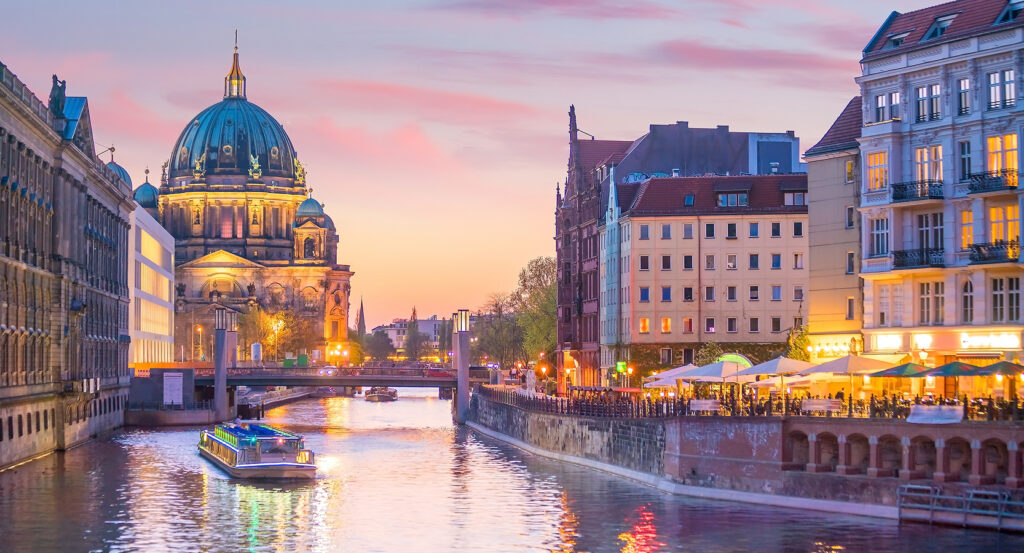
Perfect weekend in Berlin, Germany.
Berlin's history encompasses the rise of Prussian power, the formation of modern Germany, the devastation of two world wars, and the political divisions that shaped twentieth-century Europe. Founded during the thirteenth century along the River Spree, Berlin developed from neighboring medieval settlements into an important commercial center within the Margraviate of Brandenburg. The city's political importance expanded under the Hohenzollern dynasty, particularly during the reign of Frederick II of Prussia, whose patronage of philosophy, music, and architecture strengthened Berlin's position within the European Enlightenment. The establishment of the University of Berlin in 1810, guided by Wilhelm von Humboldt's educational principles, advanced a model of higher education that united teaching with original scholarship. Following German unification in 1871, Berlin became the capital of the German Empire, undergoing rapid industrialization and population growth as manufacturing, transportation, and scientific institutions expanded. The collapse of the monarchy in 1918 introduced the Weimar Republic, whose capital became internationally influential through modernist architecture, experimental theater, cinema, and artistic movements. Nazi rule beginning in 1933 brought political persecution, genocide, and the destruction of democratic institutions, followed by extensive wartime devastation. Germany's defeat in 1945 divided Berlin into Allied occupation sectors, initiating decades of Cold War confrontation before the peaceful revolution of 1989 and German reunification in 1990 restored the city's position as the national capital.
Berlin's international artistic influence developed through modernist design, experimental performance, electronic music, and institutions devoted to European intellectual achievement. The Bauhaus movement, founded by Walter Gropius in Weimar in 1919, established its final school in Berlin in 1932 before Nazi pressure forced its closure the following year. Its principles of functional design, industrial production, and architectural experimentation subsequently influenced creative disciplines throughout the world. The Berlin Philharmonic achieved international prominence under conductors including Wilhelm Furtwängler, Herbert von Karajan, and Claudio Abbado, performing in Hans Scharoun's celebrated concert hall completed in 1963. The Neue Nationalgalerie, designed by Ludwig Mies van der Rohe, became a distinguished institution for twentieth-century art through its glass-and-steel architecture and collections of European modernism. Berlin's electronic music culture emerged through underground clubs, independent producers, and experimental venues following reunification, contributing substantially to the international development of techno. The city's culinary heritage combines Brandenburg agricultural traditions, German regional cooking, and the influence of Turkish, Vietnamese, Italian, and Middle Eastern communities. Traditional preparations such as Königsberger Klopse and Berliner Pfannkuchen coexist with contemporary restaurants exploring fermentation, seasonal agriculture, and international techniques. A perfect weekend in Berlin brings together the political history, architectural experimentation, artistic achievements, and culinary diversity of a capital whose evolution has profoundly influenced modern Europe.
Three day itinerary.
Day 1: Brandenburg Gate
Brandenburg Gate is best known for embodying successive eras of Prussian power, German division, and national reunification within a single neoclassical monument. Frederick William II commissioned Carl Gotthard Langhans to design the gate during the late eighteenth century, drawing its grand columns from the Propylaea of the Athenian Acropolis. Johann Gottfried Schadow crowned the structure with the Quadriga, whose chariot and four horses became inseparable from Berlin's visual identity. Napoleon carried the sculpture to Paris after defeating Prussia in 1806, and its return following his defeat transformed it into a symbol of victory. The Berlin Wall subsequently isolated the gate inside the restricted border zone separating East and West Berlin. Its reopening in December 1989 gave the structure another historical meaning as the most recognizable architectural symbol of German reunification.
Day 1: Rutz
Rutz is best known for Marco Müller's transformation of German ingredients into Berlin's only three-MICHELIN-starred restaurant. Müller built his cooking around products from Germany and the surrounding region, giving vegetables, fish, meat, fermentation, preservation, and carefully developed sauces central positions within long tasting menus. Restaurant and wine culture developed together under owner and sommelier Anja Neumann, creating an institution in which cellar depth became integral to the culinary program. The kitchen progressively developed a distinctive interpretation of German terroir through ingredients whose origins and seasons shape individual preparations. Three MICHELIN stars place Rutz at the summit of Berlin gastronomy and establish Müller's regional cooking as one of the most accomplished expressions of contemporary German cuisine.
Day 2: Reichstag Building
Reichstag Building is best known for joining the turbulent political history of modern Germany to Norman Foster's extraordinary reconstruction of its parliamentary architecture. Paul Wallot designed the original building for the legislature of the German Empire, completing its grand neo-Renaissance composition in 1894. Fire devastated the parliamentary chamber in 1933, and the structure subsequently endured wartime destruction, postwar division, and decades beside the Berlin Wall. German reunification returned parliament to Berlin and produced an international competition for the building's reconstruction. Foster stripped away later interventions, preserved physical traces of the building's history, and placed a vast glass dome above the restored parliamentary chamber. Spiraling public ramps inside the dome look directly down toward the legislature, turning transparency and public oversight into architectural elements of the reunified German democracy.
Day 2: Restaurant Tim Raue
Restaurant Tim Raue is best known for Tim Raue's intensely personal synthesis of Asian culinary influences with the forceful flavor structure that defines his cooking. Raue grew up in Berlin and developed his professional career in the city before establishing the restaurant with Marie-Anne Wild near Checkpoint Charlie. Thai heat, Japanese precision, Chinese culinary references, acidity, bitterness, sweetness, and concentrated umami form recurring elements within dishes built for immediate intensity. Raue's cuisine emerged from extensive engagement with Asian food cultures and progressively developed into a style identifiable with the chef himself. Two MICHELIN stars place Restaurant Tim Raue among Berlin's highest-ranked dining institutions, making Raue one of the central figures in the city's transformation into an internationally significant gastronomic capital.
Day 2: Museum Island
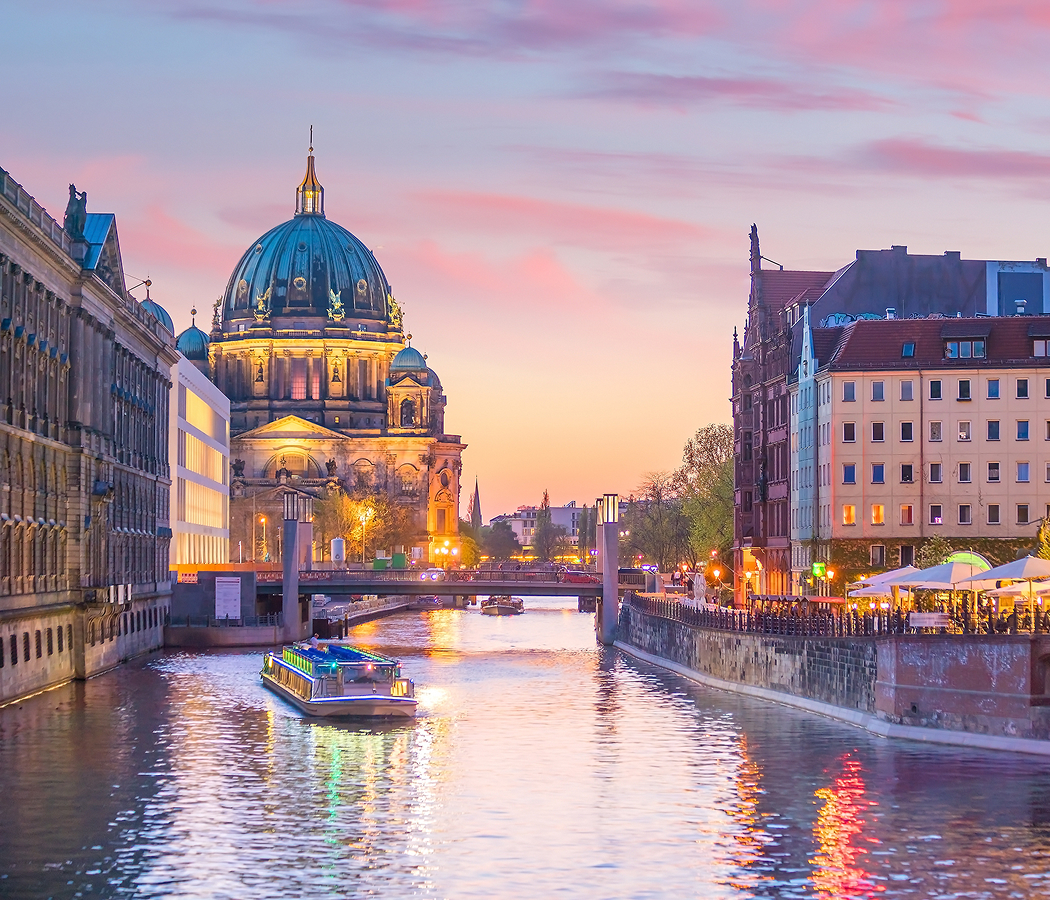
Museum Island is best known for concentrating five major museums into an extraordinary architectural ensemble devoted to art, archaeology, and cultural history. Karl Friedrich Schinkel designed the Altes Museum during the nineteenth century as one of Europe's foundational purpose-built public museums, establishing a grand relationship between scholarship and the Prussian capital. Friedrich August Stüler subsequently designed the Neues Museum and Alte Nationalgalerie as the complex expanded. The Bode Museum and Pergamon Museum extended the ensemble across the northern portion of the island, creating a sequence of institutions shaped by changing approaches to collecting and display. Archaeological holdings brought grand works from ancient civilizations into the heart of Berlin. The ensemble became a UNESCO World Heritage Site as an exceptional physical record of the evolution of the modern museum.
Day 2: Nobelhart & Schmutzig
Nobelhart & Schmutzig is best known for Billy Wagner and Micha Schäfer's dramatic concentration on ingredients from Berlin and its surrounding region. Wagner established the restaurant around the concept of brutal lokal, making geographic origin a governing principle across food and drink. Schäfer's kitchen develops vegetables, grains, dairy, meat, fish, fermentation, preservation, and seasonal products through preparations designed to retain the character of their agricultural sources. Farmers, growers, and craftspeople occupy an unusually important position within the restaurant's culinary structure. Counter seating around the open kitchen reduces the physical separation between cooks and diners, reinforcing the immediacy of the food. Nobelhart & Schmutzig became one of the defining institutions of contemporary Berlin gastronomy by treating the landscape surrounding the capital as the foundation of a serious modern cuisine.
Day 3: FACIL
FACIL is best known for Michael Kempf's refined contemporary cooking inside a glass-walled dining room overlooking a bamboo garden near Potsdamer Platz. Kempf developed a cuisine grounded in vegetables, herbs, seafood, meats, precise sauces, and carefully controlled contrasts of texture and temperature. The restaurant's architecture creates an unusual separation from the surrounding density of Central Berlin, placing the dining room within a luminous garden environment above the city streets. Technical discipline governs preparations whose complexity is concentrated into clear flavors and restrained presentation. Two MICHELIN stars place FACIL within Berlin's highest culinary tier, giving the capital a fine-dining institution whose combination of architectural calm and exacting cuisine has sustained its position through the city's rapid gastronomic evolution.
Day 3: Berlin Wall Memorial
Berlin Wall Memorial is best known for preserving the physical and human history of the barrier that divided Berlin from 1961 to 1989. East German authorities began sealing the border on August 13, 1961, progressively replacing temporary barriers with an elaborate fortified system of walls, patrol roads, watchtowers, lighting, and restricted territory. Bernauer Strasse became one of the division's most dramatic locations because the border ran directly along residential buildings whose entrances opened toward West Berlin. Residents escaped through windows before East German authorities emptied and demolished the border houses. The preserved section of fortifications exposes the depth and complexity of the border system, and the surrounding memorial landscape commemorates people killed attempting to cross it. The site gives the geography of Cold War division a surviving physical form within reunified Berlin.
Day 3: Berlin TV Tower
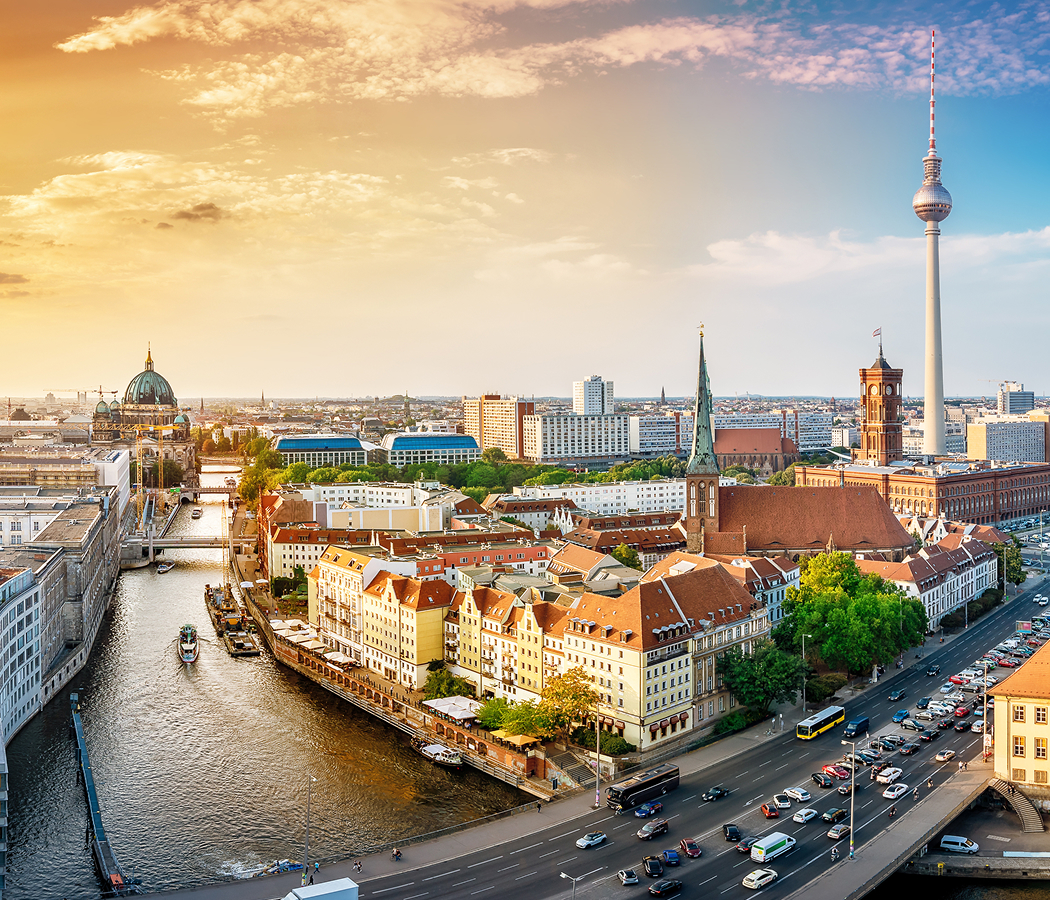
Berlin TV Tower is best known for dominating the capital's skyline as the supreme vertical statement of East German modernism. The German Democratic Republic constructed the tower near Alexanderplatz during the 1960s as both telecommunications infrastructure and a demonstration of technological capability. Hermann Henselmann contributed to early concepts, and the completed design combined a slender concrete shaft with a stainless-steel-clad sphere containing observation and restaurant levels. Rising 368 meters, the tower became the tallest structure in Germany and a visual anchor across vast areas of Berlin. Sunlight striking the sphere produces a cross-shaped reflection that acquired the popular nickname “Pope's Revenge” in the officially secular socialist state. Reunification transformed the Fernsehturm from an emblem of East Berlin into one of the most recognizable structures of the unified capital.
Day 3: CODA
CODA is best known for René Frank's reconstruction of dessert as the foundation of an entire fine-dining menu. Frank developed his pastry career through major European kitchens before opening CODA in Neukölln with Julia A. Leitner. The restaurant rejects the conventional separation between savory courses and a concluding sweet course, applying pastry techniques across a complete progression built from chocolate, fruit, vegetables, grains, dairy, fermentation, acidity, bitterness, and carefully controlled sweetness. Frank's compositions examine the structural functions traditionally supplied by refined sugar, introducing natural sweetness and savory ingredients to create balance through other mechanisms. Two MICHELIN stars established CODA as one of Berlin's most distinctive restaurants and elevated pastry from a specialized final course into the organizing discipline of an entire gastronomic institution.
Where your story begins.
Foresyte Travel reveals places that feel extraordinary long before you arrive.
Enjoy editorial crafted for luxury travelers.
Foresyte may earn a commission when you book.