Why Berlin TV Tower matters.
Berlin TV Tower is its exclamation point, a needle of light and steel that pierces the skyline and defines the capital's modern identity.
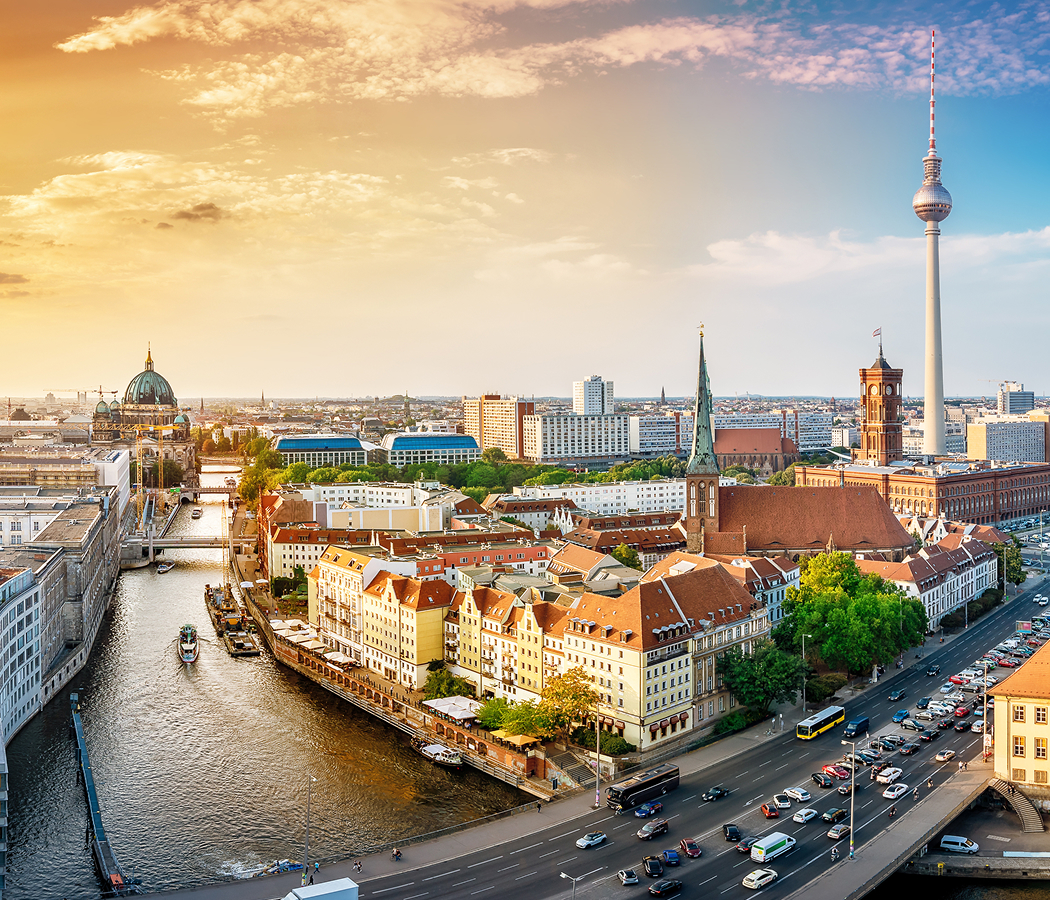
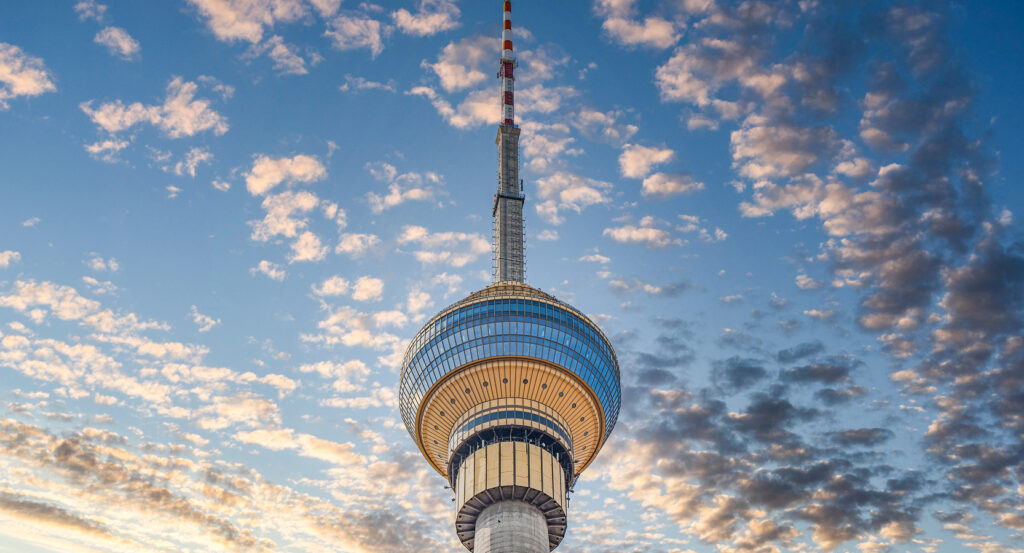
Standing 368 meters high in Alexanderplatz, the Fernsehturm (as locals call it) commands every horizon, a gleaming sphere rising over the patchwork of history that is Berlin. Built during the height of the Cold War in 1969 by the German Democratic Republic, it was designed to symbolize the strength and progress of East Germany, a shining statement of socialist ambition that could be seen from almost every corner of the divided city. Ironically, it became a shared icon, admired by East and West alike, and today it stands as a monument not to division, but to unity. Its sleek form, futuristic even by today's standards, reflects the optimism of a generation that built forward while surrounded by walls. At night, the tower glows like a cosmic beacon, its mirrored sphere catching the city lights as trams hum through Alexanderplatz below. To see Berlin without the Fernsehturm is to miss the heartbeat of its skyline, a line between heaven and earth that tells the story of resilience, reinvention, and the power of perspective.
What defines Berlin TV Tower.
Behind its shimmering design lies a story woven from ambition, faith, and unexpected symbolism.
The tower's construction was led by architect Hermann Henselmann and engineer Fritz Dieter, who envisioned a structure that could rival Western landmarks like the Eiffel Tower while showcasing East Germany's technological prowess. Built in just four years, it required over 7,000 tons of steel and cutting-edge engineering to stabilize its narrow base against strong winds. But what truly set it apart was its mirrored sphere, a marvel of precision, assembled from 1,000 stainless-steel panels, which houses a revolving restaurant and viewing platform. During its early years, Westerners mockingly dubbed it “St. Walter's Cathedral” after East German leader Walter Ulbricht, because when sunlight hit the sphere, a glowing cross appeared in reflection, an unintended yet poetic reminder of faith amid atheistic ideology. The tower became one of East Berlin's most successful symbols of modernity, broadcasting television and radio signals that reached far beyond the Iron Curtain. When the Berlin Wall fell in 1989, the Fernsehturm was reimagined, not dismantled, but embraced, as a unifying emblem of the new Germany. Its revolving restaurant, “Sphere,” was renovated, preserving its retro-futurist interiors while offering diners a 360-degree panorama that rotates every half hour. Even its elevators, shooting visitors 200 meters skyward in under 40 seconds, remain an engineering marvel. The tower's survival through political upheaval speaks to Berlin's ability to transform conflict into culture, to turn architecture into allegory.
How Berlin TV Tower fits.
Visiting Berlin TV Tower isn't just about sightseeing, it's about ascending into the essence of the city's story.
Start the journey in Alexanderplatz, where the hum of street performers, tram bells, and café chatter builds the city's daily rhythm. As you approach, the tower seems to shift with every step, its sphere catching the sky in fractured reflections. The elevator ride alone is worth the thrill, 40 seconds of anticipation before doors open to reveal a 360-degree panorama that stretches for miles. From the observation deck, Berlin unfolds like a living atlas: the green dome of the Berlin Cathedral, the Brandenburg Gate, and the distant line of the Tiergarten park merging with the horizon. Time your visit for late afternoon, when the sun burns gold over the rooftops, or arrive at dusk as the city lights awaken, the glow of cafés, trains, and street lamps flickering to life below. Grab a seat in the revolving restaurant “Sphere” and savor a slow meal as the city rotates beneath you, one revolution, one full story of Berlin's evolution. After the descent, linger in Alexanderplatz, where the tower's reflection shimmers in puddles and storefronts, and let its presence follow you through the night like a celestial compass. The Fernsehturm isn't merely an observation tower, it's a vertical love letter to Berlin's rebellious creativity, a monument to both division and reunion. Berlin TV Tower doesn't just rise above the city, it rises from it. Every gleam of its steel skin, every tick of its clock, every reflection of its glowing cross reminds you: Berlin never forgets its past, but it always looks forward.
Where your story begins.
Foresyte Travel reveals places that feel extraordinary long before you arrive.
Enjoy editorial crafted for luxury travelers.
Foresyte may earn a commission when you book.