Why Berlin Cathedral matters.
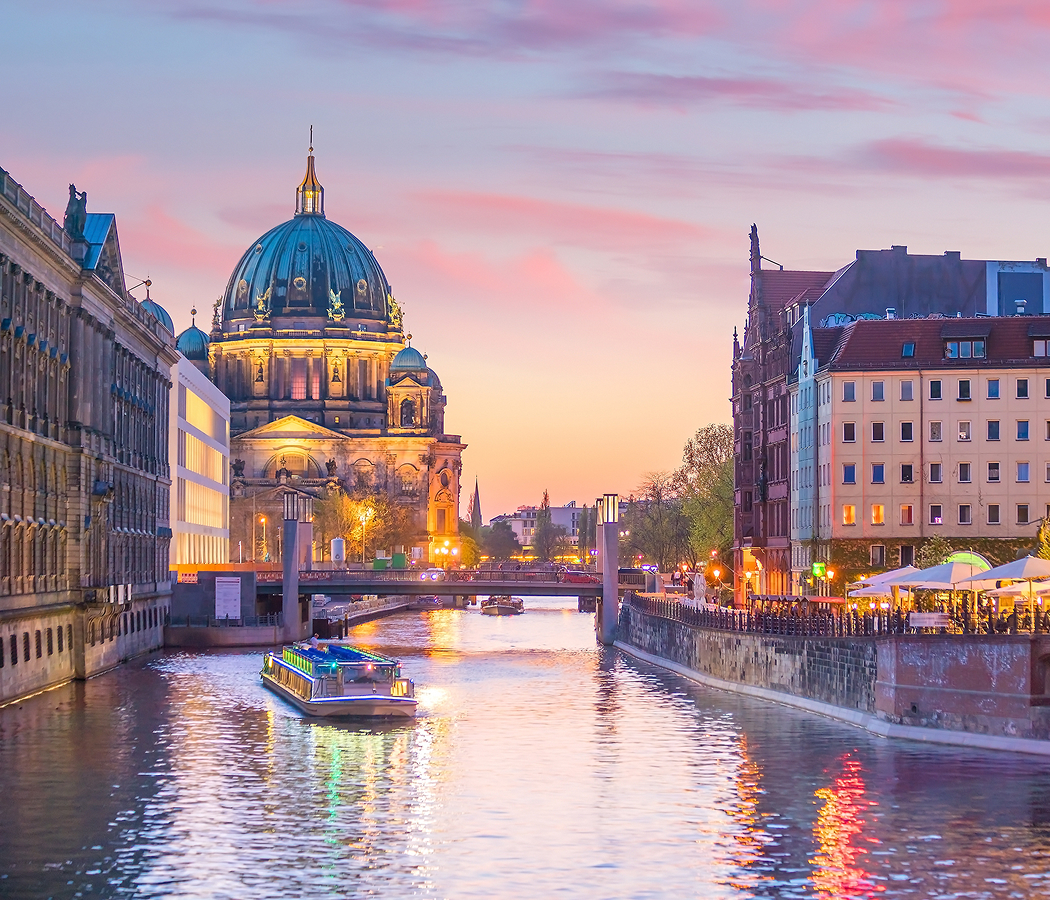
Berlin Cathedral, or Berliner Dom, is the soul of the city rendered in stone, glass, and gold, a masterpiece that bridges heaven and history on the banks of the River Spree.
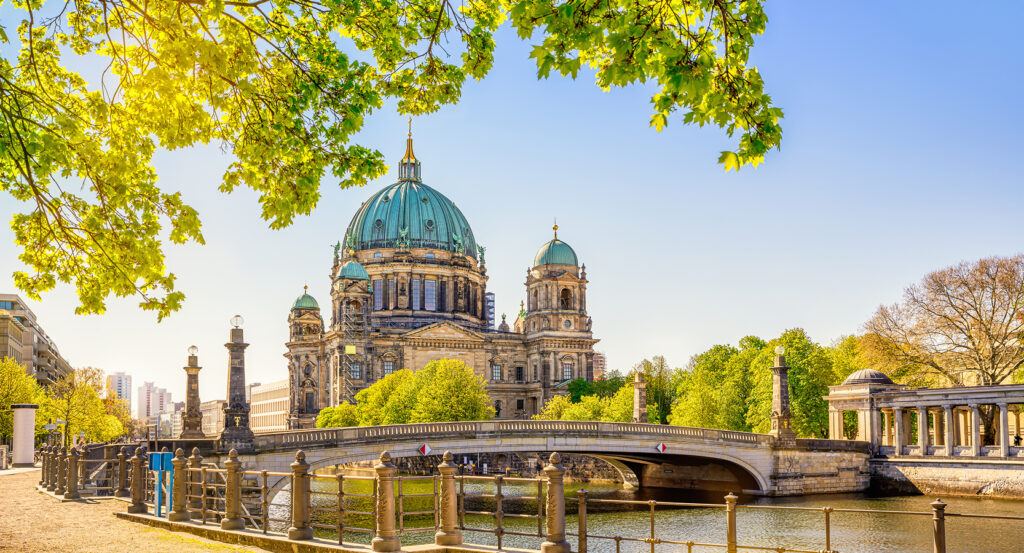
Its great green dome commands the skyline of Museum Island, glowing like a crown above the heart of Berlin. Step closer, and the cathedral reveals itself in layers, Baroque revival grandeur, Renaissance symmetry, and a quiet undercurrent of faith that has endured through empires, wars, and reunification. Inside, the vastness stuns you into stillness. Marble columns rise like trees in a forest of light, while golden mosaics shimmer beneath the soaring dome, each detail reflecting both divine aspiration and human craftsmanship. Built between 1894 and 1905 under Emperor Wilhelm II, the Berliner Dom was envisioned as the Protestant counterpart to St. Peter's Basilica in Rome, not merely a house of worship, but a statement of cultural character and imperial pride. Yet, beyond the politics of its birth, the cathedral has become something greater: a sanctuary for reflection amid the city's restless rhythm. As organ music fills the air and sunlight filters through stained glass, Berlin Cathedral feels timeless, a place where beauty offers quiet defiance against the turmoil that has shaped the world outside its doors.
What defines Berlin Cathedral.
Behind its grand façade lies a story of destruction, resilience, and meticulous restoration, a mirror of Berlin itself.
The original cathedral on this site dates back to the 15th century, but the structure we see today was crafted by architect Julius Carl Raschdorff in the late 19th century, blending Italian Renaissance and Baroque revival styles with Prussian precision. During World War II, the cathedral suffered devastating damage when Allied bombs tore through its dome in 1944, leaving it open to the sky for decades. Rain and wind eroded its frescoes, pigeons nested in its rafters, and yet, like Berlin, it endured. Reconstruction began in earnest in 1975 under East German stewardship, culminating in a careful restoration completed in 1993 after reunification. The restored dome gleams once more, crowned with a golden cross that symbolizes peace and renewal. Beneath the grandeur of the main sanctuary lies the Hohenzollern Crypt, the resting place of over ninety members of the Prussian royal family, kings, queens, and electors entombed in marble sarcophagi sculpted with regal precision. Each tells a story of power, loss, and faith, and walking among them feels like stepping through a silent lineage of European history. The cathedral's organ, built by Wilhelm Sauer, remains one of the largest in Germany, its 7,000 pipes filling the vast nave with sound so rich it vibrates through your chest like a heartbeat. Few visitors realize how much of what they see today is both ancient and reborn, the mosaics painstakingly replicated from photographs, the copper dome recast by hand, the sculptures reassembled from fragments found in the rubble. Berlin Cathedral is not a monument to perfection, but to persistence, proof that even the most shattered beauty can be restored with enough patience and faith.
How Berlin Cathedral fits.
To experience Berlin Cathedral fully, you must let it unfold slowly, part pilgrimage, part ascent, part revelation.
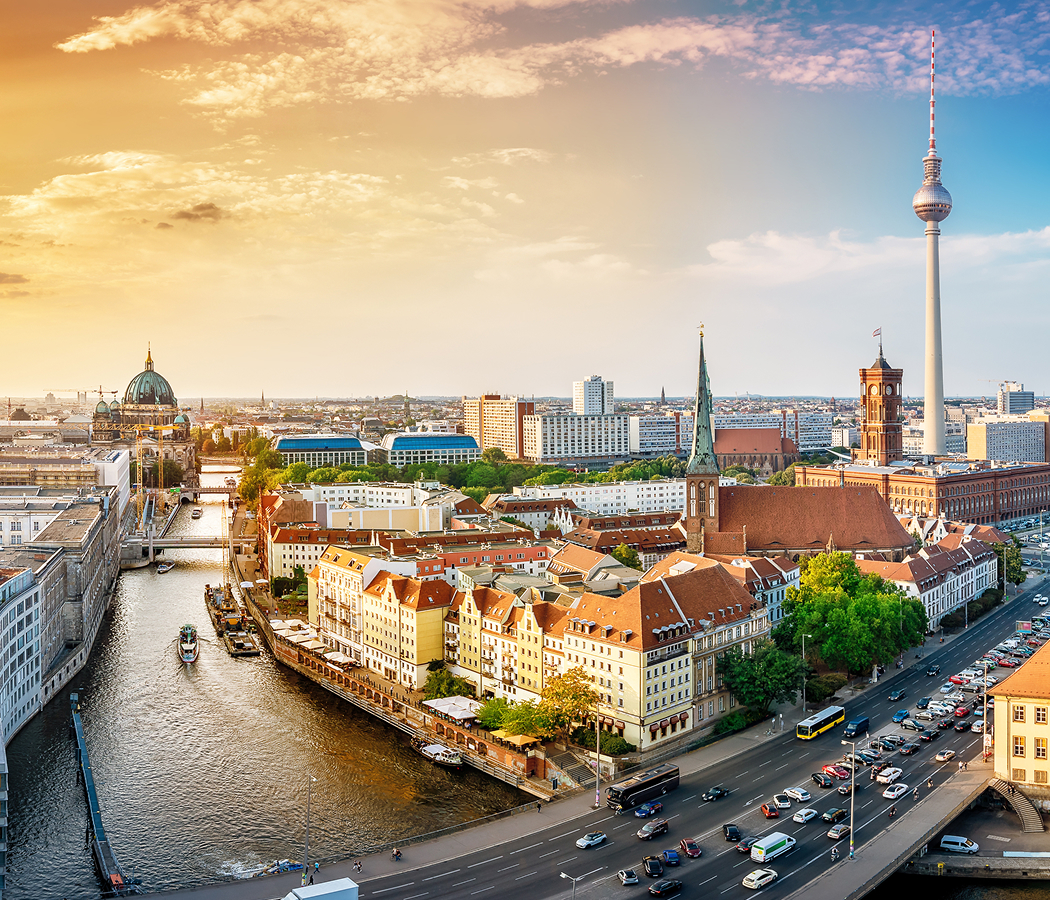
Begin your visit in the morning, when the sun catches the dome and the Spree River mirrors its reflection like liquid glass. Enter through the grand portico and allow your eyes to adjust to the soft golden glow inside. Take your time exploring the nave, every column, carving, and mosaic tells a story of devotion and endurance. Pause before the high altar, framed by sculpted angels and marble balustrades, and listen if the organ begins to play, its sound fills the space like light filling water. Then climb the 270 steps to the dome's viewing platform, where the reward is among the most breathtaking panoramas in Europe: the Brandenburg Gate, the Fernsehturm, Museum Island, and the endless sweep of Berlin stretching to the horizon. The city below feels both animated and fragile, its history visible in every rooftop. Descend to the crypt for contrast, quiet, cool, and somber, where the grandeur above gives way to intimacy. Afterward, stroll along the Lustgarten park outside the cathedral, where locals picnic, musicians play, and the building's reflection shimmers in the shallow pools nearby. For a complete experience, pair your visit with the neighboring museums, the Pergamon, Altes, and Neues, which house the artistic and spiritual echoes of the same centuries that shaped the cathedral itself. And if you can, return after dark, when the dome glows emerald and gold against the night sky, a lantern of hope above the city that has rebuilt itself time and again. Berlin Cathedral isn't just a structure, it's a heartbeat rendered in stone. Within its walls, history and humanity converge: the rise and fall of empires, the scars of war, the miracle of renewal. To stand beneath its dome is to feel both humbled and uplifted, a reminder that faith, in all its forms, is not about forgetting what was lost, but about continuing to build what can still be beautiful.
Where your story begins.
Foresyte Travel reveals places that feel extraordinary long before you arrive.
Enjoy editorial crafted for luxury travelers.
Foresyte may earn a commission when you book.