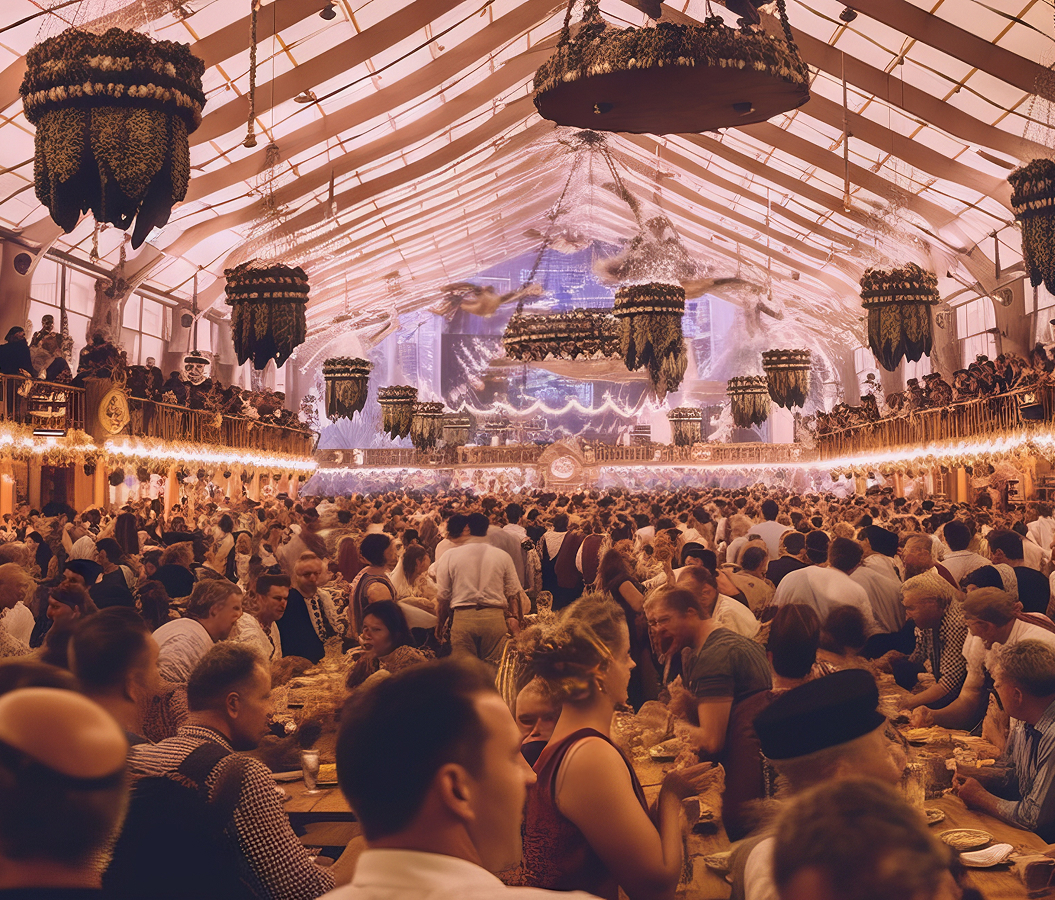
Perfect weekend in Munich, Germany.
Munich's history spans more than eight centuries of Bavarian ducal authority, royal patronage, scientific innovation, and political upheaval, establishing the city as one of Germany's foremost centers of architecture, industry, and intellectual life. Situated along the Isar River north of the Bavarian Alps, the capital of Bavaria developed on a gravel plain where medieval trade routes connected southern Germany with the Alpine passes and northern Italy. The city's name derives from Munichen, referring to the monks associated with an early settlement near the river. Munich entered written history in 1158, when Henry the Lion, Duke of Saxony and Bavaria, established a market and bridge crossing that redirected valuable salt commerce through the settlement. The Wittelsbach dynasty assumed control of Bavaria in 1180 and made Munich a principal ducal residence during the thirteenth century, beginning a relationship between the ruling family and the city that endured for more than seven centuries. Munich became the capital of a reunited Bavaria in 1506, subsequently developing into an important center of Catholic political authority during the Reformation and Counter-Reformation. Duke Wilhelm V and his successor Maximilian I commissioned substantial religious and residential projects, bringing Renaissance and early Baroque artistic influences into the Bavarian capital. The Thirty Years' War brought Swedish occupation in 1632, followed by severe population losses associated with plague and economic disruption. Bavaria became a kingdom in 1806, and King Ludwig I subsequently transformed Munich through an ambitious program of neoclassical architecture, museum construction, and artistic patronage. The city's industrial expansion accelerated during the nineteenth century, supported by railway connections, mechanical engineering, and the development of major manufacturing enterprises. Munich later became a center of National Socialist political activity, including Adolf Hitler's failed Beer Hall Putsch in 1923, before suffering extensive destruction during the Second World War. Postwar reconstruction restored significant portions of the historic center, and the 1972 Summer Olympics accelerated investment in transportation, public infrastructure, and modern architecture.
Bavarian painting, music, literature, and decorative craftsmanship achieved international prominence through the institutions and creative communities established in Munich during the nineteenth and twentieth centuries. The Alte Pinakothek, commissioned by King Ludwig I and opened in 1836, became one of Europe's most significant collections of Old Master painting, with major works by Albrecht Dürer, Peter Paul Rubens, and other European artists. The Neue Pinakothek extended this royal commitment to nineteenth-century art, supporting Munich's development as a center of historical painting, Romanticism, and emerging modern movements. The Munich Secession, founded in 1892, challenged established exhibition practices and contributed to the broader development of European artistic modernism. Wassily Kandinsky and Franz Marc subsequently established Der Blaue Reiter in 1911, advancing experimental approaches to abstraction, color, and spiritual themes in painting. Munich's musical history includes the premieres of several operas by Richard Wagner, whose association with King Ludwig II connected the Bavarian court to some of the nineteenth century's most ambitious theatrical productions. Richard Strauss was born in Munich in 1864, beginning a career that profoundly influenced orchestral composition and twentieth-century opera. The Bavarian State Opera developed into one of Europe's principal operatic institutions, maintaining traditions of performance associated with the city's former royal court. Munich also became an important center of German publishing and literature, with writers including Thomas Mann, whose years in the city contributed to his early literary career. The city's culinary foundations developed through Bavarian agriculture, Alpine dairy production, traditional brewing, and the commercial exchange of southern Germany. Weißwurst, traditionally accompanied by sweet mustard and a soft pretzel, became closely associated with Munich's nineteenth-century food culture. Other regional specialties include Schweinshaxe, Obatzda, Leberknödel, and apple strudel, incorporating ingredients associated with Bavaria's farming and livestock traditions. Munich's brewing history extends to medieval monastic and ducal enterprises, with the Reinheitsgebot of 1516 establishing influential standards for beer production in Bavaria. Oktoberfest originated in 1810 as a celebration of the marriage of Crown Prince Ludwig and Princess Therese of Saxe-Hildburghausen, developing into an internationally celebrated festival of Bavarian brewing, food, music, and traditional dress. A weekend in Munich brings centuries of Wittelsbach patronage, pioneering modern art, operatic excellence, and deeply rooted Bavarian hospitality into the setting of Germany's southern capital.
Three day itinerary.
Day 1: Marienplatz
Marienplatz is best known for its expansive Gothic Revival architecture, celebrated Glockenspiel, and central role in Munich's civic life since the city's medieval foundation. Established as the principal marketplace during the twelfth century, the square developed into the political and commercial heart of the Bavarian capital. Its name honors the Virgin Mary, whose gilded statue crowns the Mariensäule, erected in 1638 by Elector Maximilian I to commemorate Bavaria's survival during the Thirty Years' War. The Neues Rathaus dominates the northern side of the square, its elaborate facade designed by Georg von Hauberrisser during a construction program extending from 1867 to 1909. The building's celebrated Glockenspiel features mechanical figures depicting a sixteenth-century ducal wedding tournament and the traditional Schäfflertanz, a cooper's dance associated with Munich's civic history. The Altes Rathaus preserves the architectural character of the city's earlier municipal government, connecting the square with its medieval commercial origins. Marienplatz became a central gathering place for public celebrations, political events, and the city's longstanding Christmas market traditions. The square represents the defining architectural and historical center of Munich through its extraordinary concentration of Bavarian civic heritage.
Day 1: Augustiner-Keller
Augustiner-Keller is best known for its historic Bavarian beer garden and its longstanding association with Augustiner-Bräu, Munich's oldest independent brewery. The brewery traces its origins to 1328, when Augustinian monks began producing beer within their monastery near the city's historic center. Augustiner-Keller developed into a major beer garden during the nineteenth century, preserving the communal dining traditions associated with Munich's expanding brewing industry. Its extensive outdoor seating beneath mature chestnut trees reflects the historical development of Bavarian beer gardens, whose shaded landscapes originally helped protect underground beer cellars from summer heat. Traditional preparations including roast pork, sausages, pretzels, and regional specialties accompany Augustiner beers produced according to established Bavarian brewing traditions. The restaurant's historic cellar spaces and substantial beer hall preserve architectural elements associated with Munich's nineteenth-century hospitality culture. Augustiner-Keller represents an important institution in Bavarian culinary history through its connection with centuries of monastic brewing, traditional beer production, and Munich's celebrated communal dining culture.
Day 2: Nymphenburg Palace
Nymphenburg Palace is best known for its extraordinary Baroque architecture, expansive landscaped gardens, and centuries-long association with Bavaria's ruling Wittelsbach dynasty. Elector Ferdinand Maria commissioned the palace in 1664 to celebrate the birth of his son Maximilian II Emanuel, establishing a summer residence west of Munich. Italian architect Agostino Barelli designed the original central pavilion, which subsequently expanded into an elaborate royal complex through the work of successive architects and generations of princely patronage. Elector Max Emanuel transformed the residence during the late seventeenth and early eighteenth centuries, introducing architectural influences associated with the grand palaces of France and Italy. The palace's celebrated Steinerner Saal, or Stone Hall, contains grand Rococo decoration developed under architect François de Cuvilliés and painter Johann Baptist Zimmermann. King Ludwig I commissioned the Gallery of Beauties, a collection of portraits painted by Joseph Karl Stieler depicting women from different social backgrounds. The surrounding park evolved from formal Baroque gardens into an extensive landscape incorporating ornamental lakes, canals, woodland paths, and elaborate garden pavilions. Schloss Nymphenburg represents one of Germany's most consequential royal residences through its architectural evolution, dynastic history, and exceptional landscape design.
Day 2: Königlicher Hirschgarten
Königlicher Hirschgarten is best known for its enormous traditional Bavarian beer garden and its historic relationship with the royal hunting landscapes of western Munich. Elector Karl Theodor established the grounds in 1780 as a deer park, introducing a recreational landscape that subsequently developed into an important public gathering place. The site's historic relationship with royal hunting traditions survives through its name and the presence of deer within the surrounding park. Its extensive beer garden developed into one of Munich's largest, accommodating thousands of guests beneath mature chestnut trees. Traditional Bavarian dishes including roast pork, sausages, pretzels, and regional specialties accompany beer served in the customary large stoneware and glass mugs associated with Munich's brewing culture. The restaurant's culinary character reflects the historical relationship between Bavarian beer production, communal outdoor dining, and the city's expansive public gardens. Königlicher Hirschgarten represents an exceptional expression of Munich's beer garden heritage through its royal origins, substantial scale, and preservation of traditional Bavarian hospitality.
Day 2: BMW Museum
BMW Museum is best known for preserving the technological, industrial, and design achievements of Bayerische Motoren Werke within an extraordinary modernist architectural complex in northern Munich. BMW emerged from the Bavarian aviation industry during the early twentieth century, developing into one of Germany's most influential manufacturers of motorcycles and automobiles. The museum opened in 1973 near the company's headquarters, whose distinctive four-cylinder tower was designed by architect Karl Schwanzer and completed in 1972. The museum's original bowl-shaped structure reflects the experimental architectural language associated with Munich's preparations for the 1972 Summer Olympics. Its collections trace the evolution of BMW through historic motorcycles, racing vehicles, production automobiles, engines, and experimental designs that shaped the development of modern automotive engineering. A major expansion completed in 2008 introduced new exhibition spaces and multimedia installations connecting the company's industrial history with contemporary technological innovation. BMW Museum represents a significant institution in German industrial heritage through its concentration on automotive design, mechanical engineering, and the international development of Bavarian manufacturing.
Day 2: Tantris
Tantris is best known for its extraordinary influence on the development of modern German haute cuisine and its longstanding association with internationally celebrated chefs. Founded by construction entrepreneur Fritz Eichbauer in 1971, the restaurant introduced an ambitious French-inspired fine-dining program to Munich during a period of substantial transformation in German gastronomy. Architect Justus Dahinden designed its distinctive building, incorporating dramatic geometric forms, sculptural concrete, and richly colored interiors associated with late twentieth-century modernism. Chef Eckart Witzigmann established the restaurant's early culinary reputation, earning two MICHELIN stars and helping introduce the techniques of French nouvelle cuisine to Germany. His successor Heinz Winkler continued the restaurant's international influence, developing a distinguished culinary career that further established Munich as a major European gastronomic destination. Hans Haas subsequently led the kitchen for decades, preserving Tantris's relationship with classical technique and sophisticated contemporary cooking. The restaurant underwent an extensive renovation and culinary restructuring in 2021, introducing a renewed gastronomic program within its celebrated architectural setting. Tantris represents one of Germany's most consequential fine-dining institutions through its pioneering culinary leadership, exceptional architectural identity, and sustained influence on European gastronomy.
Day 3: Schmalznudel
Schmalznudel is best known for preserving Munich's traditional pastry culture through its celebrated Schmalznudeln, a regional fried-dough specialty associated with Bavarian baking traditions. Established in 1973, the café developed into a beloved institution near the Viktualienmarkt, connecting its culinary character with one of the city's oldest commercial districts. Schmalznudeln are prepared from yeast dough shaped into distinctive rings with thin centers and thicker edges, then fried until golden and finished with sugar. The café also specializes in traditional Bavarian pastries including Auszogne and other fried-dough preparations associated with regional festivals and established baking customs. Its kitchen emphasizes freshly prepared dough and traditional methods, preserving the relationship between simple ingredients and precise pastry technique. Café Frischhut represents an important institution in Munich's everyday culinary culture through its preservation of regional baking traditions and longstanding association with the historic market district.
Day 3: Deutsches Museum
Deutsches Museum is best known for its extraordinary collections devoted to science, engineering, and technology, establishing one of the world's largest and most significant institutions of its kind. Founded in 1903 by engineer Oskar von Miller, the museum emerged from an ambitious effort to preserve the technological achievements that transformed industrial society. Its principal building occupies an island in the Isar River, creating an expansive institutional setting within Central Munich. The museum's collections encompass aviation, maritime engineering, physics, chemistry, energy production, telecommunications, and numerous other scientific disciplines. Historic aircraft, industrial machinery, scientific instruments, and experimental installations illuminate the technological transformations associated with the Industrial Revolution and the development of modern engineering. The institution's extensive educational programs reflect von Miller's original commitment to making scientific knowledge accessible through direct engagement with technical objects and demonstrations. Deutsches Museum represents one of Europe's most consequential scientific institutions through its preservation of technological history and its extraordinary contribution to public scientific education.
Day 3: English Garden
English Garden is best known for its extraordinary scale, historic landscape design, and central role in Munich's public recreational culture. Established in 1789 under Elector Karl Theodor, the park developed through the work of landscape architects Friedrich Ludwig von Sckell and Benjamin Thompson, later Count Rumford. Its design reflects the principles of the English landscape garden, emphasizing naturalistic meadows, winding waterways, wooded paths, and carefully composed scenic views. The park extends across a vast area north of Munich's historic center, creating one of Europe's most significant urban green spaces. The celebrated Chinesischer Turm, constructed during the late eighteenth century, reflects the period's fascination with East Asian architectural forms and became the center of a traditional Bavarian beer garden. The Eisbach wave developed into an internationally recognized urban surfing destination, demonstrating the park's unusual relationship with contemporary recreational culture. Englischer Garten represents an exceptional achievement in European landscape architecture through its integration of Enlightenment-era planning, public recreation, and Munich's distinctive urban environment.
Day 3: Atelier
Atelier is best known for its sophisticated interpretation of contemporary French haute cuisine within the historic Bayerischer Hof hotel in Central Munich. The restaurant developed into one of Germany's leading fine-dining institutions through a culinary program emphasizing premium ingredients, classical technique, and elaborate contemporary compositions. Chef Jan Hartwig established Atelier's international reputation, earning three MICHELIN stars in 2017 through an ambitious approach to modern European gastronomy. His cooking emphasized precise execution, carefully balanced flavors, and refined interpretations of established French culinary traditions. The restaurant's interior was designed by Belgian architect Axel Vervoordt, whose restrained aesthetic incorporated natural materials, sophisticated lighting, and carefully composed spaces. Atelier's development reflects Munich's longstanding relationship with luxury hospitality and its emergence as a major destination for contemporary European fine dining. The restaurant represents an important chapter in German gastronomic history through its association with internationally influential culinary leadership and exceptional technical achievement.
Where your story begins.
Foresyte Travel reveals places that feel extraordinary long before you arrive.
Enjoy editorial crafted for luxury travelers.
Foresyte may earn a commission when you book.