Why Königlicher Hirschgarten matters.
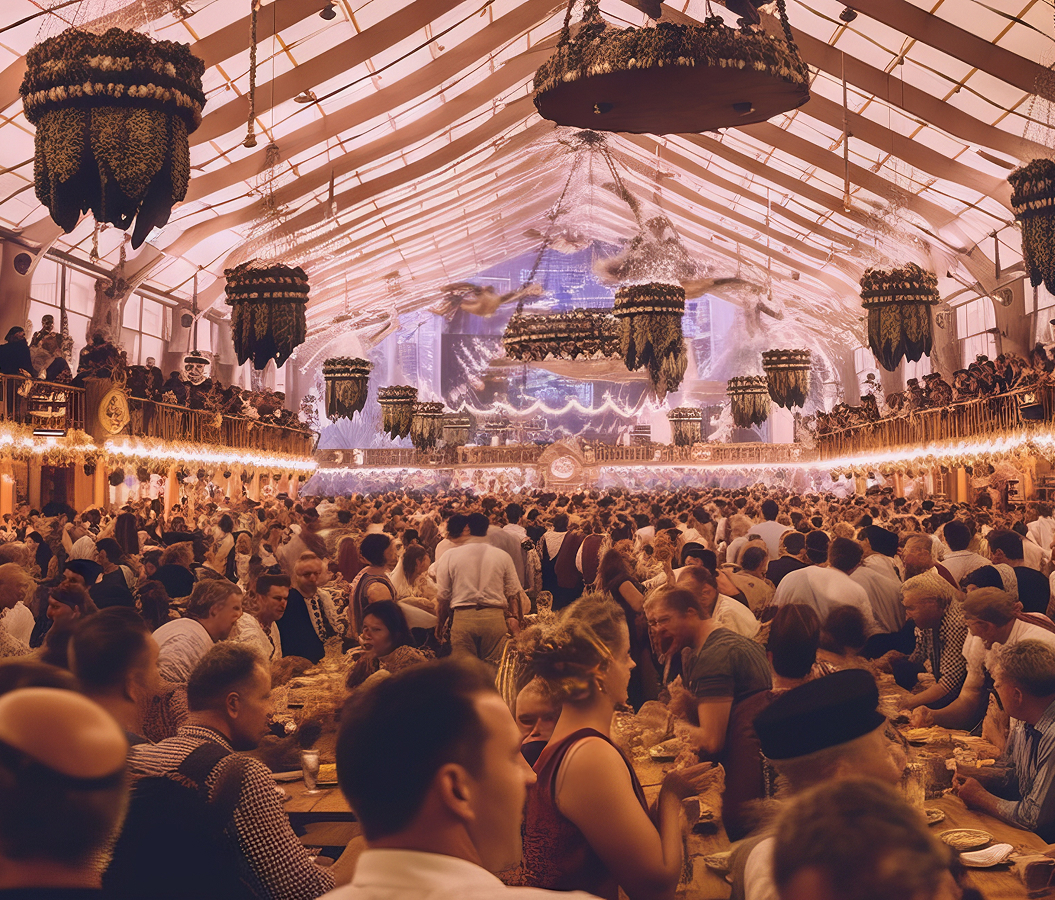
Königlicher Hirschgarten is a historic Bavarian restaurant and beer garden where Nymphenburg's royal hunting heritage meets Munich's centuries-old brewing traditions, the communal culture of the Bavarian Biergarten and the transformation of an electoral wildlife preserve into one of Europe's largest outdoor dining establishments.
Occupying the northeastern edge of Hirschgarten Park, between Hirschgartenallee and the residential streets approaching Romanplatz, the establishment stands within Munich's western Nymphenburg district, where mature woodland, landscaped meadows and established residential neighborhoods preserve the spacious character of the former electoral hunting grounds. Its extensive beer garden incorporates long wooden tables beneath substantial chestnut trees, with pathways connecting separate seating areas and the surrounding parkland. The traditional restaurant building contains interconnected dining rooms decorated with historic woodwork, hunting imagery and regional furnishings, establishing a series of distinct interiors within the larger hospitality complex. An adjoining wildlife enclosure provides a direct visual connection to the property's origins as a royal deer preserve, with fallow deer and mouflon occupying landscaped grounds beside the outdoor seating. The result is an expansive Bavarian hospitality destination whose wooded garden, historic restaurant interiors and surviving wildlife enclosure preserve the physical character of Munich's former electoral countryside.
What defines Königlicher Hirschgarten.
Königlicher Hirschgarten is best known for the extraordinary continuity between its origins as an eighteenth-century royal hunting preserve and its development into Munich's largest traditional beer garden, an institution whose public character emerged from the recreational policies of Elector Karl Theodor of Bavaria. The property's history reaches back to 1720, when a pheasant-breeding establishment was created on land associated with the extensive woodland and agricultural holdings west of Munich. The establishment formed part of the wider management of electoral hunting estates, whose cultivated grounds supported the maintenance of game populations for aristocratic recreation. In 1767, portions of the property were adapted for experimental hop cultivation, connecting the estate to the agricultural requirements of Bavaria's expanding brewing industry. The cultivation program demonstrated the relationship between courtly land management and the commercial development of ingredients essential to beer production. Another agricultural undertaking followed through the introduction of mulberry trees intended to support silkworm cultivation, an ambitious project associated with the economic policies of the Bavarian electorate. The plantation eventually encompassed 17,000 mulberry trees, representing a substantial attempt to establish silk production within the regional economy. The undertaking failed to achieve commercial success, and the property subsequently acquired a more enduring function through its association with royal hunting. In 1780, Elector Karl Theodor commissioned his chief huntsman, Johann Theodor Freiherr von Waldkirch, to establish a substantial enclosed game preserve on the former agricultural grounds. The designated estate encompassed 131 Bavarian Tagwerk, equivalent to 44.6 hectares, creating a managed landscape for the maintenance of deer and the recreational activities of the electoral court. The enclosure received a founding population of one hundred fallow deer and red deer, establishing the animal collection that gave the Hirschgarten its enduring name. Karl Theodor's reign coincided with the development of Enlightenment ideas concerning public recreation and the social responsibilities of princely government, contributing to the gradual transformation of the preserve into a destination accessible to Munich's population. The elector opened the grounds to the public in 1790, introducing a substantial recreational landscape beyond the dense residential districts of the historic city. The following year, the chief huntsman received permission to operate a public establishment within the former hunting lodge, creating the foundation of the restaurant business that continues at the property. The authorization in 1791 connected the existing Jägerhaus to the commercial hospitality traditions of Bavaria, establishing a place where beer and substantial regional food accompanied excursions into the former royal grounds. The development occurred during a period of significant change in Munich's brewing economy, when traditional brewery cellars and outdoor drinking establishments became increasingly important elements of urban recreation. A royal decree issued on January 4, 1812, permitted Bavarian brewers to sell their beer directly above their storage cellars, contributing to the formal development of the Biergarten as a distinctive hospitality institution. The associated restrictions on prepared food sales helped preserve the custom of bringing personal provisions into communal drinking gardens, establishing a social tradition that subsequently became closely associated with Munich. Königlicher Hirschgarten developed within this broader culture of outdoor hospitality, benefiting from its extensive grounds and the continuing attraction of the former wildlife preserve. During the nineteenth century, the establishment acquired additional recreational facilities, including a music pavilion and dance floor, extending its function beyond the provision of food and drink. The surrounding park also became a destination for seasonal excursions, with its open landscape and animal population contributing to its distinctive appeal among Munich residents. The expansion of railway infrastructure west of the city altered the boundaries of the former royal estate during the construction of the Munich-Augsburg railway between 1839 and 1849. The railway reduced the original extent of the grounds, establishing a substantial transportation corridor that contributed to the transformation of the surrounding countryside into an increasingly developed metropolitan district. The property nevertheless retained its recreational function, with its substantial woodland and animal population preserving a recognizable connection to the electoral hunting establishment. During the nineteenth and early twentieth centuries, deer moved freely among the tables, creating an unusual relationship between outdoor dining and the animals associated with the original royal preserve. The Second World War brought major changes to Munich's urban infrastructure and recreational institutions, contributing to the gradual separation of the animal population from the principal hospitality areas. Subsequent landscape improvements developed the park's function as a public recreational space, with a substantial redesign of its northeastern section undertaken between 1958 and 1959. The municipality extended the park southward between 1968 and 1970, introducing additional facilities and landscaped areas designed for a growing metropolitan population. The restaurant building underwent renovation between 1970 and 1971, followed by further restoration in 1980, preserving the traditional character of the hospitality complex through successive periods of modernization. The Magdalenenfest, a historic Bavarian folk festival whose origins reach back to 1728, became another enduring association of the property through its seasonal celebration within the surrounding park. The festival's modern Hirschgarten tradition developed in 1959, incorporating fairground attractions, food stalls and commercial stands into the recreational calendar of the district. The establishment's hospitality capacity subsequently expanded to 8,000 outdoor seats, placing it among the world's largest beer gardens and establishing its exceptional importance within Munich's traditional restaurant culture. Thomas Fesenmair assumed responsibility for the business as proprietor, bringing professional experience as a chef, restaurateur and hunter to the operation of the historic establishment. His management team includes Cornelia Bartz and Christoph Radde, whose responsibilities extend across the restaurant's substantial indoor and outdoor hospitality operations. Executive chef Dominik Kreuzig directs the culinary program, preserving the traditional Bavarian character of the establishment through regional cooking and seasonal preparations. Königlicher Hirschgarten's significance rests on its exceptional historical continuity, connecting eighteenth-century electoral land management, nineteenth-century public recreation and the enduring communal traditions of Munich's beer-garden culture.
Dominik Kreuzig's culinary program develops through the substantial traditions of Bavarian Wirtshaus cooking, with regional meat preparations, seasonal vegetables, traditional baking and freshly dispensed beer forming the foundation of the restaurant's distinctive hospitality. The kitchen's approach centers on familiar Bavarian preparations whose character depends on carefully controlled roasting, substantial sauces and the complementary textures of bread, dumplings and preserved vegetables. Schweinshaxe occupies an important position within this culinary tradition through pork knuckle roasted until the skin develops a crisp surface surrounding tender, richly flavored meat. The preparation requires sustained heat and careful rendering of fat, creating a substantial contrast between the exterior crust and the interior texture. Potato dumplings contribute a complementary element through their soft consistency and capacity to absorb the concentrated juices of roasted meat. Suckling pig introduces another characteristic Bavarian preparation, with the restaurant's banquet program incorporating whole roasted animals carved during service and accompanied by small potato dumplings, beer sauce and coleslaw. The preparation connects the establishment's substantial hospitality facilities to the communal traditions of festive Bavarian dining. Its associated beer service incorporates a chilled thirty-liter wooden barrel of Augustiner Lager tapped at the table, creating a ceremonial relationship between regional food and Munich's historic brewing culture. Augustiner Bräu supplies an important element of the beverage program through its traditional pale lager, whose balanced malt character and restrained hop bitterness complement the richness of the restaurant's meat preparations. The selection extends through beers from Herzogliches Brauhaus Tegernsee and Schlossbrauerei König Ludwig, connecting the establishment to several historic Bavarian brewing enterprises. König Ludwig Dunkel contributes a contrasting malt character through its darker roasted-grain profile, and the brewery's wheat beers introduce the distinctive fermentation aromas associated with Bavarian Weissbier. The restaurant's traditional Brotzeit preparations provide another important expression of regional food culture through cold meats, cheese, bread and carefully seasoned accompaniments. Obazda combines soft cheese, butter, paprika and onions into a substantial spread whose creamy texture and aromatic seasoning complement freshly baked Bavarian pretzels. The establishment's banquet selection develops this preparation alongside herb cream cheese and beetroot hummus, creating a combination of familiar regional flavors and contemporary vegetable-based preparations. Traditional Stockwürscht contribute another distinctive specialty through sausages heated gently in water and served with sweet Bavarian mustard and crisp pretzels. Their preparation preserves the delicate texture of the sausage casing and the balanced seasoning of the meat, connecting the dish to Munich's established culture of morning sausage service. The kitchen's seasonal program incorporates asparagus during the spring harvest, drawing on the agricultural traditions of Bavaria and the established German preference for carefully prepared white asparagus. The vegetable's delicate flavor supports preparations accompanied by butter, potatoes and traditional sauces, giving the seasonal menu a distinctive agricultural character. Autumn cooking introduces substantial roast duck and goose preparations, connecting the restaurant's culinary calendar to the established traditions of Bavarian Kirchweih celebrations. The preparation of poultry depends on controlled roasting and the development of concentrated sauces, with traditional accompaniments contributing acidity and sweetness to balance the richness of the meat. The restaurant's pastry selection preserves another important regional tradition through Kaiserschmarrn, a substantial shredded pancake whose caramelized exterior develops through cooking with butter and sugar. Apple sauce and plum compote provide contrasting fruit acidity, connecting the dessert to the agricultural products associated with southern German household cooking. The establishment's hospitality program extends beyond individual dishes through a distinctive combination of self-service beer-garden dining and full-service restaurant accommodation. The outdoor self-service area accommodates 7,000 people, preserving the communal character of Munich's traditional beer gardens through long wooden benches and independent food-service stations. A separate serviced garden section accommodates 1,200 diners, providing table service within the same extensive outdoor setting. The interior Wirtshaus contains more than 500 seats distributed across a series of individually decorated rooms, extending the establishment's hospitality program through substantial private and organized gatherings. The Schwemme functions as the principal tavern room, with traditional furnishings and a central position within the restaurant's interior arrangement. The Poststüberl incorporates decorative objects associated with the historic postal system, connecting the room's character to the transportation traditions of earlier centuries. The Ludwigsstüberl develops a royal architectural theme through paintings of Bavarian castles, preserving a decorative association with the kingdom's nineteenth-century residential culture. The Jägerstüberl introduces hunting-inspired decoration, connecting the dining room to the traditions of Bavarian game management and rural hospitality. The Kurfürstenstuben incorporates antique wooden paneling and historic hunting targets, creating an interior whose decorative character reflects the social traditions of the Bavarian electorate. The Herzogstuben provides a substantial dining space with direct access to the outdoor garden, supporting the transition between enclosed restaurant service and seasonal outdoor dining. The Stadl reproduces the architectural character of a traditional barn, extending the restaurant's range of settings for private celebrations and organized gatherings. Seasonal brass-band performances contribute another important element of the establishment's cultural character, preserving the musical traditions associated with Bavarian beer gardens and regional festivals. The restaurant's enduring appeal derives from the integration of traditional Bavarian cooking, historic brewing culture, substantial communal seating and a hospitality program whose scale preserves the social character of Munich's oldest recreational institutions.
How Königlicher Hirschgarten fits.
Königlicher Hirschgarten works as the anchor for an exploration connecting the royal residential ambitions of the Wittelsbach dynasty, the ceremonial transportation traditions of the Bavarian monarchy and the scientific development of Munich's botanical collections.
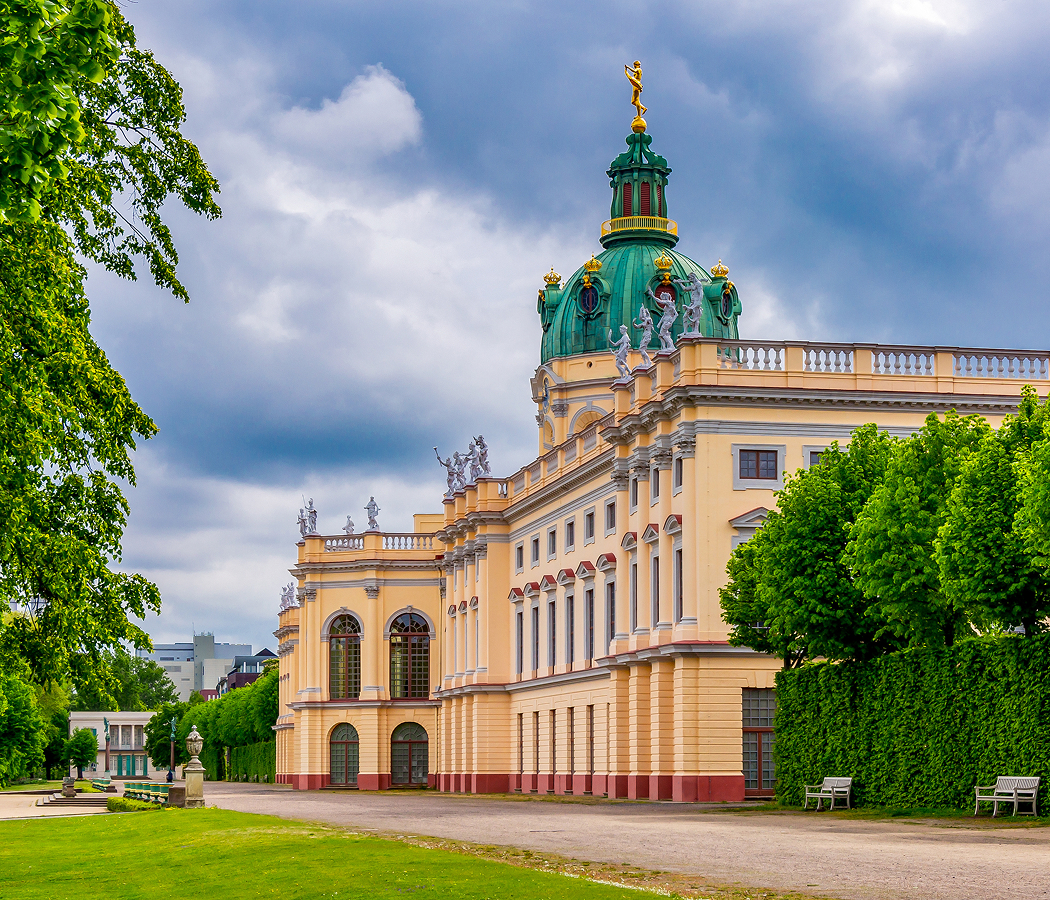
Begin at Nymphenburg Palace, the historic royal residence commissioned by Elector Ferdinand Maria and Henriette Adelaide of Savoy following the birth of their son Maximilian Emanuel in 1662. Construction began in 1664 under Italian architect Agostino Barelli, whose original design established a substantial summer residence inspired by the architectural traditions of northern Italy. Successive expansions under Enrico Zuccalli and Joseph Effner transformed the compact residence into an extensive ceremonial complex, with symmetrical galleries, residential wings and substantial landscaped grounds. Johann Baptist Zimmermann contributed the elaborate ceiling decoration of the Steinerner Saal, developing a major achievement of Bavarian Rococo art through painted mythological imagery and gilded stucco ornament. King Ludwig II was born within the palace on August 25, 1845, connecting the residence to one of Bavaria's most internationally recognized monarchs. Continue to Marstallmuseum, the historic carriage museum whose collections preserve the ceremonial transportation and equestrian traditions of the Wittelsbach court. The institution originated in 1923 within the former royal riding school designed by Leo von Klenze, establishing a permanent public collection devoted to the vehicles and equipment associated with Bavarian monarchy. Its holdings transferred to Nymphenburg in 1939, and the museum reopened in 1950 following the destruction of the former royal stable complex in Central Munich. The collection encompasses more than forty historic carriages, sleighs and equestrian objects, including the elaborate coronation coach of Emperor Charles VII and the ceremonial vehicles commissioned by Ludwig II. The upper floor accommodates the Museum of Nymphenburg Porcelain, connecting the transportation collection to the decorative craftsmanship developed under Bavarian royal patronage. Conclude at Botanical Garden Munich-Nymphenburg, the scientific institution established through the relocation of Munich's earlier botanical collections from the increasingly restricted grounds of the Old Botanical Garden. Botanist Karl Eberhard von Goebel directed the undertaking, with preparatory construction beginning in 1909 and specialist contributions from horticultural engineer Peter Holfelder, greenhouse designer Leonhard Dillis and garden curator Walter Kupper. The institution was inaugurated on May 10, 1914, establishing a substantial scientific landscape organized around formal gardens, an alpine collection, an arboretum and extensive greenhouse facilities. Its cultivated holdings encompass 16,240 plant species and subspecies across 21.2 hectares, with specialized collections representing tropical forests, arid landscapes and temperate vegetation communities. The greenhouse complex extends across 5,000 square meters, supporting the cultivation and public presentation of plants from geographically distinct climatic regions. The progression moves from Nymphenburg Palace's dynastic architecture through Marstallmuseum's ceremonial transportation collections and culminates in Botanical Garden Munich-Nymphenburg's extensive scientific landscape, connecting the royal patronage, technological craftsmanship and institutional development that shaped Munich's western districts.
Where your story begins.
Foresyte Travel reveals places that feel extraordinary long before you arrive.
Enjoy editorial crafted for luxury travelers.
Foresyte may earn a commission when you book.