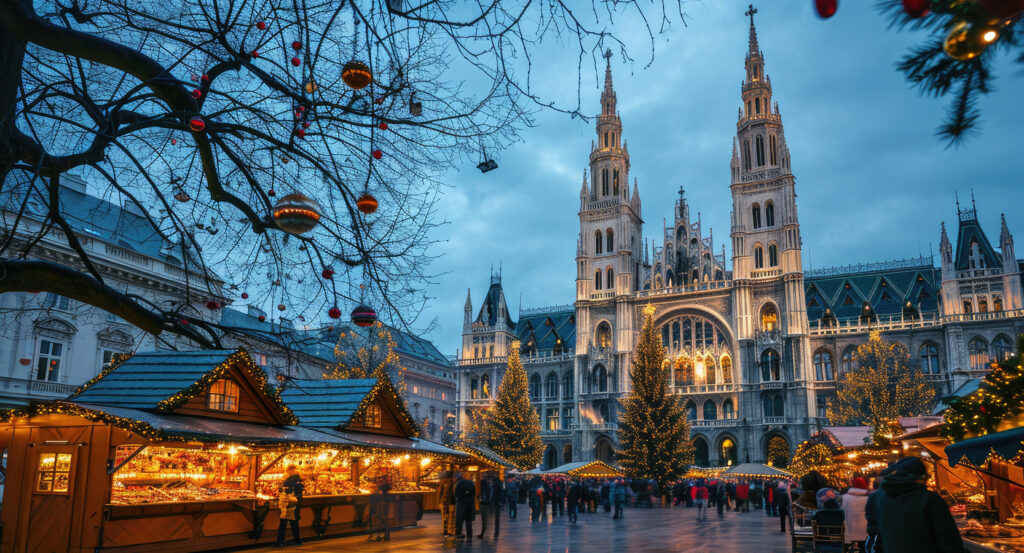
Perfect weekend in Vienna, Austria.
Vienna's historical importance emerged through centuries of Habsburg imperial government, European diplomacy, musical patronage, and intellectual innovation, establishing the Austrian capital as one of Central Europe's most influential cultural centers. Situated along the Danube River at the eastern edge of the Vienna Basin, the city originated as the Roman military settlement of Vindobona, established during the first century CE to defend the empire's northern frontier. Following the decline of Roman authority, Vienna developed into a medieval commercial settlement whose strategic position connected trading routes between the German-speaking territories, Hungary, and the Balkans. The Babenberg dynasty elevated Vienna's political importance during the twelfth century, establishing the city as the principal residence of the Austrian dukes. Habsburg rule subsequently transformed Vienna into the administrative center of an extensive European monarchy, particularly following the consolidation of hereditary territories under successive imperial rulers. The Ottoman sieges of 1529 and 1683 represented critical episodes in the city's military history, with the latter culminating in the defeat of Ottoman forces by a coalition led by King John III Sobieski of Poland. During the eighteenth century, Maria Theresa and Joseph II pursued administrative reforms, educational initiatives, and cultural patronage that strengthened Vienna's position within the European Enlightenment. The Congress of Vienna in 1814 and 1815 reorganized the European political order following the Napoleonic Wars, reinforcing the city's diplomatic importance. The collapse of Austria-Hungary in 1918 ended centuries of imperial government, introducing the First Austrian Republic and a period of profound political and social change. Following Nazi annexation in 1938, the Second World War, and Allied occupation, Austria regained full sovereignty through the Austrian State Treaty of 1955, allowing Vienna to develop into an important center of international diplomacy and European cultural life.
Vienna's international reputation rests upon its exceptional contributions to classical composition, modern painting, architecture, philosophy, and the culinary traditions of the former Habsburg territories. Wolfgang Amadeus Mozart established his mature career in Vienna during the 1780s, composing operas, concertos, and chamber works that became foundational achievements of European classical music. Ludwig van Beethoven subsequently developed much of his musical career in the city, producing symphonies and piano compositions that transformed the expressive possibilities of instrumental music. Johannes Brahms, Franz Schubert, and Gustav Mahler further strengthened Vienna's position within the development of European musical composition. The Vienna Secession, founded in 1897 by artists including Gustav Klimt, challenged established artistic conventions and encouraged new approaches to painting, architecture, and decorative design. Otto Wagner became an influential figure in Viennese modernism through architectural projects that combined technological innovation with refined decorative principles. The Leopold Museum preserves an extensive collection of Austrian modern art, including important works by Egon Schiele and artists associated with the cultural movements of fin-de-siècle Vienna. The city's culinary traditions developed through the exchange of ingredients and cooking techniques across the Habsburg Empire, incorporating influences from Bohemia, Hungary, northern Italy, and the Balkans. Wiener schnitzel, Tafelspitz, goulash, and traditional pastries including Apfelstrudel and Sachertorte occupy established places within Viennese gastronomy. Contemporary Austrian restaurants extend these foundations through seasonal produce, regional wines, freshwater fish, and ingredients cultivated across the country's agricultural regions. A perfect weekend in Vienna brings together imperial history, distinguished musical traditions, European modernism, and the sophisticated culinary heritage of Austria's historic capital.
Three day itinerary.
Day 1: Prater
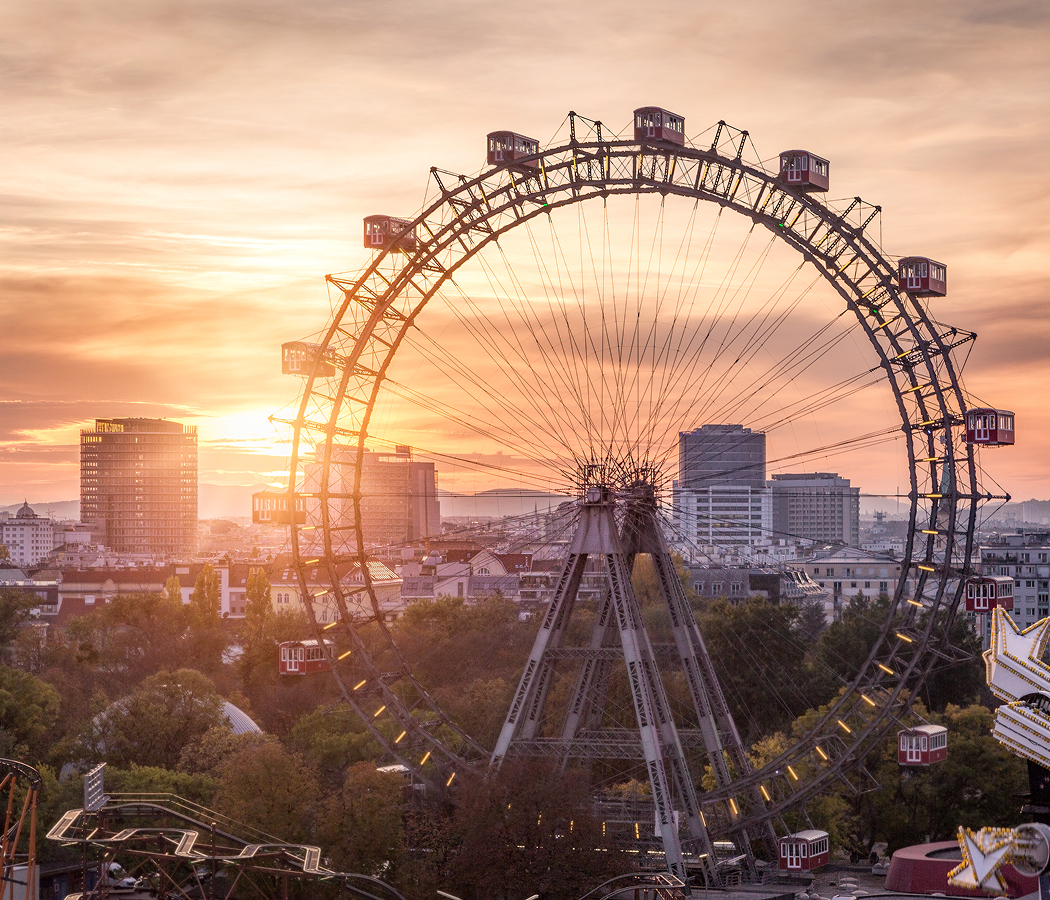
Prater is best known for transforming former Habsburg hunting grounds into one of Vienna's defining public landscapes and entertainment districts. Emperor Joseph II opened the Prater to the public in 1766, allowing restaurants, coffeehouses, amusements, and popular entertainment to develop within territory previously associated with aristocratic privilege. The 1873 Vienna World's Fair occupied an enormous section of the grounds and placed the city's industrial, architectural, and imperial ambitions before an international audience. Engineer Walter Bassett constructed the Wiener Riesenrad in 1897 for the golden jubilee of Emperor Franz Joseph I, creating the immense Ferris wheel that became the Prater's dominant structure. War damage destroyed much of the surrounding amusement district during 1945, yet the Riesenrad survived and returned to operation after reconstruction. The Prater joins imperial land policy, mass recreation, world-exposition culture, engineering, and modern Viennese popular life within a single historic landscape.
Day 1: Restaurant Konstantin Filippou
Restaurant Konstantin Filippou is best known for Konstantin Filippou's intensely personal cuisine shaped by Austrian ingredients and his Greek family heritage. Born in Graz to an Austrian mother and Greek father, Filippou developed his career through ambitious European kitchens before establishing his Vienna restaurant in 2013. Seafood occupies an unusually consequential position in his cooking, joined by vegetables, meat, offal, fermentation, concentrated broths, and preparations that draw connections between Central Europe and the Mediterranean. Filippou structures tasting menus around clarity of product and forceful flavor, giving his bicultural background a direct culinary expression. Two MICHELIN stars place the restaurant among Vienna's highest-ranked dining rooms, making Filippou one of the chefs who expanded the international style of contemporary Austrian gastronomy.
Day 2: St. Stephen's Cathedral
St. Stephen’s Cathedral is best known for embodying the religious and political history of Vienna through one of Central Europe's great Gothic structures. Earlier churches occupied the site before the Habsburg period brought major expansion, including the immense Gothic nave and the soaring south tower completed during the fifteenth century. Its multicolored tiled roof carries heraldic designs associated with Vienna and the Habsburg monarchy, making the cathedral immediately recognizable within the city's skyline. The catacombs and ducal crypt preserve connections with Habsburg burial traditions, and the cathedral became the seat of Vienna's bishopric during the fifteenth century. Fire during the final days of World War II devastated the roof and severely damaged the interior, prompting an extraordinary national reconstruction completed during the postwar period. St. Stephen's binds medieval craftsmanship, Habsburg authority, wartime destruction, and Austrian reconstruction to the physical center of Vienna.
Day 2: Steirereck
Steirereck is best known for Heinz Reitbauer's transformation of Austrian ingredients and regional culinary traditions into one of Europe's most accomplished contemporary cuisines. The Reitbauer family established the restaurant before Heinz assumed culinary leadership and deepened its engagement with Austria's farms, forests, lakes, alpine landscapes, and neglected food traditions. Freshwater fish, vegetables, herbs, grains, dairy, game, preserved ingredients, and rare regional products become the foundations for technically exact dishes whose character remains unmistakably Austrian. The restaurant's mirrored pavilion in Stadtpark places that culinary project within one of Vienna's great nineteenth-century public landscapes. Three MICHELIN stars in the 2026 guide place Steirereck at Austria's culinary summit, giving Vienna an internationally consequential restaurant built around the extraordinary agricultural diversity of the country itself.
Day 2: Schönbrunn Palace
Schönbrunn Palace is best known for monumentalizing Habsburg dynastic power through an immense Baroque summer residence and formal landscape west of Central Vienna. Johann Bernhard Fischer von Erlach developed an early design for Emperor Leopold I before Nikolaus Pacassi substantially reshaped the palace during the reign of Maria Theresa. The imperial family transformed Schönbrunn into a center of court life, diplomacy, ceremony, and dynastic politics during the eighteenth century. The Great Gallery, state apartments, gardens, Neptune Fountain, and Gloriette organized architecture and landscape around the representational requirements of monarchy. Napoleon occupied the palace during his campaigns against Austria, and Emperor Franz Joseph I was born and later died there. Schönbrunn became one of the principal physical records of a dynasty whose territories and political influence shaped Central Europe for centuries.
Day 2: Mraz & Sohn
Mraz & Sohn is best known for the Mraz family's rebellious transformation of fine dining into one of Vienna's most distinctive contemporary culinary institutions. Markus Mraz developed the restaurant before his sons Manuel and Lukas became integral to a family operation that rejected rigid formality in favor of highly technical cooking and an unusually spontaneous sequence of courses. Austrian products enter a kitchen comfortable with fermentation, seafood, vegetables, meat, sauces, and ideas drawn from culinary traditions far beyond Central Europe. The restaurant's location in Brigittenau places ambitious gastronomy beyond Vienna's conventional luxury-hotel and historic-center dining geography. Two MICHELIN stars in the 2026 guide affirm Mraz & Sohn's position among Austria's highest-ranked restaurants, giving Vienna a family-run counterpoint to the ceremonial traditions historically associated with the city's elite dining culture.
Day 3: Café Goldegg
Café Goldegg is best known for its historic Viennese coffeehouse traditions, distinctive Jugendstil interior, and longstanding association with the cultural life of Vienna's Wieden district. Established in 1910 by the Dobner family, the café occupies a prominent corner building on Argentinierstraße, near the historic gardens and Baroque architecture of Belvedere Palace. Its interior preserves an elaborate early twentieth-century decorative composition incorporating dark wood paneling, polished marble tables, green upholstered seating, brass chandeliers, and geometric ornamentation associated with Vienna's Secessionist design movement. The café developed during a period when Viennese coffeehouses served as important gathering places for writers, intellectuals, artists, and political organizations, establishing a distinctive relationship between everyday hospitality and the city's cultural development. During the Nazi era, Café Goldegg became associated with socialist resistance networks and persecuted trade unionists, adding a consequential chapter to its social history. A major restoration undertaken between 1988 and 1989 preserved the historic interior and renewed its architectural character. Its breakfast offerings incorporate traditional Viennese coffee preparations, freshly baked pastries, bread, eggs, and established Austrian café specialties, maintaining the culinary customs that distinguish the city's historic coffeehouse culture. Café Goldegg represents an exceptional surviving expression of Viennese Jugendstil hospitality through its architectural preservation, twentieth-century social history, and enduring contribution to Austria's celebrated café traditions.
Day 3: Belvedere Palace
Belvedere Palace is best known for joining Johann Lucas von Hildebrandt's Baroque architecture with the extraordinary art collection that includes Gustav Klimt's The Kiss. Prince Eugene of Savoy commissioned the palace complex after his military victories made him one of the Habsburg monarchy's most powerful figures. Lower Belvedere developed as his residential palace, and Upper Belvedere followed as a ceremonial structure positioned above formal gardens arranged across the sloping terrain. The Marble Hall of Upper Belvedere later became the setting for the signing of the Austrian State Treaty in 1955, restoring Austria's sovereignty after Allied occupation. Collections assembled within the complex subsequently made it a central institution for Austrian art, with Klimt, Egon Schiele, and other artists tracing Vienna's transformation around the turn of the twentieth century. Belvedere unites military patronage, Baroque architecture, modern art, and the political restoration of postwar Austria.
Day 3: Vienna State Opera
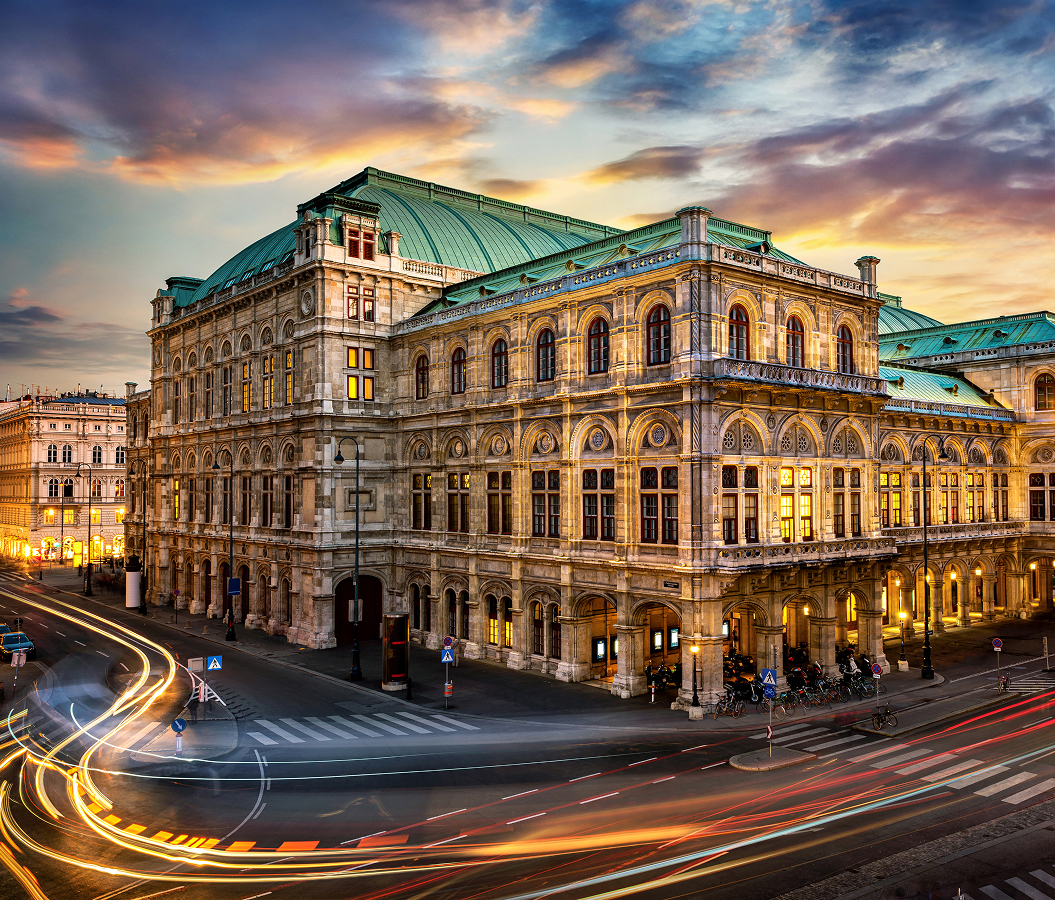
Vienna State Opera is best known for embodying Vienna's extraordinary operatic tradition within the grand Ringstrasse project that transformed the former imperial fortifications. Architects August Sicard von Sicardsburg and Eduard van der Nüll designed the Neo-Renaissance opera house as one of the first major public buildings on the new boulevard. The institution opened in 1869 with Mozart's Don Giovanni, linking the new theater immediately to the musical inheritance that had made Vienna a European capital of composition and performance. Gustav Mahler directed the company from 1897 to 1907, reforming staging, ensemble discipline, and production standards during one of its defining periods. Bombing and fire devastated the building in 1945, leaving the auditorium and stage destroyed before the reconstructed house reopened with Beethoven's Fidelio in 1955. The State Opera captures imperial urbanism, musical innovation, wartime destruction, and Austria's postwar cultural reconstruction.
Day 3: Silvio Nickol
Silvio Nickol is best known for Silvio Nickol's technically meticulous cuisine within the restored nineteenth-century Palais Coburg. Nickol developed his career in major German-speaking kitchens before assuming leadership of the restaurant in Vienna, where his cooking became defined by precision, concentrated sauces, exceptional ingredients, and tightly controlled tasting-menu experience. The Palais Coburg occupies part of Vienna's former fortification zone, incorporating historic defensive structures beneath a palace commissioned by Ferdinand of Saxe-Coburg and Gotha during the nineteenth century. Its celebrated wine cellars give the restaurant access to one of the city's most formidable collections, placing wine deeply within the culinary program. Two MICHELIN stars in the 2026 guide secure Silvio Nickol among Vienna's highest-ranked restaurants and connect contemporary Austrian fine dining with the aristocratic architecture of the former imperial capital.
Where your story begins.
Foresyte Travel reveals places that feel extraordinary long before you arrive.
Enjoy editorial crafted for luxury travelers.
Foresyte may earn a commission when you book.