Top places to stay in Thailand.
Phuket came from centuries of maritime commerce, mineral wealth, and connections across the Andaman Sea. Situated along trading routes linking the Malay Peninsula with India and China, the island attracted merchants seeking forest products, spices, and tin. Its position within the historical sphere of the Malay Peninsula encouraged cultural exchange among Thai, Chinese, Malay, and Indian communities. Tin mining expanded during the nineteenth century, bringing substantial Chinese immigration and creating commercial fortunes that transformed Phuket Town. Wealthy mining families commissioned elaborate residences and shophouses, establishing the architectural foundations of the island's historic urban center. The development of roads and harbor facilities strengthened connections between mining settlements and coastal trading communities. Tourism emerged gradually during the twentieth century as Phuket's beaches attracted adventurous travelers seeking relatively undeveloped tropical landscapes. Patong developed from a small coastal settlement into an important visitor destination during the 1970s, when modest guesthouses and beachfront businesses began serving international tourists. The opening of Phuket International Airport in 1976 accelerated accessibility and encouraged investment in larger accommodation properties. Club Med opened its Phuket resort at Kata Beach in 1985, introducing an influential international resort model centered on organized recreation and beachfront leisure. The opening of Amanpuri in 1988 established a defining moment in Asian luxury hospitality. Developed by Adrian Zecha and designed by Ed Tuttle, the resort introduced an intimate architectural vision inspired by traditional Thai pavilions, carefully landscaped tropical grounds, and secluded coastal surroundings. Its success helped establish Phuket as a destination for internationally distinguished luxury resorts. The Banyan Tree Phuket opened in 1994 within the Laguna Phuket development, introducing a prestigious villa-based resort experience associated with private pools and tropical garden settings. The Indian Ocean tsunami of December 2004 devastated several western coastal communities, bringing extensive reconstruction and renewed attention to disaster preparedness. Subsequent investment expanded the island's hospitality infrastructure through sophisticated beachfront properties, hillside retreats, and contemporary wellness resorts. Phuket's accommodation industry now encompasses intimate boutique hotels, internationally recognized luxury establishments, and extensive resort communities, reflecting a remarkable transition from maritime trading island and mining center to one of Southeast Asia's most influential coastal destinations.
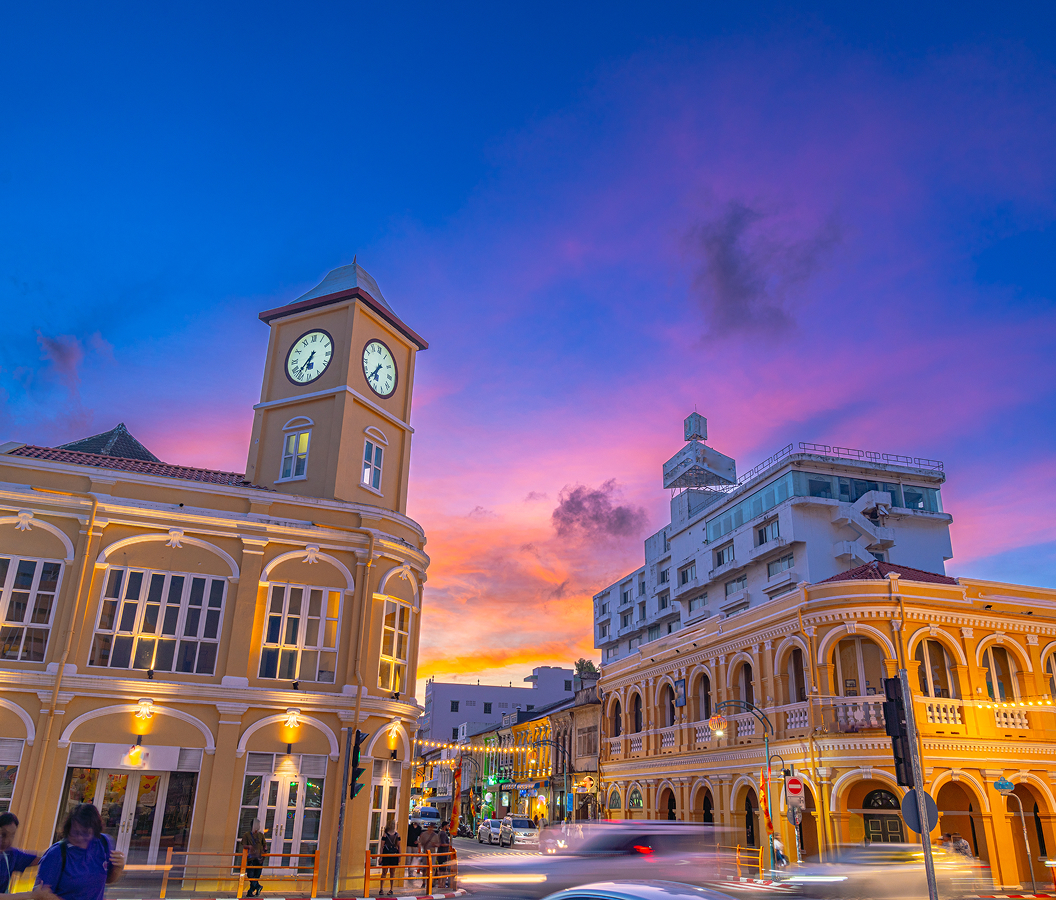
Phuket's hotel geography unfolds across a mountainous tropical island whose western coastline contains the principal resort districts, with forested headlands separating broad sandy bays and sheltered coves. Patong occupies a substantial crescent-shaped bay on the central western shore, where beachfront hotels, contemporary resort complexes, and dense commercial streets create the island's liveliest accommodation environment. Properties near the shoreline offer convenient access to restaurants, shopping, and nightlife, with elevated hillside establishments providing expansive views across the Andaman Sea. Southward, Karon Beach introduces a more spacious coastal setting through an extended shoreline bordered by substantial hotels, landscaped resort grounds, and established residential streets. Accommodation ranges from large international resorts to smaller boutique properties near neighborhood restaurants. The adjoining Kata Beach area occupies a sheltered bay framed by green hillsides, with intimate hotels and sophisticated resorts positioned near the sand and along elevated coastal roads. Its compact commercial center provides a walkable environment with cafés, restaurants, and recreational businesses. Farther south, Kata Noi presents a quieter luxury setting through a smaller bay enclosed by steep wooded slopes. Prestigious beachfront properties emphasize tropical gardens, expansive terraces, and uninterrupted ocean views. The southwestern headlands surrounding Nai Harn introduce another distinctive environment through secluded beaches, substantial private villas, and low-density resort accommodation near forested hillsides. North of Patong, Kamala Beach offers a more relaxed coastal atmosphere through traditional residential streets, beachfront restaurants, and substantial luxury developments. The surrounding hills contain exclusive villas and intimate retreats overlooking the bay. Farther north, Surin Beach occupies a prestigious stretch of coastline beneath wooded slopes, with sophisticated accommodation concentrated along nearby residential roads and elevated hillside sites. Bang Tao Beach extends across a particularly long shoreline, where substantial resort communities integrate luxury hotels, landscaped lagoons, residential villas, and golf facilities. The surrounding Cherng Talay area contains contemporary shopping districts, restaurants, and upscale residential developments supporting extended stays. Northward, Mai Khao Beach presents a quieter landscape through an extensive stretch of sand bordering protected coastal vegetation. Large luxury resorts occupy spacious properties with landscaped gardens and direct access to the shoreline. The nearby Nai Yang district offers a more informal atmosphere through smaller hotels, local restaurants, and proximity to Sirinat National Park. Across the island's eastern side, Phuket Town provides an entirely different accommodation experience through historic commercial streets, restored Sino-Portuguese buildings, and intimate boutique hotels. Its architectural character reflects generations of merchant wealth, with colorful façades, enclosed courtyards, and elaborate decorative details. Farther east, Cape Panwa occupies a secluded peninsula overlooking sheltered bays and offshore islands, with sophisticated resorts positioned among tropical gardens and elevated coastal terrain. Across Phuket, accommodation ranges from lively beachfront hotels and secluded luxury villas to historic urban boutiques and extensive integrated resorts, with the island's mountainous landscape creating exceptionally varied coastal settings. Foresyte may earn a commission when you book.
Foresyte Travel's top five choices.
5. Banyan Tree Phuket
Banyan Tree Phuket opened in 1994 within Laguna Phuket, the vast resort district created from an abandoned tin-mining landscape on the island's west coast. Ho Kwon Ping and Claire Chiang transformed heavily altered mining terrain into the foundation of Banyan Tree, establishing the property as the first resort of a company that subsequently expanded across Asia, the Middle East, Africa, and the Americas. Rehabilitation of the surrounding land introduced lagoons, vegetation, and new resort infrastructure across an area previously scarred by industrial extraction. The property's villa-based plan and emphasis on private pools became fundamental elements of Banyan Tree's subsequent resort model. Banyan Tree Phuket links the environmental rehabilitation of former mining land with the creation of one of Southeast Asia's most influential homegrown hospitality companies.
4. COMO Point Yamu
COMO Point Yamu occupies the tip of Cape Yamu on Phuket's eastern coast, where elevated terrain opens across Phang Nga Bay and its limestone islands. Italian designer Paola Navone shaped the interiors around white surfaces, turquoise accents, patterned tile, timber, and references to southern Thai craft, creating a distinctive counterpoint to the dense tropical vegetation outside. Architect Jean-Michel Gathy developed the property's long horizontal forms and extensive openings around the peninsula's unusual exposure to water on multiple sides. COMO Hotels and Resorts opened the hotel in 2013, extending Christina Ong's Singapore-based hospitality company into southern Thailand. Point Yamu turns the geography of an exposed promontory into the governing element of a resort defined by architecture, horizon, and the karst seascape of Phang Nga Bay.
3. Rosewood Phuket
Rosewood Phuket opened in 2017 along Emerald Bay on the island's southwestern coast, becoming the first Southeast Asian resort in the Hong Kong-founded company's portfolio. Bangkok-based architect firm A49 arranged the property across a steep tropical hillside descending toward the Andaman Sea, embedding low-rise structures within existing vegetation and the contours of the terrain. Interior design by BAR Studio incorporates timber, stone, woven materials, and work by Thai craftspeople into spaces closely connected with gardens and water. The resort formed an important stage in Rosewood's expansion under New World Hospitality and the Cheng family, whose acquisition of the brand in 2011 accelerated its international growth. Rosewood Phuket established a regional resort model centered on landscape integration, Thai craftsmanship, and low-density coastal architecture.
2. Sri Panwa Phuket Luxury Pool Villa Hotel
Sri Panwa occupies the crest and slopes of Cape Panwa, a forested peninsula projecting from Phuket's southeastern coast into the Andaman Sea. The property was developed by the Charn Issara family, whose Thai real-estate business expanded from urban development into hospitality through one of Phuket's most topographically ambitious resort sites. Villas descend across steep terrain and use broad glazing, terraces, and private pools to exploit the peninsula's elevation above surrounding bays and offshore islands. Baba Nest places a rooftop gathering space within an infinity-edge pool high above the cape, turning the uninterrupted marine horizon into the architectural centerpiece of the property. Sri Panwa represents a distinctly Thai-developed interpretation of Phuket resort architecture built around the dramatic geography of Cape Panwa.
1. Trisara Villas & Residences Phuket
Trisara opened in 2004 on Phuket's northwestern coast as the creation of hotelier Anthony Lark and developer Montara Hospitality Group. Its Sanskrit-derived name means “third garden in heaven,” framing a property conceived around a protected bay, dense tropical vegetation, and steep terrain descending toward the Andaman Sea. Architect Fredo Taffin arranged individual pavilions and residences across the hillside with private pools oriented toward the western horizon, establishing seclusion through topography and substantial separation between structures. The property subsequently became the setting for PRU, where chef Jimmy Ophorst developed a farm-connected culinary program that earned Thailand's first MICHELIN Green Star. Trisara joins low-density coastal planning, Thai ownership, and internationally recognized gastronomy within one of Phuket's most carefully controlled resort landscapes.
Where your story begins.
Foresyte Travel reveals places that feel extraordinary long before you arrive.
Enjoy editorial crafted for luxury travelers.
Foresyte may earn a commission when you book.