Fun facts about Monaco.
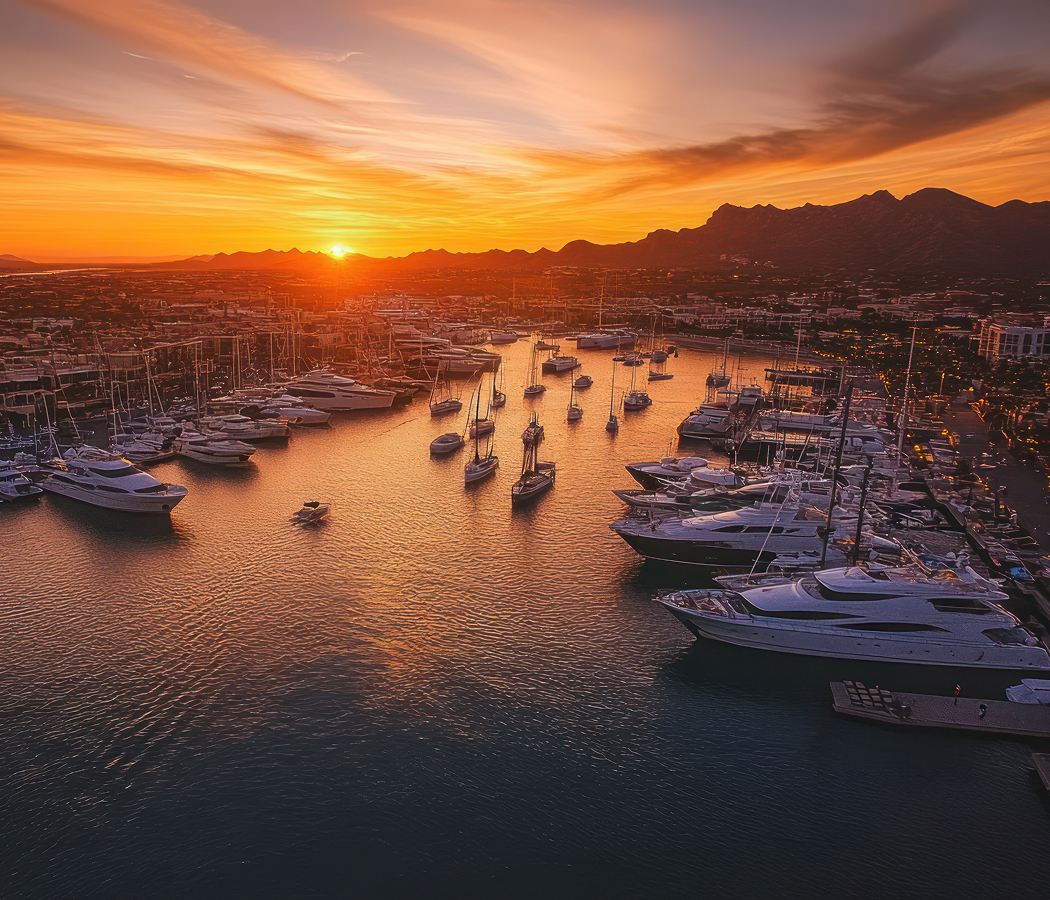
Monaco rises above the Mediterranean Sea on a series of steep coastal terraces, where expansive Belle Époque architecture, landscaped gardens, and contemporary high-rise development occupy one of Europe's most densely built urban environments. The district lies within the Principality of Monaco, bordered by the French Riviera and overlooking a narrow coastline framed by the Maritime Alps. Its topography consists of rocky slopes descending toward the harbor and sea, producing an intricate arrangement of elevated streets, stairways, tunnels, and terraced buildings. The Place du Casino forms Monaco's architectural and social center, an expansive public square surrounded by expansive hospitality buildings and carefully maintained gardens. The Casino de Monte-Carlo occupies the eastern side of the square, presenting an elaborate Belle Époque composition designed principally by Charles Garnier, whose work also includes the Palais Garnier in Paris. Its richly ornamented façade, sculptural details, and grand entrance establish a ceremonial approach to gaming rooms decorated with marble, gilding, frescoes, and chandeliers. The adjoining Opéra de Monte-Carlo, commonly called the Salle Garnier, extends the complex toward the Mediterranean through an ornate performance hall overlooking the coastline. Across the square, the Hôtel de Paris presents an expansive luxury hotel whose façade, balconies, and elaborate interior spaces reflect the architectural aspirations of nineteenth-century Riviera hospitality. The nearby Café de Paris occupies another prominent position within the square, connecting its historic restaurant and gaming facilities with the surrounding pedestrian environment. The landscaped Casino Gardens introduce formal planting beds, fountains, and sculptural features, creating a green setting between the casino complex and the surrounding urban streets. The district's principal commercial avenues extend through a network of steeply graded streets and elevated terraces, with luxury boutiques, apartment buildings, and hospitality properties concentrated around the central square. Avenue des Beaux-Arts and Avenue de Monte-Carlo form important connections between the casino district and the surrounding residential neighborhoods. Boulevard des Moulins follows an elevated route through commercial streets and substantial apartment buildings, reflecting the adaptation of urban development to Monaco's limited land area. Below the central district, Port Hercule occupies a sheltered natural harbor bordered by Monaco-Ville, La Condamine, and Monaco's western approaches. Its extensive marina facilities accommodate recreational vessels and large private yachts, with waterfront promenades connecting the harbor to surrounding commercial districts. The harbor also forms a defining setting for the Monaco Grand Prix, whose street circuit climbs from the waterfront through the district's steep roads and passes the casino before descending toward the Mediterranean. The famous Fairmont Hairpin, among the tightest corners in Formula One racing, demonstrates the unusual relationship between Monaco's transportation infrastructure and its international sporting prominence. East of the casino, the Larvotto district extends along the shoreline through contemporary residential towers, landscaped public spaces, and a developed beach facing the Mediterranean. The Grimaldi Forum occupies a prominent waterfront position nearby, presenting a contemporary glass-and-steel complex used for exhibitions, conferences, and performances. Above the coastline, the Japanese Garden combines traditional landscape principles with ponds, bridges, stone arrangements, and carefully maintained vegetation. The surrounding urban environment contains an exceptional concentration of residential towers and luxury developments, reflecting the principality's persistent demand for property within a restricted geographical area. Monaco's physical distinction arises from the close relationship between expansive resort architecture, steep Mediterranean topography, meticulously maintained public spaces, and infrastructure adapted to one of the world's most compact sovereign states.
Monégasque cultural traditions in Monaco developed through the convergence of Mediterranean court society, French artistic institutions, Italian influences, and the international audiences attracted by the principality's celebrated resort economy. The district's musical heritage is closely associated with the Opéra de Monte-Carlo, whose Salle Garnier opened in 1879 and quickly became an important destination for European opera and classical performance. The theater's intimate proportions and elaborate decorative program created a prestigious setting for productions supported by Monaco's ruling family and visiting patrons. Jules Massenet's opera Le jongleur de Notre-Dame premiered in Monte Carlo in 1902, followed by several other important works associated with the theater's early twentieth-century repertoire. The Ballets Russes established a particularly influential connection with Monaco through Sergei Diaghilev, whose company maintained important artistic relationships with Monaco during the early twentieth century. Following Diaghilev's death in 1929, successor ballet companies carried the Monte Carlo name into international performance history. The Ballets de Monte-Carlo, established in 1985 under the patronage of Princess Caroline, developed into a major contemporary ballet institution, particularly through the artistic direction of choreographer Jean-Christophe Maillot. The Orchestre Philharmonique de Monte-Carlo contributes another longstanding musical institution, performing orchestral repertoire and supporting the principality's operatic productions. Monaco's sporting traditions have achieved comparable international recognition through the Monaco Grand Prix, first held in 1929 and subsequently established as one of Formula One's most prestigious races. The event's narrow streets, elevation changes, and demanding corners have produced memorable performances by drivers including Ayrton Senna, whose six Monaco Grand Prix victories established an enduring record. The Monte-Carlo Rally, inaugurated in 1911, introduced another influential motorsport competition, combining long-distance driving with demanding mountain roads across the surrounding region. Tennis occupies an important place in the district's sporting heritage through the Monte-Carlo Masters, an established tournament on the professional men's circuit held at the Monte-Carlo Country Club in neighboring Roquebrune-Cap-Martin. The principality's cultural calendar also includes the Monte-Carlo Television Festival, founded by Prince Rainier III in 1961, which recognizes international television production and brings prominent figures from the entertainment industry to Monaco. The district's visual culture has long been associated with Belle Époque illustration, Riviera painting, and the decorative arts developed through luxury hospitality. Its architectural interiors preserve craftsmanship associated with French and Italian traditions, including ornamental plasterwork, gilded surfaces, elaborate textiles, and fine furniture. Monaco's culinary environment reflects the influence of Provençal, Ligurian, and broader Mediterranean cooking, supported by the principality's international restaurant culture. Traditional Monégasque dishes include barbagiuan, a fried pastry filled with Swiss chard, ricotta, and herbs, and stocafi, a preparation of dried cod cooked with tomatoes, vegetables, and aromatic ingredients. Local food traditions also incorporate olive oil, citrus, fresh seafood, and seasonal produce from the surrounding Riviera. The district's fine-dining institutions have contributed substantially to contemporary European gastronomy, particularly through Le Louis XV-Alain Ducasse at the Hôtel de Paris, which opened in 1987 and became an influential destination for Mediterranean haute cuisine. Its culinary approach emphasizes ingredients from the surrounding region, including vegetables, herbs, seafood, and olive oil. Monte Carlo's social traditions remain closely connected to formal hospitality, gala events, charitable celebrations, and international sporting occasions, preserving customs developed through more than a century of royal patronage and elite travel. The district's cultural influence reflects the sustained integration of opera, ballet, motorsport, gastronomy, and ceremonial hospitality within an urban environment originally conceived as a destination for Europe's wealthiest travelers.
Five fascinations.
5. Monte Carlo exists because Monaco needed a new economic engine.
During the nineteenth century, Monaco lost much of its surrounding territory and faced severe financial pressure. Prince Charles III and his mother, Princess Caroline, backed the development of a luxury resort centered on gaming to attract wealthy international visitors. The district that grew around the new casino was named Monte Carlo in honor of Charles III. Hotels, gardens, entertainment venues, and elegant residences followed as the principality reinvented itself around high-end tourism. One of Europe's most famous luxury districts emerged from an economic survival strategy that fundamentally reshaped Monaco's character and international reputation.
4. The Casino de Monte-Carlo helped finance the abolition of income tax in Monaco.
The Société des Bains de Mer developed the casino and surrounding resort enterprises into an extraordinary source of revenue during the nineteenth century. Under François Blanc, Monte Carlo became a fashionable destination for European aristocrats and wealthy travelers, bringing substantial income into the tiny principality. The success of the gaming economy allowed Charles III to abolish direct personal taxation in 1869. Monte Carlo's glamorous casino culture altered more than tourism: it helped establish an economic model that became fundamental to Monaco's later appeal as a residence for wealthy international citizens.
3. The architect of the Paris Opera designed Monte Carlo's celebrated opera house.
Charles Garnier, creator of the Palais Garnier in Paris, designed the lavish performance hall attached to the Casino de Monte-Carlo. Completed in 1879, the Salle Garnier compressed the theatrical opulence associated with his Paris masterpiece into a much smaller Mediterranean setting overlooking the sea. Gilding, frescoes, sculptural ornament, and elaborate decorative surfaces created a stage suited to the wealthy international clientele gathering in the principality. The venue subsequently hosted opera, ballet, concerts, and celebrated performers. Monte Carlo imported one of nineteenth-century Europe's defining architectural talents to give its emerging resort culture an institution of comparable artistic ambition.
2. Monte Carlo hosts a Formula One race on streets used by ordinary traffic.
The Monaco Grand Prix first took place in 1929 after Antony Noghès helped establish a race through the principality's existing streets. The circuit threads through Monte Carlo and neighboring districts using steep gradients, tight corners, tunnels, waterfront sections, and extraordinarily narrow passages that bear little resemblance to purpose-built racing facilities. Barriers, grandstands, pits, and other infrastructure temporarily transform the urban environment before ordinary street use returns. The race became one of motorsport's most celebrated events precisely because the city itself forms the circuit, turning Monaco's constrained geography into the defining technical challenge of the competition.
1. Monte Carlo's extraordinary density is built into steep terrain between mountains and the Mediterranean.
Monaco occupies an exceptionally small territory pressed between the Maritime Alps and the sea, leaving Monte Carlo with severe constraints on horizontal expansion. Development responded by moving vertically through towers, terraces, retaining structures, tunnels, elevators, escalators, and roads stacked across dramatic changes in elevation. Buildings rise directly above transportation infrastructure, gardens occupy engineered terraces, and pedestrian routes frequently shift between levels through mechanical connections. Monte Carlo's celebrated concentration of hotels, residences, entertainment, and public space reflects an extreme form of urban adaptation: luxury architecture and infrastructure have been compressed into a narrow strip of steep Mediterranean coastline.
Where your story begins.
Foresyte Travel reveals places that feel extraordinary long before you arrive.
Enjoy editorial crafted for luxury travelers.
Foresyte may earn a commission when you book.