Why Flagler Steakhouse matters.
Flagler Steakhouse is a distinguished American chophouse where Palm Beach's historic resort heritage meets The Breakers' tradition of premium beef, refined hospitality and the enduring relationship between championship golf and elegant dining.
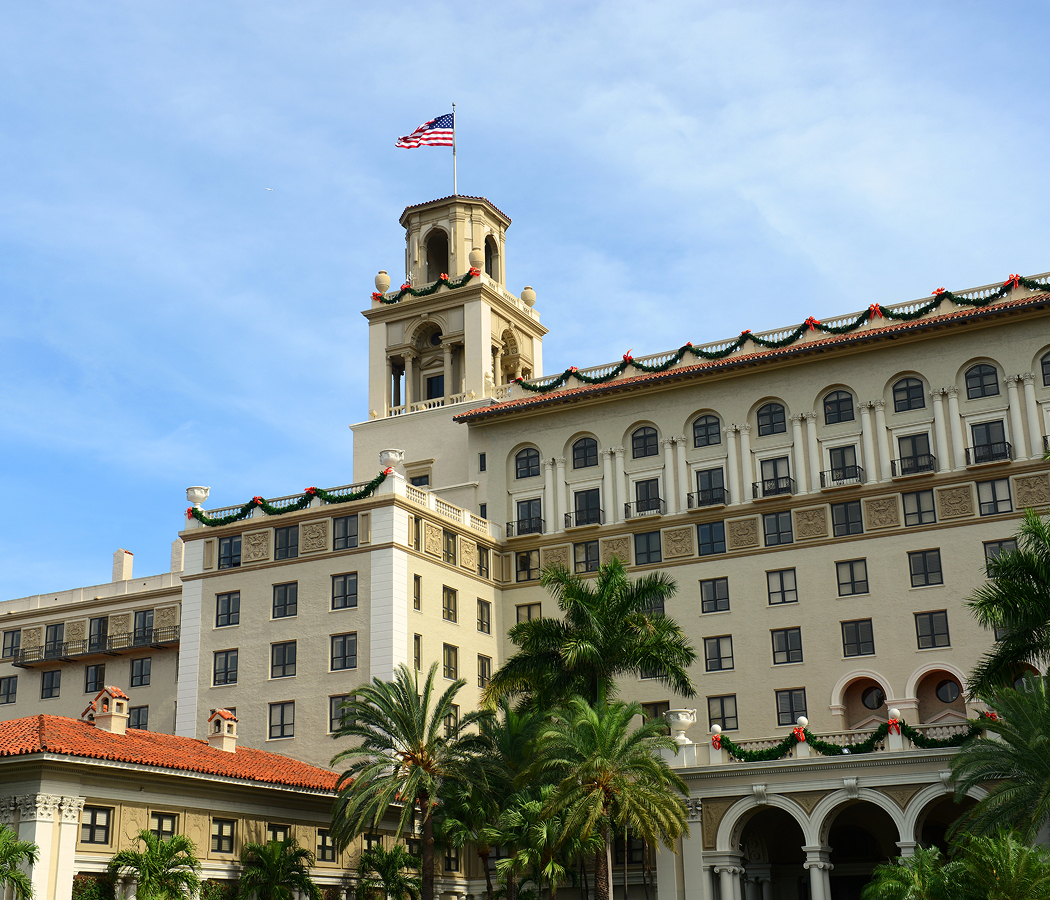
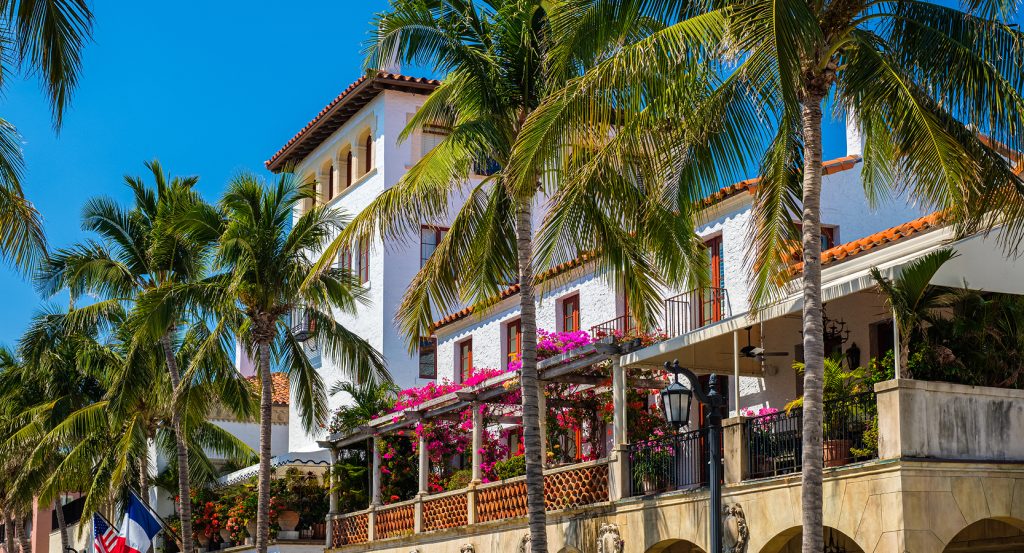
Positioned west of The Breakers' principal oceanfront hotel, near South County Road and Royal Poinciana Way, the restaurant occupies the upper level of the resort's Golf & Racquet Clubhouse overlooking the landscaped fairways of the Ocean Course. The clubhouse's estate-inspired architecture incorporates covered entrances, substantial windows and architectural detailing that complements the surrounding resort grounds. Inside, exposed ceiling beams, polished wood furnishings, oversized chandeliers and a carefully coordinated red, white and blue palette create a sophisticated interpretation of the traditional American steakhouse. An expansive outdoor terrace provides panoramic views across the golf course toward Palm Beach's residential skyline, connecting the dining room to the island's longstanding recreational culture. The result is an elegant chophouse whose architectural character, elevated terrace and intimate relationship with the historic golf course distinguish its setting within Palm Beach's established resort district.
What defines Flagler Steakhouse.
Flagler Steakhouse is best known for extending The Breakers' longstanding hospitality traditions into a dedicated American chophouse whose development connects Henry Morrison Flagler's establishment of Palm Beach as a luxury resort destination to the continuing evolution of the property's culinary program. Flagler developed his Florida hospitality interests during the late nineteenth century, combining investments in the Florida East Coast Railway with the construction of substantial hotels along the state's Atlantic coastline. His acquisition of a 140-acre Palm Beach property in 1893 provided the foundation for an ambitious resort complex connecting rail transportation, luxury accommodations and recreational facilities. The Royal Poinciana Hotel opened beside Lake Worth in February 1894, becoming one of the largest resort hotels of its period and attracting wealthy seasonal residents to the developing island community. Flagler subsequently opened the Palm Beach Inn in January 1896, creating an oceanfront counterpart that acquired the name The Breakers in 1901. The growing resort attracted prominent American families whose seasonal visits supported the development of Palm Beach's social institutions, private clubs and specialized commercial businesses. A major fire destroyed the original oceanfront hotel in 1903, prompting construction of a replacement that opened in February 1904. Another devastating fire in 1925 led to the construction of the surviving Italian Renaissance-inspired hotel designed by Schultze & Weaver, which opened in December 1926. The property's subsequent development incorporated additional restaurants, recreational facilities and extensive improvements under the ownership of Flagler's descendants. A dedicated Ocean Golf Clubhouse opened in 1966, strengthening the resort's relationship with golf and providing a distinct social setting for its recreational facilities. The Breakers subsequently undertook a five-year, $75 million improvement program during the 1990s, renewing significant portions of the property and expanding its restaurant collection. Flagler Steakhouse joined that collection in 1997, creating a specialized dining destination devoted to American steakhouse cooking. The restaurant's name honored the resort's founder and connected its culinary character to the historical development of Palm Beach hospitality. The original concept emphasized prime beef, substantial portions and attentive table service within a clubhouse environment associated with the resort's golf facilities. A new Golf & Tennis Clubhouse opened in 2001, providing an expanded architectural setting for the restaurant and the surrounding recreational operations. The clubhouse incorporated dedicated retail, locker facilities and dining areas, strengthening the connection between golf and hospitality across the property. The Breakers began a design partnership with Adam D. Tihany in 2012, introducing a series of interior projects intended to renew the resort's principal restaurants and public spaces. Flagler Steakhouse underwent a comprehensive interior transformation in 2013, with Tihany Design developing a more contemporary interpretation of the traditional chophouse. The project introduced a distinctive combination of tailored furnishings, decorative lighting and carefully selected artwork, establishing the restaurant's recognizable architectural character. The Breakers continued investing in its culinary operations through an extensive collection of independent restaurant concepts, maintaining Flagler Steakhouse as the principal destination for traditional steakhouse cooking within the resort. In June 2026, the restaurant temporarily closed as part of a substantial renovation of the Golf & Racquet Clubhouse, including improvements to its interior spaces and kitchen facilities. The project carries an anticipated reopening in November 2026, continuing the resort's longstanding practice of renewing its hospitality properties through successive architectural and operational improvements. Flagler Steakhouse's development connects the origins of American luxury resort dining to a specialized contemporary chophouse whose history remains closely associated with The Breakers and the recreational traditions of Palm Beach.
The Breakers' culinary approach at Flagler Steakhouse centers on USDA Prime beef, whose carefully selected marbling and consistent preparation provide the foundation for the restaurant's traditional American menu. Prime grading recognizes superior intramuscular fat distribution, giving selected cuts the capacity to develop tenderness and concentrated flavor during high-temperature cooking. The kitchen's signature bone-in filet mignon demonstrates that relationship through a cut prized for its naturally tender muscle structure and the additional flavor associated with cooking beside the bone. Controlled heat develops a browned exterior through the Maillard reaction, producing roasted flavors that contrast with the delicate texture of the interior. Rib-eye provides a richer alternative through substantial marbling, whose fat softens during cooking and contributes a fuller beef character. New York strip develops a firmer texture through its muscle structure, allowing direct heat to produce a pronounced crust around the meat's naturally substantial grain. The kitchen's approach to steak preparation emphasizes precise temperature control, resting and restrained seasoning, preserving the distinctive qualities of individual cuts. Traditional steakhouse accompaniments extend these preparations through vegetables, potatoes and carefully constructed sauces. Creamed spinach combines tender greens with a rich dairy foundation, creating a smooth accompaniment whose mild bitterness balances concentrated beef flavor. Brussels sprouts develop a contrasting character through roasting, which caramelizes their exterior leaves and softens the vegetable's natural sharpness. Potato preparations contribute additional richness through butter, cream and controlled cooking, complementing the browned surfaces of grilled meat. The restaurant's seafood program develops a parallel relationship between premium ingredients and classical American preparation. Colossal shrimp cocktail emphasizes the firm texture and natural sweetness of chilled shellfish, with a sharp cocktail sauce providing acidity and horseradish heat. Blue crab dumplings introduce a more elaborate preparation through delicate wrappers enclosing sweet crab, allowing the shellfish's restrained flavor to develop alongside carefully balanced seasoning. French onion soup provides a traditional opening through slowly caramelized onions, concentrated beef broth and a baked cheese topping. Extended cooking transforms the onions' natural sugars into deeper savory flavors, and the browned cheese creates a substantial contrast with the broth. Fresh fish extends the menu through preparations such as grilled Atlantic salmon, whose natural oils help preserve moisture during cooking. The kitchen's Italian specialties contribute another dimension through pasta and familiar Mediterranean ingredients, broadening the menu's culinary range within the established chophouse format. A chopped iceberg wedge salad provides a traditional steakhouse counterpoint through crisp lettuce, substantial dressing and savory garnishes. Its chilled vegetables and creamy texture create a refreshing opening before the richer preparations that follow. The dessert program continues the restaurant's connection to American culinary traditions through Key lime pie, whose concentrated citrus filling balances sweetness with the sharp acidity associated with Florida's signature dessert. A substantial cocktail and wine program complements the menu through classic spirits, carefully prepared mixed drinks and selections suited to the different intensities of beef and seafood. Red wines with developed tannin structure provide a traditional pairing for richly marbled steaks, and lighter selections complement fish and vegetable preparations. Flagler Steakhouse's culinary distinction develops through this sustained attention to premium ingredients, precise cooking temperatures and established American preparations, connecting the technical foundations of the traditional chophouse to the polished hospitality standards of The Breakers.
How Flagler Steakhouse fits.
Flagler Steakhouse works as the concluding destination for a northern Palm Beach itinerary connecting the island's early religious institutions, the architectural ambitions of its Gilded Age estates and the preservation of its historic residential landscape.
Begin at Basilica of Saint Edward, the historic Catholic church whose establishment accompanied the rapid expansion of Palm Beach's permanent and seasonal population during the Florida land boom. Jesuit priest Father Felix Clarkson received permission from the Bishop of St. Augustine in 1926 to purchase property for a new Catholic mission serving the island community. The acquisition cost $80,000, and construction began on Easter Sunday, April 4, 1926, following a fundraising campaign supported by 291 donors. The Spanish Renaissance-style church was completed in time for Midnight Mass on Christmas Day of the same year, bringing a substantial new religious institution to the northern portion of Palm Beach. Bishop Patrick Joseph Barry consecrated the building on February 13, 1927, strengthening its formal relationship with the Diocese of St. Augustine. The congregation subsequently expanded its facilities through a rectory completed in 1942 and a parish center developed after the acquisition of additional property in 1958. Continue to Henry Morrison Flagler Museum, the preserved Beaux-Arts residence whose construction demonstrated the architectural ambitions of Palm Beach's early resort development. Flagler commissioned architects John Carrère and Thomas Hastings to design Whitehall as a wedding present for his third wife, Mary Lily Kenan. Completed in 1902, the mansion incorporated an elaborate marble entrance hall, formal entertaining spaces and richly decorated interiors associated with the American Gilded Age. Its architectural program drew on European classical precedents, connecting the residence to the expansive domestic commissions undertaken for prominent American industrial families during the period. Following Flagler's death in 1913, the property underwent several changes, including its conversion into the Whitehall Hotel during the 1920s. Jean Flagler Matthews, the industrialist's granddaughter, acquired the estate in 1959 and organized its preservation, leading to the museum's opening in 1960. Conclude at Bethesda-by-the-Sea Episcopal Church, the Gothic Revival religious institution whose origins reach to the earliest years of Palm Beach's permanent settlement. The congregation began in 1889 under the leadership of Reverend Joseph N. Mulford, when a small group of worshippers gathered near Lake Worth. Its first chapel was a modest wooden structure, followed by a second church consecrated in 1896 as the community expanded alongside the island's developing resort economy. Architects Hiss and Weekes designed the surviving church, whose construction began in 1923 and culminated in the opening of its Gothic sanctuary in 1927. Pointed arches, stained glass, a prominent bell tower and carefully proportioned stonework connect the building to English ecclesiastical architectural traditions. The adjoining Cluett Memorial Garden contributes formal landscaping and secluded pathways, preserving a distinctive historic setting within the surrounding residential district. The progression moves from Basilica of Saint Edward's development during Palm Beach's land boom through Henry Morrison Flagler Museum's preservation of Gilded Age architecture and culminates in Bethesda-by-the-Sea Episcopal Church's connection to the island's earliest religious community, placing Flagler Steakhouse within the architectural and institutional heritage of northern Palm Beach.
Where your story begins.
Foresyte Travel reveals places that feel extraordinary long before you arrive.
Enjoy editorial crafted for luxury travelers.
Foresyte may earn a commission when you book.