Why Grassy Waters Preserve matters.
Grassy Waters Preserve is a freshwater wetland preserve where West Palm Beach's Everglades watershed meets the conservation of South Florida's native ecosystems, the protection of the city's drinking-water supply and the survival of a sawgrass marsh landscape shaped by centuries of seasonal flooding.
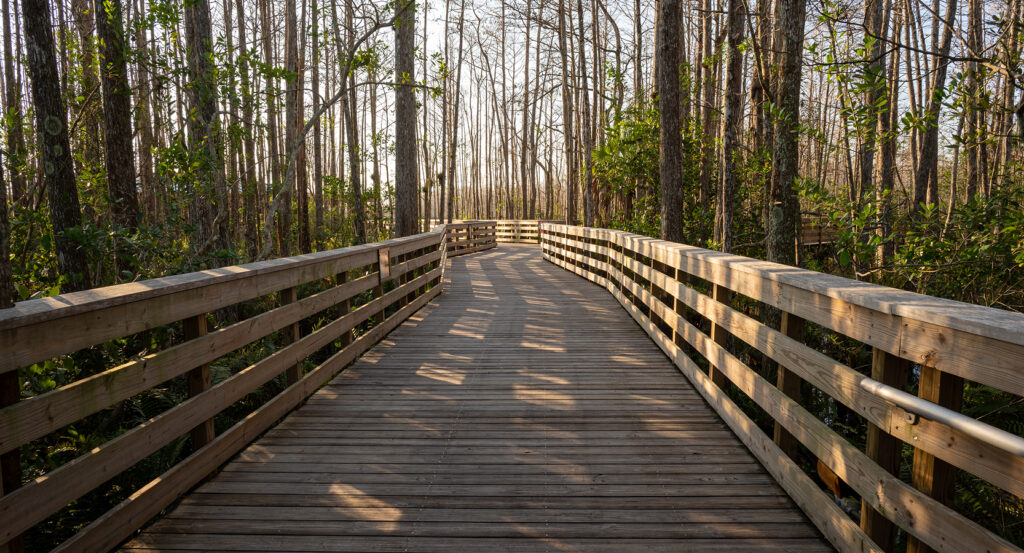
Stretching along Northlake Boulevard west of Beeline Highway and north of Okeechobee Boulevard, the preserve occupies an extensive freshwater wetland basin on West Palm Beach's western perimeter, between the city's suburban development and the agricultural and conservation lands extending toward the Loxahatchee watershed. Sawgrass marshes, tree islands and shallow waterways occupy a landscape governed by seasonal changes in water levels. Elevated boardwalks and observation platforms provide access to sections of the wetland while protecting sensitive vegetation. Cypress stands and open marshes support wildlife associated with the northern Everglades. The result is a protected freshwater landscape whose ecological functions, municipal water infrastructure and public access preserve an important remnant of southeastern Florida's historical wetlands.
What defines Grassy Waters Preserve.
Grassy Waters Preserve is best known for protecting a remnant of the northern Everglades, supplying freshwater to West Palm Beach and maintaining extensive habitat for native wetland wildlife. Before large-scale drainage altered southeastern Florida, the region formed part of a connected system of freshwater marshes, sloughs and seasonal wetlands extending through the Everglades watershed. Rainfall accumulated across the flat terrain, producing slow-moving sheets of water that supported sawgrass communities, cypress wetlands and scattered tree islands. The landscape was historically associated with the headwaters of the Loxahatchee River, whose freshwater flows sustained ecosystems extending toward the Atlantic coast. During the nineteenth and early twentieth centuries, agricultural development and settlement increased pressure to drain wetlands across Palm Beach County. Canal construction and water-control projects altered the movement of freshwater, separating substantial areas of marshland from their historical drainage patterns. West Palm Beach incorporated in 1894, and its subsequent growth created increasing demand for a dependable municipal water supply. The city developed water-management infrastructure associated with the western wetlands, preserving a substantial freshwater basin as part of its public utility system. The protected area became known as Grassy Waters, retaining extensive sawgrass marshes and cypress communities amid the transformation of surrounding land. During the twentieth century, regional drainage and urban expansion reduced wetland habitat across southeastern Florida, increasing the ecological importance of the remaining freshwater landscape. Conservation initiatives strengthened the protection of Grassy Waters as both a municipal water resource and a natural habitat. The preserve developed educational programs and recreational access facilities designed to introduce the public to the ecological processes of the northern Everglades. Its protected landscape extends across 23 square miles, supporting freshwater storage, wildlife habitat and environmental education within the municipal water catchment.
How Grassy Waters Preserve fits.
Grassy Waters Preserve works as the ecological centerpiece for a western Palm Beach County itinerary connecting Everglades wetlands, regional wildlife conservation and the restoration of South Florida's freshwater landscapes.
Begin at Arthur R. Marshall Loxahatchee National Wildlife Refuge, the protected Everglades landscape situated west of Boynton Beach. Established in 1951, the refuge preserves a substantial portion of the northern Everglades within Water Conservation Area 1. Its marshes, tree islands and cypress habitats support alligators, wading birds, turtles and other species associated with South Florida's freshwater ecosystems. The refuge is named for environmental scientist Arthur R. Marshall, whose work contributed to understanding the Everglades as an interconnected watershed. Boardwalks, observation areas and canoe trails provide access to different wetland habitats. The refuge's conservation programs address habitat management, invasive species and the protection of native wildlife. Continue to Wakodahatchee Wetlands, the constructed wetland habitat situated in Delray Beach. Developed by Palm Beach County Water Utilities in 1996, the property transforms highly treated wastewater into a resource supporting wetland vegetation and wildlife. A raised boardwalk passes through open-water ponds, marsh vegetation and nesting areas used by numerous bird species. Anhingas, cormorants, herons, egrets and other waterbirds occupy the habitat, with breeding activity concentrated around suitable nesting vegetation. The wetland demonstrates the integration of water treatment infrastructure with wildlife habitat creation. Its public access facilities support environmental education and observation of freshwater ecosystems. Conclude at Green Cay Nature Center and Wetlands, the constructed wetland and educational facility situated in Boynton Beach. Developed by Palm Beach County Water Utilities, the site incorporates restored wetland habitats created on former agricultural land. Its boardwalk system crosses open marshes, cypress stands and shallow ponds supporting birds, reptiles and aquatic wildlife. The nature center contains educational exhibits addressing South Florida's freshwater ecosystems, water conservation and habitat restoration. Interpretive programs connect the site's engineered water-management functions with the ecological requirements of native species. The progression moves from protected Everglades habitat through constructed wastewater wetlands and culminates in environmental education and freshwater restoration, connecting Grassy Waters Preserve with the conservation and water-management systems of Palm Beach County.
Where your story begins.
Foresyte Travel reveals places that feel extraordinary long before you arrive.
Enjoy editorial crafted for luxury travelers.