Why Cafe Boulud matters.
Cafe Boulud is a distinguished French-American restaurant where Palm Beach's historic resort culture meets Daniel Boulud's classical French cooking, international culinary influences and longstanding contribution to the island's fine-dining traditions.
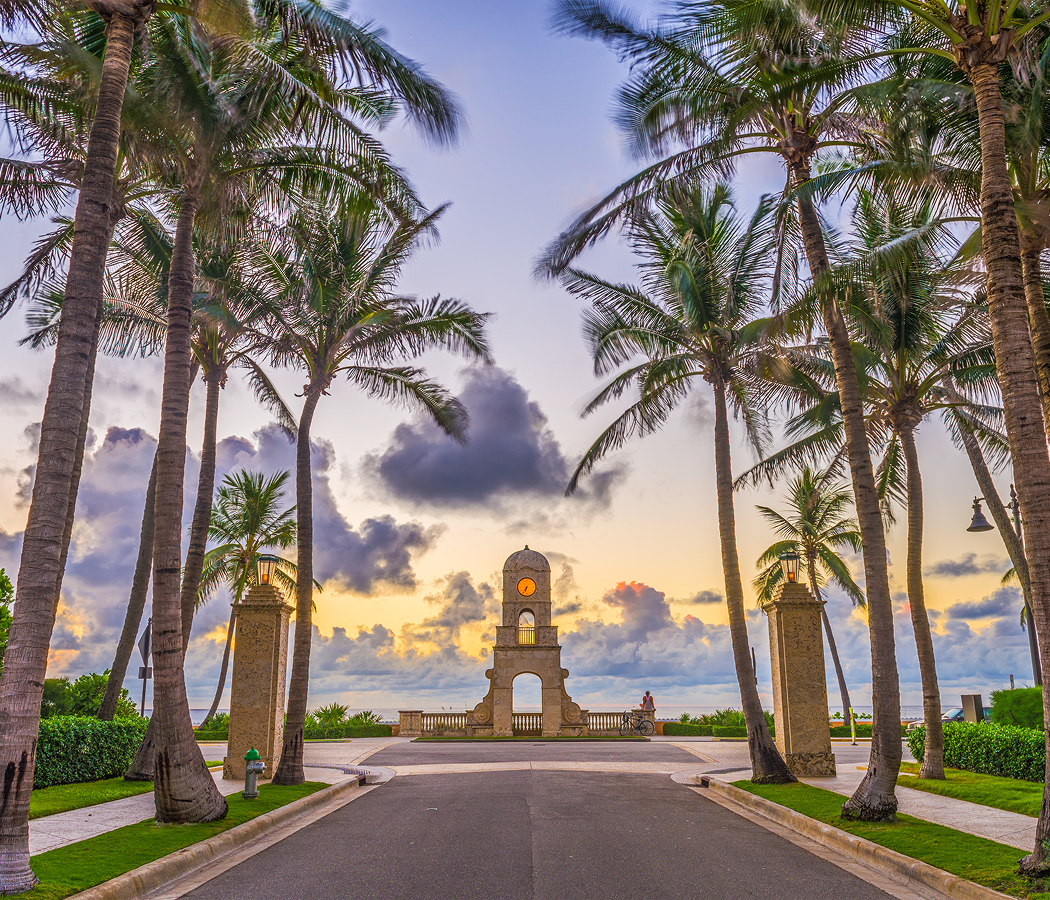
Occupying the ground level of The Brazilian Court Hotel near the intersection of Australian Avenue and South County Road, the restaurant stands between Worth Avenue's historic shopping district and the Atlantic shoreline, surrounded by Mediterranean Revival residences and established hospitality properties. Its dining room combines richly textured fabrics, upholstered seating, decorative lighting and carefully selected artwork within the hotel's intimate architectural setting. A landscaped courtyard terrace extends the restaurant outdoors, with tropical plantings, mature palms and fountains creating a sheltered dining area connected to the surrounding hotel gardens. The adjoining bar and lounge provide a more informal gathering place, and the restaurant's private dining spaces accommodate celebrations within the historic property. The result is an elegant restaurant whose refined interiors, tropical courtyard and architectural surroundings connect French culinary tradition to the established hospitality culture of Palm Beach.
What defines Cafe Boulud.
Cafe Boulud is best known for Daniel Boulud's introduction of his internationally acclaimed French restaurant concept to Palm Beach, creating a longstanding dining institution whose development connects the chef's Lyonnais upbringing, New York culinary achievements and the restoration of a historic Florida hotel. Boulud grew up on a farm outside Lyon, France, where his family's agricultural traditions introduced him to seasonal ingredients, livestock and the foundations of regional French cooking. He began his professional training as a teenager, developing his technical skills through apprenticeships in the kitchens of prominent French chefs. His early career included work with Roger Vergé at Moulin de Mougins and Michel Guérard at Les Prés d'Eugénie, exposing him to the refinement and lighter preparations associated with nouvelle cuisine. Boulud arrived in New York in 1982 and subsequently became executive chef of Le Cirque, the influential Manhattan restaurant whose international clientele and elaborate French cooking helped shape American fine dining during the 1980s. He opened Restaurant DANIEL in 1993, developing an independent restaurant organization that subsequently expanded through additional concepts and international locations. The original DANIEL property became Cafe Boulud in 1998, introducing a restaurant whose culinary structure drew on French tradition, seasonal vegetables, international influences and the chef's creative interpretations of familiar preparations. Boulud developed a personal connection to Palm Beach through regular visits and recognized an opportunity to extend the concept beyond Manhattan. His partnership with hotel owner Richard Schlesinger brought the restaurant to The Brazilian Court, a historic apartment hotel designed by architect Rosario Candela and completed in 1926. The property's Mediterranean Revival architecture, interior courtyards and established association with Palm Beach society provided the foundation for a restaurant connected to the island's resort heritage. Cafe Boulud opened in June 2003, becoming Boulud's first restaurant outside New York City and introducing one of the country's most prominent French chefs to the local dining community. The opening formed part of a substantial renovation of the hotel, which incorporated new dining facilities and expanded hospitality services into the historic property. Executive chef Zach Bell led the original kitchen, arriving from Cafe Boulud in New York after developing his professional career within Boulud's restaurant organization. Pastry chef Rémy Fünfrock and restaurant manager Philippe Langlois also transferred from New York, bringing established culinary and hospitality practices to the Florida operation. Bell subsequently became an important figure in South Florida's restaurant community, and the Palm Beach kitchen developed into a professional training ground for chefs who continued their careers throughout the region. Rick Mace later served as executive chef, strengthening the restaurant's relationship with Florida agriculture and locally sourced ingredients. The hotel underwent another substantial renovation in 2007, supported by an investment of $50 million that renewed its accommodations and public spaces. Cafe Boulud continued developing its reputation through seasonal menus, private events and an extensive wine program recognized by Wine Spectator with a Best of Award of Excellence. The restaurant celebrated its twentieth anniversary in January 2023, bringing together former executive chefs Zach Bell and Rick Mace with their successor Dieter Samijn for a commemorative event. Samijn, a Belgian chef whose professional background included work with Alain Ducasse, Peter Goossens and Bart Vandaele, had joined the restaurant in 2021 after working within Boulud's New York organization. Christopher Zabita assumed executive chef responsibilities in the 2025 season, becoming the fifth chef to lead the Palm Beach kitchen. A New Jersey native, Zabita developed his career through Disney's Victoria & Albert's, Restaurant Marc Forgione, Bar Boulud and other prominent kitchens, bringing extensive experience in French technique and Italian cooking. The restaurant completed another interior renewal in autumn 2025, incorporating updated fabrics and finishes inspired by South Florida's natural surroundings. More than two decades after its opening, Cafe Boulud occupies a consequential position in Palm Beach dining, connecting an internationally influential French chef to the architectural heritage and hospitality traditions of the island.
Zabita's cooking develops Daniel Boulud's classical French foundations through seasonal Florida ingredients, carefully constructed sauces and preparations that draw on the culinary traditions of several regions. The menu retains a recognizable French structure, moving between vegetables, seafood, charcuterie, substantial meat preparations and composed desserts. Its treatment of seasonal produce demonstrates the relationship between ingredient selection and precise technique, with vegetables prepared to preserve their natural sweetness, acidity and texture. Heirloom tomatoes receive a Mediterranean treatment through burrata, arugula pesto and watercress, combining the fruit's acidity with the richness of fresh cheese and the aromatic intensity of herbs. A green gazpacho develops a contrasting preparation through cucumber, green tomato and Marcona almonds, allowing the vegetables' freshness to balance the nuts' delicate richness. The kitchen's charcuterie program extends the French foundations through house-made pâtés and cured meats, whose preparation depends on careful seasoning, controlled texture and the preservation of traditional techniques. Foie gras torchon introduces another classical preparation, with gently cooked liver shaped into a smooth cylinder and accompanied by raspberry and charcoal brioche. The fruit's acidity balances the foie gras's richness, and the bread contributes a contrasting toasted character. Seafood receives particular attention through ingredients associated with South Florida and the broader Atlantic coast. Chilled octopus carpaccio combines the shellfish's firm texture with blood orange and charred jalapeño crema, developing a relationship between citrus sweetness, acidity and restrained chile heat. Bluefin tuna tartare introduces cucumber and Aleppo-seasoned socca, connecting delicately prepared fish to the chickpea-based cooking traditions of southern France. The kitchen's interpretation of sole meunière preserves one of French cuisine's established seafood techniques, allowing pan-cooked fish to develop alongside the richness of butter and the brightness of lemon. Daniel's loup en paupiette provides a more elaborate preparation through sea bass enclosed in a delicate potato crust, with leeks and sauce meurette contributing sweetness and concentrated savory depth. The potato develops a crisp exterior during cooking, protecting the fish's tender flesh and creating a contrast between the two textures. Florida red snapper receives a different treatment through green curry, tempura shrimp and avocado chutney, bringing Southeast Asian seasoning into the restaurant's broader French culinary structure. Zabita's Italian background contributes a complementary dimension through house-made pasta, including lobster lumache with eggplant sugo, fennel and cuttlefish. The curved pasta captures sauce within its interior, concentrating the flavor of the seafood and vegetables through successive bites. His duck preparations demonstrate a similar interest in balancing richness and acidity, with glazed duck accompanied by seasonal fruit, vegetables and a carefully reduced gastrique. The restaurant's beef program extends the classical approach through New York strip, short rib ravioli, trumpet mushrooms and bordelaise sauce, connecting grilled meat to the concentrated flavor of wine-based reduction. The dining program also includes a six-course tasting menu, allowing the kitchen to develop a longer sequence of seasonal preparations through carefully controlled changes in richness and texture. Wine pairings extend these relationships through selections chosen to complement the acidity, weight and aromatic character of individual dishes. The cellar's international breadth supports both established French regions and producers from other major wine-growing countries. Cafe Boulud's culinary distinction develops through this sustained relationship between French technique, seasonal Florida produce, international ingredients and precise sauce preparation, preserving the character of Boulud's original concept through the contributions of successive executive chefs.
How Cafe Boulud fits.
Cafe Boulud works as the concluding destination for a Palm Beach itinerary connecting the island's Gilded Age architecture, the development of its cultural institutions and the preservation of its historic commercial district.
Begin at Henry Morrison Flagler Museum, the preserved residence of the railroad developer and industrialist whose investments transformed Palm Beach into a major American winter resort. Henry Flagler commissioned architects John Carrère and Thomas Hastings to design Whitehall as a wedding present for his third wife, Mary Lily Kenan. Completed in 1902, the Beaux-Arts mansion contained seventy-five rooms and incorporated elaborate decorative craftsmanship, marble interiors and extensive formal entertaining spaces. The residence subsequently became the Whitehall Hotel during the 1920s, undergoing alterations associated with its conversion into commercial accommodations. Flagler's granddaughter Jean Flagler Matthews acquired the property in 1959 and organized its preservation, leading to the museum's opening in 1960. The institution preserves furnishings, historical artifacts and exhibitions associated with Flagler's development of Florida's railroad network and resort communities. Continue to The Society of the Four Arts, the cultural institution founded in 1936 to advance music, literature, drama and the visual arts within Palm Beach. Its founders included prominent seasonal residents who sought to create a permanent organization devoted to exhibitions, performances and educational programming. The institution developed a campus overlooking the Intracoastal Waterway, incorporating galleries, an auditorium, libraries and landscaped gardens. Architect Maurice Fatio designed the original library building, contributing a Mediterranean-inspired architectural character to the developing cultural complex. The Four Arts Demonstration Garden opened in 1938, presenting plants adapted to South Florida's subtropical climate through a series of carefully arranged garden spaces. The Philip Hulitar Sculpture Garden subsequently expanded the campus's outdoor collection, creating a setting for sculpture amid formal landscaping and mature tropical vegetation. Conclude at Worth Avenue, the historic shopping corridor whose architectural development helped establish Palm Beach as an internationally recognized center of luxury retail. The street's commercial transformation accelerated following the construction of the Everglades Club in 1918, a project associated with Paris Singer and architect Addison Mizner. Mizner's subsequent commercial developments introduced Mediterranean Revival buildings, covered arcades and intimate pedestrian courtyards that shaped the surrounding district. Via Mizner, developed during the 1920s, incorporated shops, workshops and the architect's personal residence within a connected arrangement of passages and terraces. Additional commercial buildings extended this architectural character through decorative stonework, tiled roofs and landscaped courtyards, attracting prominent retailers during the following decades. The avenue's four-block route between the Intracoastal Waterway and the Atlantic Ocean preserves an important concentration of the architecture associated with Palm Beach's early resort development. The progression moves from Henry Morrison Flagler Museum's Gilded Age architectural heritage through The Society of the Four Arts' cultural development and culminates in Worth Avenue's historic commercial district, placing Cafe Boulud within the architectural and institutional traditions that shaped Palm Beach.
Where your story begins.
Foresyte Travel reveals places that feel extraordinary long before you arrive.
Enjoy editorial crafted for luxury travelers.
Foresyte may earn a commission when you book.