Why The Scotch Whisky Experience matters.
The Scotch Whisky Experience is a distinctive whisky heritage attraction where Old Town's historic commercial character meets Scotland's centuries-old distilling traditions, the regional diversity of its single malts and the craftsmanship that established Scotch whisky as an internationally recognized expression of Scottish agriculture and industry.
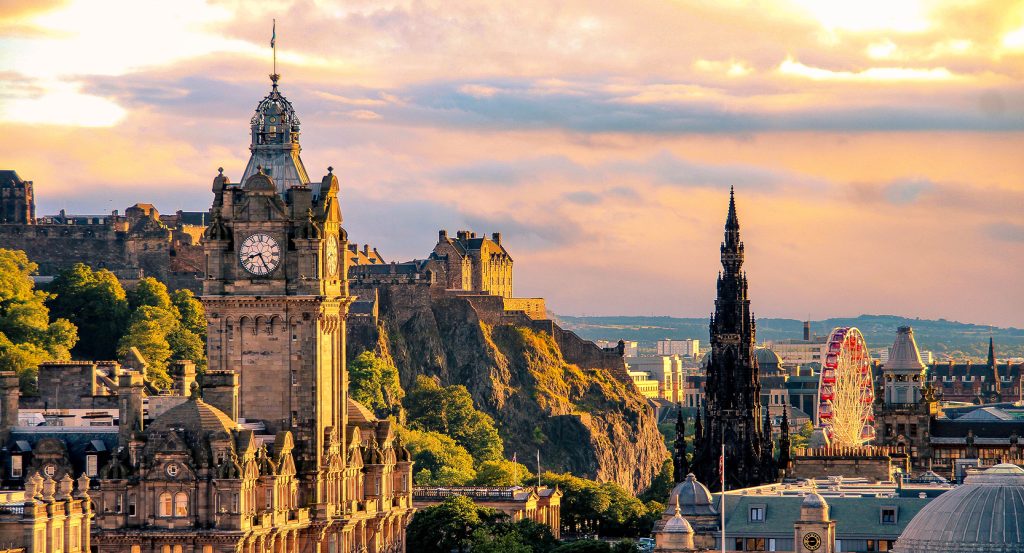
Set along Castlehill near the upper end of the Royal Mile, the attraction occupies a substantial historic building on the southern side of Edinburgh's principal medieval thoroughfare, positioned between the fortified heights of Castle Rock and the descending streets that connect the city's former royal, ecclesiastical and commercial institutions. Its sandstone frontage follows the established building line of Castlehill, with traditional masonry and vertically arranged windows preserving the scale of the surrounding streetscape. Interior exhibition spaces accommodate interpretive installations, whisky collections and specialist tasting rooms arranged across several levels. A dedicated restaurant extends the building's connection with Scottish food and drink through contemporary dining facilities. The result is a concentrated cultural institution that connects Edinburgh's historic urban setting with the production, regional character and commercial development of Scotland's national spirit.
What defines The Scotch Whisky Experience.
The Scotch Whisky Experience is best known for presenting the history and production of Scotch whisky through guided interpretation, physical demonstrations and one of the world's largest collections of unopened Scotch whisky bottles. The attraction opened in 1988 as the Scotch Whisky Heritage Centre, established through cooperation among major companies within Scotland's whisky industry. Its creation followed a period of substantial change in Scotch whisky production, when established distilling companies sought to strengthen public understanding of the spirit's regional traditions and manufacturing methods. The participating businesses recognized Edinburgh's importance as an international visitor destination and selected Castlehill as a setting for an educational institution dedicated to the industry. The center introduced a structured presentation of whisky production, connecting agricultural raw materials with the technical processes of malting, fermentation, distillation and maturation. Its original exhibitions incorporated audiovisual interpretation and displays designed to explain the differences between Scotch whisky's principal producing regions. The attraction subsequently expanded its educational activities as international interest in single malt whisky increased during the late twentieth century. Its development coincided with growing recognition of distillery heritage, specialist whisky collecting and the importance of regional production characteristics within the international spirits market. In 2009, the institution introduced the Diageo Claive Vidiz Scotch Whisky Collection, an extensive assemblage of unopened bottles accumulated by Brazilian collector Claive Vidiz. Vidiz began collecting Scotch whisky during the 1970s, eventually assembling 3,384 bottles representing numerous distilleries, brands and historical bottlings. Diageo acquired the collection and arranged its permanent exhibition in Edinburgh, creating a substantial public presentation of the industry's commercial and packaging history. The collection includes rare bottles, discontinued expressions and examples of changing label designs, demonstrating the development of Scotch whisky as an internationally traded product. The attraction adopted the name The Scotch Whisky Experience, emphasizing its broader educational and interpretive activities. Its contemporary operations include guided tours, structured tastings, specialist whisky education and dining facilities associated with Scottish produce. The institution's continued development connects the technical history of distilling with the commercial achievements and regional traditions that distinguish Scotland's whisky industry.
How The Scotch Whisky Experience fits.
The Scotch Whisky Experience works as the culinary heritage anchor for an Edinburgh outing connecting Scotland's historic commercial institutions, the development of its national collections and the architectural legacy of the city's Enlightenment-era cultural institutions.
Begin at the Museum on the Mound, housed within the former Bank of Scotland headquarters overlooking Edinburgh's central valley. The building developed during the nineteenth century as an important financial institution, occupying a prominent position between the Old Town and the expanding commercial districts of the Georgian capital. Its collections examine the history of Scottish money, banking and economic exchange through coins, banknotes, financial documents and historical objects. Exhibits explore the development of banking institutions and the practical systems that supported commerce across Scotland. The museum establishes a connection between Edinburgh's financial history and the commercial networks that supported Scottish manufacturing and international trade. Continue to the National Museum of Scotland, situated on Chambers Street within a substantial complex combining Victorian and contemporary museum architecture. Its collections cover Scottish history, natural sciences, technology and world cultures, incorporating objects associated with industrial development and scientific achievement. The Victorian Grand Gallery, designed by Francis Fowke, opened in 1866 and preserves an expansive iron-and-glass interior characteristic of nineteenth-century museum construction. Exhibitions devoted to Scotland's industrial history examine technological innovation, manufacturing and the changing organization of economic life. The museum provides a broader perspective on the scientific and commercial developments that influenced the country's agricultural and manufacturing industries. Conclude at the Scottish National Gallery, the neoclassical art museum situated on the Mound between Edinburgh's Old and New Towns. Designed by William Henry Playfair and opened in 1859, the building incorporates an expansive classical exterior and carefully arranged galleries devoted to European painting and sculpture. Its collections include major works by Scottish artists alongside paintings by Titian, Rembrandt, Velázquez and other European masters. The institution developed during Edinburgh's nineteenth-century cultural expansion, establishing a permanent public setting for important artistic collections. The progression moves from the Museum on the Mound's financial history through the National Museum of Scotland's industrial collections and culminates at the Scottish National Gallery's artistic heritage, connecting The Scotch Whisky Experience with the economic and cultural institutions that shaped modern Scotland.
Where your story begins.
Foresyte Travel reveals places that feel extraordinary long before you arrive.
Enjoy editorial crafted for luxury travelers.