Why Smyth matters.
Smyth is an refined fine-dining restaurant where West Loop's industrial heritage meets the culinary partnership of John Shields and Karen Urie Shields, the agricultural traditions of rural Virginia and Chicago's ascent to the highest ranks of international gastronomy.
Set along North Ada Street near West Lake Street and just steps from the Fulton Market District, the restaurant occupies the upper level of a converted commercial building within the West Loop's historic warehouse landscape, surrounded by former industrial properties, contemporary residences and the neighborhood's celebrated dining establishments. An intimate dining room combines warm wood surfaces, upholstered seating and restrained decorative details, establishing a residential atmosphere around an open kitchen where the preparation of successive courses becomes part of the evening's visual composition. The counter provides an immediate view of the chefs' movements, with carefully arranged workstations and understated lighting emphasizing the precision of individual preparations. The lower level houses The Loyalist, a companion restaurant whose more informal dining room gives the building a complementary culinary character beneath the principal restaurant. The result is a dining destination whose intimate architectural setting, direct relationship between chefs and diners and position within Chicago's transformed industrial district provide an exceptional stage for contemporary American cuisine.
What defines Smyth.
Smyth is best known for becoming Chicago's only three-MICHELIN-starred restaurant and establishing an internationally influential approach to American fine dining through the creative partnership of husband-and-wife chefs John Shields and Karen Urie Shields. The couple first met in 2003 at Charlie Trotter's celebrated Chicago restaurant, where John worked as sous chef and Karen served as head pastry chef. John's subsequent career included Alinea, where he developed his technical approach to contemporary cooking under Grant Achatz, before returning to Charlie Trotter's and beginning a personal relationship with Karen in 2007. Their professional partnership subsequently brought them to Town House in Chilhowie, Virginia, where they transformed a small restaurant into an ambitious culinary destination shaped by the agricultural landscape of the Appalachian region. Town House developed a national reputation for unconventional ingredient combinations, intricate preparations and close relationships with regional producers, bringing international culinary attention to a rural community far removed from America's established fine-dining centers. The couple's work in Virginia established a lasting relationship with the surrounding farms, including a productive connection with agricultural collaborators whose seasonal harvests influenced the structure of their cooking. After leaving Town House, the Shields returned to Chicago and developed a restaurant project that would combine their respective strengths in savory cuisine and pastry within a shared culinary program. Fellow Chicago chef Bill Kim helped direct John toward a vacant commercial property on North Ada Street, where the couple established two complementary restaurants within the same building. The Loyalist opened during the summer of 2016, followed by Smyth in August, with the fine-dining restaurant taking its name from Smyth County, Virginia, in recognition of the couple's formative years in Appalachia. MICHELIN awarded the restaurant two stars in 2017, placing the young establishment among Chicago's most distinguished dining destinations shortly after its opening. The restaurant received its third MICHELIN star in November 2023, becoming one of a small group of American establishments to achieve the guide's highest distinction. The recognition marked a major achievement for the Shields' collaboration, connecting their early work in Chicago's most demanding kitchens to an independent restaurant built around their own agricultural relationships and creative decisions. In May 2026, North America's 50 Best Restaurants named Smyth the Best Restaurant in North America, extending its international standing through another major culinary distinction. The restaurant's first decade traced an exceptional progression from an independent West Loop opening to the highest levels of American gastronomic recognition.
John Shields' kitchen develops its distinctive culinary character through the concentrated flavors of exceptional North American ingredients, elaborate fermentation techniques and unconventional combinations that reveal unexpected relationships between sweetness, acidity, bitterness and savory richness. The tasting menu changes with the agricultural calendar, drawing on products supplied by farmers, fishermen, foragers and specialized producers whose work determines the ingredients available for individual preparations. Delicate seafood courses introduce the kitchen's precision through controlled curing, gentle cooking and carefully balanced accompaniments, allowing the natural texture of shellfish and fish to remain central to the composition. A gently smoked quail egg topped with caviar and barley caramel exemplifies the restaurant's willingness to combine luxurious ingredients with flavors drawn from grain, smoke and carefully developed sweetness. Maine sea urchin paired with peach gel and wasabi cream creates a similarly intricate relationship between oceanic richness, fruit acidity and restrained heat, using contrasting elements to sharpen the flavor of the central ingredient. Dungeness crab preparations develop the same technical approach through concentrated shellfish flavor, delicate textures and carefully controlled garnishes. Richer courses have incorporated wagyu accompanied by a truffle-flavored doughnut and marrow glaze, bringing the intensity of beef into conversation with pastry technique and deeply savory reductions. Karen Urie Shields extends these ideas into desserts that challenge conventional divisions between sweet and savory cooking, including a warm chocolate tart incorporating maitake mushrooms and preparations built around fermented ingredients, grains and carefully controlled sweetness. Her pastry work draws on the same agricultural relationships as the savory kitchen, creating a coherent progression from the opening courses through the final desserts. Wine director Louis Fabbrini complements the menu through small-production wines, regenerative agriculture and producers working with minimal intervention, developing pairings that respond to the unusual acidity, fermentation and aromatic complexity of individual dishes. The dining room's restrained service choreography allows these preparations to unfold with exceptional precision, creating an intimate culinary encounter whose complexity emerges through the interaction of ingredients, technique and the creative partnership at the center of the kitchen.
How Smyth fits.
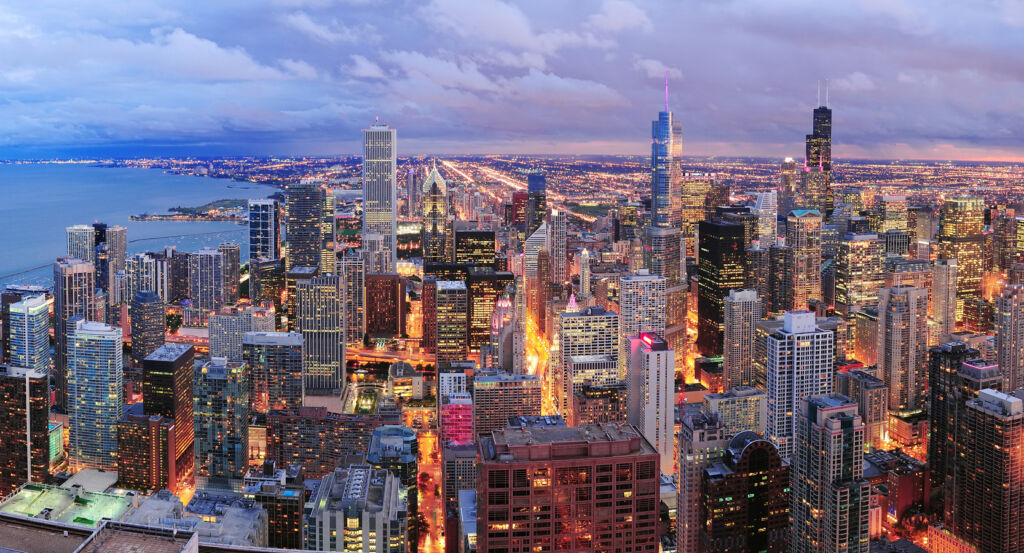
Smyth works as the culinary centerpiece for an outing connecting the West Loop's transformation from industrial commerce into a residential neighborhood, the preservation of Chicago's historic food-distribution architecture and the immigrant cultural institutions that shaped the surrounding Near West Side.
Begin at Mary Bartelme Park, the contemporary public landscape developed on the former site of a medical institution serving Chicago's Near West Side. The Chicago Park District acquired the property from the University of Illinois in 2006 and commissioned site design group to transform the former institutional land into a major neighborhood gathering space. Completed in 2010, the park incorporates three intersecting diagonal pathways that organize a series of landscaped areas, including a central lawn, sunken garden and elevated viewing mound. Five stainless steel gateway arches release fine water mist above the northwest entrance, introducing a sculptural element that connects environmental engineering with public recreation. The park honors Mary Bartelme, the pioneering Illinois jurist whose work in the juvenile justice system advanced the treatment of women and children during the early twentieth century. Continue to Fulton-Randolph Market District, the historic commercial landscape that preserves the architectural inheritance of Chicago's wholesale food industry. The district developed during the nineteenth century as a center for produce distribution, meatpacking and related commercial activities, taking advantage of the city's expanding railroad network and its position within the agricultural economy of the American Midwest. Major meatpacking companies including Armour, Swift and Morris established operations in the area, connecting the neighborhood's warehouses and loading facilities to national systems of food production and distribution. The surviving streetscape contains brick warehouses, industrial lofts and commercial buildings whose broad loading entrances and utilitarian construction reflect the requirements of wholesale commerce. Chicago designated the Fulton-Randolph Market District a municipal landmark district in May 2015, protecting a substantial collection of historic buildings during the neighborhood's transformation into a center for restaurants, technology companies and residential development. Conclude at National Hellenic Museum, the major cultural institution devoted to Greek history and the contributions of Greek immigrants to American life. Founded in 1983 as the Hellenic Museum and Cultural Center, the organization developed through successive locations before establishing its permanent Greektown home in December 2011. Greek American architect Demetrios Stavrianos of RTKL Associates designed the four-story museum, drawing inspiration from the monasteries of Meteora through a composition of limestone, glass and elevated architectural forms. Its collections contain thousands of historical artifacts, photographs and oral histories exploring Greek immigration, cultural preservation and the relationship between the ancient Mediterranean world and contemporary American society. The progression moves from Mary Bartelme Park's contemporary civic landscape through the Fulton-Randolph Market District's preserved commercial architecture and culminates in the National Hellenic Museum's exploration of immigrant cultural heritage, placing Smyth within the historical transformation of Chicago's Near West Side.
Where your story begins.
Foresyte Travel reveals places that feel extraordinary long before you arrive.
Enjoy editorial crafted for luxury travelers.
Foresyte may earn a commission when you book.