Why Waikiki matters.
Waikiki is a storied coastal enclave where Honolulu's Hawaiian royal heritage meets the birthplace of modern surfing, the transformation of Pacific leisure travel and the beachfront architecture that established Oʻahu as an international center of ocean recreation.
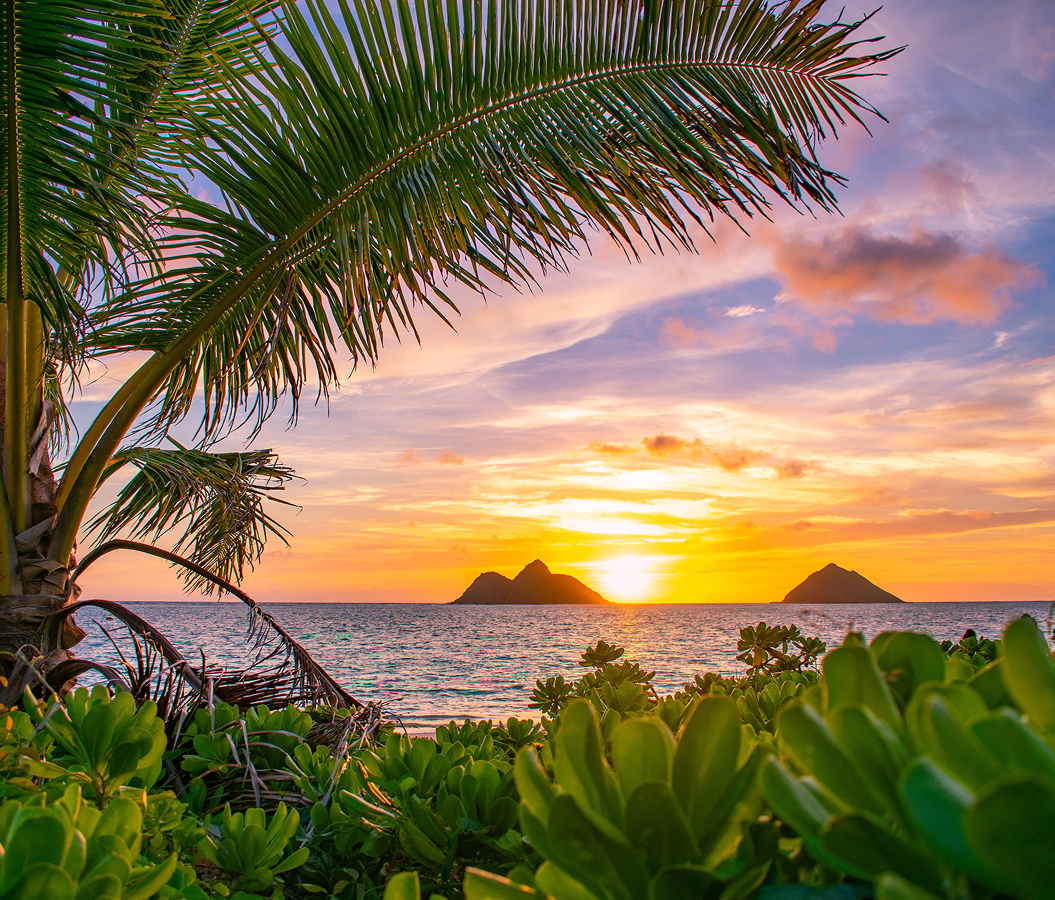
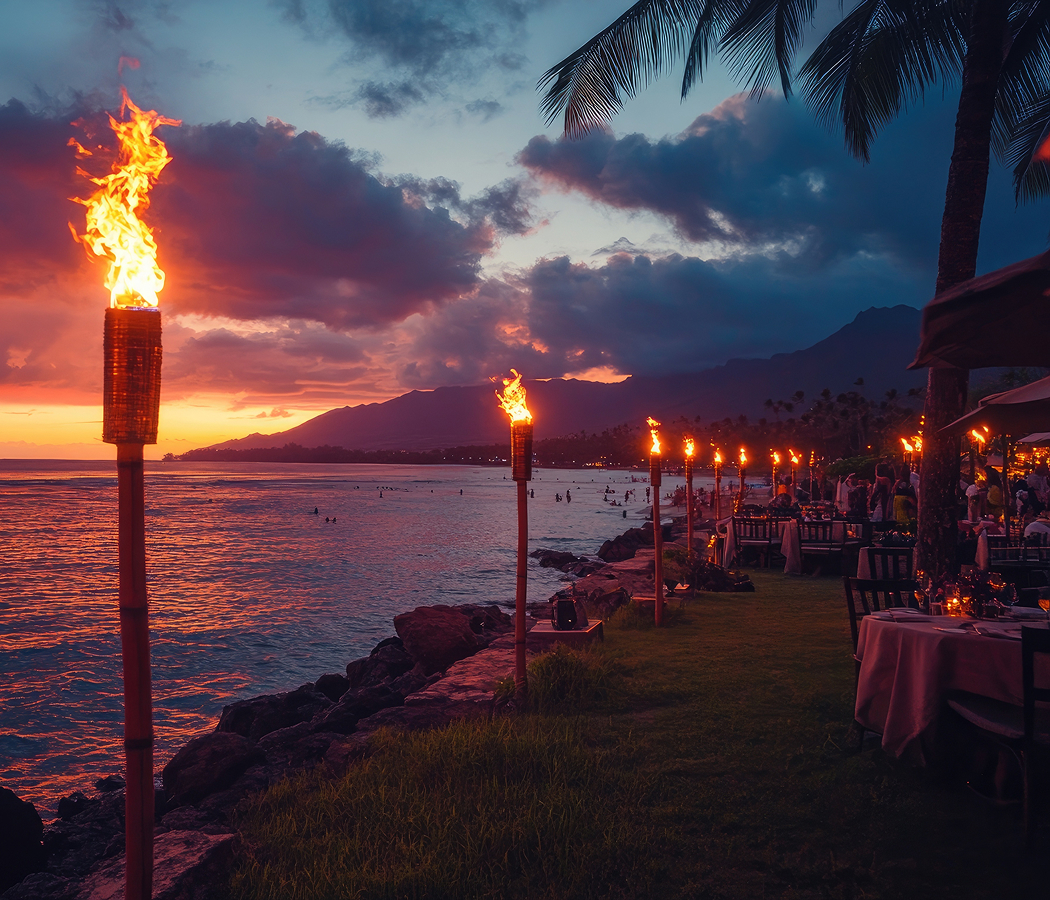
Stretching along Honolulu's southern shoreline between Ala Moana and Diamond Head, the neighborhood occupies a low coastal plain framed by the Koʻolau foothills and the Pacific Ocean, with Kalākaua Avenue following the beachfront and inland streets extending toward the Ala Wai Canal. A succession of sandy beaches, seawalls and landscaped promenades defines the waterfront, backed by towers that rise above surviving historic properties. Broad commercial avenues connect oceanfront resorts with restaurants, shops and residential buildings. The surrounding landscape combines engineered shoreline improvements, mature tropical plantings and uninterrupted views toward the volcanic ridge at the district's eastern boundary. The result is a densely developed coastal neighborhood whose royal associations, surfing heritage and oceanfront geography preserve the foundations of Hawaiʻi's international tourism industry.
What defines Waikiki.
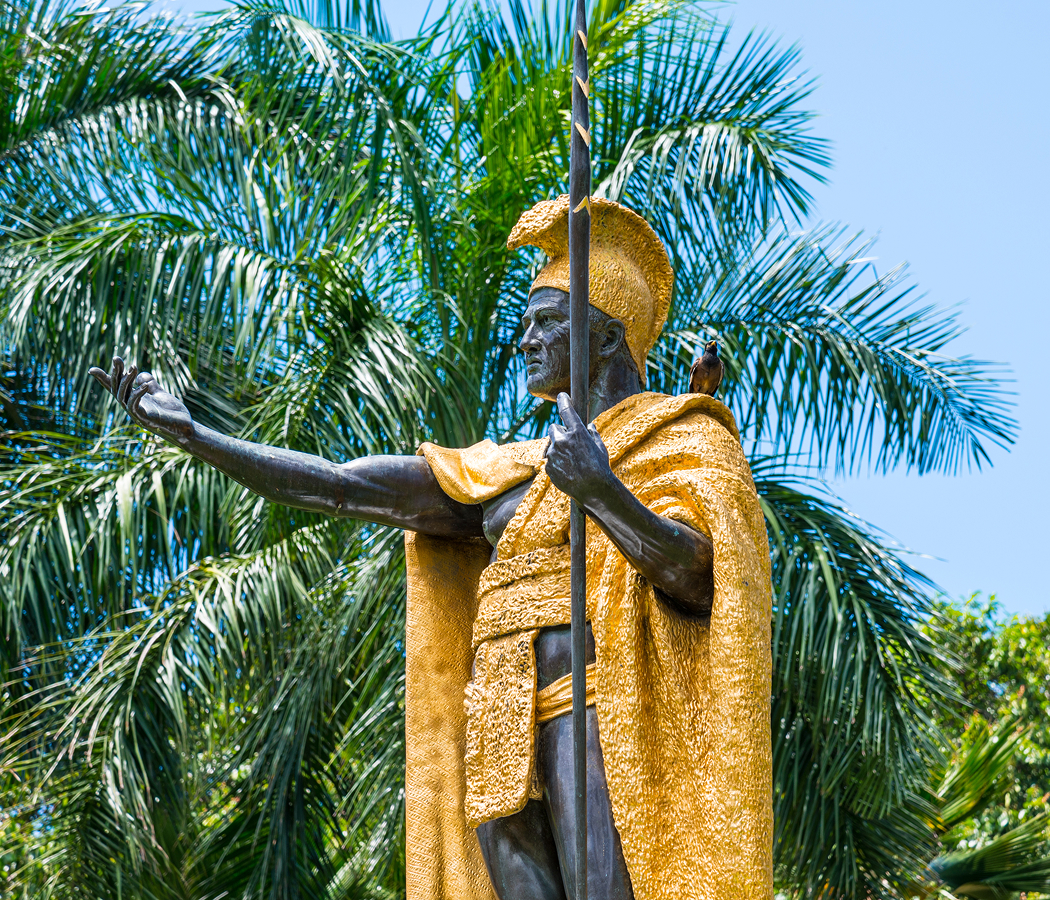
Waikiki is best known for its transformation from a Hawaiian royal retreat and agricultural coastal plain into the international birthplace of modern surf tourism. Its name, Waikīkī, means spouting fresh water, referring to the springs and streams that historically crossed the district. Before extensive urban development, the area contained wetlands, fishponds, taro cultivation and freshwater channels connected with the valleys behind Honolulu. Hawaiian aliʻi maintained residences and recreational grounds along the shoreline, where ocean bathing and surfing formed important elements of chiefly life. Kamehameha I consolidated control over the Hawaiian Islands in the early nineteenth century, establishing the political conditions under which Honolulu developed into the kingdom's principal commercial center. Waikīkī subsequently attracted members of the royal court, including King Kalākaua, whose patronage strengthened the district's association with Hawaiian recreation and ceremonial gatherings. The introduction of Western commercial institutions and expanding maritime trade altered Honolulu's economy during the nineteenth century. The overthrow of the Hawaiian monarchy in 1893 and American annexation in 1898 fundamentally changed the political circumstances surrounding the district's development. The Moana Hotel opened in 1901, establishing a substantial beachfront accommodation property that helped introduce Waikīkī to international travelers. The Outrigger Canoe Club was founded in 1908, promoting ocean sports and organized beachfront recreation. Duke Kahanamoku, born in Honolulu in 1890, became an internationally influential swimmer and surfer whose Olympic achievements brought worldwide attention to Hawaiian aquatic traditions. His gold medals at the 1912 Stockholm Olympics strengthened the international reputation of Hawaiʻi's swimming culture. The opening of the Royal Hawaiian Hotel in 1927 established a prominent luxury resort associated with transpacific travel and the growing appeal of Hawaiian leisure. Construction of the Ala Wai Canal, completed in 1928, redirected watercourses and enabled extensive urban development across former wetlands. Commercial aviation expanded access during the twentieth century, particularly following the introduction of regular transpacific passenger services. Statehood in 1959 coincided with accelerating investment in resort construction, transportation infrastructure and international tourism. The subsequent development of high-rise hotels and commercial avenues substantially altered the district's scale. Waikīkī retained its association with surfing, Hawaiian music and beachfront recreation as visitor numbers increased. Its contemporary urban form preserves the consequences of royal patronage, American territorial development and the growth of Pacific tourism.
Duke Kahanamoku's surfing demonstrations established an important connection between traditional Hawaiian wave riding and the international development of recreational surfing. His athletic career combined competitive swimming with the promotion of Hawaiian ocean culture across Australia, California and other coastal destinations. The long, rolling waves of Waikīkī provided favorable conditions for the development of surfing techniques associated with traditional wooden boards. Early Hawaiian surfers used boards fashioned from local woods, with different forms and dimensions corresponding to the practices of particular communities. Twentieth-century board design introduced lighter materials and new construction techniques, gradually expanding participation in the sport. Waikīkī's principal surf breaks include Canoes, Queens and Populars, whose differing wave characteristics support a range of surfing abilities. The offshore reef moderates incoming swells, producing the long-breaking waves associated with the district's reputation. Beachboys developed a distinctive occupational tradition, providing surfing instruction, canoe rides and ocean guidance to travelers. Their work connected Hawaiian maritime knowledge with the emerging commercial organization of beachfront recreation. Outrigger canoe surfing preserved a communal form of ocean recreation associated with Polynesian navigation and Hawaiian coastal life. The district's beachfront establishments subsequently incorporated Hawaiian music, hula performances and other cultural programs into the developing tourism economy. Historic resort architecture introduced substantial verandas, landscaped courtyards and open-air gathering areas suited to the tropical climate. Later construction adopted modernist towers, expansive balconies and elevated commercial facilities to accommodate increasing visitor demand. Kalākaua Avenue became the principal commercial corridor, concentrating retail businesses, restaurants and entertainment establishments along the waterfront. The surviving combination of surf culture, resort architecture and public beach access maintains the district's close relationship with the ocean.
How Waikiki fits.
Waikiki works as the coastal anchor for a Honolulu outing connecting Hawaiian royal history, the development of public ocean recreation and the volcanic landscape that shaped Oʻahu's southern shoreline.
Begin at ʻIolani Palace, the former royal residence situated in Downtown Honolulu. Completed in 1882 during the reign of King Kalākaua, the palace incorporated advanced nineteenth-century building technologies and elaborate ceremonial interiors. Its architecture combines Renaissance Revival influences with design elements developed specifically for the Hawaiian monarchy. The palace served as the official residence of Kalākaua and Queen Liliʻuokalani, whose reign ended following the overthrow of the monarchy. Restored state rooms, royal furnishings and historical collections preserve the political and cultural institutions of the Hawaiian Kingdom. Continue to Kapiʻolani Park, the extensive public landscape established during the reign of King Kalākaua and named for Queen Kapiʻolani. Dedicated in 1877, the park developed as an important recreational ground near the eastern end of Honolulu's principal coastal settlement. Its open lawns, mature trees and broad pathways provide a substantial public green space adjoining the ocean. The park's historical associations include horse racing, civic gatherings and the development of organized recreation during the Hawaiian Kingdom. Its contemporary landscape preserves an important connection between royal patronage and public access to coastal land. Conclude at Diamond Head State Monument, the volcanic crater rising above Honolulu's southeastern shoreline. Known in Hawaiian as Lēʻahi, the formation originated through explosive volcanic activity associated with the Honolulu Volcanics. Its prominent ridge became an important navigational reference for vessels approaching the southern coast of Oʻahu. Military installations constructed during the early twentieth century incorporated observation positions and defensive infrastructure within the crater. The summit trail ascends through steep terrain, tunnels and stairways to panoramic viewpoints overlooking Honolulu and the Pacific. The progression moves from ʻIolani Palace's royal institutions through Kapiʻolani Park's public recreational heritage and culminates at Diamond Head State Monument's volcanic summit, connecting Waikiki with the political and geographical foundations of Honolulu.
Where your story begins.
Foresyte Travel reveals places that feel extraordinary long before you arrive.
Enjoy editorial crafted for luxury travelers.
Foresyte may earn a commission when you book.