Why Atlanta Botanical Garden matters.
Atlanta Botanical Garden is a major horticultural institution where Midtown's Piedmont Park landscape meets the botanical diversity of the southeastern United States, the conservation of endangered plant species and the contemporary garden design that has reshaped Atlanta's cultural landscape.
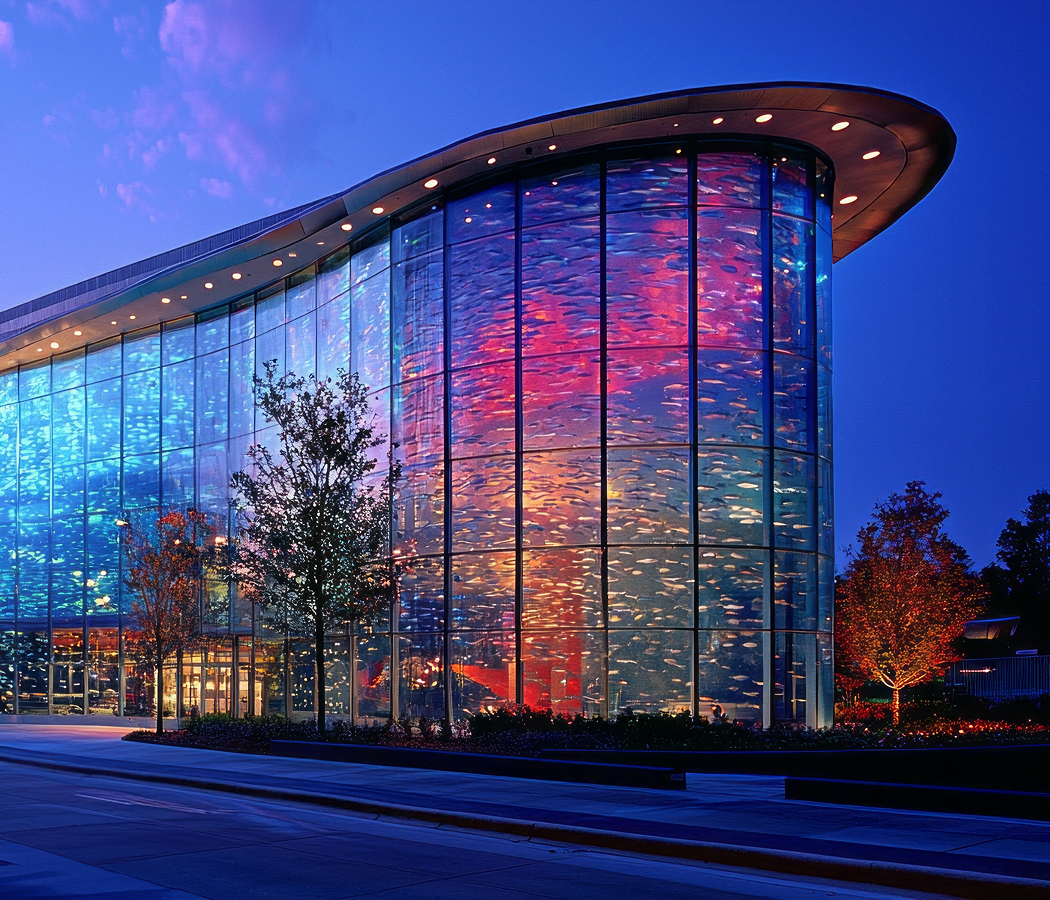
Set along Piedmont Avenue near The Prado and just north of the Midtown residential district, the garden occupies a wooded rise overlooking Piedmont Park, with cultivated terraces descending toward the park's eastern lawns and forested grounds extending toward the Ansley Park neighborhood. The garden's principal entrance opens into a sequence of landscaped courtyards, formal planting beds and contemporary exhibition spaces organized around the central visitor complex. The Fuqua Conservatory introduces an extensive collection of tropical plants beneath interconnected glass structures, with specialized environments accommodating orchids, palms, cycads and other species requiring controlled temperature and humidity. Elevated pathways extend through the Storza Woods, connecting cultivated gardens with mature woodland and creating changing perspectives on the surrounding landscape. The result is a botanical institution whose extensive plant collections, carefully engineered environments and relationship with Atlanta's principal urban park establish one of the Southeast's most significant centers for horticulture and plant conservation.
What defines Atlanta Botanical Garden.
Atlanta Botanical Garden is best known for developing an internationally significant collection of living plants and establishing major conservation programs devoted to endangered species from the southeastern United States and tropical regions across the world. The institution originated in 1973 when a group of Atlanta residents organized a botanical garden society dedicated to creating a permanent public garden within the city's expanding park system. The organization received a long-term lease from the City of Atlanta in 1976, securing thirty acres adjacent to Piedmont Park for the development of cultivated landscapes and horticultural facilities. Early planning emphasized the preservation of existing woodland alongside the introduction of specialized gardens, educational programs and botanical collections. The garden opened to the public in 1976, beginning a period of institutional development supported by private philanthropy, municipal cooperation and the participation of Atlanta's horticultural community. The first major expansion of its scientific facilities followed through the construction of the Dorothy Chapman Fuqua Conservatory, which opened in 1989. The conservatory introduced specialized growing environments for tropical and subtropical plants, establishing a foundation for the institution's subsequent research into rare and endangered species. Its collections developed through relationships with botanical institutions, scientific organizations and conservation programs across several continents. The Fuqua Orchid Center opened in 2002, extending the conservatory's capacity for orchid cultivation and research through a complex of specialized growing environments. The center became particularly significant for its work with tropical orchids, including species whose survival depends on highly specialized ecological relationships with fungi, insects and particular forest habitats. The garden's conservation program expanded through the establishment of the Southeastern Center for Conservation, focusing on the preservation of rare plants native to the southeastern United States. Its work includes seed banking, tissue culture, population monitoring and the propagation of endangered species for restoration projects. The institution's scientific activities have included extensive work with native orchids, pitcher plants and other species threatened by habitat loss, altered hydrology and environmental disturbance. A major capital campaign subsequently supported the development of a new visitor center and extensive landscape improvements, culminating in the opening of a substantial expansion in 2010. The project introduced the Canopy Walk, a suspended pedestrian pathway extending through the treetops of Storza Woods, along with new gardens, exhibition facilities and public circulation routes. The garden's continuing development has strengthened its position as a center for botanical research, environmental education and contemporary landscape design within the southeastern United States.
The Fuqua Conservatory and adjoining orchid collections form the scientific center of the garden's living plant program, incorporating specialized environments designed to accommodate species from tropical rainforests, cloud forests and other ecologically sensitive habitats. The Tropical Rotunda contains palms, ferns, flowering trees and climbing plants arranged beneath a glass enclosure whose controlled climate supports the growth of species adapted to warm, humid conditions. The Desert House presents plants from arid regions, including cacti, succulents and other species whose structural adaptations conserve water under conditions of limited rainfall. The Orchid Center incorporates a high-elevation tropical house designed to reproduce the cooler temperatures and persistent moisture associated with mountain cloud forests. Its collections include epiphytic orchids whose roots attach to trees and other surfaces, drawing moisture and nutrients from the surrounding environment. The garden's conservation laboratories support the propagation of rare species through tissue culture and other techniques, providing an important resource for the preservation of plants whose wild populations have declined. Outdoor collections extend across a series of themed landscapes, including the Japanese Garden, Rose Garden, Edible Garden and formal seasonal planting displays. The Japanese Garden incorporates traditional design elements associated with Japanese landscape architecture, including stone arrangements, water features, carefully pruned trees and a restrained composition of cultivated plants. The Rose Garden contains a diverse collection of cultivated roses, emphasizing the horticultural development of the genus through successive generations of breeding and selection. The Edible Garden connects ornamental horticulture with agricultural production, incorporating vegetables, herbs and fruit-bearing plants into a landscape designed for public education. The Storza Woods woodland landscape preserves mature trees and native understory vegetation, providing a contrasting environment to the formal cultivated gardens. The Canopy Walk extends 600 feet through the woodland canopy, rising as high as forty feet above the forest floor and providing an elevated perspective on the surrounding vegetation. The garden's seasonal exhibitions have incorporated large-scale plant sculptures, contemporary art installations and extensive floral displays, expanding the institution's relationship with landscape architecture and visual art. The Imaginary Worlds exhibition introduced expansive plant sculptures constructed through steel structures, horticultural growing media and carefully maintained living vegetation. These installations required extensive coordination among horticulturists, landscape designers and structural specialists, combining botanical cultivation with the engineering of large outdoor artworks. The garden's educational programs include horticultural instruction, botanical science activities, family programs and public events devoted to environmental conservation. Its extensive collections and scientific facilities connect the cultivation of ornamental plants with the preservation of threatened species, establishing a substantial institutional contribution to the study of plant biodiversity.
How Atlanta Botanical Garden fits.
Atlanta Botanical Garden works as the horticultural centerpiece for an outing connecting Midtown's historic park landscape, the residential architecture of Atlanta's early suburban expansion and the cultural institutions developed along the city's principal arts corridor.
Begin at Piedmont Park, the historic public landscape whose development transformed a former agricultural and exposition property into Atlanta's principal urban park. The grounds originally formed part of the Walker family's agricultural estate before becoming the site of the Piedmont Exposition in 1887 and the Cotton States and International Exposition in 1895. Landscape architect Frederick Law Olmsted's sons, John Charles Olmsted and Frederick Law Olmsted Jr., developed a comprehensive park plan in 1912, introducing formal circulation routes, open lawns and carefully arranged landscape features. The park's surviving topography incorporates broad meadows, wooded slopes, Lake Clara Meer and extensive recreational grounds, preserving the spatial character established through successive phases of landscape development. Its public spaces accommodate major cultural events, outdoor recreation and community gatherings, maintaining the park's central role in Atlanta's civic life. Continue to Ansley Park Historic District, the residential neighborhood developed during the early twentieth century as one of Atlanta's most ambitious planned suburban communities. Entrepreneur Edwin P. Ansley began developing the district in 1904, organizing its streets around curving alignments, landscaped medians and substantial residential lots. The neighborhood's planning departed from the rigid street grids characteristic of earlier Atlanta development, incorporating topographic variation and formal landscape design into the arrangement of residential blocks. Its surviving architecture includes Tudor Revival, Colonial Revival, Mediterranean Revival and Craftsman residences associated with the city's expanding professional and business communities. The district entered the National Register of Historic Places in 1979, preserving an important example of early twentieth-century residential planning and architectural development. Conclude at High Museum of Art, the principal fine arts institution occupying a major architectural complex along Peachtree Street. The museum originated in 1905 as the Atlanta Art Association and received its first permanent home in 1926 through the donation of the High family residence. Architect Richard Meier designed a dedicated museum building that opened in 1983, introducing a composition of white geometric volumes and a dramatic central atrium. Renzo Piano subsequently designed a major expansion completed in 2005, adding galleries whose roof systems distribute natural light throughout the exhibition spaces. The museum's collections encompass American art, European painting, African art, photography, decorative arts and contemporary artistic production, establishing an important center for art historical scholarship and public education within the southeastern United States. The progression moves from Piedmont Park's historic landscape through Ansley Park Historic District's early suburban architecture and culminates at High Museum of Art's modern cultural campus, connecting Atlanta Botanical Garden to the landscape design, residential development and artistic institutions that distinguish Midtown.
Where your story begins.
Foresyte Travel reveals places that feel extraordinary long before you arrive.
Enjoy editorial crafted for luxury travelers.
Foresyte may earn a commission when you book.