
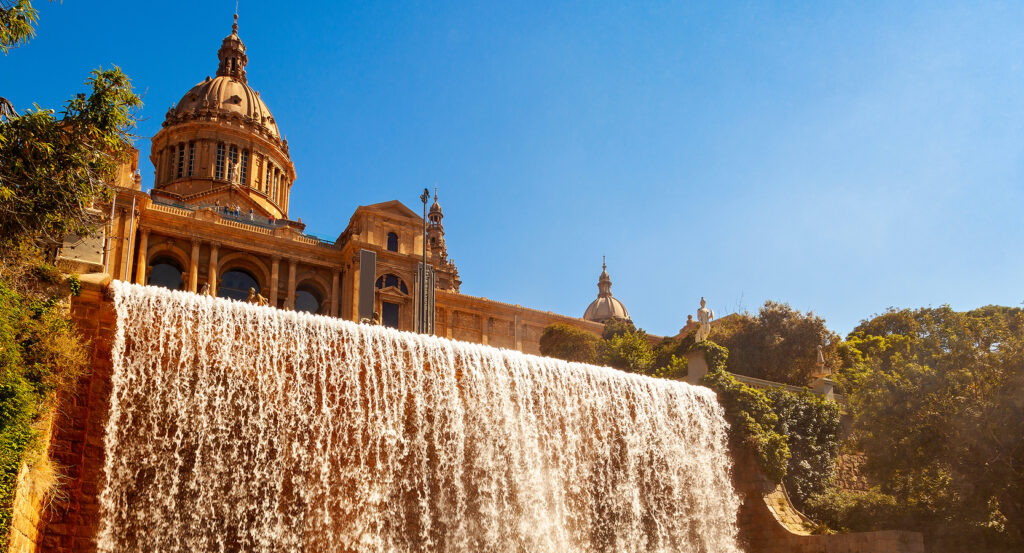
Why Magic Fountain of Montjuïc matters.
Magic Fountain of Montjuïc is pure performance, a symphony of water, light, and music that turns the heart of Barcelona into an open-air theater.
Set between Plaça d'Espanya and the Palau Nacional, the fountain comes alive at dusk, when jets of water leap skyward in perfect rhythm with color and sound. The choreography is hypnotic, plumes of mist swirling like dancers, arcs of light shifting from deep sapphire to fiery crimson, crescendos of motion timed to everything from classical scores to modern soundtracks. It's not just beautiful; it's resonant. For a few minutes, thousands of strangers stand together in silence and awe, united by color and music. The Magic Fountain captures Barcelona's gift for turning art into experience, dramatic, playful, and utterly unforgettable. No visit to the city feels complete without seeing it erupt into brilliance beneath the Palau Nacional's glowing dome.
What defines Magic Fountain of Montjuïc.
Built for the 1929 International Exposition, the Magic Fountain was the vision of engineer Carles Buïgas, who proposed what critics at the time called “too ambitious to be real.”
He proved them wrong. In less than a year, over 3,000 workers brought the project to life, a grand system of pumps, lights, and hydraulics that became an engineering marvel of its era. The fountain originally used over 3,000 jets and 120 hydraulic valves, creating a seamless dance of motion before computers even existed. During the Spanish Civil War, it was heavily damaged and lay dormant for decades until restoration in 1955, when music and colored lighting were added, transforming it into the city's most beloved nighttime ritual. Today, modern LED technology allows for thousands of hues and precise choreography synced to digital audio. The water you see shooting skyward reaches heights of up to 50 meters, and the show consumes over 2,600 liters of water per second, all of it recirculated through an eco-efficient system designed to preserve Montjuïc's natural beauty.
How Magic Fountain of Montjuïc fits.
To experience the Magic Fountain properly, make it your evening finale in Barcelona.
Arrive early, 30 minutes before the show, and find a spot on the steps leading up to the Palau Nacional, they offer the best panoramic view of the entire performance, with the city glittering in the distance. As dusk settles, the crowd begins to hush, and the first notes of music ripple through the air. Stay through multiple sequences, each song reveals a new choreography, from elegant classical patterns to pulsing contemporary beats. Pair your visit with a stroll through the surrounding Montjuïc attractions, the Venetian Towers at Plaça d'Espanya, the cascading fountains along the avenue, and the illuminated palace terraces above. If you can, visit on a weekend night when the full light show runs in its most elaborate form. When the final cascade fades into mist, linger a moment longer. Watching the crowd exhale, faces lit by the last shimmer of color, you'll understand why Barcelona calls this place “màgica.” It's not just a fountain, it's the heartbeat of a city that never stops celebrating wonder.
Where your story begins.
Foresyte Travel reveals places that feel extraordinary long before you arrive.
Enjoy editorial crafted for luxury travelers.
Foresyte may earn a commission when you book.














































































































