Why CQ's Restaurant matters.
CQ's Restaurant is a Lowcountry fine-dining institution where Harbour Town's planned coastal architecture meets Hilton Head's early resort history, the preservation of Ralph Ballantine's original waterfront building and a culinary tradition established in 1973.
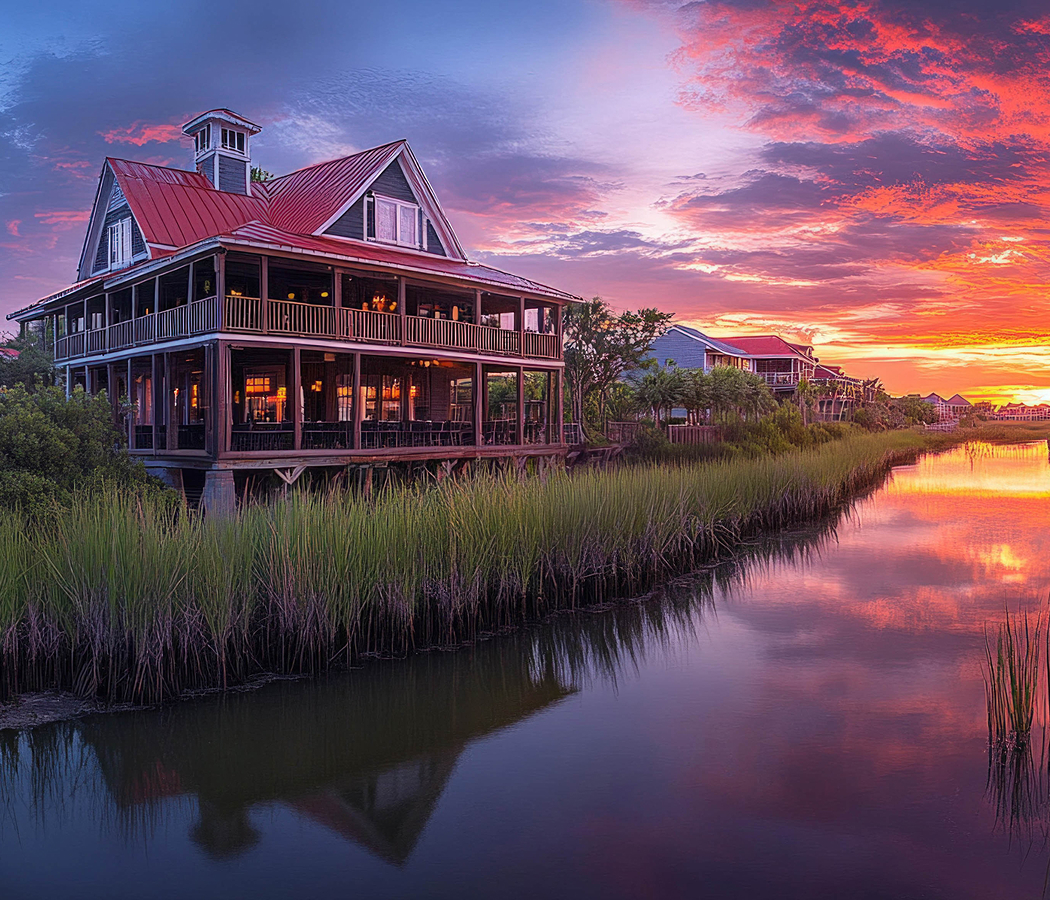
Set along Lighthouse Road near the Harbour Town Yacht Basin and a short walk from the waterfront promenade, the restaurant occupies a two-story building beneath mature live oaks, between the marina village's pedestrian streets and the residential landscape of Sea Pines. Its weathered exterior and steeply pitched roof recall the agricultural buildings of the South Carolina Lowcountry. Original heart-of-pine floors, wooden mantels and stained glass preserve the interior's early architectural character. Separate dining rooms contain historical photographs, framed memorabilia and furnishings accumulated during decades of restaurant operation. The result is a historic restaurant whose intimate rooms and preserved timber construction connect Harbour Town's earliest development with the island's established coastal dining traditions.
What defines CQ's Restaurant.
CQ's Restaurant is best known for occupying the first building constructed in Harbour Town, a structure designed by Ralph Ballantine in 1970 that became a restaurant in 1973 and subsequently developed into one of Hilton Head's longest-established dining institutions. Ballantine originally conceived the building as an art studio, drawing upon the proportions and timber construction of traditional Lowcountry rice barns. Its construction preceded the completion of the surrounding marina village, placing the structure at the beginning of Charles Fraser's ambitious development of Hilton Head's southern peninsula. Fraser had established Sea Pines in 1956, introducing a residential resort organized around landscape conservation, recreational facilities and carefully controlled architectural development. Harbour Town extended that undertaking into a pedestrian waterfront community, combining commercial buildings, a yacht basin and public gathering places within the coastal setting. Restaurateur Sieg Weinhandle established CQ's in the former studio in 1973, adapting the building's residential-scale rooms for an intimate dining establishment. The restaurant took its name from Weinhandle's son, Courtenay Quentin, giving the business a personal connection to its founding family. Its early development coincided with the expansion of Hilton Head's resort economy and the emergence of Harbour Town as a recognized destination for boating, golf and waterfront recreation. The original building's timber floors and divided interior spaces distinguished CQ's from larger dining establishments constructed during subsequent periods of island development. Its menu developed around seafood, beef and game, incorporating classical European preparations alongside ingredients associated with South Carolina's coastal communities. The restaurant established a substantial wine program, extending its dinner service into carefully paired meals and special occasions. Successive generations of island residents and returning vacationers sustained the establishment through changes in ownership, culinary leadership and the surrounding commercial district. Its fiftieth anniversary in 2023 marked five decades of continuous association with Harbour Town's development. Executive chef Ferenc Bukta became an important figure in the restaurant's later culinary history, maintaining its established specialties and introducing preparations influenced by contemporary American cooking. The preservation of Ballantine's original structure has kept the restaurant's architectural beginnings visible throughout its development as a Hilton Head dining institution.
Ferenc Bukta's kitchen develops contemporary American cuisine through Lowcountry seafood, classical sauces and substantial meat preparations, combining established restaurant specialties with seasonal ingredients. CQ's She Crab Soup continues a house tradition dating to the restaurant's opening, using the richness of crab and cream to produce a distinctly coastal first course. Fried Green Tomatoes arrive with a cornmeal coating, sweet corn relish and remoulade, combining crisp texture with the acidity of the tomatoes. Prince Edward Island Mussels are prepared with white wine, roasted garlic and cream, accompanied by herbed crostini for collecting the cooking liquid. Seared Ahi Tuna incorporates a sesame crust, edamame hummus, Asian vegetable slaw, pickled ginger and ponzu, introducing Japanese-influenced ingredients into the seafood selection. Lump Crab Cakes are accompanied by edamame, butternut squash, roasted peppers and sweet corn succotash, connecting the shellfish with vegetables associated with the region's agricultural seasons. CQ's Shellfish Pasta combines sautéed lobster, shrimp, spinach and grape tomatoes with campanelle pasta and a Boursin-enriched soubise sauce. Grilled shrimp receive a different treatment through Parmesan polenta, sautéed spinach, Tasso ham and Tabasco cream, incorporating the smoked pork and pepper heat associated with Southern cooking. Pan-seared sea scallops are paired with sweet pea risotto, pancetta and saffron cream, emphasizing the contrast between caramelized shellfish and a rich rice preparation. The bone-in pork chop incorporates roasted potatoes, caramelized onions, haricots verts and bourbon-glazed apples, extending the menu into substantial meat-centered cooking. Filet mignon is served with a potato pancake, grilled asparagus and a green peppercorn brandy sauce, preserving a classical steakhouse preparation within the broader menu. Desserts include crème brûlée, cheesecakes and warm bread pudding prepared in-house. The wine selection encompasses established European and American regions, with bottles and wines by the glass selected to accompany seafood, meat and richer sauces. Upstairs seating overlooks portions of the lower dining room, retaining the spatial arrangement of the original loft-like structure. The combination of historical interiors, carefully prepared seafood and established dinner service sustains CQ's longstanding place in Hilton Head's restaurant community.
How CQ's Restaurant fits.
CQ's Restaurant works as the dinner centerpiece for a Sea Pines itinerary connecting Hilton Head's coastal resort development, the maritime environment of Calibogue Sound and the preservation of the Lowcountry's distinctive ecological and historical landscapes.
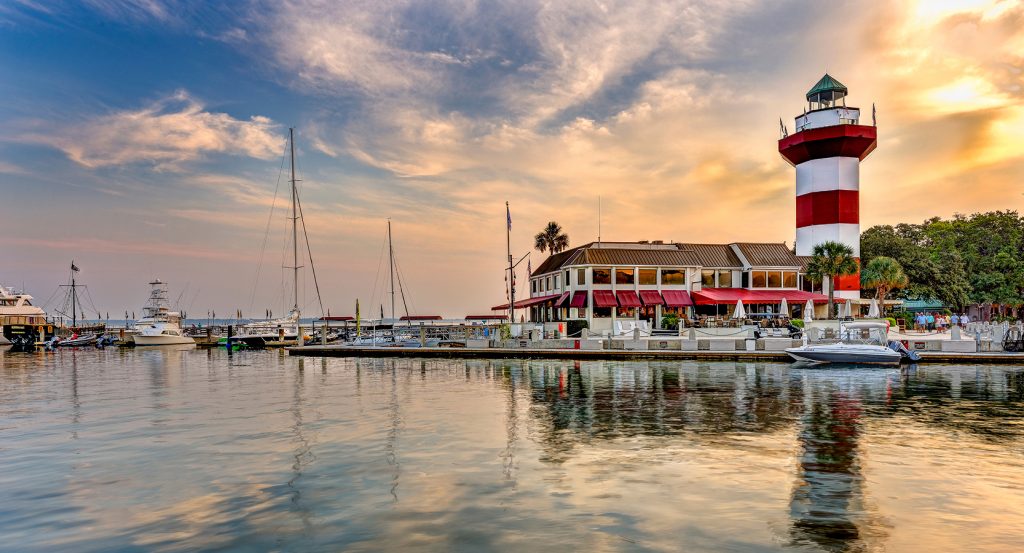
Begin at Harbour Town Lighthouse, the red-and-white-striped observation tower overlooking the yacht basin and Calibogue Sound. Completed in 1970, the 90-foot structure became a defining feature of Hilton Head's recreational waterfront. Its 114-step interior staircase connects historical exhibits with an observation deck overlooking the marina, surrounding waterways and neighboring coastal islands. The tower's construction accompanied the development of Harbour Town as a planned waterfront destination, establishing a recognizable architectural feature for the growing resort community. Its exhibits examine Hilton Head's historical development and the maritime setting that shaped the island's economy. Continue to Sea Pines Forest Preserve, the protected natural landscape occupying more than 600 acres within the resort. Established in 1970, the preserve protects freshwater wetlands, maritime forests, open grasslands and habitats supporting native wildlife. Its network of walking paths and boardwalks provides access to forested areas, lakes and wetland environments. The preserve contains the Sea Pines Shell Ring, a circular archaeological feature constructed by Indigenous inhabitants thousands of years before European settlement. Its surviving oyster-shell deposits preserve evidence of early coastal communities and their relationship with the surrounding estuarine environment. Conclude at Stoney-Baynard Ruins, the remains of a nineteenth-century plantation residence situated near Baynard Park Road. The property originated within the island's plantation economy and subsequently became associated with the Baynard family. Surviving tabby foundations and portions of masonry walls preserve the physical remains of a substantial Lowcountry residence. The site also contains traces of associated plantation structures, connecting the surviving architecture with the labor and agricultural systems that shaped Hilton Head before the Civil War. Interpretive information examines the property's development and its place within the island's plantation history. The progression moves from modern resort architecture through protected coastal ecology and culminates in the material remains of plantation-era Hilton Head, connecting CQ's Restaurant with the broader history of Sea Pines.
Where your story begins.
Foresyte Travel reveals places that feel extraordinary long before you arrive.
Enjoy editorial crafted for luxury travelers.
Foresyte may earn a commission when you book.