Why Harbour Town Lighthouse matters.
Harbour Town Lighthouse is a red-and-white-striped observation tower where Sea Pines' planned coastal landscape meets the development of Hilton Head's resort economy, the creation of Harbour Town Marina and the architectural legacy of developer Charles Fraser.
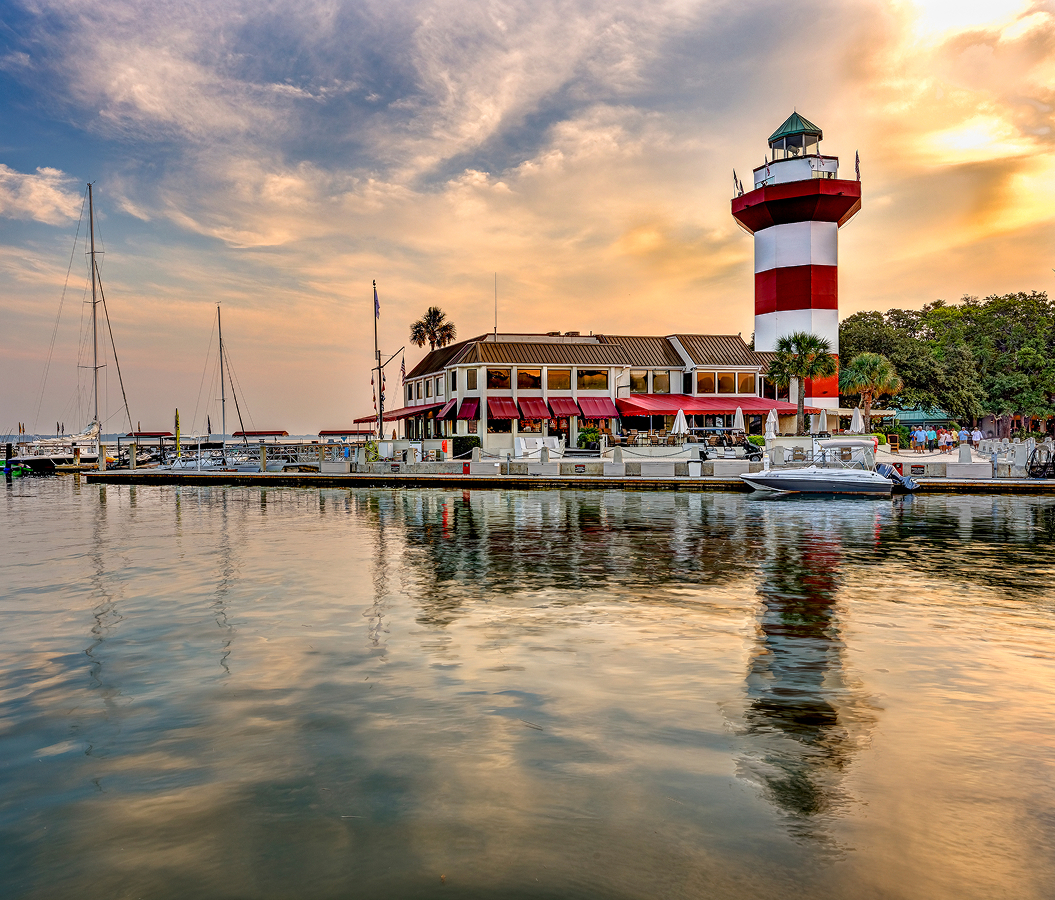
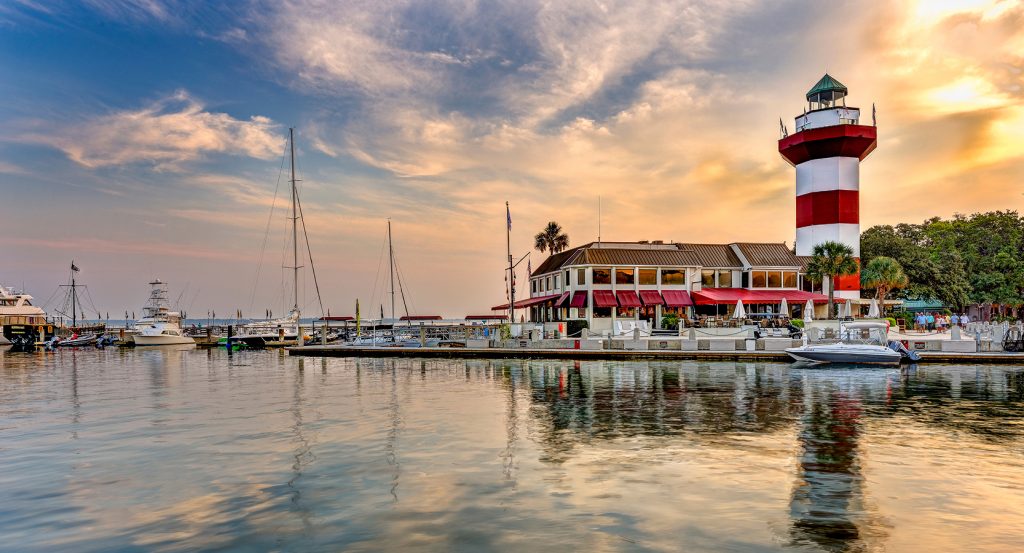
Set at the western end of Harbour Town Marina near Lighthouse Road and a short walk from the Harbour Town Yacht Basin, the lighthouse occupies a waterfront position overlooking Calibogue Sound, where the marina's sheltered harbor opens toward the tidal channels separating Hilton Head from Daufuskie Island. Its alternating red and white horizontal bands rise above the surrounding buildings, creating a recognizable vertical feature within the low-rise marina village. A public observation deck provides views across the harbor, nearby waterways and coastal islands. The tower's base connects directly with pedestrian paths, waterfront businesses and the marina's boat slips. The result is a coastal observation tower whose distinctive appearance, maritime setting and relationship with Harbour Town's planned development connect Hilton Head's recreational waterfront with its modern resort history.
What defines Harbour Town Lighthouse, Hilton Head.
Harbour Town Lighthouse is best known for its red-and-white-striped exterior, its completion in 1970 and its central role in Charles Fraser's development of Harbour Town as a distinctive waterfront destination within Sea Pines Resort. Fraser began developing Sea Pines in 1956, acquiring substantial portions of Hilton Head's southern end with the intention of creating a residential resort integrated into the surrounding coastal environment. His planning approach emphasized the preservation of mature trees, controlled building heights and the placement of residential and commercial structures within the island's maritime landscape. The development of Harbour Town during the late 1960s introduced a marina village designed around a sheltered yacht basin, waterfront restaurants, shops and pedestrian streets. Fraser envisioned a lighthouse as the harbor's defining architectural feature, despite the absence of a navigational requirement for a traditional coastal light station. The proposed structure attracted criticism from observers who questioned the expense and practicality of constructing a decorative lighthouse within a resort development. Fraser proceeded with the project, financing a tower that would establish a recognizable visual reference for Harbour Town and the surrounding waterfront. Construction began in 1969, with the lighthouse completed in 1970 at a height of 90 feet. Its alternating red and white horizontal bands distinguished the structure from conventional white coastal lighthouses and made it readily recognizable across the harbor. The tower incorporated an internal staircase leading to an observation deck, establishing public access as a central part of its function. Harbour Town's development coincided with the establishment of the Heritage golf tournament in 1969, which brought professional golf to Sea Pines and increased the national visibility of Hilton Head. The lighthouse subsequently appeared in tournament broadcasts, promotional photography and resort imagery, connecting its distinctive appearance with the island's expanding recreational economy. Fraser's broader development program influenced subsequent resort planning on Hilton Head, establishing standards for landscape preservation, architectural controls and the integration of recreation with residential communities. The lighthouse became one of the island's most recognizable structures, maintaining its original purpose as an observation tower and public attraction within the marina village.
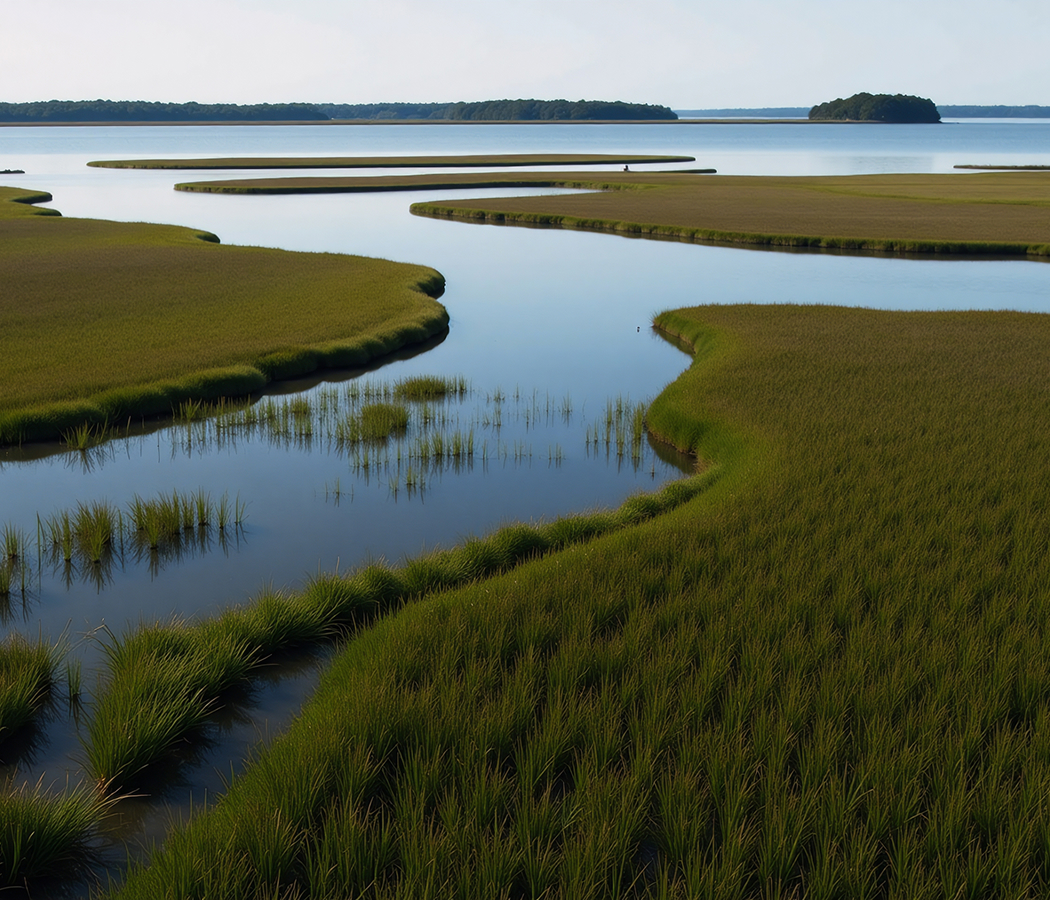
Charles Fraser's original design concept placed the lighthouse within a pedestrian waterfront district, allowing its observation deck to function as an elevated viewpoint over the marina and surrounding coastal waterways. The tower rises through nine levels, with an interior staircase of 114 steps connecting the entrance with the observation deck. Its enclosed stairwell incorporates historical exhibits, photographs and displays addressing Hilton Head's development and the surrounding Lowcountry. The exhibits examine subjects including the island's Indigenous history, plantation agriculture, the Civil War and the emergence of modern resort communities. Historical photographs trace the transformation of Sea Pines from undeveloped coastal land into a planned residential and recreational destination. The tower's observation deck provides views over Harbour Town Marina, where sailboats, motor yachts and visiting vessels occupy slips arranged around the sheltered basin. Calibogue Sound extends beyond the marina, forming a broad tidal waterway between Hilton Head and neighboring coastal islands. The surrounding shoreline contains salt marshes, maritime vegetation and shallow tidal channels characteristic of South Carolina's Lowcountry. The lighthouse's red and white exterior bands remain visible across the harbor, maintaining a direct relationship between the structure and the surrounding marina. A museum shop at the base incorporates maritime souvenirs, historical materials and lighthouse-themed merchandise. The tower's public access supports both self-directed visits and educational interpretation, connecting the elevated viewpoint with exhibits encountered during the ascent. Its compact interior requires visitors to climb the staircase, creating a continuous vertical route through the historical displays. The observation deck's open-air perimeter provides changing views according to the tide, weather and position of boats within the sound. The surrounding marina supports seasonal boating activity, waterfront dining and pedestrian recreation, establishing the lighthouse as a central point within Harbour Town's public spaces. The tower's continued operation preserves Fraser's original concept of a waterfront observation structure designed to connect recreational activity with the coastal setting of Hilton Head.
How Harbour Town Lighthouse, Hilton Head fits.
Harbour Town Lighthouse works as the waterfront centerpiece for a Hilton Head itinerary connecting the island's maritime history, the preservation of its coastal ecology and the cultural institutions that interpret the Lowcountry's historical development.
Begin at Coastal Discovery Museum, the cultural and environmental institution situated on the historic Honey Horn property in Central Hilton Head. The museum occupies a former plantation landscape containing historic buildings, gardens, maritime forest and salt marsh habitats. Its exhibitions examine the island's natural environment, Indigenous history, plantation agriculture and the development of Gullah communities along the South Carolina coast. Walking paths extend through the property, connecting interpretive displays with live oak trees, gardens and tidal wetlands. Educational programs address local wildlife, coastal ecology and the preservation of the Lowcountry's cultural heritage. Continue to Pinckney Island National Wildlife Refuge, the protected coastal landscape situated between Hilton Head and the mainland. The refuge encompasses salt marshes, tidal creeks, maritime forests and former agricultural lands associated with the island's plantation history. Its network of walking and cycling trails provides access to habitats supporting wading birds, migratory waterfowl and other coastal wildlife. Ibis Pond and surrounding freshwater impoundments attract herons, egrets and additional bird species during different seasons. The refuge's protected status preserves an extensive portion of the Lowcountry's tidal environment within the developed Hilton Head region. Conclude at Fort Howell, the Civil War earthwork fortification situated near Hilton Head Airport. Constructed in 1864 by Union forces, the fort was designed to protect Mitchelville, the nearby settlement established by formerly enslaved people following the Union occupation of Hilton Head. Its surviving earthworks preserve the defensive arrangement of a military installation associated with the island's wartime transformation. Mitchelville became an important early community of self-governing freedpeople, developing schools, churches and civic institutions during the Civil War. The fort's preservation connects Hilton Head's military history with the broader struggle for emancipation and the development of African American communities in the Lowcountry. The progression moves from coastal cultural interpretation through protected tidal landscapes and culminates in Civil War history, connecting Harbour Town Lighthouse with the environmental and historical foundations of Hilton Head.
Where your story begins.
Foresyte Travel reveals places that feel extraordinary long before you arrive.
Enjoy editorial crafted for luxury travelers.
Foresyte may earn a commission when you book.