Why Harbour Town matters.
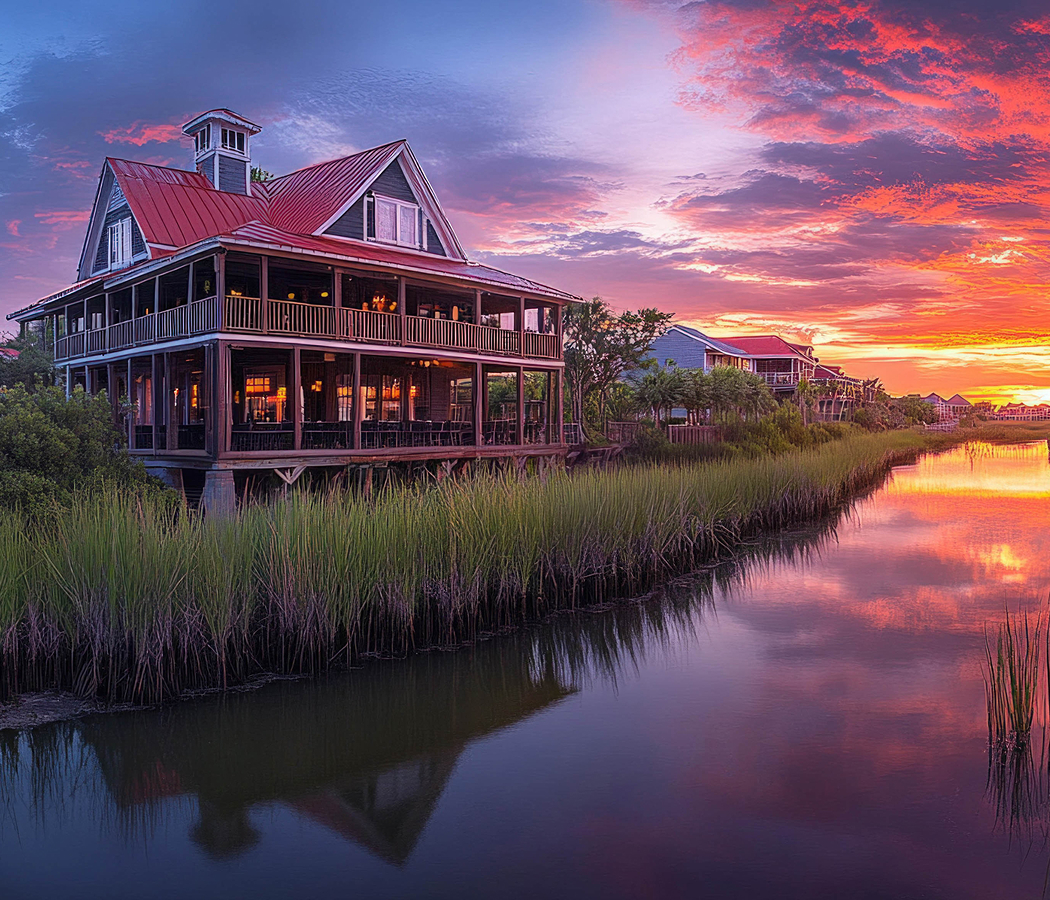
Harbour Town is a waterfront village where Sea Pines' environmentally conscious resort character meets Charles Fraser's marina-centered planning, Calibogue Sound and a purpose-built beacon conceived to give Hilton Head a recognizable coastal center.
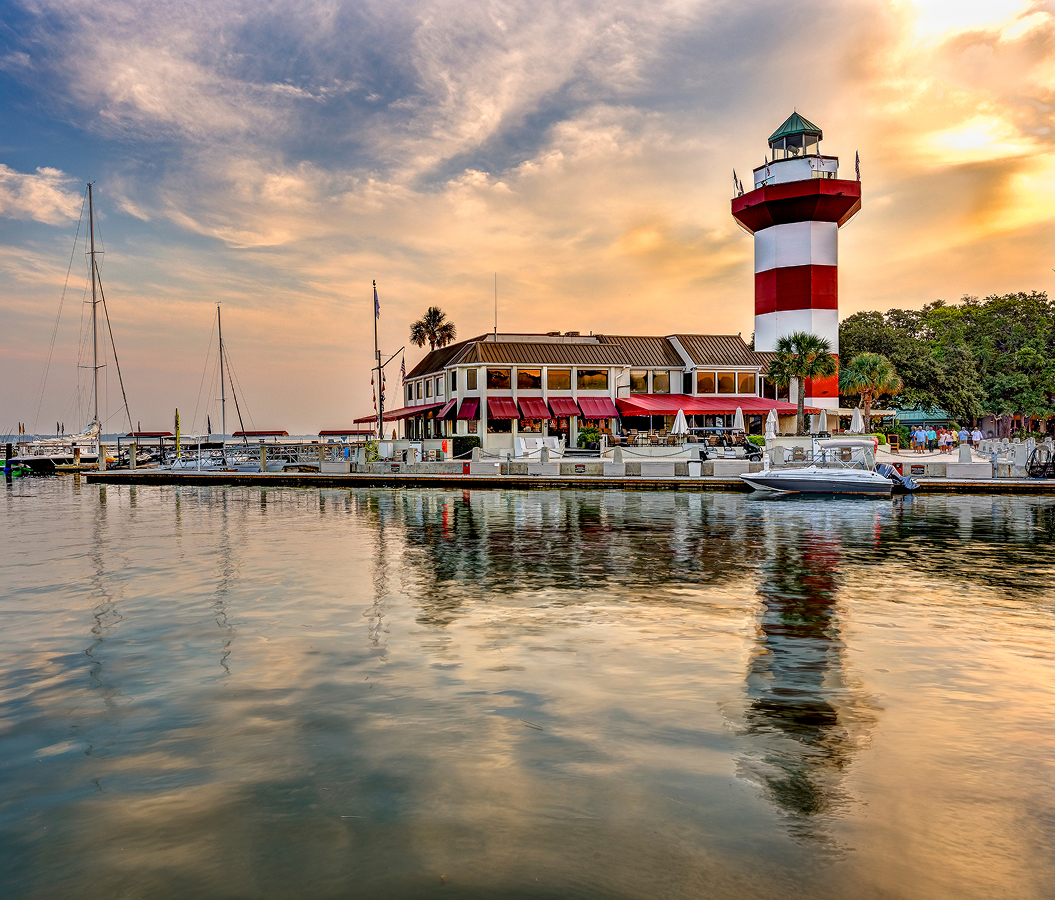
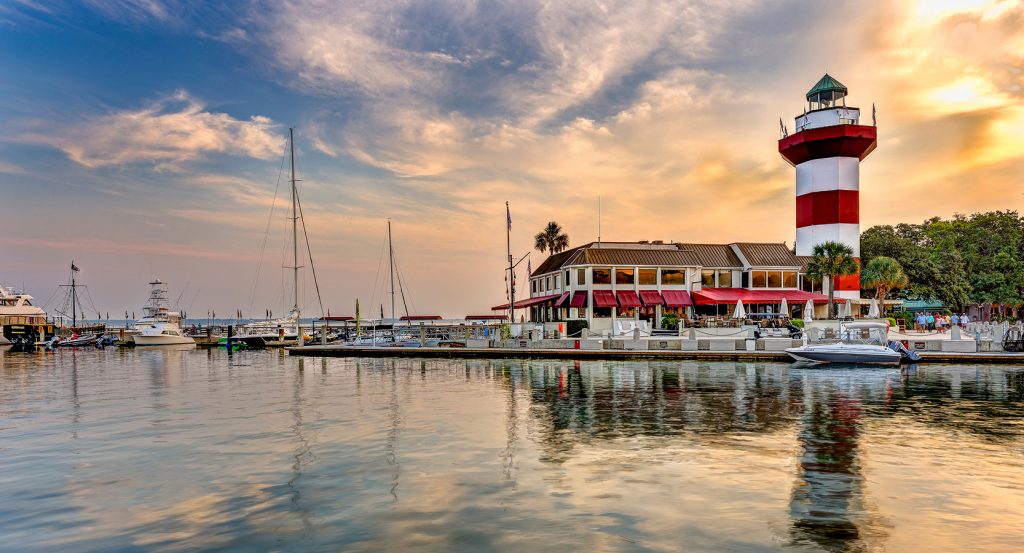
Set around the Harbour Town Yacht Basin near Lighthouse Lane and just steps from Harbour Town Golf Links, the village occupies the southwestern edge of Hilton Head where Calibogue Sound opens toward Braddock Cove, with Daufuskie Island across the sound, the Sea Pines Forest Preserve inland and the Atlantic shoreline wrapping around the island's southern end. Fraser drew inspiration for the yacht basin from Portofino, Italy, organizing the waterfront around a marina whose construction deliberately accommodated a centuries-old live oak. Low-rise shops and restaurants curve around the enclosed harbor, bringing pedestrian circulation directly against docks filled with recreational vessels. The red-and-white lighthouse rises 90 feet above that composition, supplying the vertical counterpoint to a waterfront otherwise kept close to the tree canopy. The result is a compact coastal village whose basin, shaded pedestrian edges, preserved live oak and striped tower condense Fraser's larger Sea Pines planning principles into one of Hilton Head's most concentrated waterfront environments.
What defines Harbour Town, Hilton Head.
Harbour Town is best known for translating Sea Pines founder Charles Fraser's approach to resort development into a marina village where architecture, recreation and preserved landscape were planned as parts of the same coastal composition. Fraser envisioned the yacht basin as a destination for mariners and drew inspiration from Portofino, but his environmental priorities materially altered its construction when he insisted that an immense live oak remain in place despite the additional expense and lost marina capacity. That tree, now known as the Liberty Oak, stands 55 feet tall and 90 feet across, weighs 38 tons and dates back more than three centuries. Fraser also conceived the Harbour Town Lighthouse as a symbolic beacon intended to draw people toward the new village, beginning construction on the 90-foot tower in 1968. The structure remained unfinished when the first Heritage Classic arrived in November 1969, then developed into the red-and-white visual marker associated with both Harbour Town and Hilton Head. Its interior later became a museum reached by 114 steps, combining island history with memorabilia from the golf tournament that helped introduce Sea Pines to a national audience. Fraser founded that tournament in 1969, and Arnold Palmer won the inaugural event on the newly completed Harbour Town Golf Links, giving the resort immediate visibility within professional golf.
Pete Dye and Jack Nicklaus began work on Harbour Town Golf Links on July 2, 1968 after Fraser sought a championship course with an older strategic character and Nicklaus recommended Dye for the assignment. Dye narrowed fairways and reduced green sizes at a moment when professional courses were moving toward greater scale, forcing approach angles and placement to carry more consequence than raw distance. The PGA TOUR accepted Fraser's proposal for a tournament that October, leaving the designers little more than a year to complete a course that had barely entered construction. Its debut Heritage Classic proved severe: 39 rounds of 80 or higher were posted across the first two days, and Palmer finished at one under par as the sole player below par for the tournament. Nicklaus later won there in 1975, and Dye credited Harbour Town with elevating his architectural career before going on to design TPC Sawgrass, Whistling Straits and the Ocean Course at Kiawah Island. The course's small greens, tree-defined playing corridors and strategic demands remain inseparable from the village beside it, giving Fraser's waterfront center a nationally significant golf work embedded directly into its surrounding resort landscape.
How Harbour Town, Hilton Head fits.
Harbour Town works as the anchor for a Sea Pines outing connecting the plantation economy that preceded resort development, the rice landscape preserved within a protected forest and an African American burial ground carrying the history of the island's enslaved population and their descendants.
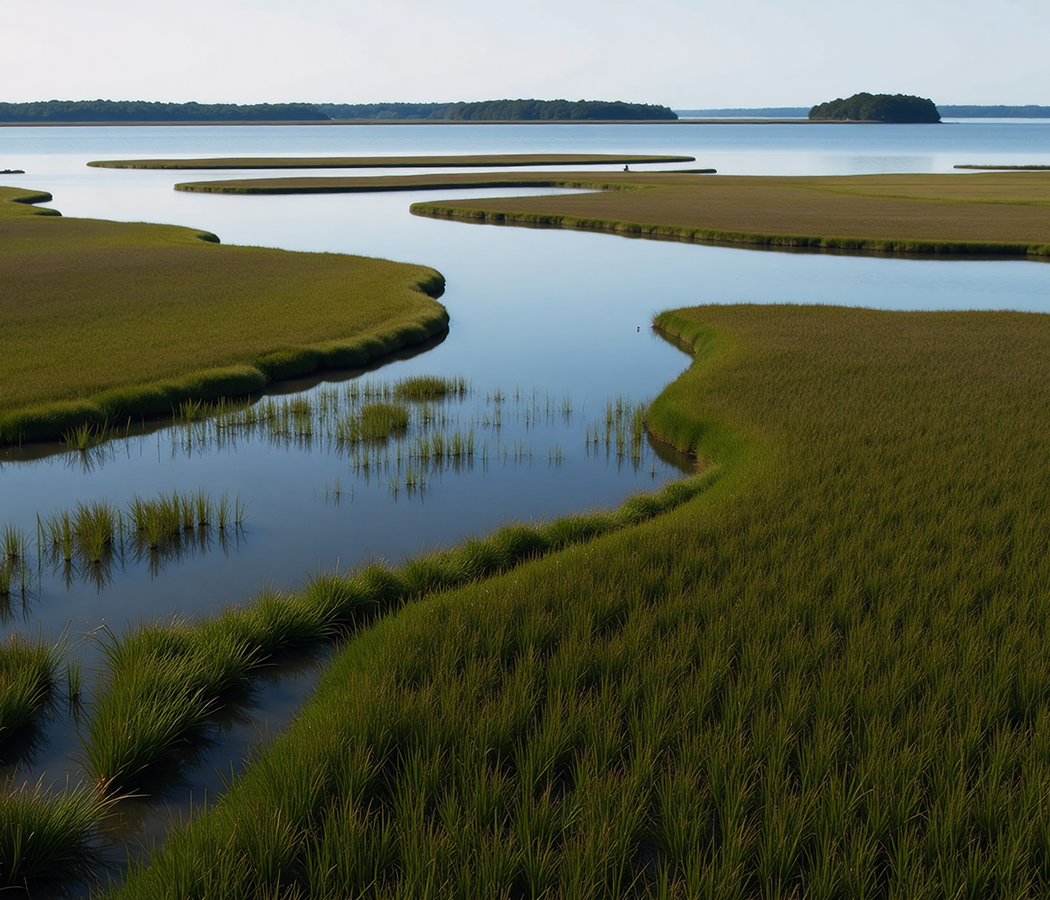
Begin at Stoney-Baynard Ruins, where surviving tabby walls mark the former Braddock's Point Plantation house built by the Stoney family around the turn of the nineteenth century. Captain John Stoney assembled extensive Hilton Head holdings, and the property eventually passed through the indebted Stoney estate before the Bank of Charleston sold it to William Eddings Baynard for $10,000 in 1845. The plantation encompassed 1,000 acres producing Sea Island cotton, corn, peas and sweet potatoes, with enslaved labor underpinning its agricultural economy. Union forces used the house during the Civil War, and the mansion burned in 1867, leaving thick tabby foundations and structural remnants as physical evidence of the plantation landscape absorbed into Sea Pines nearly a century later. Continue to Old Lawton Rice Field, reached through the Sea Pines Forest Preserve, where a boardwalk extends into former rice acreage associated with Lawton Plantation. The plantation once encompassed more than 1,800 acres and became the only plantation on Hilton Head devoted to rice cultivation, passing through Martha Sarah Stoney Barksdale Lawton and Joseph Lawton before descending through their family. The surviving rice-field terrain now lies within the 605-acre Forest Preserve, protected since 1970 and developed with trails, wetland boardwalks, bridges and fishing docks that retain access to landscapes predating Sea Pines. Conclude at Braddock's Point Cemetery, a Black burial ground near Harbour Town whose origins are associated with the Stoney plantation and whose marked and unmarked graves survive amid later residential development. The cemetery dates to the plantation period, with local historical work placing its beginnings in the late eighteenth or nineteenth century and connecting it with enslaved people held on Braddock's Point. Its survival near the resort village preserves a materially different human history within the same landscape Fraser began redeveloping during the twentieth century. The progression moves from the tabby remains of a plantation sustained by enslaved agricultural labor through the rice terrain reshaped for Lowcountry cultivation and culminates at a Black cemetery surviving beside modern Harbour Town, joining three physical remnants of the land and people that preceded Sea Pines.
Where your story begins.
Foresyte Travel reveals places that feel extraordinary long before you arrive.
Enjoy editorial crafted for luxury travelers.
Foresyte may earn a commission when you book.