
Why Palmetto Bay Sunrise Café matters.
Palmetto Bay Sunrise Café is a family-owned waterfront breakfast restaurant where Palmetto Bay Marina's boating heritage meets the Lowcountry's seafood traditions, scratch-made Southern cooking and the independent restaurant culture established by Leslie and Paul Stewart on Hilton Head.
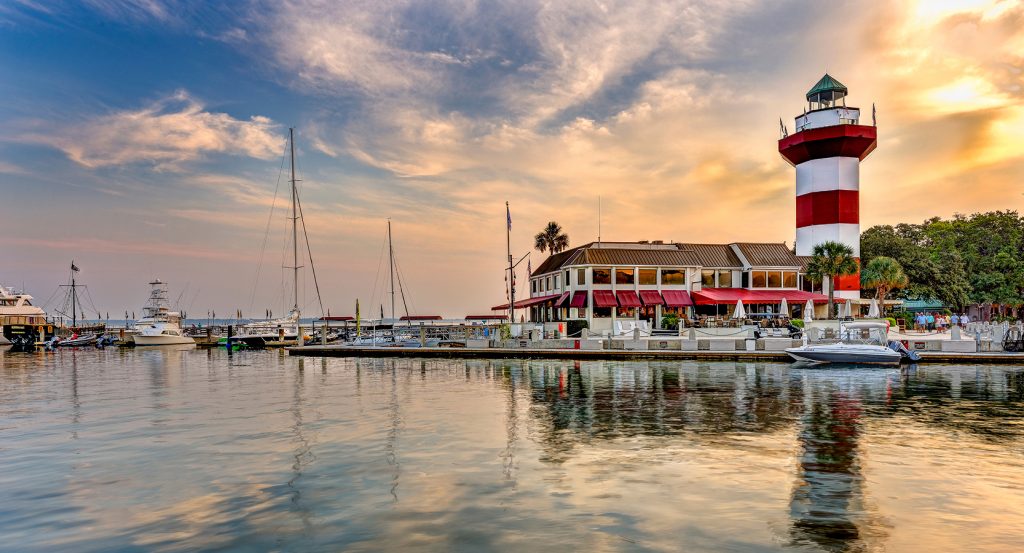
Set along Helmsman Way near Palmetto Bay Road and a short walk from the marina's boat slips, the café occupies a waterfront commercial building overlooking Broad Creek, between the island's southern residential neighborhoods and the tidal channels extending toward Calibogue Sound. A covered outdoor dining area accommodates breakfast tables overlooking the marina's recreational boating activity. Inside, a counter faces the open kitchen, placing the preparation and movement of breakfast orders directly within view. Nautical decorations and closely arranged seating preserve the informal character of a working marina café. The result is a waterside restaurant whose open kitchen, outdoor tables and marina location connect Hilton Head's boating community with its established breakfast and lunch traditions.
What defines Palmetto Bay Sunrise Café.
Palmetto Bay Sunrise Café is best known for its scratch-made breakfasts, substantial seafood lunches and the family operation established by Leslie and Paul Stewart in 2002 after more than a decade working in Hilton Head's restaurant industry. Leslie had developed her career in restaurant service, and Paul, known locally as Stew, had worked as a chef at several island establishments. Their combined professional backgrounds provided the foundation for a business organized around freshly prepared food and coordinated table service. The couple identified a shortage of traditional breakfast restaurants serving Hilton Head's permanent residential community. They discovered a vacant commercial space at Palmetto Bay Marina, where the building had deteriorated sufficiently to shelter raccoons in its ceiling. Its waterfront position and existing commercial facilities provided the setting for their proposed restaurant. The Stewarts renovated the property and opened their café on March 4, 2002, serving 35 customers during the first day of business. Their original operation emphasized individually cracked eggs, house-made sauces and familiar breakfast preparations assembled directly in the kitchen. Business expanded through repeat customers, eventually reaching more than 500 diners on busy Sundays. The restaurant developed a substantial breakfast menu incorporating Southern staples, coastal seafood and preparations associated with American diners. Its lunch program introduced additional seafood dishes, extending the kitchen's relationship with domestic shrimp and other ingredients harvested from American waters. The couple maintained a hands-on approach to daily operations, with Leslie overseeing service and Paul directing food preparation. Their twentieth anniversary in 2022 marked two decades of family ownership and an established position within Hilton Head's independent restaurant community. The café's continued popularity has sustained a dining format centered on early morning service, substantial portions and personal relationships between staff and returning customers.
Paul Stewart's kitchen develops its breakfast preparations through daily ingredient preparation, controlled egg cooking and sauces assembled in-house. Individual eggs are cracked before cooking, incorporating air into omelets to produce a light, evenly cooked texture. Eggs Benedict combines poached eggs with English muffins and freshly prepared hollandaise, preserving the classical balance of butter, egg yolk and acidity. Crab Cake Benedict introduces a coastal variation, pairing house-made crab cakes with poached eggs and hollandaise. Fried Chicken Eggs Benedict incorporates crisp chicken into the same breakfast structure, combining a browned exterior with the richness of the sauce. Shrimp Hash places locally associated seafood within a substantial breakfast preparation, using hollandaise to connect the shrimp with potatoes and eggs. Blueberry Cream Cheese Stuffed French Toast combines custard-soaked bread with fruit and a soft cheese filling, creating a richer alternative to conventional French toast. Banana Rum Pancakes introduce fruit and rum flavor into a sweet breakfast preparation, extending the selection beyond traditional buttermilk pancakes. Biscuits and Gravy pairs freshly baked biscuits with sausage gravy prepared daily, continuing a Southern breakfast tradition. The kitchen also prepares quiches and breakfast stratas, incorporating eggs, cheese and changing ingredients into baked dishes. Lunch includes homemade She-Crab Soup, a regional specialty combining crab with a rich cream-based preparation. Potato-Crusted Flounder introduces a seafood entrée whose crisp exterior contrasts with the delicate texture of the fish. Shrimp Provençal draws upon Mediterranean cooking, combining shrimp with aromatic ingredients and a seasoned sauce. Crab wontons provide a contrasting appetizer, incorporating shellfish into crisp pastry. The kitchen prepares salad dressings, cuts steaks and deveins domestic shrimp as part of its daily routine. The open counter allows diners to observe cooks assembling plates and coordinating orders, establishing a direct connection between food preparation and table service.
How Palmetto Bay Sunrise Café fits.
Palmetto Bay Sunrise Café works as the breakfast starting point for a Hilton Head itinerary connecting the preservation of Lowcountry coastal habitats, the interpretation of plantation-era history and the cultural development of African American communities during the Civil War.
Begin at Sea Pines Forest Preserve, the protected natural landscape occupying more than 600 acres within the island's southern resort district. Established in 1970, the preserve protects freshwater wetlands, maritime forests, open grasslands and habitats supporting native wildlife. Its walking paths and boardwalks provide access to forested areas, lakes and wetland environments. The property contains the Sea Pines Shell Ring, a circular archaeological feature constructed by Indigenous inhabitants thousands of years before European settlement. Its surviving oyster-shell deposits preserve evidence of early coastal communities and their relationship with the surrounding estuarine environment. Continue to Coastal Discovery Museum, situated on the historic Honey Horn property in northern Hilton Head. Founded in 1985, the institution relocated to the 70-acre estate in 2007, preserving nineteenth-century buildings, gardens and coastal habitats. Its exhibitions examine Indigenous settlement, plantation agriculture, Gullah heritage and the development of South Carolina's barrier islands. Walking paths connect historic structures with maritime forest, cultivated gardens and salt-marsh boardwalks. Educational programs examine native wildlife and the historical relationship between coastal communities and the region's natural resources. Conclude at Historic Mitchelville Freedom Park, the preserved site of an early self-governing community established by formerly enslaved African Americans. Union occupation of Hilton Head in 1861 created the conditions for the settlement's development. General Ormsby M. Mitchel supported its formal organization in 1862, enabling residents to construct homes and establish schools, churches and civic institutions. The community became an important example of African American self-determination during the Civil War. Archaeological interpretation connects the wooded site with the settlement's domestic arrangements and political development. The progression moves from protected coastal ecology through the interpretation of island history and culminates in the preservation of an African American community established during emancipation.
Where your story begins.
Foresyte Travel reveals places that feel extraordinary long before you arrive.
Enjoy editorial crafted for luxury travelers.
Foresyte may earn a commission when you book.




















































































































