Why Broad Creek matters.
Broad Creek is a tidal estuary where Hilton Head's maritime geography meets expansive salt marsh, oyster beds, bottlenose dolphins and a waterway that nearly divides the island between its Atlantic and Calibogue Sound shores.
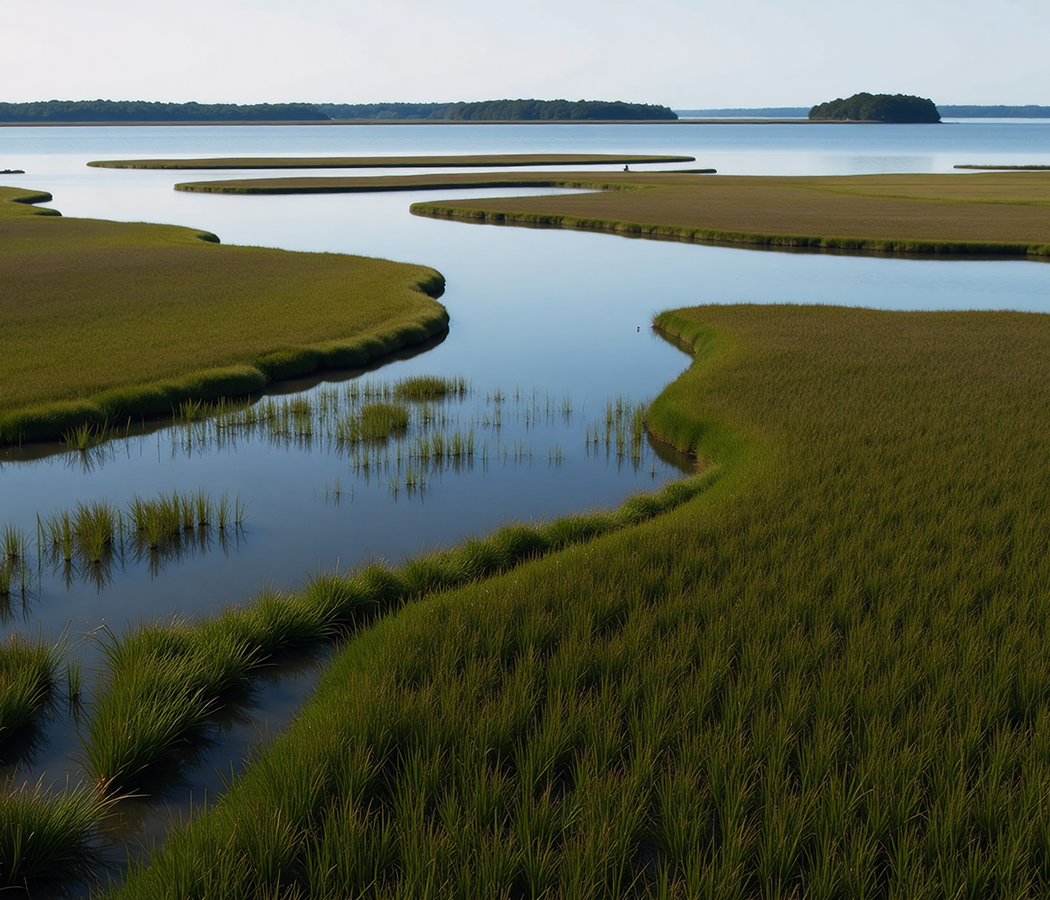
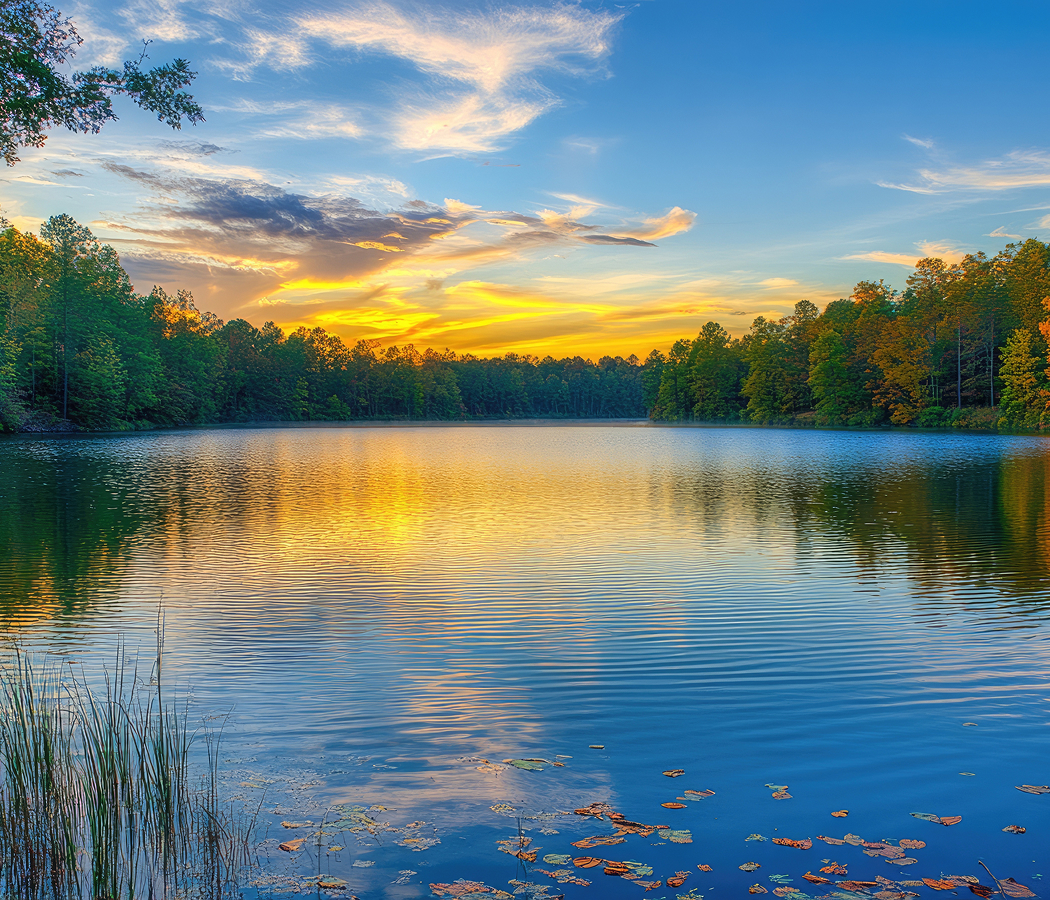
Running through the center of Hilton Head from headwaters near the historic Chaplin, Folly Field and Marshlands tracts toward Calibogue Sound, the creek forms one of the island's broadest internal waterways. Spartina marsh pushes deep into its tributaries, with exposed oyster beds appearing along muddy banks as the falling tide removes water from the surrounding flats. Kayaks move into sheltered upper reaches used by great blue herons, egrets and cormorants, and Atlantic bottlenose dolphins enter the estuary to pursue fish and shrimp concentrated around bends and marsh edges. Higher water opens channels through the grass that become inaccessible as the tide recedes, changing both the visible landscape and the routes available to small craft across a matter of hours. The result is a Central Hilton Head waterway where tides continually redraw the boundary between navigable creek, oyster reef and salt marsh.
What defines Broad Creek.
Broad Creek is best known for cutting deeply across Hilton Head as a wide tidal estuary running parallel to the Atlantic before emptying into Calibogue Sound. Its geography long organized human occupation around the island: eighteenth- and nineteenth-century properties including Honey Horn, Spanish Wells, Possum Point, Point Comfort and Lawton Place were defined partly through their relationship with Broad Creek, and Civil War-era land descriptions repeatedly used the waterway as a tract boundary. Commercial harvesting later turned the estuary into working infrastructure. Beginning in 1925, the Broad Creek Oyster Factory drew shellfish from 1,700 acres of surrounding creeks and wetlands, with oystermen working beds from bateaux before women shucked and canned the catch for distribution between Savannah, Charleston and other Lowcountry markets. Hilton Head's postwar development placed another kind of infrastructure across the creek: Charles E. Fraser and the Sea Pines Company proposed a road and bridge spanning Broad Creek in November 1957, decades before the Cross Island Parkway opened in January 1998. The bridge joined the island's northern and southern road networks across a waterway that had historically acted as a geographic division, marking a dramatic change in how people moved through Hilton Head.
Tidal exchange governs the creek from its marsh edges to its deeper channel, moving salt water, sediment and marine life through an estuarine system embedded inside the island. Eastern oysters form dense beds exposed at low water, their clustered shells creating hard habitat amid otherwise soft mud while feeding birds work along the newly uncovered shoreline. Spartina alterniflora occupies the intertidal marsh, providing cover for juvenile fish, shrimp and crabs that feed larger animals farther through the food web. Bottlenose dolphins exploit those concentrations of prey and regularly move into Broad Creek, making the estuary one of Hilton Head's principal dolphin-watching waterways. Great blue herons, egrets, ibis, cormorants and other coastal birds work the same marsh margins, with different feeding ground exposed across successive tidal stages. Protected headwaters receive comparatively little motorized traffic, giving paddlers access to narrow channels where oyster reef, marsh grass, birds and marine mammals become visible components of the same functioning estuary.
How Broad Creek fits.
Broad Creek works as the natural anchor for a Hilton Head outing that connects centuries of island land use with Gullah history, plantation agriculture and the preservation of Lowcountry coastal environments.
Begin at Coastal Discovery Museum at Honey Horn, where John Hanahan began assembling Hilton Head property in 1789 and acquired the 270-acre tract between Crooked and Muddy creeks in 1792 that eventually carried a corruption of his surname as “Honey Horn.” William John Graham and Anne Barnwell Stoney occupied the property by the 1850s, and its surviving house dates to the period immediately before the Civil War; later owners converted the property into a hunting preserve before the historic acreage became the home of the Coastal Discovery Museum. Continue to Zion Cemetery and Baynard Mausoleum, where the surviving cemetery preserves one of Hilton Head's strongest physical connections to the island community established around Zion Chapel of Ease during the eighteenth century. Revolutionary War figures are interred within the grounds, and the Baynard mausoleum preserves the name of a family whose holdings became deeply connected with the plantation landscape of southern Hilton Head, placing individual lives inside the island's colonial and antebellum history. Conclude at Sea Pines Forest Preserve, established within Charles Fraser's Sea Pines development as protected interior land containing wetlands, maritime forest and archaeological remains far removed from the resort's built centers. The preserve includes the Sea Pines Shell Ring, an Indigenous shell construction dating back thousands of years, placing the island's modern conservation landscape beside physical evidence of human occupation long preceding European settlement. The progression moves from Honey Horn's transformation across plantation ownership and preservation through Zion's surviving traces of Hilton Head's colonial community into Sea Pines Forest Preserve's protection of wetlands and ancient shell construction, extending Broad Creek's tidal history into the deeper chronology of human settlement across the island.
Where your story begins.
Foresyte Travel reveals places that feel extraordinary long before you arrive.
Enjoy editorial crafted for luxury travelers.
Foresyte may earn a commission when you book.