Why Zion Chapel of Ease matters.
Zion Chapel of Ease is a consequential historic site where Folly Field's maritime Lowcountry character meets Hilton Head's colonial Anglican past, Revolutionary War memory and one of its most significant surviving burial grounds.
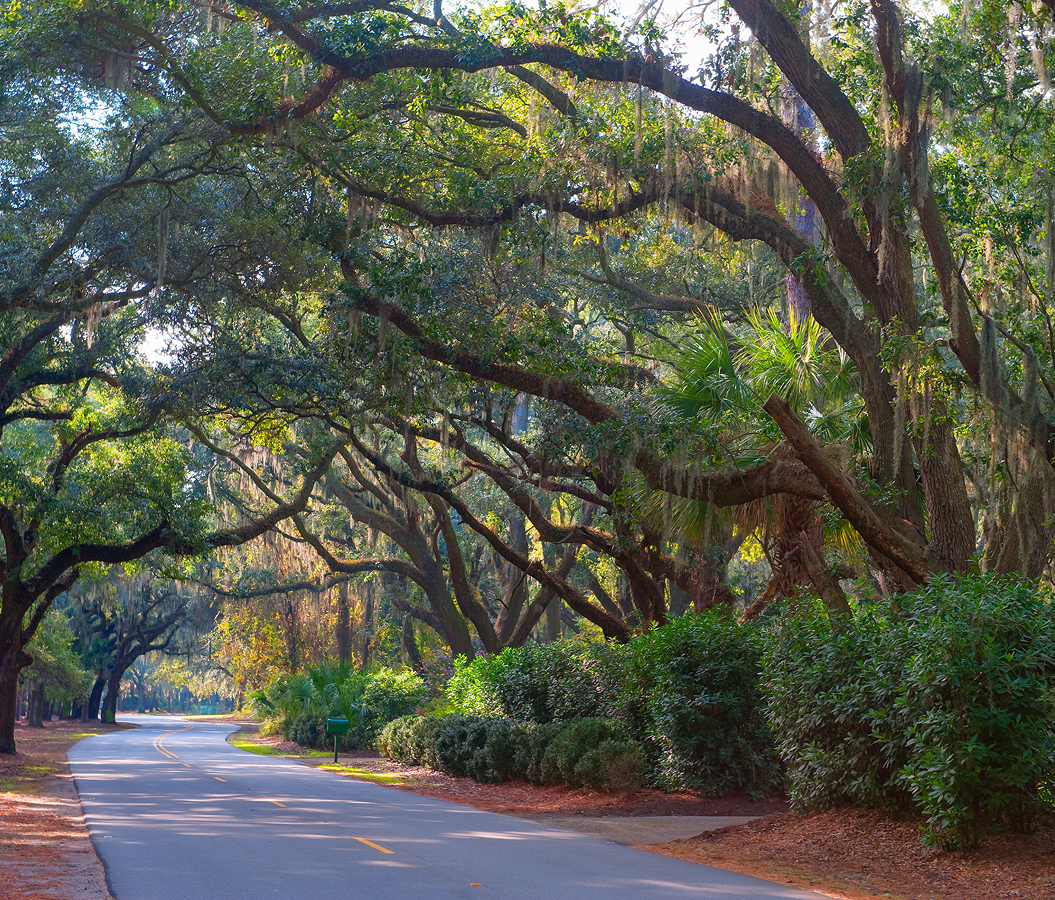
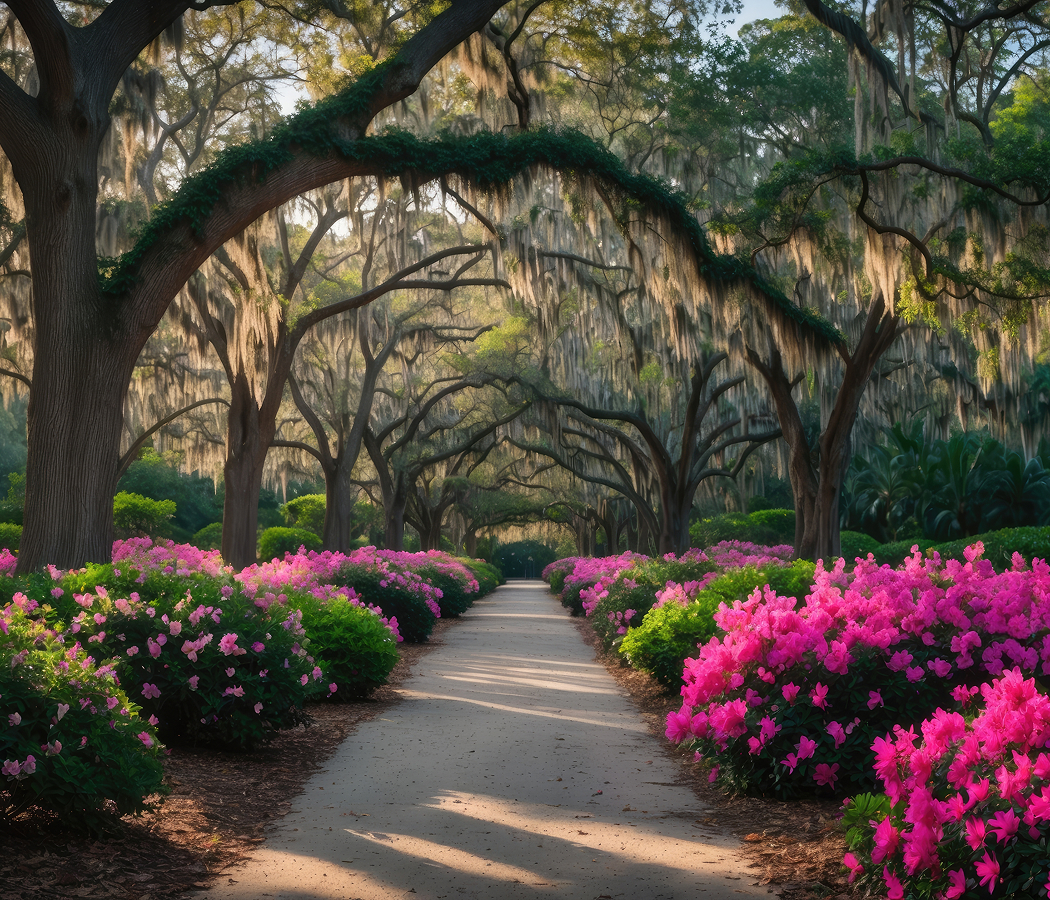
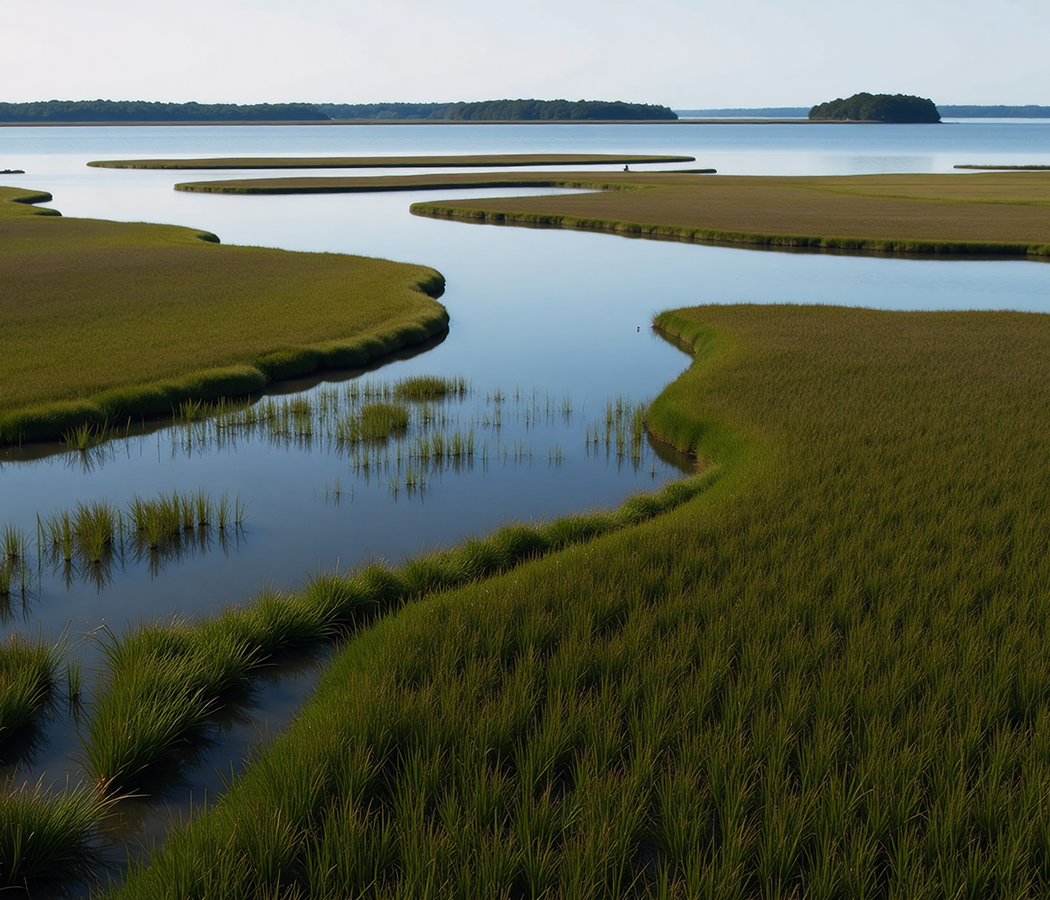
Set along William Hilton Parkway near Mathews Drive and just south of Folly Field Road, the historic site occupies a wooded parcel between the island's central highway, Broad Creek's tidal landscape and residential communities extending east toward the Atlantic shoreline. Mature live oaks enclose a compact cemetery removed visually from the commercial frontage beyond its boundary. Gravestones rise irregularly across the shaded ground, creating a physical chronology of families associated with early Hilton Head. The surviving stone mausoleum commands the property through its heavier masonry and sharply defined rectangular form. The result is a small historic precinct whose burial architecture preserves a tangible fragment of Hilton Head before plantations, war and twentieth-century resort development reshaped the island.
What defines Zion Chapel of Ease.
Zion Chapel of Ease is best known for being the site of Hilton Head's first chapel, erected in 1788 for plantation families whose distance from the St. Luke's Parish church on the mainland made regular worship difficult. St. Luke's Parish had been created on May 23, 1767, two decades before Captain John Stoney and Isaac Fripp directed construction of the island chapel. The rectangular wooden building measured 30 by 40 feet and stood on a brick foundation. Reverend Philip Mathews became its first full-time rector in 1811. After a period of diminished use, the chapel was consecrated in 1833. Two silver chalices crafted by London silversmiths arrived the following year for its communion service. Worship continued until Union occupation in November 1861 forced Hilton Head's white plantation population to flee. By 1867 the altar, pulpit, prayer desks, pews and communion silver had disappeared, and the wooden building and its bricks were gone by the following year. The chalices resurfaced years later in a Philadelphia pawnshop, where their inscription revealed their Hilton Head origin; they eventually returned to the island's Episcopal community. The vanished building left its churchyard as the enduring physical remnant of an institution that had served Hilton Head's Anglican planter families across the final decades of the colonial plantation order and into the Civil War.
William Edings Baynard commissioned the cemetery's great stone mausoleum in 1846 as a burial place for his family, using brownstone and bluestone transported from the North and assembled on Hilton Head. It survives as the island's oldest extant building. The surrounding 2.4-acre cemetery contains graves and memorials associated with four Revolutionary War Patriots: Isaac Baldwin, James Davant, John Stoney and Charles Davant. Davant died after an October 1781 ambush by Loyalist militia from Daufuskie Island and became the only known Patriot killed in action on Hilton Head. Lydia Page Davant became the churchyard's first burial in 1795. Gravestones belonging to the Baldwin, Barksdale, Baynard, Davant and other early island families extend the site beyond a single family memorial into a concentrated surviving record of Hilton Head's colonial and antebellum population. The cemetery and Baynard Mausoleum entered the National Register of Historic Places in October 2017, followed by inclusion on the South Carolina Liberty Trail in 2021. Heritage Library ownership now preserves the churchyard and mausoleum together as the surviving physical core of the former chapel grounds.
How Zion Chapel of Ease fits.
Zion Chapel of Ease works as the colonial opening to a north-island outing connecting Civil War fortification, emancipation-era religious organization and the emergence of self-governed freedom at Mitchelville.
Begin at Fort Mitchel, laid out by Union forces in late 1861 and 1862 on a bluff overlooking Skull Creek as part of a defensive system protecting the Department of the South headquarters established after the Battle of Port Royal. Engineer Quincy A. Gillmore designed the earthwork in a lunette form with protective traverses around positions intended for five or six cannon. First known as Battery Gillmore, it received its later name after Major General Ormsby MacKnight Mitchel died of yellow fever in October 1862, only weeks after assuming command on Hilton Head. Its guns never entered combat there and were removed in 1864 for siege operations at Petersburg. Continue to Historic First African Baptist Church, organized at Mitchelville on August 17, 1862 by 120 formerly enslaved congregants under Reverend Abraham Murchison. Murchison, himself formerly enslaved, became the congregation's first pastor and assisted Union recruitment of African American soldiers. The church moved as Mitchelville's population dispersed, eventually reaching its Beach City Road property in 1889 after a period under the Crossroads Baptist Church name. Its descendants helped seed additional Black Baptist congregations across Hilton Head and Bluffton. Conclude at Historic Mitchelville Freedom Park, preserving the ground associated with the self-governed community established after Union forces captured Hilton Head in November 1861. Major General Mitchel championed the settlement for formerly enslaved residents in 1862, and its inhabitants built homes, operated businesses, elected officers and instituted compulsory education. The settlement developed beside a major Union military center during a period when emancipation, Black military service and experiments in free labor were reshaping the Sea Islands before the Civil War had ended. The progression moves from Union defenses built to hold Hilton Head through a congregation organized by newly freed residents and culminates on the ground where African Americans constructed one of the nation's earliest self-governed freed communities.
Where your story begins.
Foresyte Travel reveals places that feel extraordinary long before you arrive.
Enjoy editorial crafted for luxury travelers.
Foresyte may earn a commission when you book.