Why Charlie's L'Étoile Verte matters.
Charlie's L'Étoile Verte is a French-inspired seafood bistro where South End's dining tradition meets the culinary legacy of Savannah-born chef Charlie Golson, whose Parisian influences and commitment to fresh Lowcountry seafood shaped one of the island's enduring family restaurants.
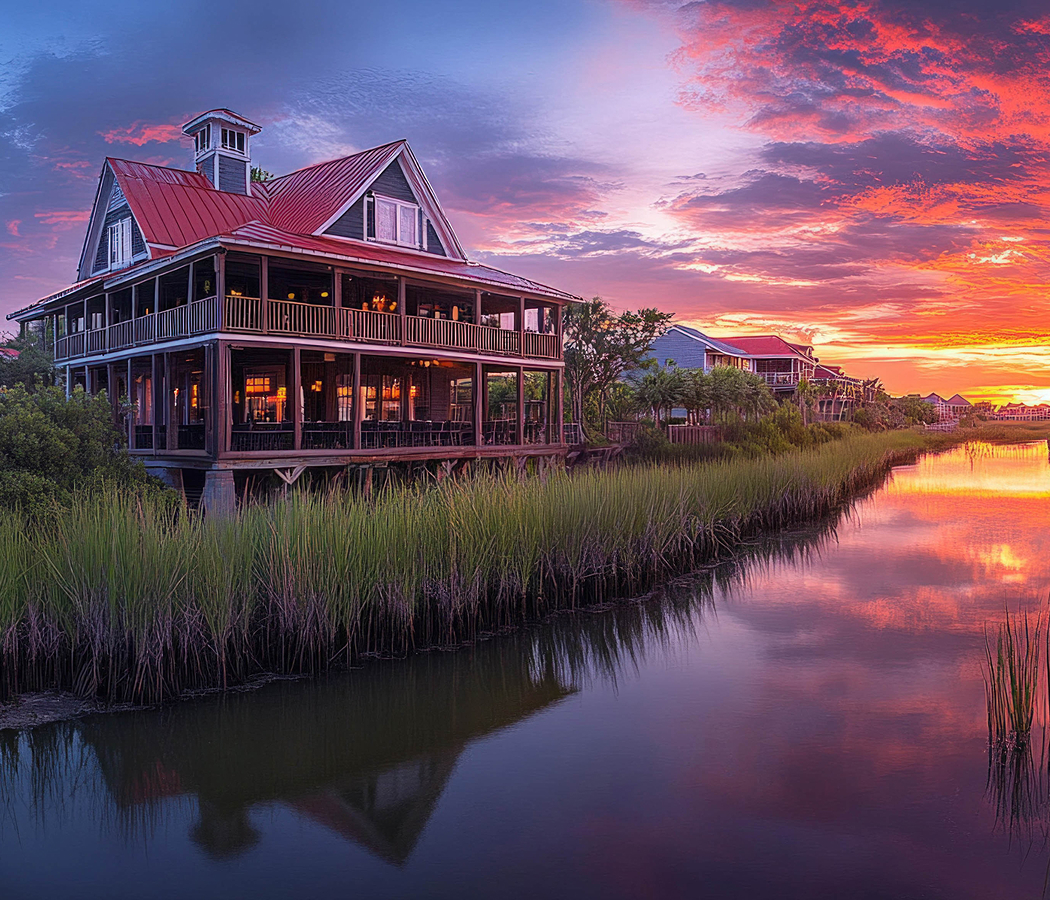
Set along New Orleans Road near William Hilton Parkway and a short drive from Coligny Beach, the restaurant occupies a cottage-style building in the island's South End commercial district, between the professional offices of the New Orleans Road corridor and the residential neighborhoods extending toward the Atlantic shoreline. Its intimate dining rooms contain closely arranged tables, warm lighting and furnishings associated with a traditional French country restaurant. A separate bar accommodates cocktails and wine service, complementing the principal dining areas. The building's modest exterior and domestic proportions preserve the character of the original family-operated bistro. The result is an established neighborhood restaurant whose understated architecture, personal service and culinary continuity distinguish it within Hilton Head's resort-oriented dining community.
What defines Charlie's L'Étoile Verte.
Charlie's L'Étoile Verte is best known for its handwritten daily seafood menu and the French culinary traditions introduced by founder Charlie Golson, whose restaurant career connected Paris, Washington, Savannah and Hilton Head. Born in Savannah, Golson attended the University of South Carolina before spending two years in the Peace Corps and developing an interest in French language and cooking. A subsequent year in Paris exposed him to neighborhood bistros, regional preparations and the informal dining establishments that influenced his professional ambitions. He studied French at the Alliance Française and attended cooking classes, supplementing his education through extensive exploration of the city's restaurants. The name L'Étoile Verte, meaning Green Star, came from a small Parisian restaurant near the Arc de Triomphe that left a lasting impression on him. Returning to the United States, Golson developed his professional skills in Washington hotel kitchens and subsequently trained under French chef Duilio Bigatin at Savannah's Chatham Club. He later became executive chef of the Hilton Head Inn, establishing his professional connection with the island before purchasing an existing French restaurant called Le Bon Vivant. Golson and his wife, Nancy, opened their family bistro in the early 1980s, beginning with a single dining room and a kitchen centered on the day's available ingredients. Their children, Margaret and Palmer, grew up within the business and subsequently assumed responsibility for its operation, preserving the family's direct involvement across generations. Margaret Golson Pearman developed particular expertise in wine, becoming a certified sommelier and directing an important component of the restaurant's dining program. The business expanded beyond its original premises into a larger establishment on New Orleans Road, accommodating increased demand and a broader range of dining occasions. Golson's handwritten menus became a defining feature, changing with the availability of fresh fish and shellfish from regional suppliers. His culinary approach combined French sauces and cooking techniques with the ingredients of coastal South Carolina, establishing a durable relationship between European restaurant traditions and Lowcountry seafood. Executive chef Joe Galluzzi joined the kitchen in 2019 as sous chef, bringing experience developed over two decades in professional kitchens. Raised in an Italian family in Irvington, New Jersey, Galluzzi relocated to the Lowcountry in 2011 and subsequently advanced to executive chef. The restaurant's continued family ownership preserves Golson's founding approach to cooking and hospitality.
Joe Galluzzi's kitchen organizes its dinner preparations around the seafood available for each day's handwritten menu, allowing the selection of fish to determine the principal dishes. Local catches appear alongside Atlantic and imported species, creating a changing assortment of textures, flavors and cooking requirements. Grilling develops a browned exterior on firmer fish, and blackening introduces a seasoned crust suited to preparations with greater intensity. Sautéed flounder meunière follows a classical French preparation, coating delicate fillets lightly before cooking them with white wine, butter and lemon. Basil-pecan pesto incorporates a Southern nut into an Italian-derived sauce, connecting regional ingredients with the restaurant's European influences. Wild mushroom sauce combines mushrooms, cream and demi-glace, providing a richer accompaniment for selected fish and meat preparations. Chicken crêpes contain chicken, mushrooms and spinach bound with béchamel, finished beneath melted Swiss cheese. Beef stew follows the Bourguignonne tradition, braising tender beef with vegetables and red wine before service with scalloped potatoes. Duck breast receives a seared exterior and raspberry demi-glace, balancing the meat's richness with fruit acidity. Charlie's potatoes combine thinly sliced potatoes, onion and nutmeg in a layered preparation associated with French gratins. House-made pâté incorporates chicken, mushrooms and pork rillettes, extending the kitchen's classical repertoire into its appetizer selection. Smoked salmon arrives with onion, egg, capers and horseradish-dill sauce, drawing upon established European seafood accompaniments. Quiche du jour uses puff pastry to support changing fillings, providing a lunch preparation distinct from the evening seafood program. Desserts include crème caramel, bread pudding with crème anglaise and pavé au chocolat, a dense chocolate-and-espresso preparation. Margaret Golson Pearman's wine program emphasizes California Cabernet Sauvignon, Oregon Pinot Noir, Bordeaux and the Rhône Valley, creating pairings suited to both delicate fish and richer meat dishes. The dining room's service connects these preparations through individual wine recommendations and the timing of successive courses, preserving the personal character of a family-operated French bistro.
How Charlie's L'Étoile Verte fits.
Charlie's L'Étoile Verte works as the dinner centerpiece for a southern Hilton Head itinerary connecting the island's preserved coastal ecosystems, its plantation-era architecture and the planned waterfront community that shaped its development as a resort destination.
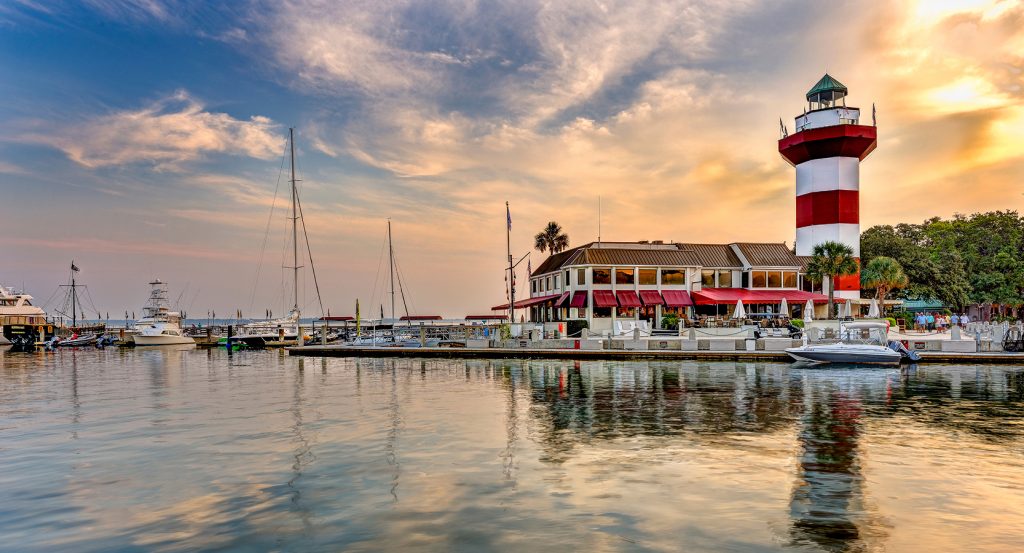
Begin at Sea Pines Forest Preserve, the protected natural landscape encompassing 605 acres within the island's southern resort district. Dedicated for conservation through protective covenants in 1970, the preserve contains maritime forests, freshwater wetlands, former agricultural fields and an extensive network of walking trails. Its archaeological features include the Sea Pines Shell Ring, constructed by Indigenous inhabitants thousands of years before European settlement. Boardwalks cross seasonally flooded woodland, and freshwater ponds support wading birds, turtles and American alligators. The preserve provides an introduction to the coastal habitats and early settlement history underlying Hilton Head's development. Continue to Stoney-Baynard Ruins, the surviving remains of a nineteenth-century plantation residence within Sea Pines. The property became associated with the Baynard family during the island's plantation era, when agricultural production depended upon enslaved African laborers. Surviving tabby foundations and masonry walls preserve portions of the residence and associated structures. Tabby construction incorporated oyster shells, lime, sand and water, drawing upon materials available throughout the coastal region. The wooded archaeological site connects the island's agricultural past with the architectural practices developed in the South Carolina Lowcountry. Conclude at Harbour Town Lighthouse, the red-and-white-striped observation tower overlooking Harbour Town Marina and Calibogue Sound. Completed in 1970, the 90-foot structure became a principal feature of the waterfront village developed under Charles Fraser's direction. Its 114-step staircase connects historical displays with an elevated observation deck overlooking the yacht basin, surrounding waterways and neighboring coastal islands. The marina's pedestrian streets, boat slips and waterfront buildings represent the planned recreational development that accompanied Hilton Head's transformation into a resort community. The progression moves from protected coastal habitats through surviving plantation architecture and culminates in the waterfront planning that reshaped Hilton Head during the twentieth century.
Where your story begins.
Foresyte Travel reveals places that feel extraordinary long before you arrive.
Enjoy editorial crafted for luxury travelers.
Foresyte may earn a commission when you book.