Why The Table matters.
The Table is a pioneering contemporary restaurant where Colaba's cosmopolitan dining heritage meets Gauri Devidayal and Jay Yousuf's introduction of California-inspired cooking, seasonal agricultural sourcing and sophisticated international hospitality to Mumbai.
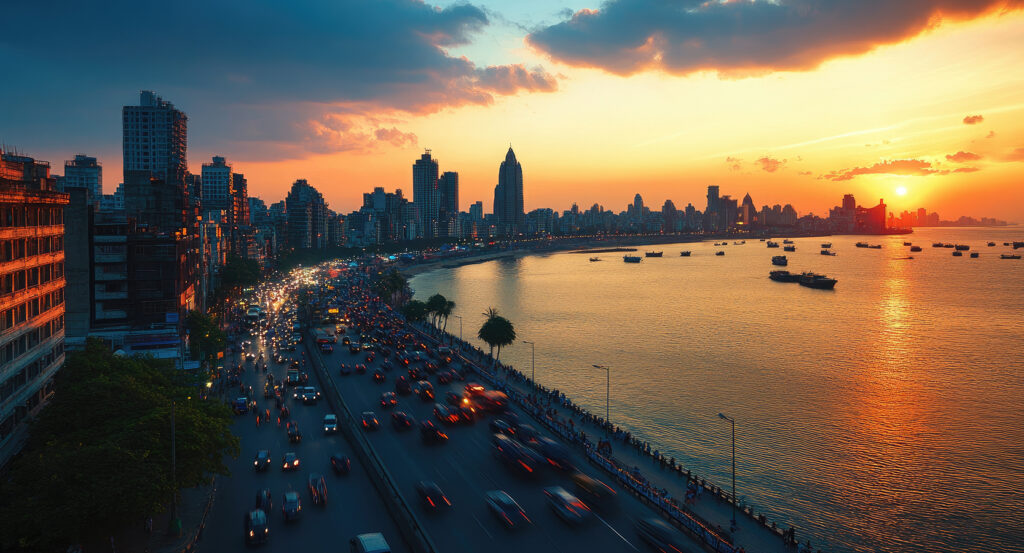
Positioned along Apollo Bunder Marg opposite Dhanraj Mahal, near the intersection with Mandlik Road and a short walk from the Taj Mahal Palace and Gateway of India, the restaurant occupies a prominent corner of South Mumbai's historic waterfront district. Its ground-floor frontage incorporates expansive windows that connect the dining room to the surrounding streets, where colonial-era buildings, established commercial premises and prominent cultural institutions shape the neighborhood's architectural character. Inside, black-and-white chevron flooring, tall windows and a restrained palette of contemporary furnishings establish a distinctive interior organized across two levels. A twenty-foot Burma teak communal table anchors the ground-floor dining room, and a mezzanine provides additional seating overlooking the restaurant's principal social space. The result is a sophisticated restaurant whose architectural restraint, prominent communal table and established Colaba setting connect international culinary ambition to one of Mumbai's most historically significant commercial neighborhoods.
What defines The Table.
The Table is best known for transforming Mumbai's independent fine-dining culture through Gauri Devidayal and Jay Yousuf's introduction of California-inspired seasonal cooking, a communal dining format and a dedicated agricultural supply operation. Devidayal grew up in Mumbai before studying law at University College London and qualifying as a chartered accountant, subsequently spending eight years working as a tax consultant with PricewaterhouseCoopers in London and Mumbai. Yousuf developed his professional career in telecommunications in San Francisco, where the Bay Area's independent restaurants shaped his understanding of ingredient-centered cooking and informal hospitality. The couple met in 2007 and married in 2010, developing plans for a restaurant during a period when Mumbai's premium dining market was heavily concentrated within international hotels. Yousuf initially explored opening a bakery and café, commissioning a visiting pastry specialist to evaluate the feasibility of producing European-style baked goods with locally available flour and equipment. Technical difficulties prompted a reconsideration of the concept, directing the project toward a full-service restaurant influenced by the contemporary American dining establishments he had encountered in California. San Francisco chef and television personality Joey Altman introduced the couple to his cousin Alex Sanchez, a Culinary Institute of America graduate who became the restaurant's founding executive chef. The founders secured a former military café in Colaba after an unsuccessful search for a larger property near the World Trade Centre, eventually undertaking a fourteen-month construction project that incorporated an additional dining level. Architect Tarik Currimbhoy contributed to the restaurant's design, developing a contemporary interior whose communal seating arrangement encouraged a more informal approach to premium dining. The Table opened in 2011, establishing an ingredient-centered menu built around small plates, international cooking techniques and carefully selected regional produce. Sanchez developed the kitchen's early reputation through dishes such as boneless chicken wings with sweet ginger glaze, yellowfin tuna tataki and seafood tagliatelle with red curry. The restaurant subsequently received Times Food Awards for European and global cuisine in 2012 and 2013, followed by Time Out Mumbai's Best Restaurant in India recognition in 2014. Its commitment to agricultural sourcing led to the establishment of The Table Farm in Sasawne, Alibaug, in 2012, creating a dedicated operation for cultivating vegetables, herbs and specialty produce. The farm developed with assistance from urban agricultural specialist Adrienne Thadani of Fresh & Local, introducing cultivation methods designed around seasonal production and careful soil management. The restaurant reached third place in the inaugural Condé Nast Traveller India Top Restaurant Awards in 2017, strengthening its national reputation for independent fine dining. Sanchez departed that year after establishing the kitchen's original culinary direction, and chef John Solari subsequently assumed responsibility for its evolving menu. The founders expanded their hospitality interests through Magazine Street Kitchen, a culinary production and event facility established in 2016 within a former industrial property belonging to Devidayal's family. The operation supported visiting chefs, professional collaborations and the development of Mag St. Bread Co., whose bakery eventually supplied the group's wider restaurant portfolio. Chef Luke Robinson contributed another chapter to The Table's kitchen before Will Aghajanian assumed culinary leadership in 2023, renewing its relationship with California-inspired cooking and seasonal European preparations. Devidayal and Yousuf published Diamonds for Breakfast in 2023, collaborating with writer Vishwas Kulkarni to examine their experiences building an independent restaurant business. The Food Matters Group subsequently expanded through Mag St., Iktara and Kaspers, developing distinct hospitality concepts around the original restaurant. The Table celebrated its fifteenth anniversary in 2026, having established a sustained position within Mumbai's contemporary dining culture through independent ownership, culinary experimentation and an extensive network of agricultural and professional relationships.
Aghajanian's cooking develops The Table's original California-inspired approach through seasonal produce, precise European techniques and globally influenced preparations whose flavors depend on carefully selected ingredients. The kitchen receives vegetables and herbs from its agricultural operation in Alibaug, where crops include heirloom tomatoes, leafy greens, radishes, beetroot, specialty herbs and edible flowers. Agricultural production influences the composition of vegetable dishes, allowing the sweetness, acidity and texture of individual crops to determine their preparation. Kohlrabi provides a particularly distinctive example, with surplus production from the farm inspiring a preparation that became one of the restaurant's established favorites. Its crisp structure and mild brassica sweetness respond to careful seasoning, allowing acidity and complementary textures to develop the vegetable's character. The SoBo Salad extends the kitchen's produce-centered approach through a combination of fresh greens, vegetables and balanced dressing, preserving the contrast between tender leaves and crisp components. Seafood preparations develop a different relationship between ingredient quality and technical precision, with sea bass crudo emphasizing delicate flesh, restrained seasoning and carefully controlled acidity. The use of citrus and complementary garnishes sharpens the fish's natural sweetness, allowing its texture to remain central to the finished preparation. Duck liver mousse introduces a richer French influence through finely processed liver whose smooth consistency depends on careful cooking and emulsification. Its concentrated savory flavor develops alongside crisp accompaniments, balancing the mousse's richness through contrasting texture. The kitchen's cauliflower and cheddar pithivier demonstrates classical pastry technique through a laminated exterior surrounding a substantial vegetable filling. Controlled baking develops a golden crust, and the cheese contributes savory depth to the cauliflower's mild sweetness. Crumpets Kejriwal adapts the familiar Bombay combination of eggs, cheese and green chilli through a British griddle bread whose porous surface absorbs butter and accompanying sauces. The preparation connects the restaurant's international influences to a recognizable Mumbai breakfast tradition. A rotating pasta program extends the menu through hand-rolled preparations, including pappardelle accompanied by slow-cooked lamb ragù. The broad pasta ribbons provide substantial surface area for the sauce, allowing the concentrated flavor of the braised meat to develop alongside the dough's delicate texture. Sourdough cacio e pepe introduces fermented bread characteristics into a familiar Roman pasta preparation, combining the sharpness of aged cheese with the aromatic warmth of black pepper. The restaurant's soft-shell crab sandwich brings a more informal American influence through delicate shellfish enclosed in a crisp exterior and accompanied by contrasting sauces and vegetables. Boneless chicken wings preserve another longstanding connection to the founding menu, using a concentrated glaze to balance sweetness, acidity and savory seasoning. The dessert program extends the kitchen's technical interests through European preparations including tiramisu and crème caramel, whose textures depend on carefully controlled dairy, eggs and sugar. A substantial wine collection provides complementary selections across European and international producers, supported by a cocktail program that incorporates classical preparations and contemporary ingredient combinations. The Table's culinary distinction develops through the sustained relationship between seasonal agriculture, accomplished kitchen technique and an international menu whose diversity remains connected to the restaurant's original commitment to ingredient quality.
How The Table fits.
The Table works as the concluding destination for a Colaba itinerary connecting Mumbai's maritime monument, the architectural development of its colonial waterfront and the preservation of one of the city's most important historical collections.
Begin at Gateway of India, the expansive waterfront arch whose construction commemorated the visit of King George V and Queen Mary to Bombay in December 1911. Scottish architect George Wittet developed its Indo-Saracenic design, incorporating architectural influences from Gujarat and the Deccan into a ceremonial structure overlooking the harbor. The foundation stone was laid on March 31, 1913, and construction proceeded through extensive reclamation and the development of a substantial waterfront approach. Completed in 1924, the basalt monument rises twenty-six meters above the surrounding plaza, with a central arch framed by decorative stonework and four prominent turrets. Its ceremonial importance acquired another historical dimension on February 28, 1948, when the final British military contingent departed India through the waterfront precinct following independence. The surrounding harbor continues to connect the monument to Mumbai's maritime geography, with passenger vessels departing toward destinations including Elephanta Island. Continue to Taj Mahal Palace, the historic hotel whose construction established a major architectural and hospitality institution along Bombay's expanding colonial waterfront. Industrialist Jamsetji Nusserwanji Tata commissioned the property during a period of substantial commercial development, engaging architects Sitaram Khanderao Vaidya and D. N. Mirza in the creation of its original design. English engineer W. A. Chambers subsequently contributed to the project, which incorporated architectural influences from European Renaissance buildings and Indo-Saracenic traditions. The hotel opened on December 16, 1903, introducing advanced electrical systems, imported furnishings and substantial public entertaining spaces to the city's hospitality industry. Its central dome, elaborate stonework and distinctive corner towers established an enduring architectural presence overlooking the Arabian Sea. The later construction of the Taj Mahal Tower expanded the property in 1973, creating a contrasting modern addition to the original historic building. Conclude at Chhatrapati Shivaji Maharaj Vastu Sangrahalaya, the major museum whose collections preserve significant chapters of the Indian subcontinent's artistic, archaeological and natural history. The institution originated through a civic initiative to commemorate the 1905 visit of the Prince of Wales, subsequently King George V, with the creation of a permanent public museum. George Wittet designed its Indo-Saracenic building, incorporating a prominent dome inspired by the Gol Gumbaz in Bijapur and architectural details associated with Indian palace and religious construction. The structure was completed in 1914, although its opening was delayed by wartime requirements that temporarily redirected the building toward other institutional purposes. The museum opened to the public on January 10, 1922, developing collections of Indian miniature paintings, sculpture, decorative arts, archaeological objects and natural history specimens. Its conservation and educational activities contribute to the preservation of material associated with successive periods of Indian civilization, connecting Mumbai's cultural institutions to the wider history of the subcontinent. The progression moves from Gateway of India's ceremonial waterfront architecture through Taj Mahal Palace's development of international hospitality and culminates in Chhatrapati Shivaji Maharaj Vastu Sangrahalaya's historical collections, placing The Table within the maritime, architectural and institutional heritage of southern Mumbai.
Where your story begins.
Foresyte Travel reveals places that feel extraordinary long before you arrive.
Enjoy editorial crafted for luxury travelers.
Foresyte may earn a commission when you book.