Why Lovrjenac Fortress matters.
Lovrjenac Fortress is a formidable coastal stronghold where Pile's rocky Adriatic shoreline meets the Republic of Ragusa's determination to defend its western maritime approaches and preserve the political independence that sustained Dubrovnik for centuries.
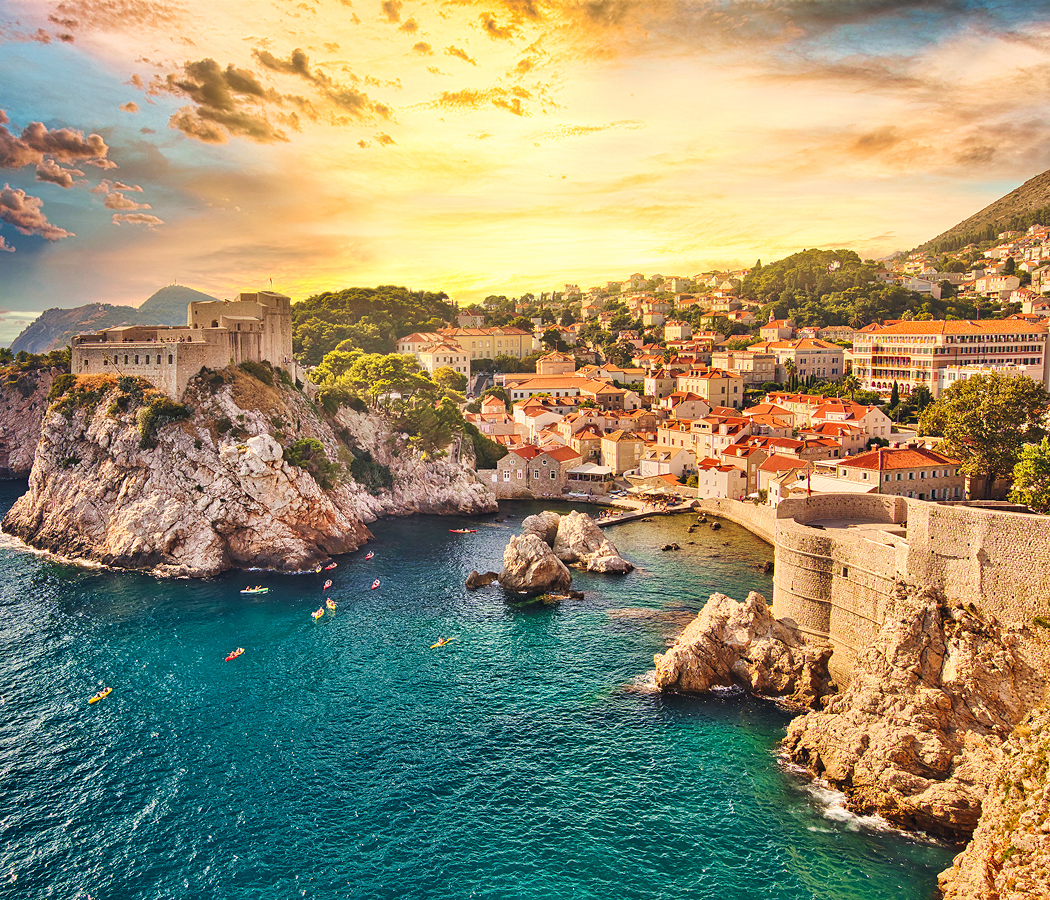
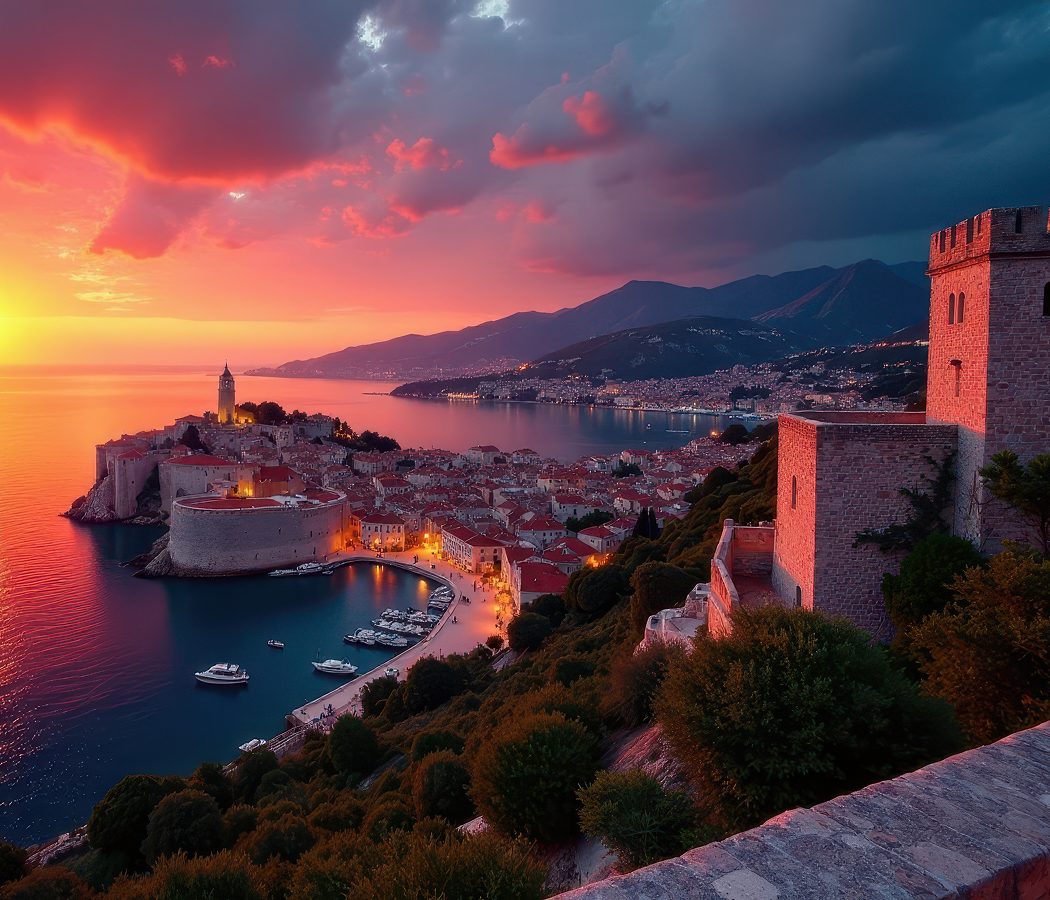
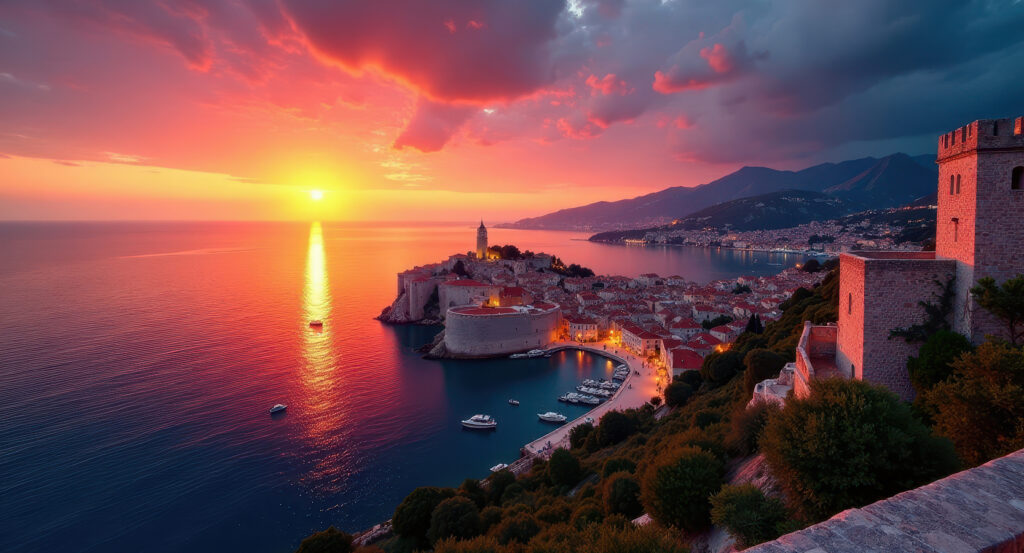
Perched on a limestone promontory west of Dubrovnik's historic walls, the fortress occupies a commanding position above Kolorina Bay, with its eastern terraces overlooking the fortified city and its southern masonry rising directly above the exposed Adriatic coastline. Sheer rock faces support massive defensive walls that follow the irregular contours of the headland. A sequence of stone stairways, fortified entrances and elevated courtyards organizes movement through the compact military complex. Its exposed battlements provide sweeping views of the coastal approaches, the terracotta rooftops of the historic center and the narrow channel separating the fortress from the city. The result is a coastal fortification whose dramatic elevation, concentrated defensive architecture and commanding maritime position preserve the military ambitions of Dubrovnik's former republic.
What defines Lovrjenac Fortress.
Lovrjenac Fortress is best known for protecting Dubrovnik's western maritime approaches and serving as an architectural expression of the Republic of Ragusa's commitment to political independence. The fortress stands on a rocky promontory 37 meters above the Adriatic, occupying a position that allowed defenders to control the waters immediately west of the fortified settlement. Its earliest construction is traditionally associated with the eleventh century, when Dubrovnik's inhabitants sought to prevent Venetian control of the strategically important headland. Medieval accounts connect the fortress with a rapid building campaign intended to deny Venice an advantageous military position overlooking the city. The surviving structure developed through successive construction phases, incorporating substantial improvements as Dubrovnik's commercial prosperity increased. During the thirteenth and fourteenth centuries, the republic strengthened its coastal defenses amid competition among Adriatic maritime powers. The Treaty of Zadar in 1358 ended Venetian sovereignty over Dubrovnik, creating conditions for the development of a largely autonomous maritime state. Ragusan authorities subsequently invested in fortifications that could protect the city's commercial harbor and principal western entrance. The growing effectiveness of gunpowder artillery during the fifteenth century required substantial changes to defensive construction, including thicker masonry and improved firing positions. Lovrjenac underwent important modifications during this period, adapting its walls and platforms to the military technologies of the Renaissance. The fortress's exposed position made it particularly important to the defense of Dubrovnik's western approaches, where hostile vessels could threaten the city from the sea. Its strategic importance also extended to the control of movement around the rocky coastline and the narrow waters adjoining the fortified settlement. The republic maintained a carefully organized military administration, coordinating defensive infrastructure with diplomatic arrangements intended to preserve its autonomy among more powerful neighboring states. The devastating earthquake of 1667 damaged substantial portions of Dubrovnik, but the fortress survived as an important component of the city's defensive system. French forces occupied Dubrovnik in 1806, and the republic was formally abolished in 1808, ending the political institutions responsible for maintaining its independent military defenses. Austrian administration during the nineteenth century introduced a different strategic environment, gradually reducing the fortress's original military importance. Twentieth-century conservation programs subsequently preserved its historic masonry and defensive structures. The Old City of Dubrovnik received UNESCO World Heritage recognition in 1979, establishing international protection for the fortified urban ensemble. Lovrjenac's continued preservation maintains an important connection with the republic's maritime history and the military architecture developed to safeguard its independence.
Lovrjenac's architectural organization is defined by three principal terraces arranged at different elevations within the rocky promontory. The fortress incorporates substantial stone walls whose thickness varies considerably according to the direction of potential attack. Its seaward defenses reach twelve meters in thickness, providing substantial protection against artillery bombardment from hostile vessels. The walls facing Dubrovnik are considerably thinner, reflecting the republic's determination to retain control over the fortress should an occupying force capture it. This defensive arrangement allowed the city to maintain a strategic advantage over a compromised military position. The principal entrance bears the Latin inscription Non bene pro toto libertas venditur auro, expressing the conviction that liberty could not be purchased with gold. The inscription became closely associated with Dubrovnik's republican political traditions and its emphasis on preserving independence through military preparedness and diplomatic negotiation. A sequence of steep stone stairways provides access to the elevated defensive terraces, revealing the compact arrangement of the fortress's internal spaces. The upper courtyard incorporates substantial masonry surfaces and enclosed architectural elements adapted to the site's irregular topography. The fortress historically accommodated artillery positions intended to command the surrounding waters and protect the approaches to the city. Its defensive equipment included the large cannon known as Gušter, cast by the Dubrovnik founder Ivan Rabljanin during the sixteenth century. Rabljanin's work contributed to the republic's artillery production and demonstrated the technical capabilities of its military craftsmen. The fortress's elevated position provides direct views across the western defensive perimeter and the adjoining coastal landscape. Its exposed terraces also create a distinctive setting for theatrical performances, particularly during the Dubrovnik Summer Festival. Shakespeare's Hamlet has been staged within the fortress, using its enclosed courtyards and substantial stone architecture as a dramatic setting. The combination of preserved military engineering and contemporary cultural use maintains Lovrjenac's importance within Dubrovnik's historical and artistic institutions.
How Lovrjenac Fortress fits.
Lovrjenac Fortress works as the defensive anchor for a Dubrovnik outing connecting the republic's principal western entrance, its maritime commercial institutions and the elevated landscape that shaped the city's strategic position along the Adriatic.
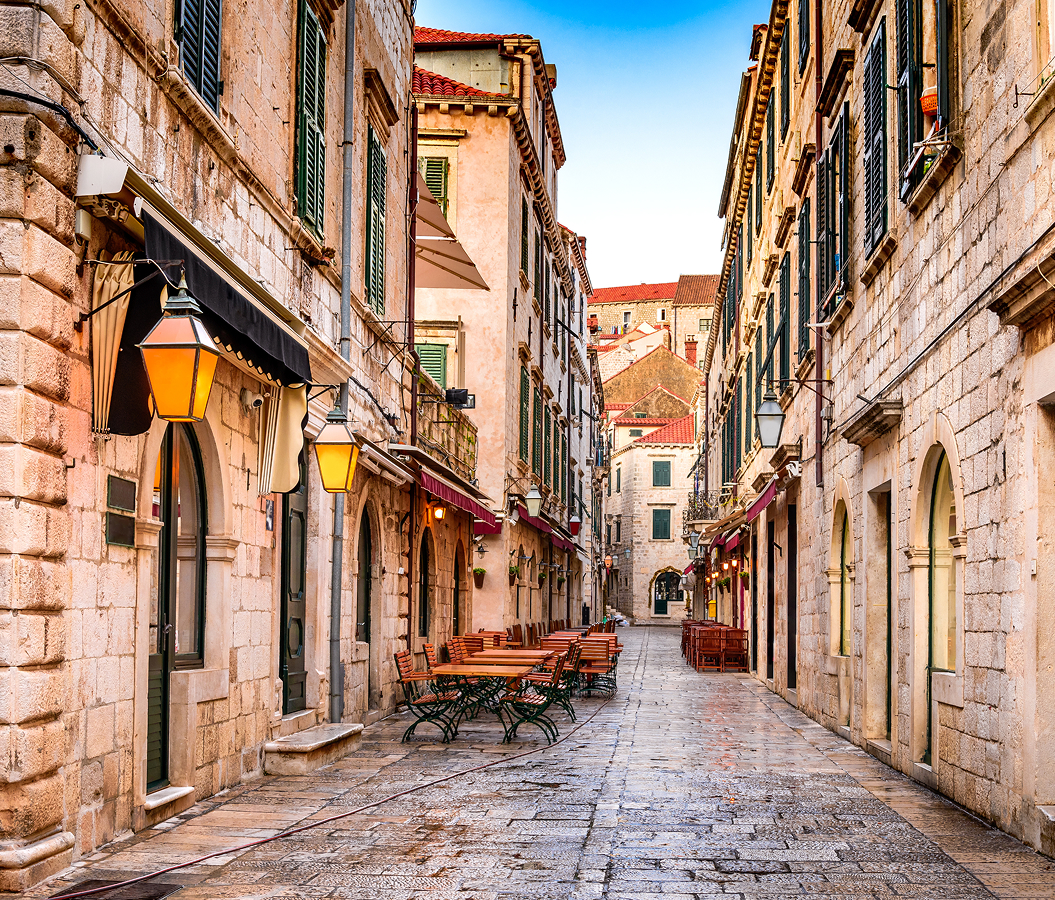
Begin at Pile Gate, the principal western entrance to Dubrovnik's historic center. The fortified gateway developed through medieval and Renaissance construction phases, incorporating substantial defensive passages and architectural features intended to regulate access to the city. Its outer entrance connects with a stone bridge spanning the former defensive ditch, establishing a controlled approach toward the historic streets. The gateway bears an image of Saint Blaise, Dubrovnik's patron saint, whose representation became closely associated with the republic's civic and religious traditions. Its surviving masonry preserves important evidence of the defensive organization that protected the city's principal landward approach. Continue to Rector's Palace, the historic administrative center of the Republic of Ragusa near the Old Port. The building developed through Gothic and Renaissance construction phases, incorporating an arcaded courtyard, ceremonial chambers and administrative offices associated with the republic's elected rector. Onofrio della Cava contributed to its fifteenth-century reconstruction, introducing architectural elements that combined civic dignity with the practical requirements of government. The rector served a term of one month, an institutional arrangement intended to prevent excessive concentration of political authority. The palace now houses historical collections associated with Dubrovnik's republican government, preserving the architectural setting of its former administrative institutions. Conclude at Mount Srđ, the elevated ridge rising directly above Dubrovnik's northern perimeter. Reaching 412 meters above sea level, the mountain commands extensive views across the historic center, the Adriatic coastline and neighboring islands. Fort Imperial occupies the summit, having been constructed during the Napoleonic period and subsequently modified under later administrations. The fortress played an important role during the Croatian War of Independence, particularly during the siege of Dubrovnik in 1991. Its museum presents historical materials concerning the conflict and the defense of the city. The progression moves from Pile Gate's fortified entrance through Rector's Palace's republican institutions and culminates at Mount Srđ's commanding defensive landscape, connecting Lovrjenac Fortress with the military and political structures that sustained Dubrovnik's historic independence.
Where your story begins.
Foresyte Travel reveals places that feel extraordinary long before you arrive.
Enjoy editorial crafted for luxury travelers.
Foresyte may earn a commission when you book.