
Why Noema matters.
Noema is a contemporary Greek dining destination where Chora's Cycladic architectural heritage meets the island's evolving gastronomic culture, bringing open-fire cooking, seasonal Aegean ingredients and an ambitious music program into a restored historic courtyard.
Positioned on Panachrantou Street in the pedestrianized heart of Mykonos Town, near the Panachrantos monastery and the commercial lanes connecting Matogianni with the island's waterfront, the restaurant occupies a former open-air cinema surrounded by whitewashed residences and traditional Cycladic buildings. Its central courtyard combines mature trees, stone surfaces and understated furnishings, creating a secluded gathering space within the dense historic settlement. An open kitchen introduces the movement and aromas of live-fire cooking into the dining environment, establishing a direct relationship between culinary preparation and hospitality. An adjoining bar and carefully integrated lighting support the transition from evening dining into the property's later musical program. The result is a distinctive cultural setting whose historic courtyard, elemental cooking and intimate atmosphere connect contemporary Mykonos with the architectural character of its traditional town center.
What defines Noema.
Noema is best known for transforming a former open-air cinema into a contemporary restaurant and cultural destination that brings together Greek gastronomy, architecture and music. The establishment opened in 2021 through a partnership between hospitality entrepreneur Panos Zinas and restaurateur Richard Caring's Caprice Holdings, introducing an ambitious new concept into Mykonos's internationally recognized dining scene. Zinas had previously established an influential presence on the island through Scorpios, the beachside cultural destination developed with Thomas Heyne and Mario Hertel in 2015. His involvement brought experience in creating hospitality environments that integrated food, design, music and contemporary cultural programming. Caprice Holdings contributed an established international restaurant portfolio associated with destinations including London's The Ivy and Sexy Fish. The partnership positioned Noema within a growing movement toward experiential hospitality on Mykonos, emphasizing a coherent relationship between the restaurant's physical setting and its broader cultural activities. Interior designer Richard Saunders directed the architectural transformation, preserving the courtyard's open-air character through a restrained approach to materials and furnishings. The project incorporated traditional Cycladic construction techniques, natural textures and contemporary design elements, creating an environment grounded in the island's architectural traditions. Local craftsmen contributed to the development of the space, strengthening the connection between the new restaurant and the surrounding community. The name Noema derives from the Greek word νόημα, associated with meaning and understanding, expressing the founders' interest in creating a destination shaped by physical experience and cultural exchange. Chef Athinagoras Kostakos became central to the restaurant's culinary development, bringing extensive experience in contemporary Greek cooking and a professional background closely connected with Mykonos. Kostakos had previously worked at Bill & Coo Suites and Lounge, where his culinary leadership contributed to the property's reputation as a leading gastronomic destination. He also established the Athenian restaurant Cookoovaya in 2014 alongside fellow chefs, developing an influential collaborative approach to contemporary Greek cuisine. His appointment at Noema introduced a culinary direction centered on regional ingredients, ancestral cooking methods and the expressive possibilities of fire. The restaurant's opening attracted international attention for its combination of Mediterranean gastronomy and cultural programming, strengthening Mykonos's reputation as a destination for ambitious contemporary hospitality. Its musical activities developed through collaborations with international DJs, producers and artists, establishing a program that connected electronic music with the rhythms of the island's evening social culture. The venue also introduced a carefully developed cocktail program, extending its emphasis on regional ingredients and aromatic complexity into the bar. Noema's development reflected the broader transformation of Mykonos from a destination defined principally by beaches and nightlife into an increasingly diverse center for gastronomy, design and cultural exchange. Its significance rests on this integration of culinary leadership, architectural preservation and artistic programming, establishing a distinctive interpretation of contemporary Greek hospitality within the historic center of Chora.
Athinagoras Kostakos's cooking develops the flavors of the Aegean through elemental techniques, emphasizing open-fire preparation, seasonal ingredients and the culinary traditions of Greek island communities. The kitchen draws upon methods associated with domestic hearths and coastal cooking, using flame, smoke and carefully controlled heat to develop the natural qualities of fish, meat and vegetables. Exceptional regional ingredients provide the foundation, with seafood sourced from the surrounding waters and agricultural products selected from Greek producers. Wood-fire grilling plays a central role, introducing aromatic complexity and delicate surface caramelization while preserving the natural textures of the principal ingredients. The menu explores the relationship between familiar Greek preparations and contemporary culinary technique, allowing traditional flavors to emerge through refined combinations. Grilled octopus demonstrates this approach through its tender interior and lightly charred exterior, complemented by aromatic herbs and Mediterranean seasonings. The preparation emphasizes the seafood's natural salinity, with smoke contributing an additional layer of flavor. Fresh fish receives comparable attention, with whole specimens prepared over open flames to preserve moisture and develop a delicate contrast between crisp skin and tender flesh. Vegetables occupy an equally important position, reflecting the importance of seasonal produce within the traditional Greek diet. Fire-roasted preparations concentrate natural sweetness, allowing olive oil, herbs and restrained acidity to complete compositions grounded in the ingredient's distinctive character. The kitchen also incorporates traditional Greek cheeses, whose tangy freshness and rich textures contribute balance to both vegetable and meat dishes. Slow-cooked preparations extend the menu beyond the grill, drawing upon the techniques associated with communal meals and family celebrations. These dishes introduce deeper concentrations of flavor, allowing aromatic herbs, vegetables and carefully prepared stocks to develop through extended cooking. The restaurant's approach emphasizes sharing, encouraging guests to experience complementary dishes across a table in the tradition of Greek communal dining. Desserts continue the Mediterranean emphasis through seasonal fruits, nuts and familiar regional flavors interpreted with contemporary precision. The beverage program complements the kitchen through Greek wines, international selections and cocktails developed around herbs, citrus and other aromatic ingredients. These drinks contribute an additional expression of the restaurant's interest in Mediterranean produce, supporting the progression from dinner into its evening social program. Noema's culinary distinction emerges from this sustained relationship between elemental cooking and accomplished contemporary technique, presenting the flavors of the Aegean through a coherent and engaging gastronomic experience.
How Noema fits.
Noema works as the culinary anchor for an exploration of Chora's religious architecture, traditional maritime commerce and the preservation of Cycladic domestic culture, connecting the island's historic institutions with the contemporary social life of its pedestrianized center.
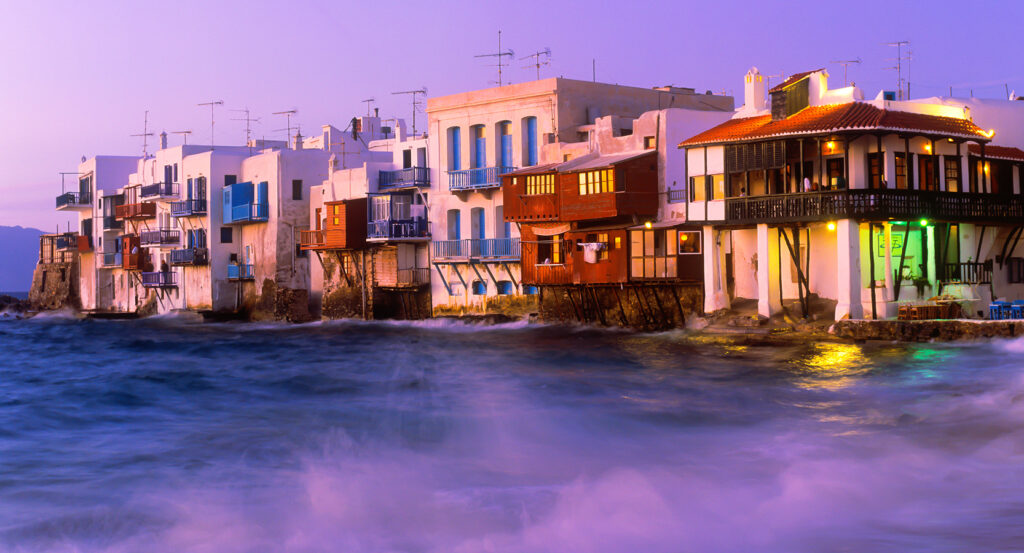
Begin at Panachrantos Monastery, the historic religious complex situated within the narrow lanes of Mykonos Town. The monastery developed as part of the island's longstanding Orthodox traditions, providing a place of worship and communal religious activity within the historic settlement. Its whitewashed architecture and compact proportions reflect the characteristic building methods of the Cyclades, where religious structures were integrated closely with surrounding residences. The complex preserves the intimate relationship between ecclesiastical life and everyday urban activity that shaped traditional Mykonian communities. Its setting offers a quiet introduction to the spiritual and architectural heritage embedded within Chora's commercial streets. Continue to Mykonos Folklore Museum, the institution housed in a historic sea captain's residence near the Kastro waterfront. Founded in 1958 by Professor Vasilios Kyriazopoulos, the museum preserves the material culture of Mykonos through collections of traditional furnishings, textiles, ceramics, historical photographs and maritime objects. Its exhibits include domestic utensils, embroidery and decorative objects associated with the island's nineteenth-century households. The museum's setting within a traditional residence reinforces the relationship between its collections and the architectural environment in which they were originally used. Its preservation of everyday objects provides an important perspective on Mykonos before the rapid expansion of international tourism. Conclude at Little Venice, the celebrated waterfront quarter extending along the western edge of the historic town. The district developed through the seventeenth and eighteenth centuries, when prosperous merchants and sea captains constructed residences directly above the water. Their colorful wooden balconies project over the shoreline, creating an architectural arrangement associated with the maritime commerce that sustained the island's economy. The buildings' distinctive relationship with the sea reflects the practical importance of coastal access within the historic settlement. The waterfront subsequently became a center for cafés, galleries and evening social activity, preserving the architectural character of the former merchant quarter. The progression connects Chora's religious traditions with the domestic culture of its maritime families and concludes at a waterfront neighborhood whose historic architecture continues to shape Mykonos's cultural life.
Where your story begins.
Foresyte Travel reveals places that feel extraordinary long before you arrive.
Enjoy editorial crafted for luxury travelers.
Foresyte may earn a commission when you book.




















































































































