Why Grey Ghost matters.
Grey Ghost is an acclaimed American restaurant where Brush Park's architectural revival meets John Vermiglio and Josef Giacomino's inventive meat-centered cooking, Detroit's Prohibition folklore and a defining partnership in the city's contemporary dining scene.
Set along East Watson Street near Woodward Avenue and a short walk from Little Caesars Arena, the restaurant occupies the western edge of Brush Park between Midtown's cultural institutions, the historic residential streets surrounding Alfred Street and Downtown Detroit's entertainment district. Its low-rise brick building once housed Ye Olde Butcher Shoppe, connecting the restaurant's contemporary culinary character to the property's earlier commercial use. Inside, exposed brick, dark wood, upholstered banquettes and patterned black-and-white tile establish an intimate dining room whose industrial materials reflect the surrounding neighborhood. A long bar constructed from reclaimed bowling-alley flooring anchors the interior, with closely arranged tables and a seasonal patio extending the restaurant's social atmosphere beyond the main dining space. The result is a restaurant whose historic commercial setting, carefully adapted interior and proximity to Detroit's changing urban landscape reinforce its place within Brush Park's culinary revival.
What defines Grey Ghost.
Grey Ghost is best known for the partnership between chefs John Vermiglio and Josef Giacomino, restaurateur David Vermiglio and bartender Will Lee, whose collaboration transformed a former Detroit butcher shop into one of the city's most celebrated restaurant openings of 2016. John Vermiglio grew up in metropolitan Detroit and began working in restaurants at fourteen, washing dishes at a bagel shop before pursuing professional culinary training. He graduated with honors from Johnson & Wales University in Providence, Rhode Island, establishing the technical foundation for a career that subsequently carried him into Chicago's demanding restaurant industry. His early professional development included Trotter's To Go, the catering operation associated with Charlie Trotter, where he advanced through private dining and event production before working within Trotter's MICHELIN-starred restaurant organization. Vermiglio later became executive sous chef at Art Smith's Table Fifty-Two, spending four years overseeing restaurant operations and private events. His subsequent work with Graham Elliot expanded his fine-dining background before he reunited with chef Matthias Merges, a former Trotter colleague whose Folkart Restaurant Management operated several prominent Chicago establishments. Vermiglio became the group's director of culinary operations, overseeing kitchens associated with A10 Hyde Park, Billy Sunday and Yusho. Giacomino developed his own reputation within the same Chicago restaurant community, serving as executive chef at A10 and earning recognition in Zagat's Chicago 30 Under 30 culinary class. The chefs' professional relationship originated through their work together at Table Fifty-Two and subsequently developed through their shared involvement with Merges' restaurant group. David Vermiglio, John's twin brother, supplied a complementary business perspective rooted in Detroit, bringing the brothers' longstanding ambition to establish an independent restaurant closer to realization. Lee entered the partnership through Detroit's emerging cocktail culture, having worked at establishments including Selden Standard, Wright & Company and Standby. David first encountered Lee during a 2013 pop-up event, beginning a professional relationship that eventually placed the bartender alongside the two chefs in the founding group. Their search for a restaurant name led to Detroit's Prohibition history and the story of a mysterious rumrunner known as the Grey Ghost, whose reputation for evading authorities along the Detroit River supplied a connection to the city's illicit liquor trade. The partners announced their restaurant ambitions in 2015 and introduced their cooking through a succession of pop-up dinners devoted to different animal proteins, using beef, pork, poultry and seafood to explore the possibilities of a meat-centered concept. A final preview event in June 2016 took the form of a pig roast benefiting Crossroads of Michigan, connecting the developing business to a Detroit social-service organization. Grey Ghost opened on July 28, 2016, bringing the partners' Chicago culinary training and Detroit hospitality backgrounds into a neighborhood undergoing substantial redevelopment. Its arrival generated immediate attention within the city's restaurant community, and Eater Detroit recognized Grey Ghost with its 2016 Design of the Year award. The restaurant also won the publication's readers' choice recognition for Restaurant of the Year and Bar of the Year, reflecting the combined strength of its culinary and beverage programs. StarChefs named John Vermiglio a Rust Belt Rising Star Chef in November 2016, adding professional recognition to the restaurant's early reception. The partnership subsequently developed into Four Man Ladder Hospitality, extending its operations beyond the original restaurant. Second Best opened directly across Watson Street in 2018, translating the founders' interest in accessible food and cocktails into a more casual neighborhood bar. Basan followed near Little Caesars Arena, expanding the group's culinary scope through an Asian-influenced restaurant concept. The company later introduced Little Ghost in Ferndale, developing a dedicated fast-casual operation around the cheeseburger that had become one of Grey Ghost's most recognizable preparations. This expansion connects the restaurant's original founding partnership to a broader Detroit hospitality enterprise whose development began with the transformation of a single former butcher shop.
Vermiglio and Giacomino's culinary approach begins with the techniques of butchery and meat cookery, developing familiar American preparations through carefully controlled heat, assertive seasoning and influences drawn from their extensive professional training. The kitchen's relationship with beef demonstrates that philosophy through steaks selected for their marbling, tenderness and capacity to develop concentrated flavor under high heat. Dry aging introduces another dimension by allowing moisture loss and enzymatic activity to intensify the meat's character before cooking begins. The resulting beef develops a deeply browned exterior that contrasts with the tenderness and retained juices of its interior, giving the restaurant's steak preparations their central physical appeal. Grey Ghost's cheeseburger translates the same attention to beef into a more informal preparation, using griddled patties whose surfaces develop pronounced caramelization through direct contact with the cooking surface. American cheese melts across the hot meat, and shredded lettuce, onion and a distinctive dill sauce introduce contrasting temperatures, acidity and texture. The burger's popularity eventually supported its development into a separate restaurant concept, demonstrating how a straightforward preparation became an enduring expression of the kitchen's culinary philosophy. That approach extends beyond beef through the deliberate relationship between richness and sharply contrasting accompaniments. Pork receives substantial attention through preparations that emphasize the natural fat and sweetness of the meat, with mustard, fermented vegetables and acidic sauces providing balance against its richness. Seafood introduces a different technical challenge, requiring precise control of cooking temperature to preserve delicate textures before concentrated sauces and aromatic garnishes supply additional depth. The kitchen's broader culinary influences appear through ingredients associated with East Asian, Mediterranean and American regional cooking, introducing fermented flavors, herbs, chiles and assertive condiments into preparations grounded in familiar proteins. Beef tartare demonstrates this exchange through raw meat whose texture and natural richness provide a foundation for seasonings that introduce sweetness, heat and crispness. Vegetables occupy an important supporting position within this culinary structure, receiving roasting, frying and other treatments that develop their own flavors and textures alongside the principal proteins. The small-plate format allows these contrasting preparations to develop across the table, giving diners access to the kitchen's different approaches to heat, acidity, richness and seasoning within a shared meal. Lee's cocktail program extends that balance into the bar, connecting classic American drink structures with contemporary ingredients and techniques. Spirit-forward preparations emphasize the character of whiskey, gin and other base spirits through carefully measured bitters, vermouth and aromatic additions. Brighter cocktails incorporate citrus, spice and fruit, establishing a complementary relationship with the kitchen's roasted meats and concentrated sauces. The bar's original approach included cocktails served from taps alongside shaken and stirred preparations, allowing different methods to shape texture, temperature and the integration of ingredients. This coordination between kitchen and bar gives Grey Ghost a distinctive culinary character in which classical technique, creative seasoning and familiar American dishes develop through a consistent emphasis on flavor, balance and craftsmanship.
How Grey Ghost fits.
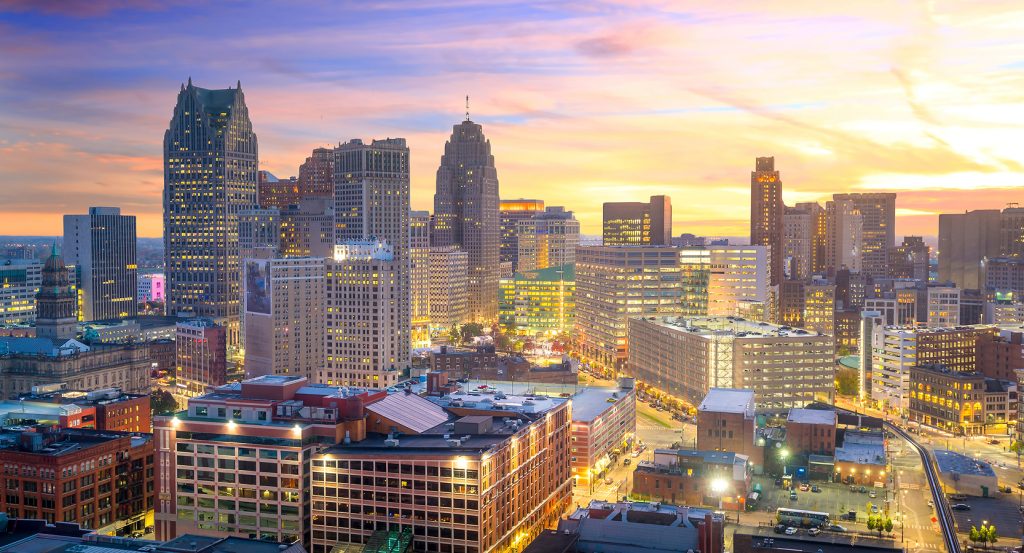
Grey Ghost works as the concluding destination for a Brush Park itinerary connecting Detroit's nineteenth-century residential architecture, the reinvention of its industrial buildings and the contemporary artistic institutions that have reshaped the cultural landscape surrounding Woodward Avenue.
Begin at Ransom Gillis House, the restored Venetian Gothic residence that preserves one of Brush Park's most distinctive architectural achievements from Detroit's nineteenth-century expansion. Wholesale dry-goods merchant Ransom Gillis commissioned the house during the 1870s, engaging architect Henry T. Brush and his young assistant George D. Mason to create a residence influenced by the Venetian architectural traditions celebrated by John Ruskin. Completed between 1876 and 1878, the building acquired an elaborate corner turret decorated with geometric tiles in blue, red, yellow and brown, establishing a visual character that distinguished it from neighboring Victorian residences. The property deteriorated during the twentieth century as Brush Park experienced population loss and extensive demolition, eventually standing vacant for decades. A major restoration completed in 2015 through a collaboration involving Nicole Curtis and Quicken Loans returned the house to residential use, preserving its architectural significance within the neighborhood's wider redevelopment. Continue to Museum of Contemporary Art Detroit, the contemporary art institution established through the efforts of Marsha Miro, Susanne Feld Hilberry and Julia Reyes Taubman. The project originated in 1995, developing through discussions about the need for a Detroit institution devoted specifically to contemporary artistic production. Its permanent home occupies a former automobile dealership designed by Albert Kahn, connecting the museum's cultural mission to the city's industrial architectural heritage. Architect Andrew Zago adapted the building into flexible exhibition spaces, preserving the raw character of its industrial interior when the museum opened in October 2006. The institution subsequently developed a program of exhibitions, performances, films and public discussions, with a substantial renovation undertaken between 2025 and 2026 under the direction of Craig Borum and PLY + Architecture. Conclude at Little Caesars Arena, the major sports and entertainment complex that transformed the northern edge of Downtown Detroit through the creation of a new home for the Detroit Red Wings and Detroit Pistons. The arena opened in September 2017 as the central component of a broader development undertaken by Olympia Development of Michigan and its associated partners. Its architectural program incorporated a distinctive enclosed concourse known as the Via, connecting the main arena structure with surrounding commercial spaces through a climate-controlled public passage. The venue brought Detroit's professional hockey and basketball franchises together under one roof, ending the Red Wings' long association with Joe Louis Arena and the Pistons' decades of suburban home games. Concerts, sporting events and entertainment programming subsequently established the complex as a major destination within the expanding District Detroit development. The progression moves from the preservation of Brush Park's nineteenth-century residential architecture through the transformation of industrial property into a contemporary art institution and culminates in Little Caesars Arena's redevelopment of Detroit's entertainment landscape, connecting Grey Ghost to the architectural and cultural changes reshaping the surrounding city.
Where your story begins.
Foresyte Travel reveals places that feel extraordinary long before you arrive.
Enjoy editorial crafted for luxury travelers.
Foresyte may earn a commission when you book.