Why Lewis Barbecue matters.
Lewis Barbecue is a consequential Central Texas barbecue restaurant where North Morrison corridor meets John Lewis's Austin smokehouse training, custom-built offset smokers and the transformation of beef brisket into a defining specialty of the Lowcountry's contemporary dining scene.
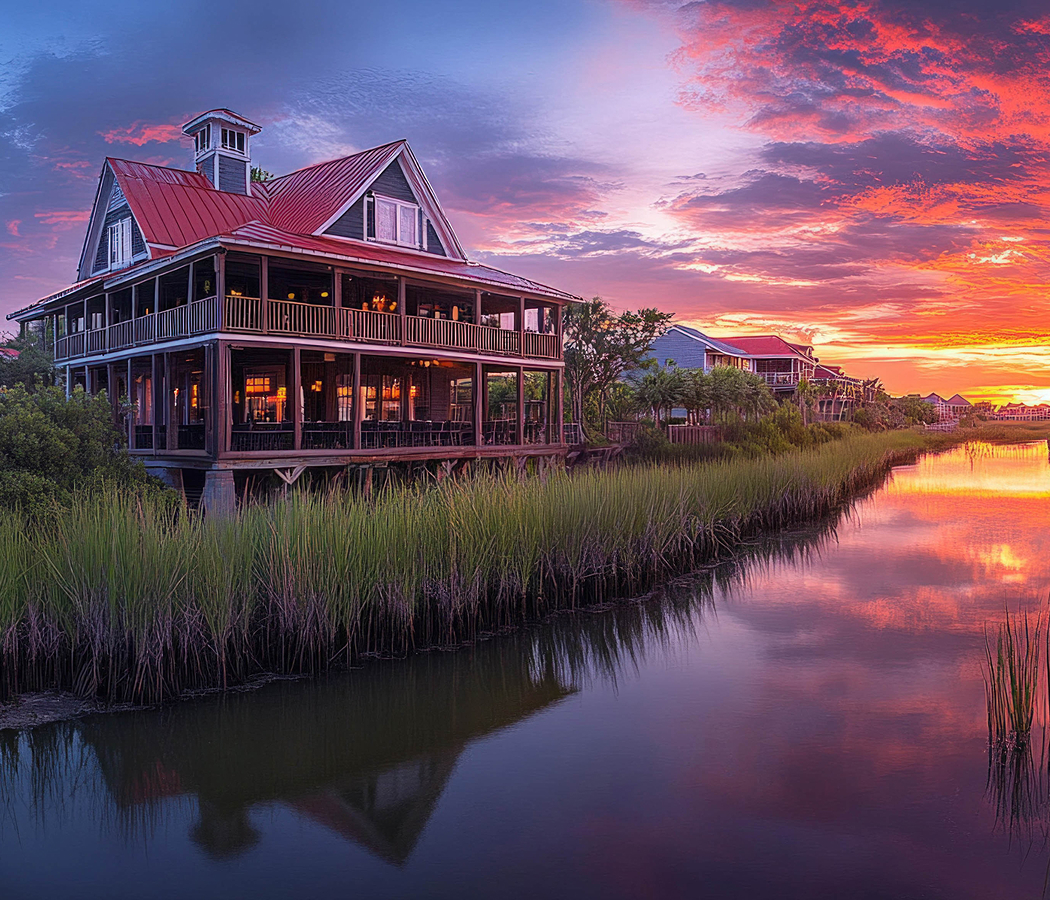
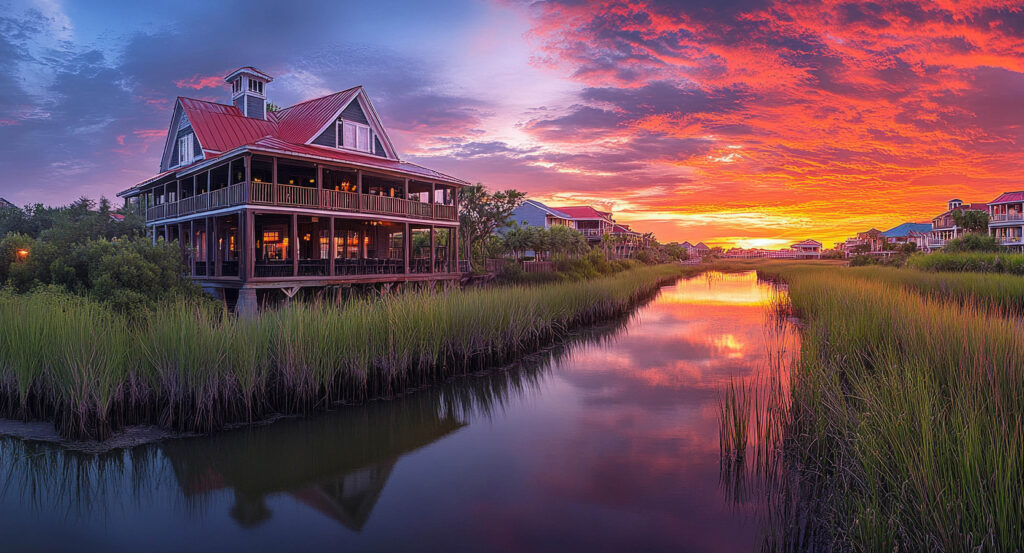
Set along North Nassau Street near its intersection with Romney Street, the restaurant occupies a substantial single-story property on Charleston's upper peninsula, amid former industrial parcels, neighborhood businesses and the commercial redevelopment extending north from the historic downtown. Its spacious dining room incorporates communal tables, an extended ordering counter and a bar positioned alongside the customer queue. Large custom-built smokers occupy the exterior cooking area, accompanied by substantial stacks of firewood and equipment associated with the daily production of smoked meats. A gravel courtyard accommodates picnic tables beneath a mature tree, with handmade hanging lights and open-air seating extending the dining area beyond the principal building. The result is a purpose-built barbecue establishment whose generous outdoor space, visible cooking equipment and straightforward service arrangement preserve the communal character of traditional Texas smokehouses.
What defines Lewis Barbecue.
Lewis Barbecue is best known for introducing the traditions of Central Texas brisket to Charleston through pitmaster John Lewis, whose professional development connects several of the most influential establishments in modern American barbecue. Lewis grew up in El Paso, where the cooking traditions of the Texas-Mexico border shaped his early interest in food. At eighteen, he moved to Austin and began experimenting with barbecue after receiving a New Braunfels smoker from his parents. His interest extended into equipment fabrication as he investigated the relationship between firebox construction, airflow and cooking performance. A period in Denver introduced him to competition barbecue, strengthening his technical understanding of smoking methods and meat preparation. Returning to Austin, he helped Aaron Franklin establish Franklin Barbecue, contributing to the development of a business that became nationally influential for its beef brisket. Lewis subsequently partnered with LeAnn Mueller to establish La Barbecue, extending his professional experience through a second prominent Austin smokehouse. In March 2015, he relocated to Charleston, bringing his equipment and cooking methods to a city whose established barbecue traditions centered on pork and regional sauces. Pop-up events introduced his brisket to local diners during the construction of a permanent restaurant. Lewis Barbecue opened on June 28, 2016, establishing a dedicated venue for the preparation and service of Central Texas smoked meats. Its arrival broadened Charleston's barbecue landscape, connecting the city's existing culinary traditions with the beef-centered cooking of another major Southern region. The restaurant's early reception earned Eater Charleston's Restaurant of the Year recognition in 2016. Lewis expanded his interests into the border cooking of his childhood through Juan Luis, a Tex-Mex food stall that opened at Workshop in 2017. That enterprise eventually developed into Rancho Lewis, which opened in Charleston in April 2022. The original barbecue business expanded to Greenville, South Carolina, later that year, establishing a second permanent location. Subsequent expansion into Atlanta extended the enterprise into Georgia while preserving its emphasis on custom equipment and established smoking methods. Recognition from national food publications strengthened the restaurant's standing beyond the Carolinas, and its inclusion in the MICHELIN Guide's inaugural American South selection in 2025 placed the establishment within a broader assessment of regional American cooking.
John Lewis's barbecue develops through the controlled combustion of hardwood, the circulation of heated smoke and the gradual transformation of collagen-rich meat during extended cooking. The custom offset smokers are central to this process, separating the firebox from the cooking chamber and allowing heat and smoke to circulate around substantial cuts of beef and pork. Lewis's experience fabricating his own equipment gives him direct control over the relationship between airflow, fire management and cooking temperature. USDA Prime beef brisket provides the principal expression of the method, beginning with careful trimming that establishes an even surface and preserves sufficient fat for extended smoking. A restrained seasoning of salt and black pepper allows the beef's natural flavor to remain prominent. During cooking, smoke deposits aromatic compounds on the surface, and prolonged heat develops the dark bark associated with Central Texas brisket. The gradual conversion of connective tissue into gelatin creates tenderness, and rendered fat contributes richness throughout the sliced meat. Resting preserves moisture before the brisket is cut to order, allowing diners to select lean, fatty or mixed portions. Chopped brisket introduces a related preparation through the addition of the restaurant's Bobby Sauce, distributing its seasoning across smaller pieces of smoked beef. Housemade Texas Hot Guts sausage extends the cooking method through a mixture dominated by beef with a smaller proportion of pork and a substantial chile presence. The sausage casing develops a firm exterior during smoking, and the interior retains the texture and concentrated seasoning associated with traditional Central Texas links. Green chile cheddar sausage introduces a different balance through pork, melted cheese and chiles, connecting the smokehouse with the flavors of the Southwest. Pork spare ribs receive a light glaze that complements the meat's rendered fat and smoked exterior. Pulled pork develops through the extended cooking of Boston butt, whose substantial connective tissue gradually softens into strands that retain the juices and seasoning of the roast. Smoked turkey breast provides a leaner preparation, requiring careful temperature management to preserve tenderness. The accompanying dishes connect the meat-centered menu with familiar Southern and Southwestern cooking traditions. Green chile corn pudding combines a soft cornbread casserole with Hatch chiles, introducing sweetness, dairy richness and gentle pepper flavor against the concentrated smoke of the meats. Macaroni and cheese contributes a substantial creamy texture, and potato salad provides a cooler accompaniment to the warm barbecue. The weekly specials extend the kitchen's technical range through smoked beef ribs, prime rib, house-cured pastrami and chicken-fried steak with green chile gravy. Desserts preserve the casual smokehouse tradition through banana pudding and housemade icebox pies. Lewis Barbecue's cooking gains its coherence from the relationship between custom equipment, patient fire management and the different physical properties of beef, pork and poultry, allowing each preparation to develop through a consistent approach to smoke and heat.
How Lewis Barbecue fits.
Lewis Barbecue works as the culinary centerpiece for an upper-peninsula Charleston itinerary connecting the city's early twentieth-century landscape design, the preservation of its nineteenth-century burial grounds and the interpretation of the Atlantic slave trade at a historically consequential waterfront site.
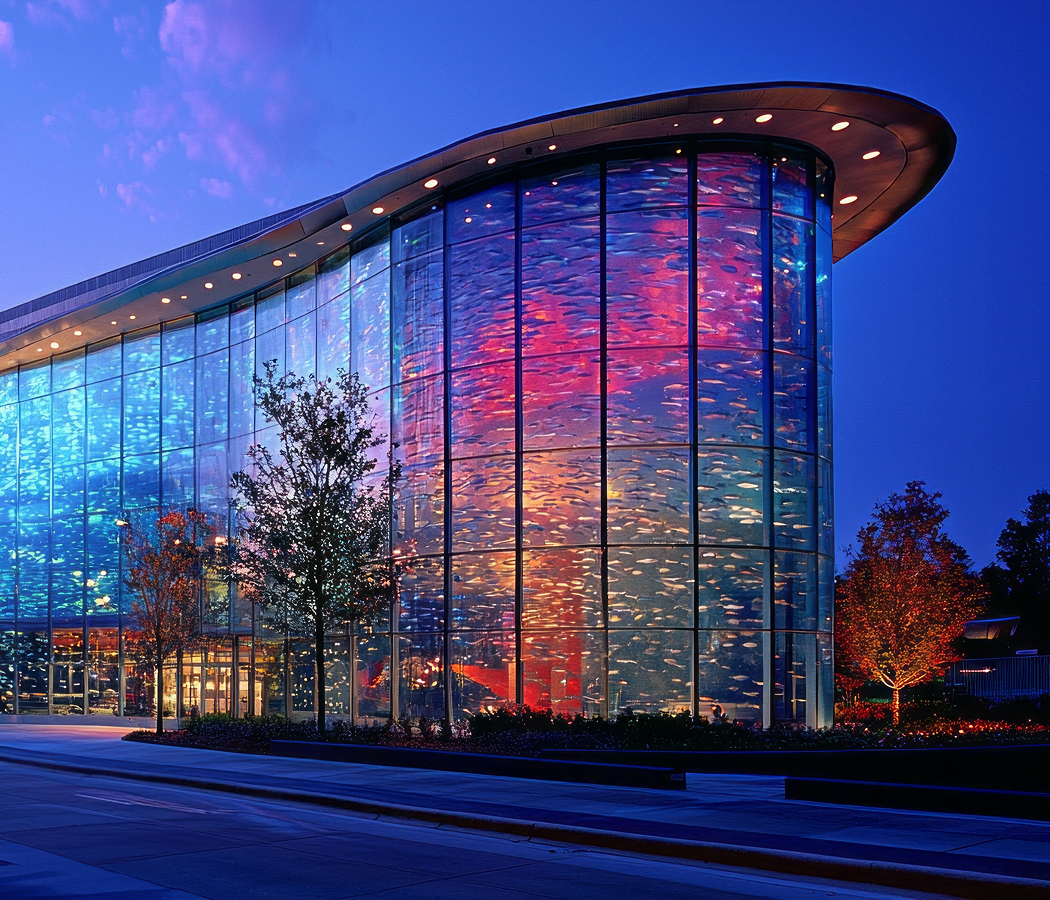
Begin at Hampton Park, whose landscape developed from the former Washington Race Course and the grounds of the South Carolina Inter-State and West Indian Exposition of 1901-1902. The exposition introduced elaborate temporary exhibition buildings, formal gardens and public attractions intended to stimulate Charleston's commercial economy. Following its closure, the city acquired the property and began developing a public park in 1903. Landscape architect John Charles Olmsted contributed to its subsequent design, establishing an arrangement of planted spaces, pathways and ornamental features. The surviving exposition bandstand and sunken garden preserve elements of the earlier grounds, connecting the park's recreational character with Charleston's ambitions during the early twentieth century. Continue to Magnolia Cemetery, established in 1850 on land formerly associated with the Magnolia Umbra estate. Architect Edward C. Jones developed its scenic arrangement of winding roads, water features and burial plots overlooking the Cooper River marshes. The cemetery's dedication included an address by Charleston artist Charles Fraser, connecting its establishment with the national movement toward landscaped rural burial grounds. Its monuments encompass Egyptian Revival tombs, marble memorials and substantial family mausoleums. The grounds also contain graves associated with the Confederate submarine H. L. Hunley and its crews, preserving material connections with Charleston's Civil War history and the subsequent development of public commemoration. Conclude at International African American Museum, which opened to the public in June 2023 on the former site of Gadsden's Wharf. The waterfront served as a major arrival point for enslaved Africans transported through the Atlantic slave trade, establishing profound historical significance for the surrounding harbor. Architects Pei Cobb Freed & Partners designed the building as an elevated structure supported by eighteen columns, preserving the ground beneath for remembrance and public interpretation. Landscape architect Walter Hood developed the African Ancestors Memorial Garden, incorporating historical references and spaces for reflection. Nine exhibition galleries examine African American history, cultural production and the enduring contributions of the African diaspora. The progression moves from Charleston's transformation of exposition grounds into public parkland through the preservation of nineteenth-century burial traditions and culminates at a waterfront institution confronting the city's central role in the Atlantic slave trade.
Where your story begins.
Foresyte Travel reveals places that feel extraordinary long before you arrive.
Enjoy editorial crafted for luxury travelers.
Foresyte may earn a commission when you book.