Why Mandarin Oriental matters.
Mandarin Oriental is a post-war modernist hotel where Marc J. Saugey's riverside architecture, Geneva's diplomatic culture and contemporary Japanese and Mediterranean dining converge beside the Rhône.
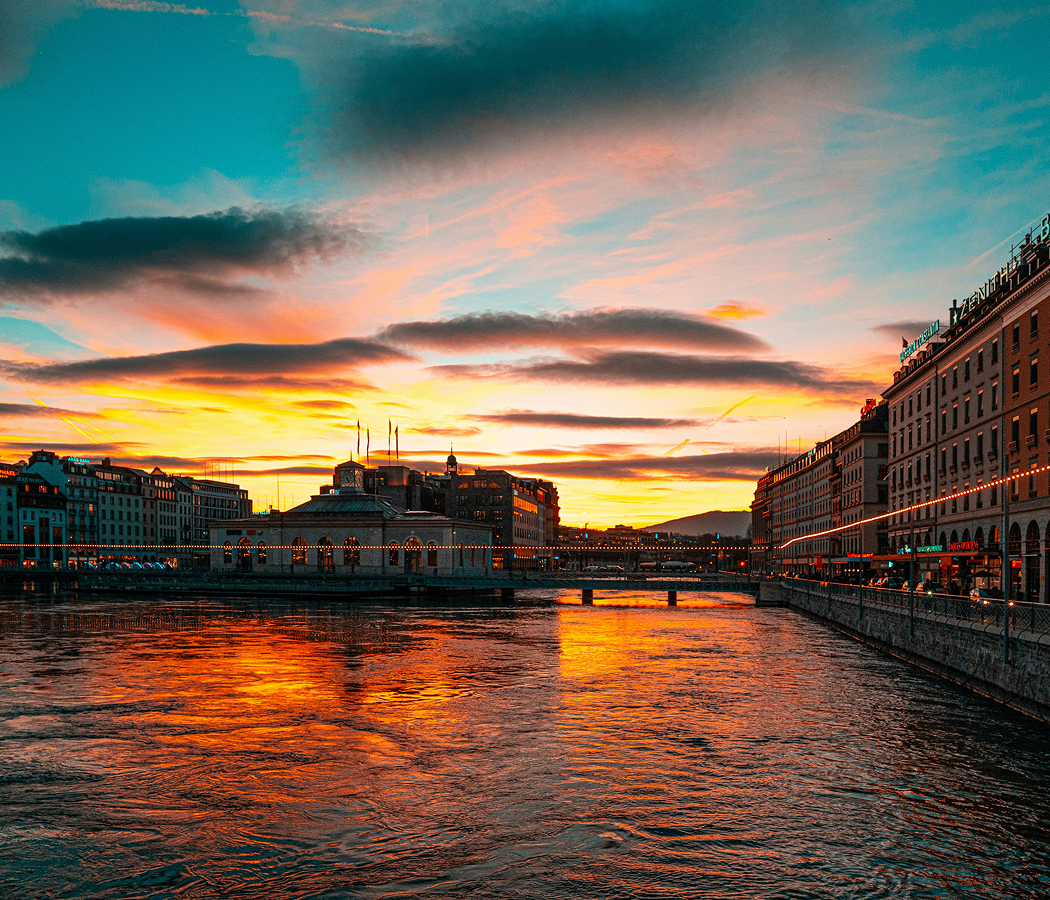
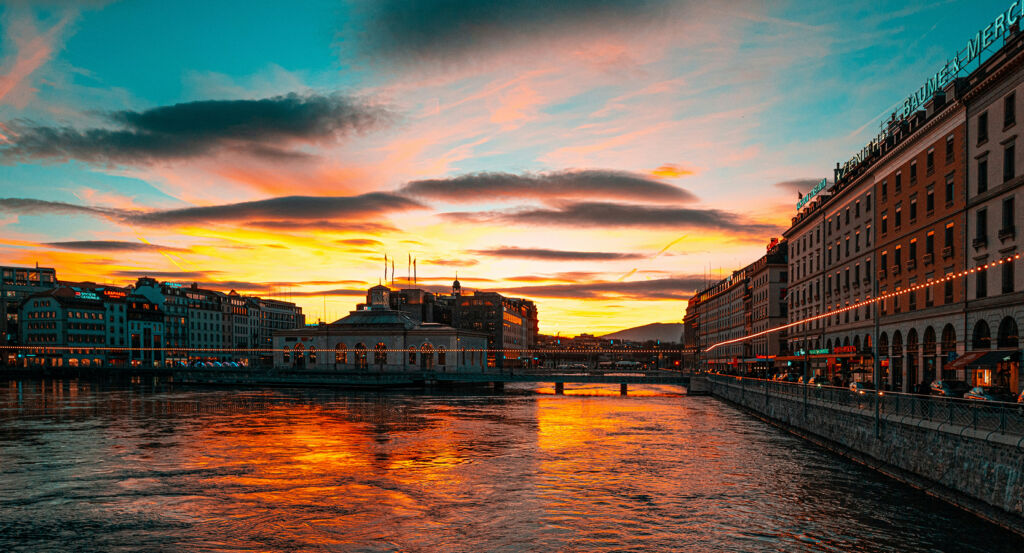
Set along Quai Turrettini near Rue du Mont-Blanc and just steps from Pont de la Coulouvrenière, the seven-floor hotel occupies Geneva's right bank between the Rhône River, the banking district, Rue du Rhône's luxury shops and the commercial blocks around Place Bel-Air. The building rises directly above the river corridor, giving its façades and upper rooms a strong relationship with moving water, urban bridges and the city's compact centre. River-facing rooms, panoramic suites and private terraces create the primary experiential mechanism, placing the Rhône, Salève and Alpine horizon within the architecture of the stay. The hotel's riverside restaurants and bar extend that setting into dining rooms where the water, quay and city lights become part of the evening atmosphere. The result is a hotel whose post-war structure, river frontage and Central Geneva position connect modern architecture with the city's international urban character.
What defines Mandarin Oriental.
Mandarin Oriental is best known for evolving from the Hôtel du Rhône, a pioneering post-war hotel that placed modern architecture and international hospitality on Geneva's right bank. The Hôtel du Rhône opened on 14 July 1950 as the first luxury hotel built in Europe after the Second World War. Marc J. Saugey designed the building as a modular accordion-style structure with flexible capacity ranging from 150 to 350 beds. The project rejected the model of both the traditional grand palace and the conventional residential hotel, giving Geneva a new form of urban accommodation. Its opening coincided with the arrival of the European headquarters of the United Nations, linking the hotel's early character to Geneva's expanding diplomatic role. The Rhône frontage placed the property beside the city's business district, luxury retail streets and river infrastructure. An enlargement in 1958 expanded the building's presence while preserving Saugey's post-war architectural language. Jean-Louis Christen supervised renovation work completed in 1999 with interior design by Chhada, Siembieda & Partners. Mandarin Oriental Hotel Group assumed management in 2000 and brought the Hôtel du Rhône into a new international chapter. The seven-floor hotel contains 181 rooms, including 143 rooms and 35 suites, with the largest suites extending across substantial private terraces and panoramic interiors. Contemporary Swiss hospitality now occupies a building whose structural logic, riverside position and diplomatic history remain inseparable from Geneva's post-war transformation. This sequence gives Mandarin Oriental a character shaped equally by architectural innovation, international politics and the long life of a major city hotel.
SACHI anchors the hotel's contemporary dining character through Japanese cuisine, sushi, Wagyu beef, black cod with yuzu miso and an intimate riverside setting. Chef Mitsu trained under Nobu Matsuhisa before bringing Japanese technique to Geneva through menus built around carefully selected ingredients and local suppliers. The Omakase Bar seats ten guests and places the preparation of six-, eight- or ten-course menus at the centre of the meal. Ottolenghi shifts the culinary direction toward Mediterranean vegetables, fermentation, herbs, spices and cooking over fire. MO Bar combines cocktails and tapas within a lounge setting that opens toward the Rhône and the city's evening movement. The bar's Martini Bar creates a more focused drinking space inside the hotel's broader dining program. The hotel's guest rooms and suites use mirrored walls, light and dark wood, marble bathrooms and floor-to-ceiling windows to translate contemporary Swiss interiors into a consistent residential language. The Royal Terrace Suite occupies the highest floor with a 175-square-metre terrace facing the Rhône, Geneva's rooftops and the surrounding mountains. The Royal Suite adds exclusive artworks, dining space, a living room and panoramic views over the river and city. Together, SACHI, Omakase Bar, Ottolenghi, MO Bar and the hotel's signature suites make Mandarin Oriental a compact cultural setting where cuisine, design and riverside urban life develop within one post-war architectural structure.
How Mandarin Oriental fits.
Mandarin Oriental works as a central base for tracing Geneva's passage from medieval religious authority through the precision of Swiss horology and into the hydraulic infrastructure that became one of the city's defining civic symbols.
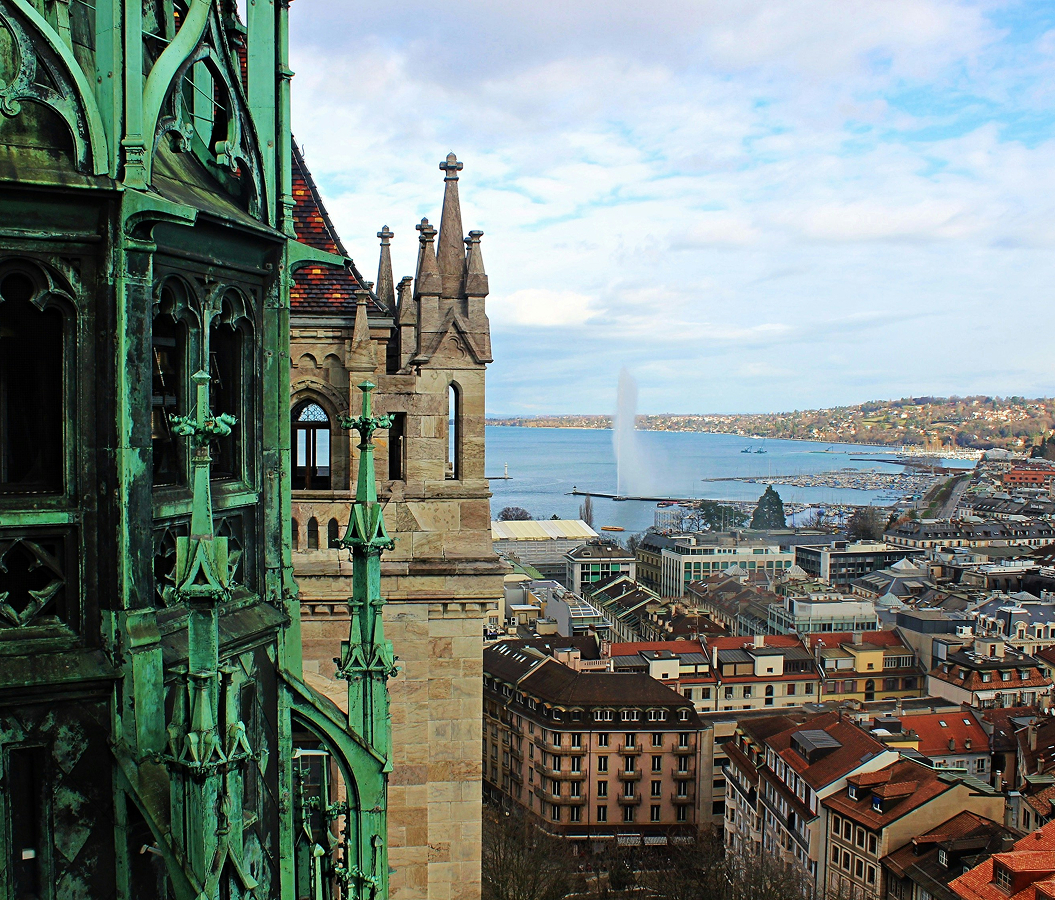
Begin at St. Peter's Cathedral, where the present structure rose between 1160 and 1250 over earlier Christian buildings and incorporated Romanesque, Gothic and later neoclassical elements. John Calvin preached from the cathedral during the Reformation, transforming the building into a centre of Protestant theology and Geneva's sixteenth-century religious life. The archaeological site beneath the cathedral reveals foundations and remains extending across earlier periods of Geneva's settlement, connecting the visible monument with a deeper urban chronology. Continue to the Patek Philippe Museum, founded in 2001 inside Geneva's Plainpalais district and organized around five centuries of watchmaking. The collection includes watches, musical automata and enamel miniatures from the sixteenth through nineteenth centuries, linking Genevan craftsmanship with Swiss and European horological production. A library dedicated to horology extends the museum beyond display cases into the study of technical, artistic and industrial timekeeping. Conclude at the Jet d'Eau, whose origin began in 1886 as an open-air pressure outlet for a hydraulic plant distributing Rhône energy to Geneva's craftspeople and watchmakers. The fountain moved to its present harbour position in 1891 and reached 140 metres after a lake-pumping station increased its height in 1951. Water travels through the Jet d'Eau at 200 kilometres per hour and 500 litres per second, turning industrial pressure into a visible civic performance above Lake Geneva. The progression moves from St. Peter's Cathedral's religious transformation through the Patek Philippe Museum's horological inheritance and culminates in the Jet d'Eau's conversion of hydraulic infrastructure into public symbolism, placing Mandarin Oriental within the intellectual and technical history of the city.
Where your story begins.
Foresyte Travel reveals places that feel extraordinary long before you arrive.
Enjoy editorial crafted for luxury travelers.
Foresyte may earn a commission when you book.