
Why The Ritz-Carlton matters.
The Ritz-Carlton is Kyoto interpreted through stillness, proportion, and cultural fluency, a hotel that does not attempt to impress through scale or performance but instead earns its authority through restraint, precision, and a profound understanding of place.
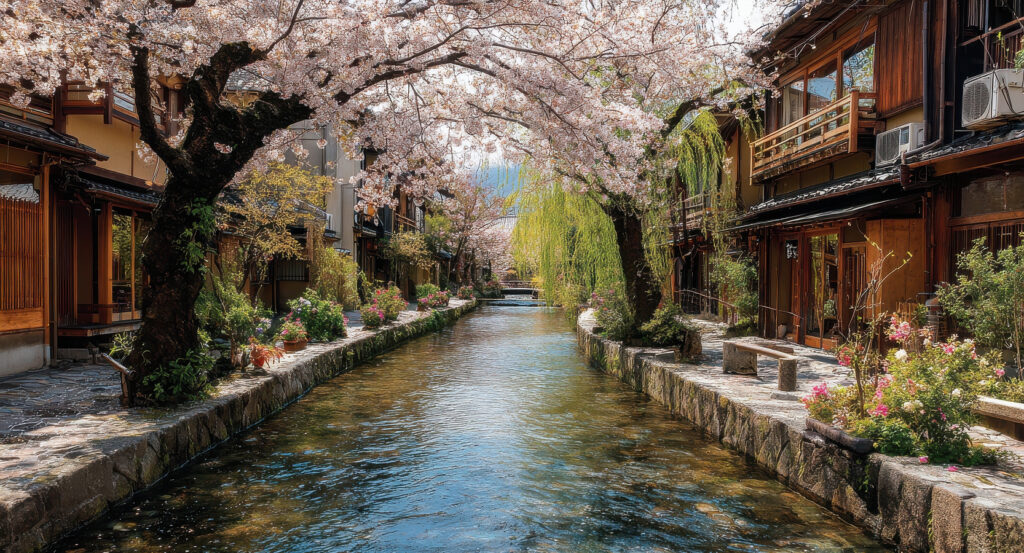
Set along the Kamogawa River at the edge of Kyoto's historic Nakagyo Ward, the hotel occupies a position that feels intentional and quietly powerful. Arrival is subtle. You move away from the city's visual density and into an environment that immediately lowers volume and sharpens awareness. The architecture does not announce itself; it reveals itself gradually. Clean lines, natural materials, and careful transitions between interior and exterior establish a tone of calm from the first step. Public spaces feel expansive without being imposing, designed to encourage pause rather than movement. Stone, wood, water, and light are treated as structural elements rather than decoration, creating an atmosphere that feels grounded and deeply Japanese without slipping into pastiche. The hotel feels less like a building and more like a composed landscape. Guest rooms and suites continue this philosophy with exceptional discipline. They are generously sized and arranged with a sense of spatial intelligence that prioritizes flow, clarity, and rest. Beds are low, substantial, and deeply comfortable, engineered for restorative sleep after days spent walking temple grounds, gardens, and narrow streets. Floor to ceiling windows frame the Kamogawa River, Higashiyama mountains, or inner courtyards, allowing nature and city to exist as quiet companions. Furniture is minimal yet purposeful. Seating encourages stillness, desks support focused work, and storage allows you to unpack fully and inhabit the space. Lighting is layered and gentle, shifting seamlessly from natural daylight to warm evening glow. Bathrooms are expansive and serene, designed as private retreats. Deep soaking tubs, rain showers, and refined materials transform daily routine into ritual, reinforcing the hotel's overarching emphasis on mindfulness and calm. Dining at The Ritz-Carlton reflects the same respect for craft and restraint. Culinary experiences are rooted in seasonality, precision, and balance. Spaces are composed to support conversation and presence, not performance. Whether dining formally or informally, the experience feels aligned with Kyoto's culinary philosophy: thoughtful, measured, and deeply connected to place. Service throughout the hotel is exceptional in its subtlety. Interactions are attentive, intuitive, and culturally fluent, guided by timing. Staff anticipate needs quietly and step back just as gracefully, allowing guests to feel supported. The hotel attracts travelers who value depth over display: seasoned cultural explorers, couples seeking calm rather than romance-as-performance, long-stay guests, and anyone who wants Kyoto to be experienced through feeling rather than itinerary. The Ritz-Carlton does not interpret the city for you or soften its complexity. It provides a structure in which Kyoto can be felt clearly, slowly, and with enduring resonance.
What defines The Ritz-Carlton.
The Ritz-Carlton was designed with an explicit intention to align with Japanese spatial philosophy rather than impose a global luxury template.
The property occupies land with deep historical significance, and its design responds by emphasizing horizontality, negative space, and controlled movement. Architects and designers studied traditional Japanese residences, gardens, and ryokan principles, translating them into a contemporary context. Materials were selected for tactile and aging qualities. Stone, wood, and paper-like surfaces absorb sound and light, shaping atmosphere through restraint. Guest room layouts were informed by how the body moves through space at different times of day, prioritizing circulation clarity and visual calm. Furniture placement avoids clutter and hierarchy, allowing rooms to feel balanced. Lighting was integrated early in the design process to support circadian rhythm, using indirect sources and adjustable layers that reduce fatigue and heighten awareness. Bathrooms were conceived as experiential spaces rather than service zones, emphasizing water, warmth, and enclosure as essential elements of rest. Public spaces were arranged as sequences rather than destinations, encouraging gradual transition rather than abrupt arrival. Operational culture mirrors this architectural intent. Staff training emphasizes cultural literacy, situational awareness, and resonant timing. This creates service that feels intuitive and deeply respectful, aligning with Japanese hospitality traditions while maintaining global standards. Over time, the hotel has developed a loyal following among travelers who return not for novelty, but because the experience feels coherent under repeated use. In a city where many luxury properties either lean heavily into tradition or default to international sameness, The Ritz-Carlton distinguishes itself by occupying the space between with clarity and confidence.
How The Ritz-Carlton fits.
The Ritz-Carlton works best when you allow it to become a counterbalance to the city's intensity rather than a backdrop, shaping your rhythm through return and reflection.
Begin mornings quietly, walking along the Kamogawa River while the city is still soft and local. Use early hours to visit temples and gardens before crowds gather, allowing Kyoto's spatial language to register fully. Because the hotel sits slightly removed from the most congested tourist corridors, returning midday feels restorative. Come back to soak, rest, or simply sit with the view before heading out again. Afternoons lend themselves to deeper exploration: neighborhoods, craft shops, tea houses, and lesser-known shrines reward unhurried attention. Evenings align naturally with the hotel's tone. Dine thoughtfully, attend cultural performances, or walk along the river at dusk before returning to a space that absorbs energy. The hotel's calm becomes an active part of the experience, not an escape from it. The Ritz-Carlton pairs especially well with longer stays, repeat visits, and trips focused on cultural immersion.
Where your story begins.
Foresyte Travel reveals places that feel extraordinary long before you arrive.
Enjoy editorial crafted for luxury travelers.
Foresyte may earn a commission when you book.

















































































































