
Why Four Seasons Hotel Kyoto matters.
Four Seasons Hotel Kyoto is a refined temple-district retreat where Higashiyama's historic landscape meets Japanese garden design, Kyoto's imperial and religious traditions and the contemporary culture of one of Japan's most important historic cities.
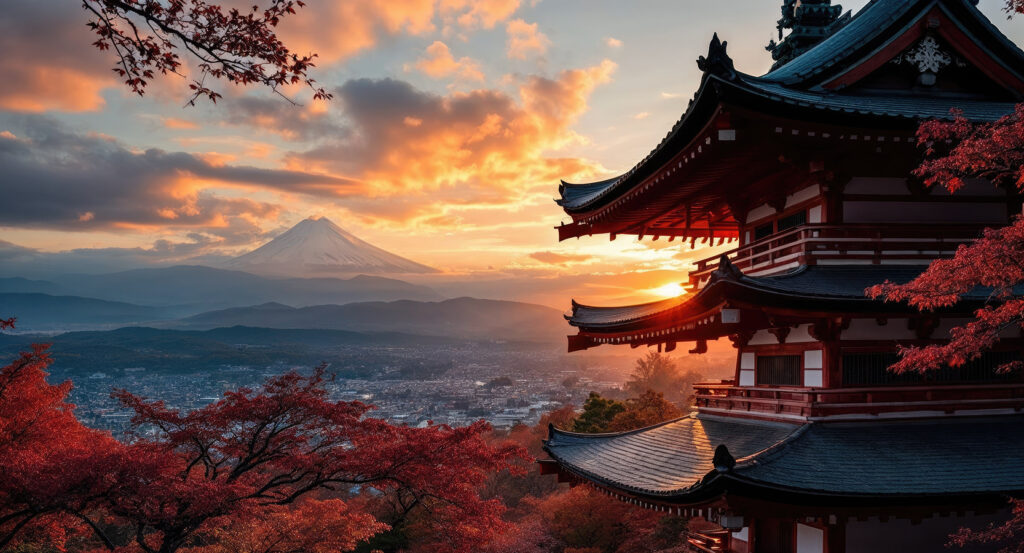
Set in the Higashiyama district beside Myoho-in Temple, Four Seasons Hotel Kyoto occupies a landscaped position between the eastern mountains, the Kamo River and the historic streets leading toward Gion, with the city center extending west across Kyoto's traditional grid. Its low-rise buildings surround a pond garden, courtyards and stone paths rather than forming a single urban tower. Japanese architectural references, timber, pale stone, tiled roofs and carefully framed openings create a setting shaped by Kyoto's seasonal light and temple landscapes. Guest rooms and suites face gardens, the pond, surrounding neighborhoods or the mountains, with balconies and broad windows connecting private interiors to the natural setting. The garden forms the visual center of the property, combining water, bridges, planted banks and mature trees within a landscape designed for gradual movement and quiet observation. Narrow paths lead between accommodations, restaurants, spa spaces and the historic environment beyond the hotel grounds. Nearby streets connect the property with temples, museums, traditional neighborhoods, teahouses and the Kamo River, while the eastern hills rise behind the city. The result is a substantial yet intimate Kyoto hotel whose architecture, garden and location connect contemporary hospitality with the religious, seasonal and cultural geography of Higashiyama.
What defines Four Seasons Hotel Kyoto.
Four Seasons Hotel Kyoto is best known for preserving Shakusui-en, an extraordinary twelfth-century Japanese pond garden whose association with the powerful Taira clan connects the property with the final decades of the Heian period. The garden occupies a historic site in Higashiyama, where Kyoto's eastern foothills supported aristocratic residences, Buddhist institutions, and elaborate landscapes during the city's centuries as Japan's imperial capital. Its origins are associated with Taira no Shigemori, the eldest son of military leader Taira no Kiyomori, whose political ascendancy transformed the relationship between Japan's imperial court and its emerging warrior aristocracy. Shigemori's residence, known as Komatsu-dono, incorporated a landscaped retreat associated with his position within the imperial administration and the family's extraordinary political influence. The garden appears in The Tale of the Heike, the medieval Japanese epic recounting the struggle between the Taira and Minamoto clans that culminated in the Genpei War of 1180-1185. Its association with Shigemori preserves a connection to the aristocratic culture that preceded the establishment of Japan's first enduring military government under Minamoto no Yoritomo. Shakusui-en subsequently underwent alterations during the Genroku era around the beginning of the eighteenth century, reflecting the continued cultivation of classical garden traditions under the Tokugawa shogunate. The surviving landscape represents a rare inheritance from the late Heian period, preserving a historical relationship between courtly recreation, Buddhist cosmology, and the artistic development of Japanese garden design. Four Seasons Hotels and Resorts incorporated this cultural landmark into an ambitious contemporary hotel project, commissioning Japanese architectural firm Kume Sekkei to develop a building whose composition respected the established landscape. The development introduced a low-rise architectural arrangement organized around the historic garden, accommodating contemporary hospitality functions within the spatial constraints of Kyoto's protected urban environment. Four Seasons Hotel Kyoto opened on October 15, 2016, becoming the company's second property in Japan after Four Seasons Hotel Tokyo at Marunouchi. Opening general manager Alex Porteous directed the property's introduction, establishing an international hospitality institution within a district whose cultural importance had been shaped by centuries of imperial patronage and Buddhist religious activity. The project brought together Japanese architectural expertise and international design practices, including Hirsch Bedner Associates, Kokai Studios, and STRICKLAND, whose separate commissions connected contemporary hospitality design with Kyoto's established artistic traditions. Its significance extends beyond the introduction of an international luxury brand, preserving an exceptional historical landscape through a development conceived around the continuity of Japanese architectural and garden culture. Four Seasons Hotel Kyoto represents a distinctive intersection of aristocratic history, classical landscape design, and contemporary architectural conservation within Japan's ancient imperial capital.
Hirsch Bedner Associates developed the hotel's interior conception under design partner Agnes Ng, establishing a carefully restrained interpretation of Kyoto's traditional architecture through contemporary forms, natural textures, and locally associated craftsmanship. The design team began work five years before the hotel's opening, developing an architectural language that places particular emphasis on the relationship between interior spaces and the surrounding natural environment. Traditional shoji screens introduce the translucent qualities of Japanese paper into the public interiors, filtering daylight through delicate surfaces associated with centuries of domestic architectural practice. A bamboo-lined arrival sequence establishes a transition into the property's principal interior spaces, drawing upon the cultural importance of bamboo in Japanese gardens, crafts, and decorative arts. Rich purple textiles introduce a reference to the color's historical association with imperial rank and aristocratic prestige, connecting the contemporary decorative program with Kyoto's courtly inheritance. Locally produced fabrics, traditional ceramic craftsmanship, and restrained timber detailing extend this artistic conception through the work of regional artisans. The property's architectural character also develops through the sukiya-style teahouse designed by Kyoto craftsman Ryosuke Yamamoto, whose construction incorporates locally sourced cypress and cedar joined through traditional Japanese woodworking techniques. The building's earthen floor incorporates soil from Kyoto's Fushimi district, introducing a tangible connection to the region's established architectural traditions. A Japanese umbrella integrated into the ceiling creates a distinctive decorative composition, translating a familiar cultural object into an element of the building's interior architecture. The teahouse contains Fuju, named through the involvement of a priest from neighboring Myoho-in Temple, and Shakusui-tei, an intimate room devoted to the formal practice of chanoyu, the Japanese tea ceremony. Its architectural philosophy draws upon wabi-sabi, the aesthetic appreciation of simplicity, natural irregularity, and the passage of time that became central to Japanese tea culture. A glass bridge provides access across the historic landscape, introducing a contemporary architectural element into a setting whose classical composition incorporates islands, carefully positioned stones, and symbolic representations of distant mountains. Five yodomari-ishi, or night-mooring stones, evoke vessels associated with the mythical Island of Immortals, reflecting the influence of Chinese cosmological ideas on classical Japanese landscape design. The hotel's culinary character extends this commitment to Japanese craftsmanship through Sushi Ginza Onodera, whose Edo-style sushi tradition emphasizes disciplined knife work, carefully seasoned rice, and the precise treatment of seasonal seafood. STRICKLAND designed its intimate counter using 400-year-old Japanese cypress, establishing a direct relationship between culinary technique and the material traditions of Japanese woodworking. Regional ceramics, including Bizen ware and Kiyomizu ware, further connect the presentation of food with established centers of Japanese ceramic production. Together, Ng's restrained interiors, Yamamoto's traditional teahouse, and the craftsmanship surrounding the hotel's culinary program establish a coherent expression of Kyoto's artistic inheritance within a contemporary international hotel.
How Four Seasons Hotel Kyoto fits.
Four Seasons Hotel Kyoto works as the starting point for an exploration connecting Kyoto's Buddhist architecture, its imperial religious traditions and the temple landscapes that shaped the historic eastern edge of the city.
Begin at Kyoto National Museum, the major institution where Japanese art, archaeology, sculpture, ceramics, textiles and religious objects occupy galleries within a historic cultural campus. Its collections connect Kyoto to the broader artistic history of Japan while preserving a strong emphasis on objects associated with temples, shrines, court culture and craft traditions. The museum's architecture and grounds create a formal cultural setting beside the hotel and the historic streets of Higashiyama. Its exhibitions provide a broad structure for understanding the art and religious traditions encountered throughout Kyoto. Continue to Kiyomizu-dera, the celebrated Buddhist temple on the eastern hills where wooden halls, terraces, gates and pagodas overlook the city and surrounding forest. The temple's architecture creates a dramatic relationship between elevated structure, seasonal trees and the urban basin below. Its grounds preserve pilgrimage routes, sacred springs, devotional spaces and views that have shaped Kyoto's cultural imagination for centuries. Kiyomizu-dera demonstrates how religious architecture, mountain landscape and public movement operate together within the historic city. Conclude at Sanjusangen-do, the long wooden temple hall whose rows of Kannon statues, painted interiors and formal gardens preserve one of Kyoto's most powerful religious environments. The building's scale and repetitive columns create a distinctive interior rhythm, while the surrounding grounds maintain a quieter relationship with the urban streets. Its history connects Buddhist sculpture, temple patronage and the cultural life of medieval and early modern Kyoto. Sanjusangen-do demonstrates how architecture and devotional art can transform a simple linear hall into an extraordinary sacred landscape. The progression moves from Kyoto National Museum's artistic collections through Kiyomizu-dera's mountain temple architecture and concludes at Sanjusangen-do, where Buddhist sculpture, ritual and historic timber architecture meet within Higashiyama.
Where your story begins.
Foresyte Travel reveals places that feel extraordinary long before you arrive.
Enjoy editorial crafted for luxury travelers.
Foresyte may earn a commission when you book.

















































































































