Why Le Chique matters.
Le Chique is a MICHELIN-starred contemporary Mexican restaurant where Riviera Maya's Caribbean coastal heritage meets Jonatán Gómez Luna's experimental reinterpretation of regional cooking, intricate tasting-menu presentations and nearly two decades of culinary innovation.
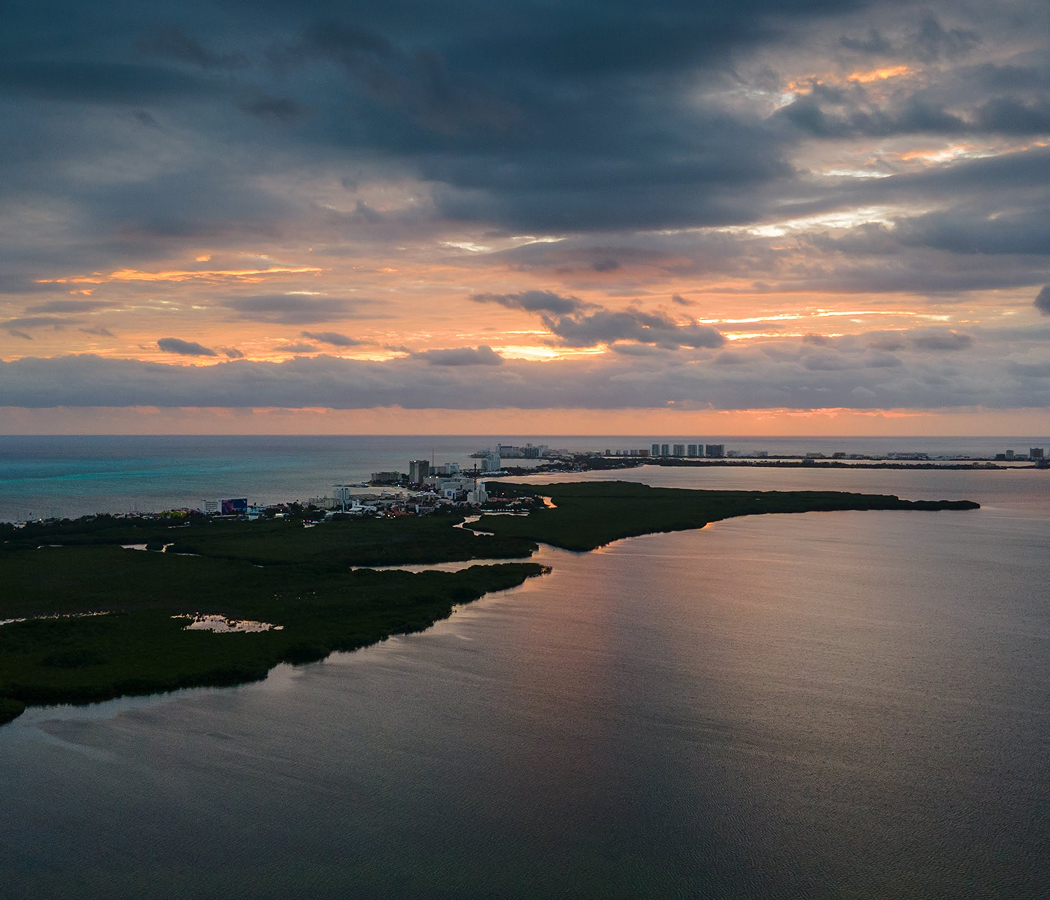
Set along the Cancún, Tulum highway south of Playa del Carmen, near the coastal entrance to Xcaret and the limestone landscape surrounding the Riviera Maya's underground waterways, the restaurant occupies Hotel Xcaret Arte within the Rancho Xcaret development overlooking the Caribbean coastline. Its purpose-designed dining room incorporates sculptural furnishings, controlled lighting and contemporary finishes that establish an intimate setting for an extended tasting menu. The interior accommodates carefully coordinated service sequences, with individual presentations requiring dedicated preparation and tableside attention. The surrounding resort architecture incorporates natural stone, landscaped courtyards and vegetation associated with the Yucatán Peninsula's tropical environment. The result is a restaurant whose contemporary interior and coastal setting provide a concentrated architectural counterpart to the elaborate compositions of its kitchen.
What defines Le Chique.
Le Chique is best known for transforming Mexican regional cooking into an elaborate fine-dining tasting menu under chef Jonatán Gómez Luna, whose work established the restaurant as an influential training ground for contemporary Mexican chefs. The establishment opened in 2008 at Azul Sensatori, a resort operated within the Karisma hospitality portfolio on the Riviera Maya coast. Gómez Luna developed the original concept around the technical possibilities of molecular gastronomy, incorporating experimental presentations into preparations grounded in Mexican ingredients. His professional formation included work with leading European chefs, exposing him to the technical developments that reshaped international fine dining during the early twenty-first century. The restaurant's early menus became associated with numerous small courses, unusual serving vessels and transformations of familiar Mexican preparations. Its culinary reputation developed through the sustained exploration of regional ingredients, including corn, chilies, tropical fruits, native herbs and seafood from Mexico's surrounding waters. Recognition from the American Automobile Association followed, with the restaurant earning its Five Diamond distinction in 2015. The establishment subsequently entered Latin America's 50 Best Restaurants, extending its recognition across the region's professional culinary community. Mexico's inaugural MICHELIN Guide in 2024 awarded Le Chique one star, establishing its place among the country's first restaurants to receive the distinction. Gómez Luna retained that recognition in 2025 and received the MICHELIN Guide Mexico Mentor Chef Award for his contribution to the professional development of younger cooks. Former members of his kitchen subsequently advanced into prominent international restaurant organizations, including establishments associated with Quique Dacosta and the Basque culinary community. The restaurant's original Riviera Maya premises closed ahead of a relocation to Hotel Xcaret Arte, where a new dining room opened in 2026. The move brought Le Chique into the hospitality development operated by Grupo Xcaret, establishing a new architectural setting for its established culinary program. Its revised tasting menu expanded to twenty-seven courses, maintaining the detailed presentations and geographical breadth associated with Gómez Luna's cooking. The relocation marked a substantial institutional transition for a restaurant whose influence had grown through technical experimentation, international recognition and the professional development of successive generations of chefs.
Jonatán Gómez Luna's cooking examines Mexican regional preparations through changes in physical form, temperature and texture, preserving recognizable flavors inside compositions that require considerable technical precision. A fruit and foie gras salad presented within an orange demonstrates the relationship between familiar ingredients and unexpected construction. The citrus shell becomes a serving vessel, connecting the fruit's acidity with the richness of the liver and establishing a contrast between sweetness, fat and freshness. A doughnut filled with huitlacoche develops a more distinctly Mexican combination through the earthy flavor of corn fungus enclosed within a tender fried preparation. Poblano chili and epazote sauce introduce vegetal heat and the aromatic character of an herb closely associated with Central Mexican cooking. The doughnut's exterior contributes a delicate fried texture, and its filling concentrates the savory qualities of the fungus. These opening preparations establish a sequence in which the appearance of familiar foods changes while their principal flavors remain identifiable. Seafood courses extend the geographical range toward Mexico's coastal regions, incorporating marine ingredients into compositions distinguished by concentrated sauces and carefully controlled cooking. The kitchen's treatment of native corn provides a recurring foundation, connecting contemporary techniques with one of the country's oldest cultivated ingredients. Sikil pak introduces the traditions of the Yucatán Peninsula through roasted pumpkin seeds, whose nutty richness combines with tomato, citrus and aromatic seasonings. Chichilo negro develops a contrasting intensity through the dark color and concentrated flavor of a traditional Oaxacan mole, whose roasted ingredients and chilies require careful control to balance bitterness and depth. A reinterpretation of Caesar salad introduces a preparation associated with twentieth-century Tijuana, connecting the menu's geographical range with Mexico's northern border. Successive courses develop through changes in serving vessels, intricate garnishes and combinations of crisp, creamy and tender components. The service team introduces individual preparations and their regional associations, maintaining continuity across the extended menu. Wine pairings accompany the changing richness and aromatic intensity of the dishes, with selections coordinated around acidity, spice and concentrated savory flavors. Desserts continue the kitchen's attention to physical transformation, incorporating tropical fruit, chocolate and confectionery techniques into a succession of smaller preparations. Le Chique's culinary character rests on the sustained reinterpretation of Mexican ingredients through elaborate technical construction, connecting regional cooking traditions with contemporary fine-dining methods.
How Le Chique fits.
Le Chique works as the culinary centerpiece for a Riviera Maya itinerary connecting the region's subterranean freshwater systems, the archaeological inheritance of the ancient Maya and the coastal ecosystems that shaped settlement along the eastern Yucatán Peninsula.
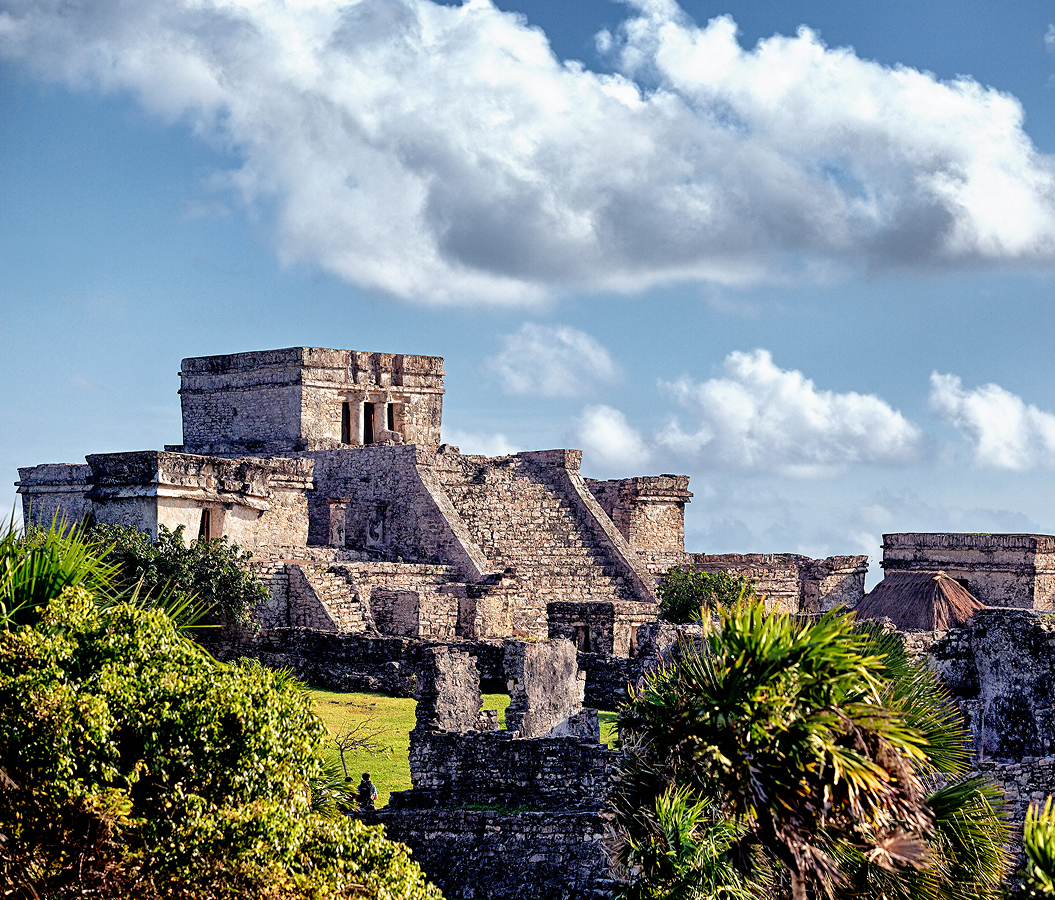
Begin at Río Secreto, the underground river system south of Playa del Carmen whose limestone passages contain extensive stalactite and stalagmite formations. The caves developed through the gradual dissolution of the Yucatán Peninsula's porous carbonate bedrock, creating channels through which groundwater travels beneath the forest. Their flooded chambers belong to the larger network of subterranean waterways that supplied freshwater to Maya settlements. Guided routes follow shallow underground rivers through chambers containing mineral formations produced over thousands of years. The site connects the peninsula's geological development with the freshwater resources that supported human occupation. Continue to Xcaret Archaeological Site, the remains of a Maya coastal settlement historically associated with the name Polé. Its position near a sheltered Caribbean inlet supported maritime commerce and movement along the eastern coastline. During the Postclassic period, the settlement participated in trading networks connecting communities across the Yucatán Peninsula and neighboring regions. Surviving masonry structures, platforms and ceremonial buildings preserve elements of its former religious and commercial functions. The site's association with pilgrimage routes to Cozumel further connects the coastal settlement with the worship of the goddess Ixchel. Conclude at Xaman-Há Archaeological Site, the remains of a Maya settlement within the urban area of Playa del Carmen. The name refers to the northern waters and preserves an association with the coastal geography of the peninsula. Its surviving structures belong to a settlement connected with maritime activity and regional movement during the Postclassic period. The archaeological remains include masonry platforms and building foundations that provide evidence of occupation along the Caribbean shoreline. The site places Playa del Carmen's modern urban development within the longer history of Maya coastal settlement and trade. The progression moves from the limestone waterways that sustained the peninsula's inhabitants through a coastal ceremonial and trading center and culminates in the archaeological remains preserving Playa del Carmen's Maya foundations.
Where your story begins.
Foresyte Travel reveals places that feel extraordinary long before you arrive.
Enjoy editorial crafted for luxury travelers.
Foresyte may earn a commission when you book.