Why Cathedral Rock matters.
Cathedral Rock is a towering sandstone formation where Sedona's red-rock wilderness meets the geological history of the Colorado Plateau, the enduring cultural significance of the Verde Valley and the dramatic erosional forces that created one of Arizona's most recognizable desert silhouettes.
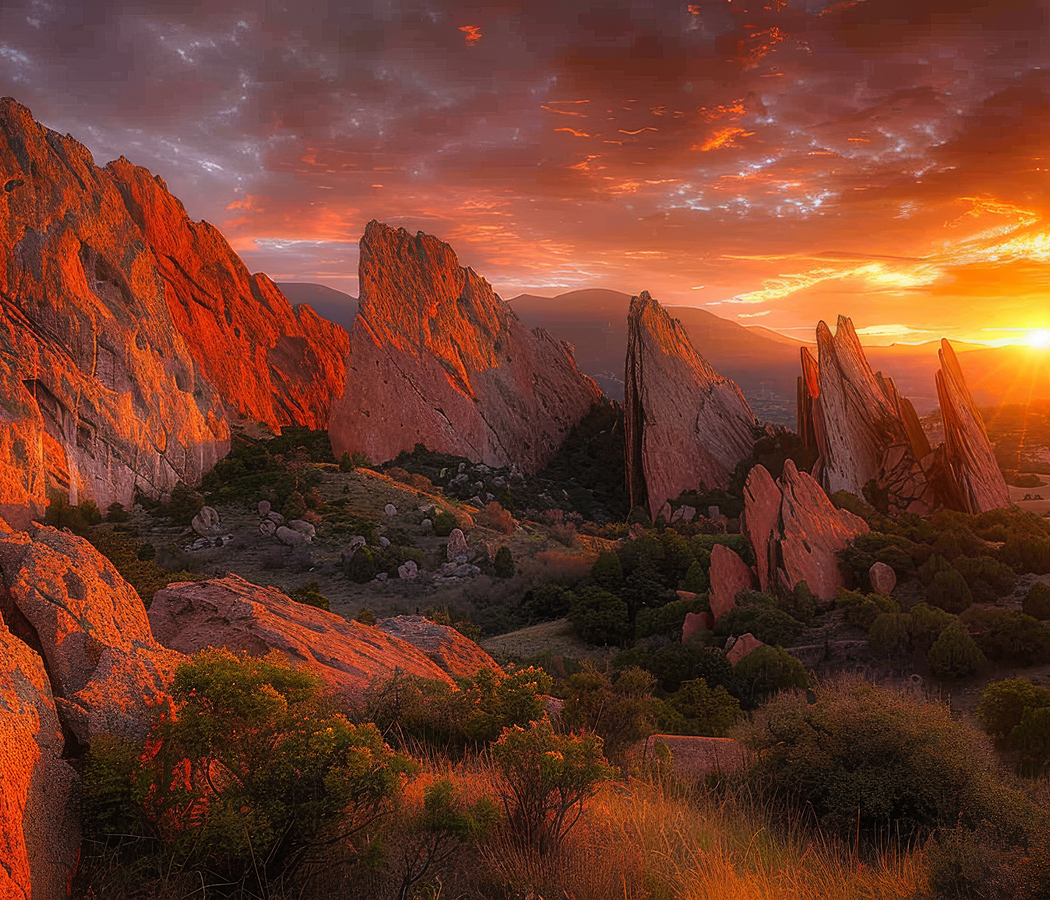
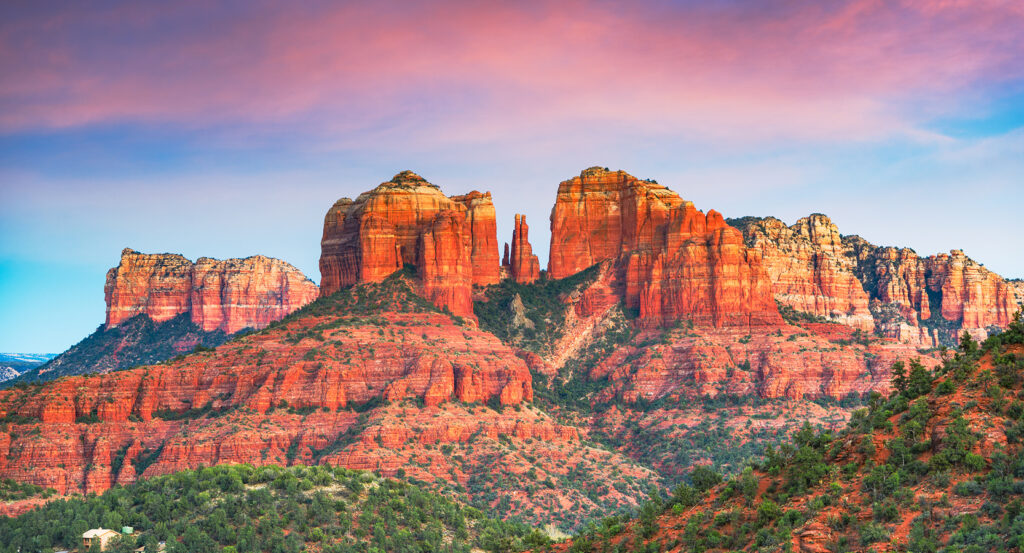
Rising south of Central Sedona between Oak Creek and the Back O' Beyond trail corridor, the formation occupies a prominent position above the surrounding sandstone benches, with its clustered spires overlooking the creek's wooded floodplain and the broad red-rock landscape extending toward the Mogollon Rim. Steep rock faces rise above sloping aprons of weathered sandstone, their exposed strata creating alternating bands of red and pale stone. Narrow clefts separate the principal towers, giving the formation its distinctive arrangement of vertical pinnacles. Juniper, pinyon pine and desert shrubs occupy the lower slopes, establishing a sharp contrast between vegetation and exposed rock. The result is a commanding geological formation whose sculpted towers, layered sandstone and elevated setting define the physical character of Sedona's southern landscape.
What defines Cathedral Rock.
Cathedral Rock is best known for its clustered sandstone spires, which developed through prolonged erosion of sedimentary formations deposited across the ancient environments of the Colorado Plateau. The rock belongs principally to the Schnebly Hill Formation, a sequence of Permian-age sedimentary deposits that underlies much of Sedona's distinctive red-rock scenery. During the Permian Period, the region occupied a landscape of coastal plains, shifting dunes and shallow marine environments along the western margin of the ancient North American continent. Sediment accumulated through successive episodes of wind and water transport, producing sandstone and related deposits with differing grain sizes and internal structures. Iron-bearing minerals subsequently oxidized within portions of the sediment, creating the red coloration characteristic of the exposed rock. Continued burial compacted the deposits and cemented their grains, forming the resistant sandstone layers visible across the surrounding terrain. Regional uplift associated with the development of the Colorado Plateau raised these sedimentary rocks above their original depositional environments. Streams and surface runoff gradually removed overlying material, exposing the formations to weathering and erosion. Fractures within the sandstone provided pathways for water penetration, encouraging the progressive separation of resistant rock masses. Differential erosion removed softer material more rapidly, leaving the narrow towers and steep-sided ridges that distinguish Cathedral Rock. Oak Creek contributed to the development of the surrounding valley, cutting through sedimentary layers and establishing a substantial drainage corridor. The region's geological history also includes the influence of the Mogollon Rim, whose elevated escarpment forms the southern boundary of the Colorado Plateau. Human occupation of the greater Verde Valley extends back thousands of years, with Indigenous communities developing extensive knowledge of its water sources, seasonal environments and natural resources. The Southern Sinagua established settlements and agricultural systems across the region during the late prehistoric period. Yavapai and Apache communities subsequently maintained important cultural relationships with the surrounding mountains, valleys and waterways. Anglo-American settlement expanded during the nineteenth century, introducing ranching, agriculture and new transportation routes. Sedona developed as a small agricultural community before the growth of tourism and residential construction during the twentieth century. Cathedral Rock became a prominent subject of regional photography and landscape painting as the area's distinctive scenery attracted wider attention. The expansion of hiking and outdoor recreation established the formation as a major destination within the Coconino National Forest. Its contemporary significance combines geological heritage, Indigenous cultural associations and the conservation of the surrounding high-desert landscape.
Schnebly Hill sandstone displays the sedimentary structures responsible for Cathedral Rock's layered appearance, including cross-bedding produced by ancient wind-driven dunes. These inclined internal layers preserve changes in sediment transport and deposition during the Permian Period. Variations in mineral composition and cementation influence the resistance of individual rock surfaces to erosion. The formation's principal towers rise above broad sloping surfaces where weathered fragments accumulate beneath the exposed cliffs. Vertical joints divide the sandstone into distinct masses, producing narrow gaps and steep channels between the spires. Rainfall moves rapidly across the exposed rock, concentrating runoff within these fractures and accelerating the removal of loosened material. Freeze-thaw activity and thermal expansion contribute to the gradual breakdown of rock surfaces during seasonal temperature changes. The surrounding slopes support vegetation adapted to the region's relatively dry climate and variable elevations. Pinyon pine and juniper establish themselves in shallow soils and sheltered pockets where moisture accumulates. Agave, prickly pear and other drought-tolerant plants occupy exposed sites across the lower benches. The Cathedral Rock Trail approaches the formation from Back O' Beyond Road, crossing sandstone shelves before ascending toward the saddle between the central towers. Its route includes steep rock scrambling, with sections requiring the use of hands for balance and upward movement. The trail's elevation gain and exposed surfaces create a physically demanding ascent despite its comparatively short distance. The saddle provides expansive views across Sedona's surrounding formations, including the broad valley floor and distant forested ridges. Afternoon sunlight intensifies the contrast between illuminated sandstone and the deep shadows within the formation's clefts. The rock's distinctive profile changes substantially with viewing angle, appearing as a compact cluster of towers from the east and a broader arrangement of separated pinnacles from other positions. Its protected setting within the national forest preserves access to a significant example of Colorado Plateau sandstone erosion.
How Cathedral Rock fits.
Cathedral Rock works as the geological anchor for a Sedona outing connecting the region's historic religious architecture, the ecological character of Oak Creek and the expansive sandstone landscapes of the surrounding national forest.
Begin at Chapel of the Holy Cross, the striking modernist chapel built into the red-rock cliffs south of Central Sedona. Completed in 1956, the building originated through the vision of Marguerite Brunswig Staude, whose interest in religious architecture led to the creation of a sanctuary integrated with the surrounding sandstone. Architects Richard Hein and August K. Strotz developed the project, incorporating a prominent concrete cross that divides the chapel's principal facade. The interior features a restrained arrangement of seating and devotional space, directing attention toward the dramatic landscape visible through the structure's glazed openings. Its elevated position provides broad views across the surrounding valley. Continue to Crescent Moon Picnic Site, the protected recreational landscape situated along Oak Creek beneath the southern red-rock formations. The site preserves a stretch of riparian habitat where cottonwood trees, willows and other moisture-dependent vegetation line the creek. Historic irrigation and agricultural activity shaped portions of the surrounding landscape, establishing connections with Sedona's early farming community. The creek's shallow pools and smooth sandstone banks provide a distinctive contrast with the dry uplands. The area is particularly associated with views of Cathedral Rock rising above the water, establishing a close visual relationship between the formation and the valley's principal stream. Conclude at Red Rock State Park, the protected natural area situated southwest of Sedona along Oak Creek. Established in 1991, the park preserves riparian woodland, sandstone hills and high-desert habitats across a substantial conservation landscape. Its trail system crosses the creek and ascends toward elevated viewpoints overlooking the surrounding red-rock formations. Interpretive programs examine regional ecology, wildlife and the environmental importance of perennial watercourses in the desert Southwest. The park's protected landscape supports native birds, mammals and plant communities associated with the Verde Valley's varied habitats. The progression moves from Chapel of the Holy Cross's modernist architecture through Crescent Moon Picnic Site's creekside landscape and culminates at Red Rock State Park's protected ecosystems, connecting Cathedral Rock with Sedona's geological and environmental heritage.
Where your story begins.
Foresyte Travel reveals places that feel extraordinary long before you arrive.
Enjoy editorial crafted for luxury travelers.
Foresyte may earn a commission when you book.