Why Bahnhofstrasse matters.
Bahnhofstrasse is a historic commercial boulevard where Zürich's banking heritage meets nineteenth-century urban planning, Swiss luxury retail and the transformation of medieval fortifications into one of Europe's most distinguished shopping streets.
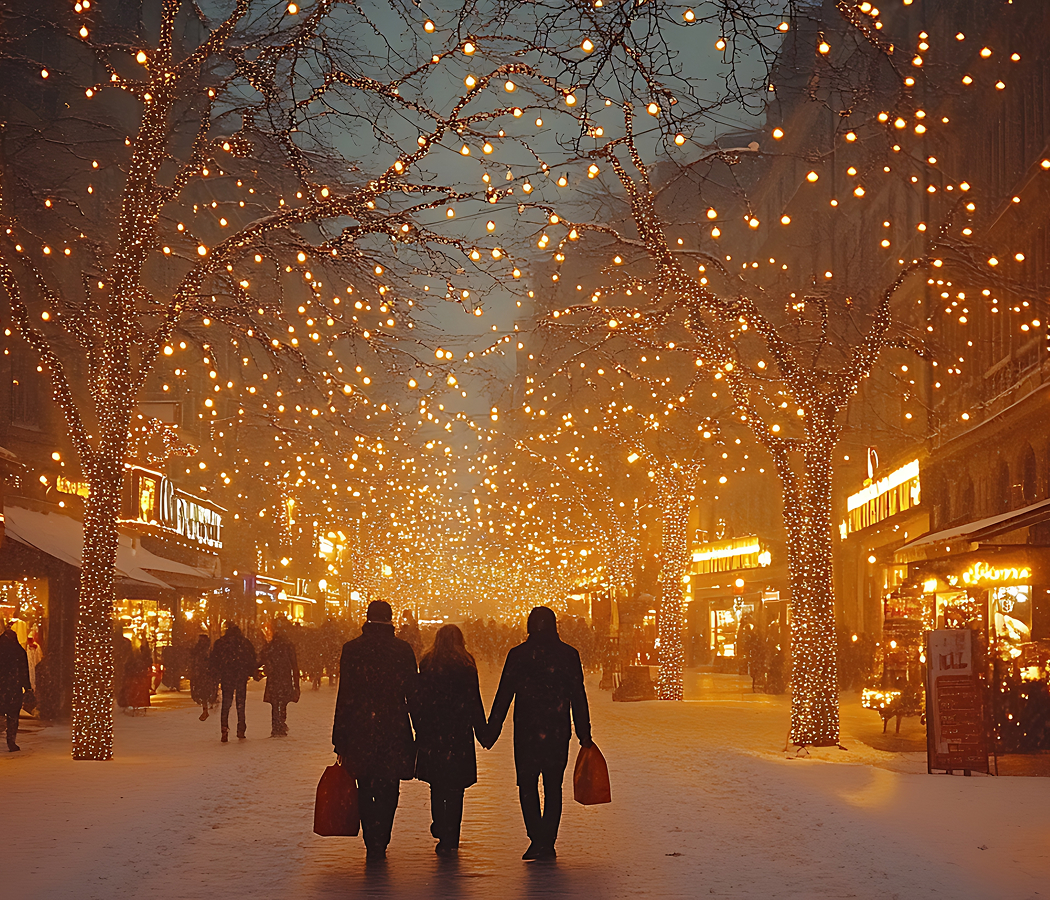
Set along Bahnhofstrasse near Rennweg and just steps from Paradeplatz, the boulevard extends from Zürich Hauptbahnhof toward Bürkliplatz on Lake Zürich, crossing the commercial heart of the city between the medieval streets of the Altstadt and the financial institutions surrounding the Lower Sihl and Limmat corridors. Broad pavements frame a predominantly tram-oriented thoroughfare lined with nineteenth-century commercial buildings, substantial stone façades and carefully proportioned shopfronts. Historic department stores, international fashion houses and Swiss watchmakers occupy ground-floor retail spaces beneath upper stories containing offices, apartments and financial institutions. The avenue's gradual descent toward the lake creates a continuous urban perspective punctuated by major intersections, tram stops and architectural landmarks associated with Zürich's commercial expansion. The result is a boulevard whose disciplined streetscape, concentration of luxury commerce and direct connection between the railway station and waterfront establish a defining expression of Zürich's metropolitan prosperity.
What defines Bahnhofstrasse.
Bahnhofstrasse is best known for its development from the site of Zürich's former defensive works into a major European commercial boulevard associated with Swiss banking, luxury retail and nineteenth-century urban modernization. Its origins belong to the demolition of the city's medieval and early modern fortifications following the political transformations of the nineteenth century. Zürich's fortified perimeter had incorporated substantial defensive walls, gates and the Fröschengraben, a moat extending along the western edge of the historic settlement. The decision to remove these structures created an opportunity to reorganize the city's circulation network and establish a broad commercial street connecting the railway terminus with the southern urban districts. Construction of Bahnhofstrasse began in 1864, transforming the former moat corridor into a planned avenue designed to accommodate the city's expanding commercial activity. The project formed part of Zürich's wider modernization during a period of industrial growth, railway development and increasing financial importance within Switzerland. The establishment of the railway station at the northern end strengthened the boulevard's strategic position, creating a direct route between regional transportation networks and the commercial center. Early development introduced substantial residential and commercial buildings along the new thoroughfare, gradually replacing the defensive landscape with an urban frontage associated with prosperous merchants and financial institutions. The street's development accelerated during the late nineteenth century as Zürich's banking sector expanded and commercial enterprises concentrated around the new avenue. Credit Suisse, founded in 1856 by Alfred Escher, became closely associated with Paradeplatz through its headquarters, contributing to the square's emergence as a principal center of Swiss finance. The construction of substantial bank buildings reinforced the architectural character of the lower boulevard, establishing an imposing commercial environment around its southern intersections. Department stores and specialist retailers subsequently developed prominent addresses along Bahnhofstrasse, attracting customers from across Switzerland and international visitors arriving through the railway network. Jelmoli became an important institution in Zürich's retail history, with its department-store development contributing to the introduction of modern commercial architecture and organized consumer shopping. The boulevard's commercial significance expanded during the twentieth century as international luxury brands established flagship stores alongside established Swiss businesses. Its concentration of financial institutions, jewelry houses and specialist retailers contributed to Zürich's international reputation for wealth management and high-value commerce. The development of an extensive tram network strengthened public access while preserving the boulevard's role as a major pedestrian-oriented commercial corridor. Bahnhofstrasse's historical importance rests on its transformation of obsolete defensive infrastructure into a principal metropolitan avenue and its contribution to Zürich's development as an international financial and commercial center.
Paradeplatz forms the principal financial and architectural concentration along the southern portion of Bahnhofstrasse, occupying a historic urban square whose development predates the modern boulevard. The square's name derives from its former association with military parades, reflecting the changing civic functions of Zürich's public spaces during the nineteenth century. UBS and the former Credit Suisse headquarters established a substantial banking presence around the square, reinforcing its association with Swiss financial institutions. The surrounding buildings incorporate imposing stone façades, carefully proportioned windows and substantial entrances designed to communicate commercial stability and institutional permanence. Confiserie Sprüngli occupies another important position on Paradeplatz, connecting the square's financial character with Zürich's celebrated confectionery traditions. The business traces its origins to David Sprüngli-Schwarz and his son Rudolf Sprüngli-Ammann, who established a confectionery enterprise in 1836 and subsequently developed a prominent retail presence within the city. Its Paradeplatz premises became an important destination for chocolates, pastries and the Luxemburgerli macarons associated with the Sprüngli name. Farther north, the boulevard contains a concentration of Swiss watchmakers and international jewelry houses, reflecting Zürich's importance within the luxury goods economy. Bucherer contributes to this specialist retail environment through its longstanding association with Swiss watches, jewelry and high-value craftsmanship. The architectural character of the avenue includes nineteenth-century historicist buildings, early twentieth-century commercial structures and later modern retail interventions. Their façades establish a varied streetscape organized around consistent building lines and substantial ground-floor commercial openings. Tram tracks occupy the central roadway, with pedestrian crossings and public transportation stops connecting the commercial blocks to the surrounding neighborhoods. The boulevard's northern end opens toward Bahnhofplatz, where the railway station's substantial nineteenth-century architecture establishes a major metropolitan arrival point. Its southern continuation approaches the lakefront through a sequence of commercial streets and public spaces associated with Zürich's waterfront development. Seasonal decorations and commercial displays contribute to the boulevard's established role within the city's public celebrations and retail calendar. The concentration of international luxury businesses coexists with longstanding Swiss commercial institutions, preserving an important connection between local enterprise and global consumer markets. Bahnhofstrasse's distinctive character emerges from this combination of historical urban planning, financial institutions, specialist craftsmanship and extensive pedestrian commerce.
How Bahnhofstrasse fits.
Bahnhofstrasse works as the commercial centerpiece for a Central Zürich itinerary connecting the city's medieval religious architecture, its historic financial institutions and the cultural collections associated with Switzerland's national artistic heritage.
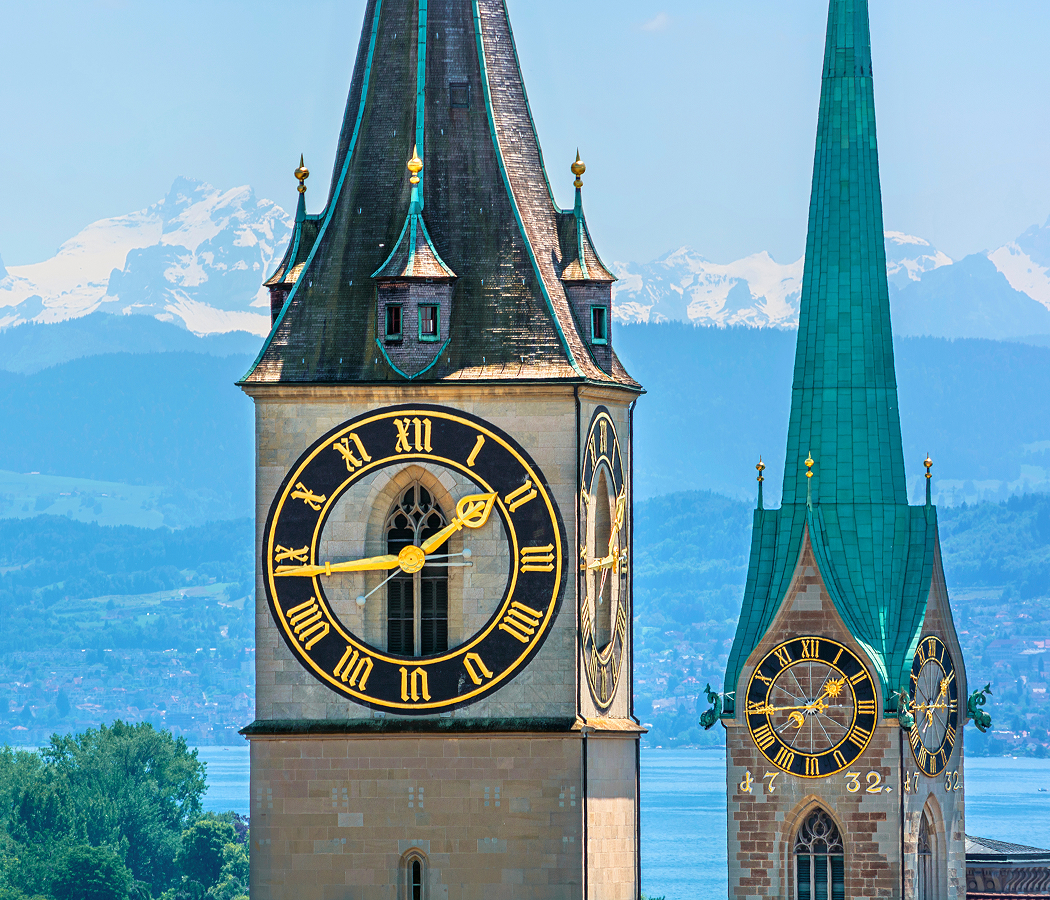
Begin at Fraumünster, the historic church occupying a prominent position beside the Limmat in Zürich's Altstadt. The institution originated in 853 when King Louis the German established a convent for his daughter Hildegard, creating a religious foundation that subsequently acquired substantial political and economic influence within the medieval city. The church's architectural development incorporates Romanesque and Gothic elements, including a substantial choir and distinctive stained-glass windows. Marc Chagall created five celebrated choir windows installed in 1970, introducing an internationally significant modern artistic commission into the historic ecclesiastical interior. The church's history connects Zürich's medieval religious institutions with the city's later cultural development. Continue to Grossmünster, the Romanesque church whose twin towers form one of Zürich's most recognizable architectural features. Construction of the present building began during the twelfth century, establishing a major religious institution associated with the city's medieval development. The church became central to the Swiss Reformation through the ministry of Huldrych Zwingli, who began preaching there in 1519 and subsequently advanced religious reforms that transformed Zürich's civic and ecclesiastical institutions. Its interior preserves important architectural features associated with successive periods of construction and restoration. The towers provide a commanding presence above the surrounding riverfront streets, connecting the church with the historical geography of the old city. Conclude at Kunsthaus Zürich, the major art museum occupying a prominent position east of the historic center. Its collections encompass European painting, sculpture and modern art, with important holdings associated with Alberto Giacometti, Ferdinand Hodler and major international artists. The museum's original building, designed by Karl Moser and opened in 1910, established a substantial institutional home for Zürich's art collections. A major extension designed by David Chipperfield opened in 2021, introducing additional exhibition galleries and public spaces. The expanded institution strengthened Zürich's position as a major European center for visual art, connecting historical collections with contemporary museum architecture. The progression moves from the medieval religious foundations of the old city through the Reformation's architectural center and culminates in the art collections that establish Zürich's international cultural significance.
Where your story begins.
Foresyte Travel reveals places that feel extraordinary long before you arrive.
Enjoy editorial crafted for luxury travelers.
Foresyte may earn a commission when you book.