
Why Isabella Stewart Gardner Museum matters.
In the heart of Boston's Fenway-Kenmore district, Isabella Stewart Gardner Museum feels less like a museum and more like an enchanted world, a place where art, architecture, and atmosphere are woven into a single living masterpiece.
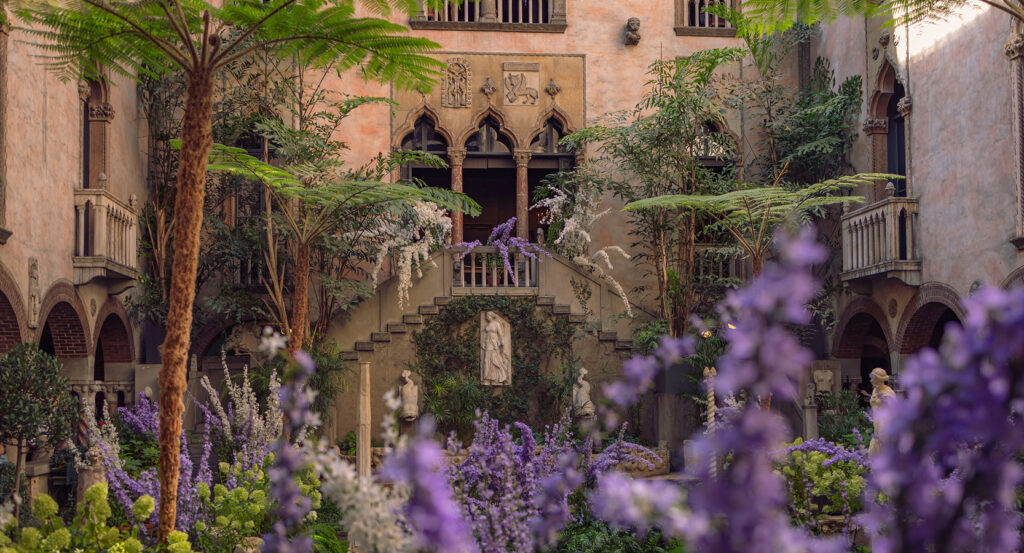
Stepping inside the Venetian-style palazzo, visitors are immediately transported from the bustle of the city into a timeless sanctuary. Sunlight filters through arched windows onto mosaicked floors and lush greenery that surrounds the iconic central courtyard, a floral haven that changes with the seasons. Every room, every wall, every object in this space was arranged by Isabella Stewart Gardner herself, not to showcase art but to evoke emotion. The collection, spanning Rembrandt, Vermeer, Titian, Botticelli, and countless others, unfolds like an intimate diary of passion and taste. But it's not just the names that matter here; it's the curation. Gardner designed her home so that paintings, sculptures, furniture, and tapestries would speak to one another, creating a symphony of light and history. The building itself, modeled after a 15th-century Venetian palace, hums with her spirit. Even the air feels charged, not sterile or reverent, but alive. To walk through its galleries is to glimpse the soul of a woman who defied convention, loved beauty fiercely, and left behind one of the most personal, mysterious museums in the world.
What defines Isabella Stewart Gardner Museum.
Isabella Stewart Gardner Museum was born from one woman's dream to create “a place for the education and enjoyment of the public forever,” and every inch of it bears her imprint.
Isabella, known to her contemporaries as a patron of the arts and a magnetic social force, opened the museum in 1903, filling it with treasures collected during her travels across Europe, Asia, and the Middle East. But beyond its splendor, the museum holds one of the most fascinating, and haunting, stories in art history: the 1990 art heist. On a quiet March night, two men disguised as police officers entered the museum and stole thirteen irreplaceable works, including Vermeer's The Concert and Rembrandt's The Storm on the Sea of Galilee. Valued at over $500 million, it remains the largest unsolved art theft in the world. To this day, Gardner's empty frames hang on the walls as silent witnesses to what was lost, and as symbols of her enduring presence. Few realize that Gardner's will explicitly forbade any changes to the collection's arrangement; her vision had to remain eternal, untouched. That directive continues to shape how the museum operates, preserving the house as a living artwork. In 2012, the Renzo Piano-designed expansion added new galleries and performance spaces, delicately balancing modern transparency with Gardner's historic intimacy. The museum's Artist-in-Residence program continues her tradition of supporting creativity, inviting contemporary artists to engage with her legacy through new interpretations and installations. Every aspect of the museum, from its horticultural displays to its classical concerts, reflects Gardner's belief that art should be felt, not simply observed.
How Isabella Stewart Gardner Museum fits.
Visiting Isabella Stewart Gardner Museum is an experience best savored slowly, a discussion between art and emotion that unfolds like poetry.
Begin your journey in the central courtyard, where orchids and ferns frame a Roman mosaic floor and the soft sound of water echoes through the arcade. Then wander through the galleries as Gardner intended: without maps, without order, guided only by curiosity. Allow yourself to drift from the Tapestry Room, where rich Flemish weavings glow under soft light, to the Dutch Room, still hauntingly marked by the missing frames from the 1990 theft. In the Little Salon and Yellow Room, smaller works reveal Gardner's love of intimacy and personal storytelling. Don't miss the Veronese Room and the Titian Room, where masterpieces are displayed as part of lived space, surrounded by velvet chairs, antique books, and delicate ceramics. Once you've absorbed the old-world magic of the original museum, cross into the modern wing, where Renzo Piano's glass-and-steel structure opens up to gardens, performance halls, and rotating exhibitions that connect Gardner's past with the art of today. Stop for lunch at Café G, known for its fresh, artful cuisine that mirrors the museum's aesthetic grace. The museum is conveniently located near the Museum of Fine Arts Boston, making it easy to pair the two for a full day of cultural exploration. But while the MFA impresses with grandeur, Isabella Stewart Gardner Museum captivates with intimacy. It's not just a collection of art, it's an act of love, a physical manifestation of one woman's belief that beauty, when shared with others, can become immortal.
Where your story begins.
Foresyte Travel reveals places that feel extraordinary long before you arrive.
Enjoy editorial crafted for luxury travelers.
Foresyte may earn a commission when you book.







































































































