Why Savannah Historic District matters.
Savannah Historic District is a distinguished urban enclave where Savannah's colonial foundations meet James Oglethorpe's revolutionary town plan, the architectural prosperity of Georgia's Atlantic port and one of America's most extensive concentrations of preserved eighteenth- and nineteenth-century streetscapes.
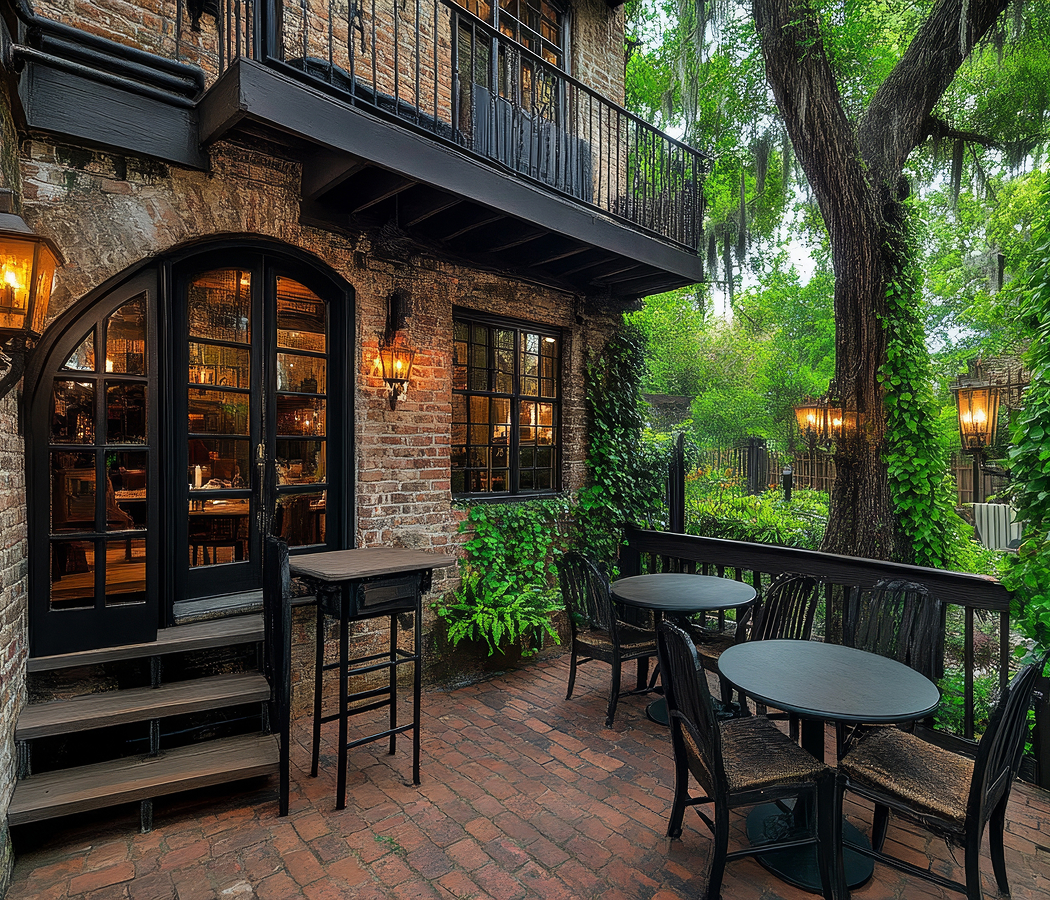
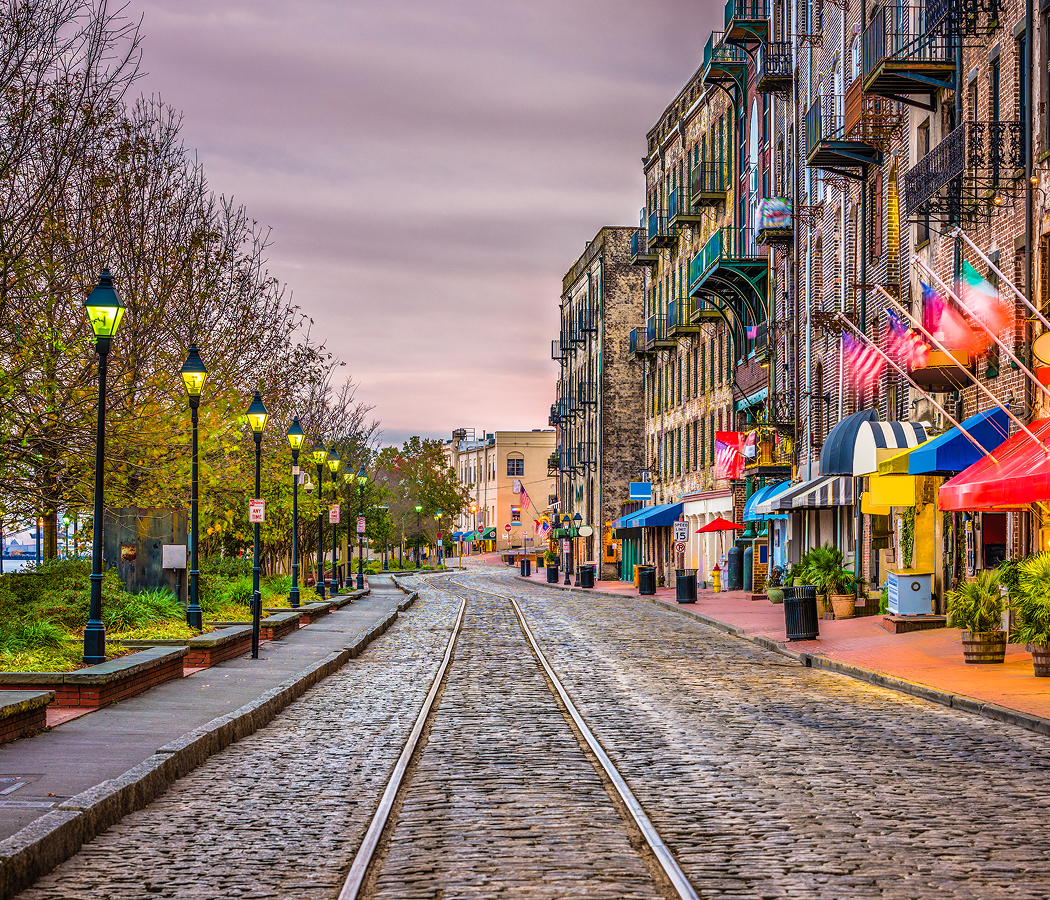
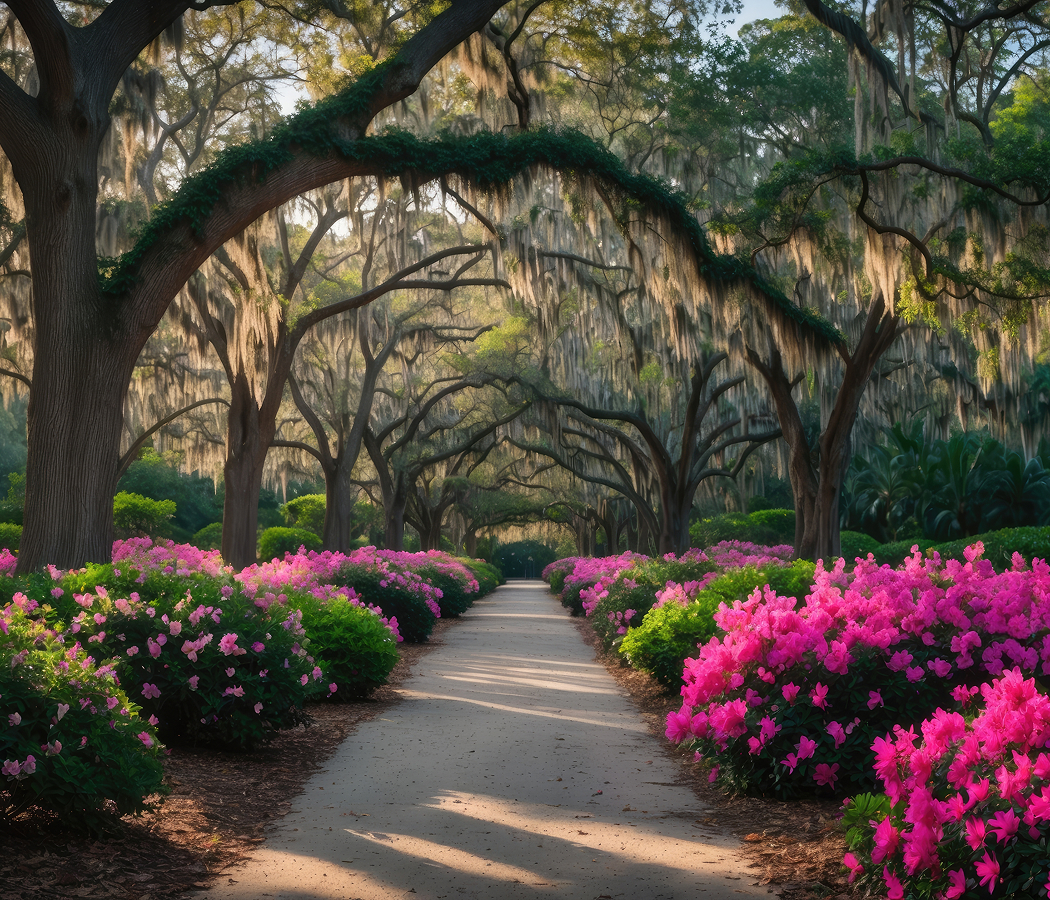
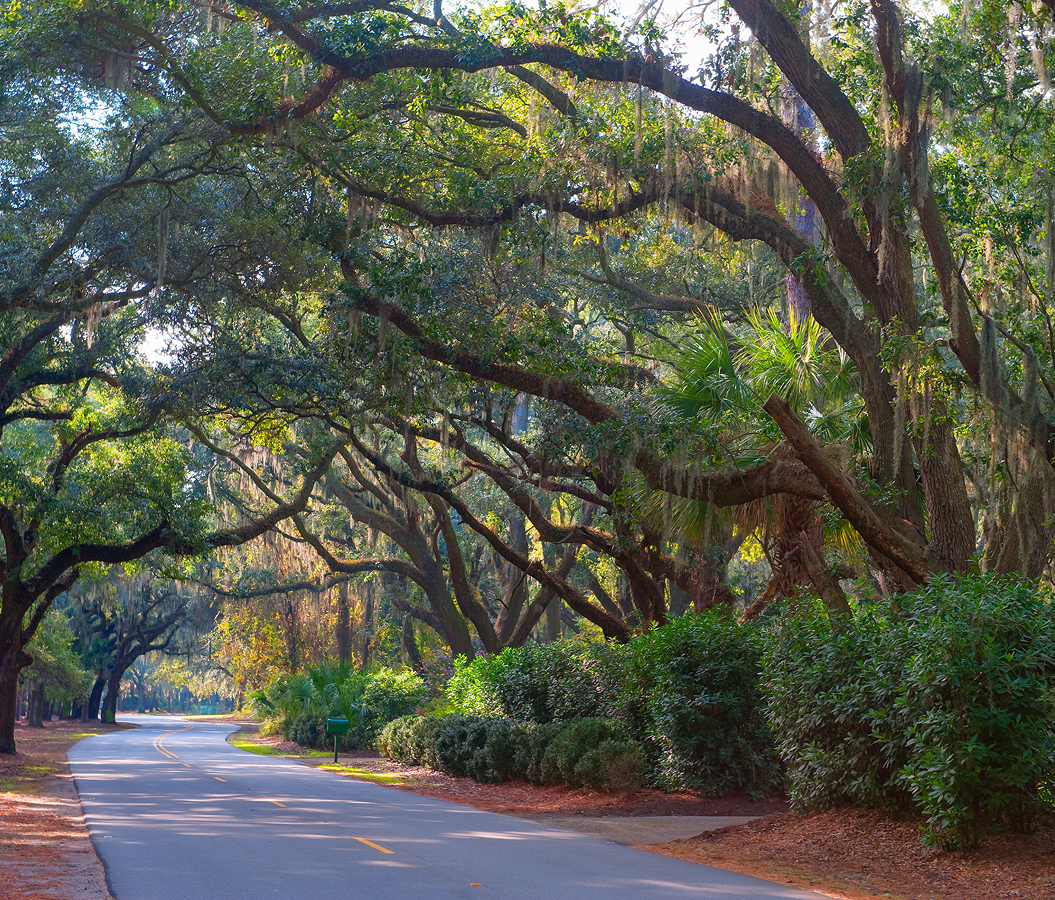
Positioned between the Victorian District to the south, the Thomas Square neighborhood farther southwest and the Savannah River to the north, the historic district occupies the original urban core, extending through a remarkably ordered network of public squares, residential blocks and commercial streets overlooking the waterfront. Brick sidewalks, cobblestone passages and mature live oaks connect Federal, Greek Revival, Gothic Revival and Italianate buildings across successive generations of development. Expansive churches, merchant residences and former commercial warehouses establish distinct architectural settings within the district's regular street grid. Landscaped squares interrupt surrounding blocks with shaded paths, ornamental planting beds and civic monuments. The result is an exceptionally coherent historic cityscape whose preserved buildings and public spaces sustain the physical organization of colonial Savannah.
What defines Savannah Historic District.
Savannah Historic District is best known for preserving the Oglethorpe Plan, the distinctive urban arrangement established during the founding of Georgia's first colonial settlement. James Edward Oglethorpe arrived on the Savannah River in February 1733 with settlers supported by the Trustees for Establishing the Colony of Georgia in America. The settlement occupied a bluff overlooking the river, providing access to Atlantic commerce and a defensible position within the contested southeastern frontier. Oglethorpe organized Savannah around wards containing a central public square, residential lots and larger trust lots intended for civic and institutional buildings. This modular arrangement permitted orderly expansion as the settlement grew, producing a distinctive relationship between public gathering spaces and private development. The colony initially prohibited slavery, although that restriction ended in 1751, and enslaved African labor subsequently became central to the agricultural economy supporting Savannah's commercial growth. Georgia became a royal colony in 1752, introducing new administrative arrangements as Savannah developed into an increasingly important provincial capital and port. British forces captured the city in December 1778 during the American Revolution, and a combined French and American assault failed to retake it during the Siege of Savannah in 1779. Following independence, the expanding cotton trade transformed Savannah's commercial fortunes, connecting its merchants and shipping facilities with plantations across Georgia's interior. The invention of the cotton gin accelerated the regional production of short-staple cotton, intensifying the expansion of slavery and the port's participation in Atlantic commodity markets. Nineteenth-century prosperity financed substantial residential construction, religious institutions and commercial buildings across the established ward system. The Civil War brought another major turning point when Union forces occupied Savannah in December 1864 following General William Tecumseh Sherman's campaign through Georgia. The district's surviving architectural fabric subsequently endured economic change, modernization and periods of physical deterioration before organized preservation efforts transformed its future.
Juliette Gordon Low Birthplace occupies an important position in Savannah's residential heritage as the childhood home of the founder of Girl Scouts of the USA. Juliette Gordon Low established the organization in 1912, creating an enduring national institution devoted to leadership, practical skills and opportunities for girls. The Davenport House became another pivotal property in the district's modern history when plans for its demolition prompted seven Savannah women to establish the Historic Savannah Foundation in 1955. Their successful campaign to preserve the Federal-style residence demonstrated the possibilities of coordinated architectural conservation. The foundation subsequently expanded its activities through property acquisition, rehabilitation and advocacy, helping protect numerous endangered buildings. The Owens-Thomas House & Slave Quarters preserves an exceptional Regency residence designed by English architect William Jay, alongside surviving service spaces associated with the enslaved people who maintained the household. Its architectural composition incorporates refined interior plasterwork, an innovative indoor plumbing system and a courtyard arrangement connecting domestic and working spaces. The First African Baptist Church traces its congregation to 1773, establishing one of the country's oldest historically Black Baptist religious communities. Its nineteenth-century sanctuary preserves significant connections with African American religious organization, education and community leadership. Savannah's historic squares also contain monuments associated with military figures, political leaders and civic benefactors, revealing successive generations of public commemoration. The district received National Historic Landmark designation in 1966, recognizing the national significance of its town plan and surviving architecture. River Street's former cotton warehouses subsequently underwent extensive rehabilitation, reconnecting the waterfront with commercial and pedestrian activity. The preservation of Savannah Historic District established a nationally influential example of protecting an interconnected urban landscape through the conservation of buildings, streets and public squares.
How Savannah Historic District fits.
Savannah Historic District works as the architectural anchor for an outing connecting the city's nineteenth-century residential grandeur, its religious heritage and the cultural institutions established through the preservation of historic buildings.
Begin at Mercer Williams House Museum, the distinguished Italianate residence overlooking Monterey Square. Architect John S. Norris designed the house for General Hugh W. Mercer, and construction began in 1860 before the disruptions of the Civil War delayed completion until 1868. Its red-brick exterior, ornate ironwork and carefully proportioned windows establish an imposing residential presence. Preservationist Jim Williams acquired the property in 1969 and undertook an extensive restoration, furnishing its interiors with antiques and decorative objects. The residence later gained international recognition through John Berendt's Midnight in the Garden of Good and Evil, connecting its architectural history with Savannah's literary reputation. Continue to Cathedral Basilica of St. John the Baptist, the expansive Roman Catholic church overlooking Lafayette Square. The present Gothic Revival building was dedicated in 1876, incorporating twin spires, pointed arches and elaborate stained-glass windows. A devastating fire in 1898 destroyed substantial portions of the interior, prompting a reconstruction that restored the sanctuary's architectural character. Its vaulted ceilings, decorative paintings and religious sculpture create one of the Southeast's most elaborate Catholic interiors. The cathedral's development accompanied the growth of Savannah's Irish Catholic population and the establishment of major religious institutions across coastal Georgia. Conclude at Telfair Academy, the historic art museum occupying a Regency-style mansion near Telfair Square. English architect William Jay designed the residence for Alexander Telfair, and construction was completed in 1819. Mary Telfair subsequently bequeathed the property and her artistic possessions to the Georgia Historical Society, establishing the foundation of a public cultural institution. The museum opened in 1886 and became one of the earliest public art museums in the American South. Its galleries contain American and European painting, sculpture and decorative arts, and the building's preserved interiors retain important examples of early nineteenth-century architectural craftsmanship. The progression moves from Mercer Williams House Museum's restored residential interiors through Cathedral Basilica of St. John the Baptist's religious architecture and culminates at Telfair Academy's historic collections, connecting Savannah's domestic, spiritual and artistic heritage.
Where your story begins.
Foresyte Travel reveals places that feel extraordinary long before you arrive.
Enjoy editorial crafted for luxury travelers.
Foresyte may earn a commission when you book.