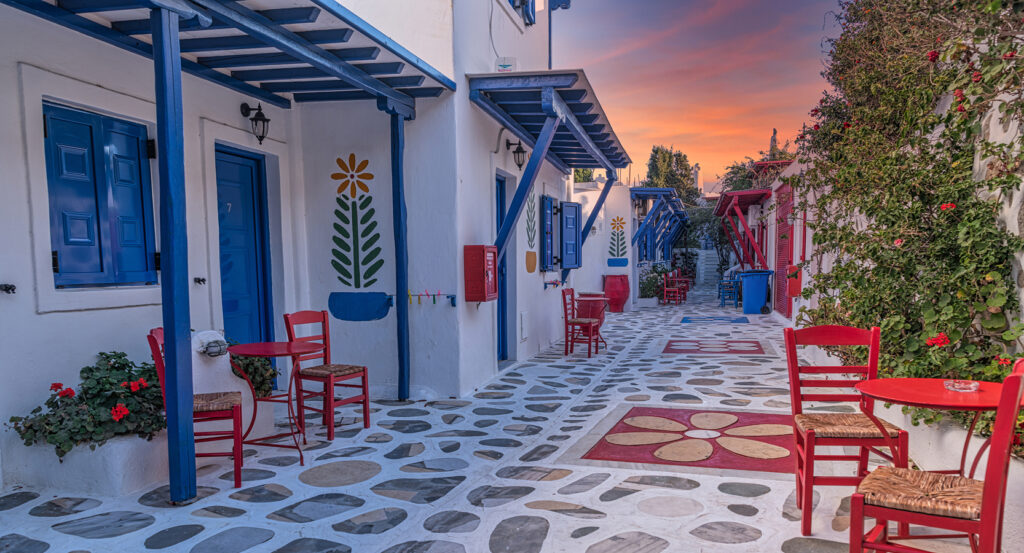
Fun facts about Mykonos, Greece.
Mykonos carries a deeper, older soul beneath its glossy reputation, a landscape shaped by geology, mythology, maritime history, and winds that have carved its identity for millennia.
The island sits along ancient Aegean trade routes that once connected civilizations, and its harbors saw everything from Minoan sailors to Venetian nobles. Its iconic windmills aren't just postcard-perfect structures; they were once the economic engine of the Cyclades, grinding grain carried across the sea by merchant ships. The maze-like streets of Chora weren't built for charm, they were a defensive strategy against pirates, designed to disorient invaders and shield locals from coastal winds. Beneath the surface lie remnants of ancient sanctuaries dedicated to Dionysus and Apollo, hints of the island's long spiritual lineage tied closely to Delos, one of the most sacred archaeological sites in Greece. The beaches themselves tell a geological story: sculpted granite formations, tidal shifts, and underwater plateaus that create Mykonos's famously crystal-clear waters. Even the nightlife culture has roots deeper than the modern era, Mykonos has been a sanctuary for artists, rebels, and free spirits since the 1950s, long before DJs and beach clubs arrived. Visitors often sense a kind of electric ease on the island without realizing it's the convergence of history, wind, rock, sea, and myth echoing through every sunlit corner.
Five fun facts.
5. Petros the Pelican is an island icon.
In 1958, a wounded pelican was rescued by locals and became Mykonos's beloved mascot. Today, his legacy lives on through his namesake lookalikes roaming the harbor.
4. It was once considered a sacred gateway to Delos.
Just a short boat ride away is one of Greece's most important mythological and archaeological sites, and Mykonos served as the luxurious outpost for travelers en route to the holy island.
3. The windmills aren't just for show.
Those postcard-worthy 16th-century windmills once powered the island's grain economy. Now, they power the visual identity of Mykonos worldwide.
2. The town layout was designed to confuse pirates.
The labyrinthine streets of Chora weren't just charming, they were tactical, intentionally built to disorient invaders and protect locals.
1. Mykonos has one of Europe's oldest LGBTQ+ scenes.
Since the 1970s, the island has embraced LGBTQ+ travelers with open arms, becoming a pioneer of queer-friendly hospitality in the Mediterranean.
Where your story begins.
Start your planning journey with Foresyte Travel.
Experience immersive stories crafted for luxury travelers.