
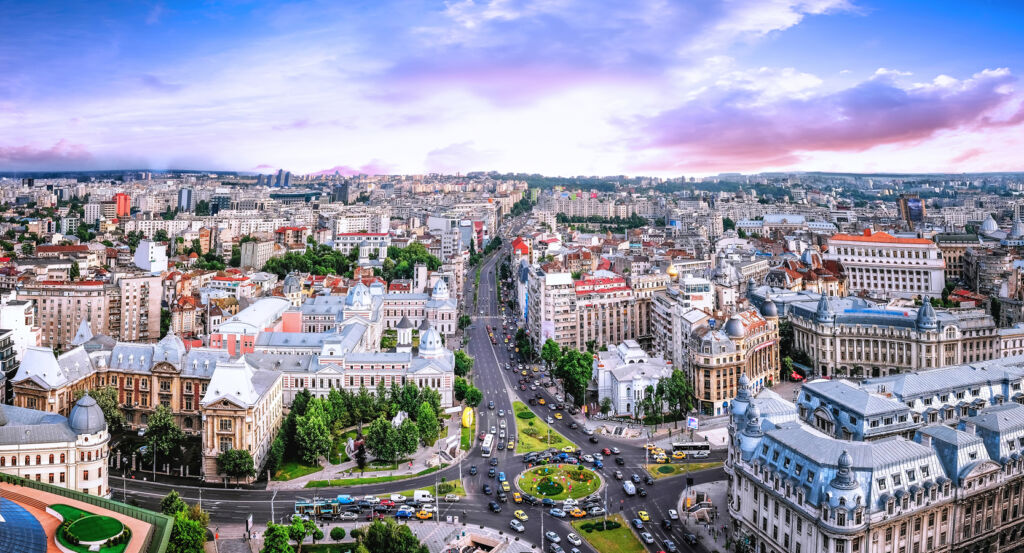
Why you should experience Rembrandt Old Town in Bucharest, Romania.
Rembrandt Old Town is where refined comfort, thoughtful simplicity, and Bucharest's timeless urban texture converge into a stay that feels grounded, present, and deeply connected to the rhythms of the city.
Situated in the heart of Bucharest's historic district, just steps from atmospheric cobblestone streets, energetic cafés, cultural venues, and architectural landmarks, Rembrandt Old Town places you squarely in the flow of the city's lived experience. From the moment you arrive, there's a palpable sense of balanced presence, an environment that supports exploration and relaxation without commanding attention through performance or pretense. The hotel's exterior, while modest, signals a place defined by purpose: clean lines, thoughtful proportion, and a position that feels woven into the urban fabric. Step inside and the atmosphere immediately feels composed and intentional. Public spaces are designed with clarity in mind, seating arranged for use rather than display, natural light balanced with warm interior tones, and surfaces that exude quiet refinement rather than decorative excess. The lobby communicates a steady sense of welcome: calm, open, usable. It's a space where you can orient yourself to the day's plans, gather before heading out, or return after a long walk. Guest rooms embody Rembrandt Old Town's core philosophy of understated comfort. Rooms are proportioned to feel generous without being oversized, with beds dressed in quality linens that prioritize deep rest. Furnishings favor clean, functional forms, each element chosen for coherence and durability. Workspaces are intentionally placed for ease of use, and lighting is layered to support both focused activity and relaxed presence. Neutral palettes with soft accents create environments that feel calm and composed, encouraging a sense of internal balance that mirrors the city's external rhythm. Large windows allow daylight to fill the room and frame views of Bucharest's streets or surrounding architectural nuances, keeping your experience visually anchored to place. Bathrooms are structured to support unhurried routines, with modern fixtures, clear layouts, and finishes that balance refined texture with practical comfort. Walk-in showers, accessible storage, and thoughtful lighting contribute to a seamless daily experience. Dining at Rembrandt Old Town reinforces its character as a hotel where genuine hospitality and usability take precedence. Breakfast unfolds with composed pacing and well-executed offerings, fresh ingredients presented simply yet thoughtfully. The restaurant and lounge areas maintain an approachable atmosphere that encourages conversation rather than performance, making morning starts and evening returns equally comfortable. Service throughout the hotel is attentive and grounded. Staff interactions are helpful without being intrusive, guided by local familiarity rather than rehearsed script. Recommendations for cafés, pedestrian routes, cultural stops, or quieter corners of the city feel rooted in lived experience and practical insight. The hotel's location is one of its defining strengths. From the front door, Bucharest's historic core unfolds immediately, walkable, observable, and woven with layers of architectural and cultural depth.
What you should know about Rembrandt Old Town.
Rembrandt Old Town is best known for a hospitality philosophy rooted in adaptability, situational clarity, and contextual awareness, an approach that prioritizes lived experience over theatrical presentation.
Instead of anchoring the hotel's character in sweeping design gestures, the creators focused on how guests actually inhabit space: how they move through it, rest in it, return to it, and let it recede into the backdrop of meaningful travel moments. This operational clarity influences design choices at every scale. Interior materials were selected for their tactile longevity and tonal balance. Surfaces age with use, textures feel reassuring under touch, and finishes resist visual noise while supporting functional demands. Another lesser-known dimension of the hotel's character lies in how shared spaces were deliberately kept adaptable. Rather than rigidly separating areas into hierarchical “lobby,” “lounge,” or “waiting zone,” the design encourages fluid use based on your needs in the moment, work, conversation, quiet pause, or transit. This reflects a broader hospitality logic that sees space as a facilitative tool rather than a series of performance stages. Sustainability and operational responsibility were integrated pragmatically. Energy-efficient systems, responsible sourcing, and waste-aware practices align with Bucharest's broader expectations for environmentally aware operation. The service culture further reflects this grounded character. Rather than scripted interactions, staff engagements are rooted in real familiarity with the city's rhythm, offering directions that consider ease of walking, recommending cafes where locals linger, noting quieter pedestrian routes, or suggesting quieter periods to visit nearby cultural venues. These recommendations feel lived-in. Over time, Rembrandt Old Town has developed a core following among travelers who appreciate environments that support genuine engagement. Guests often return because the experience feels stable, coherent, and calm, spaces that function without demanding attention but rather enable presence. In a hospitality landscape often polarized between heritage romanticism and high-concept design, Rembrandt Old Town stands apart through its commitment to clarity, usability, and contextual openness.
How to fold Rembrandt Old Town into your trip.
Rembrandt Old Town works as a foundational anchor that supports fluid movement through Bucharest's historic and cultural layers, allowing your itinerary to unfold organically.
Begin your mornings with breakfast in the hotel's composed dining space, let the calm clarity of the setting orient your pace for the day. Step outside and find yourself within minutes of pedestrian corridors leading toward favorite city landmarks: Old Town's cafésque squares, historic façades, and galleries that reward slow observation. Midday returns to the hotel feel restorative. Use shared areas to regroup, handle logistics, or simply pause before heading back into the city's fold. The hotel's proximity to pedestrian routes and transit access makes these transitions seamless, allowing movement to feel fluid. Afternoons can unfold toward cultural venues, parks, or quieter neighborhoods that invite lingering. Because everything feels accessible, spontaneous decisions become part of the experience. Evenings at Rembrandt Old Town feel composed. After dinner in Old Town or at a nearby neighborhood favorite, returning to the hotel feels like stepping into calm. Soft lighting, familiar textures, and spaces designed for rest support resonant and physical recovery, preparing you for the next segment of exploration. Over multiple nights, Rembrandt Old Town becomes a stabilizing presence. Bucharest begins to feel navigable through presence rather than pace, and your understanding of the city deepens through repeated observation rather than frenzy. The hotel's consistent, composed environment allows the city's character to be the focus, shaping an experience defined by clarity, coherence, and lasting resonance.
Where your story begins.
Foresyte Travel reveals places that feel extraordinary long before you arrive.
Experience premium editorial crafted for luxury travelers.





































































































