
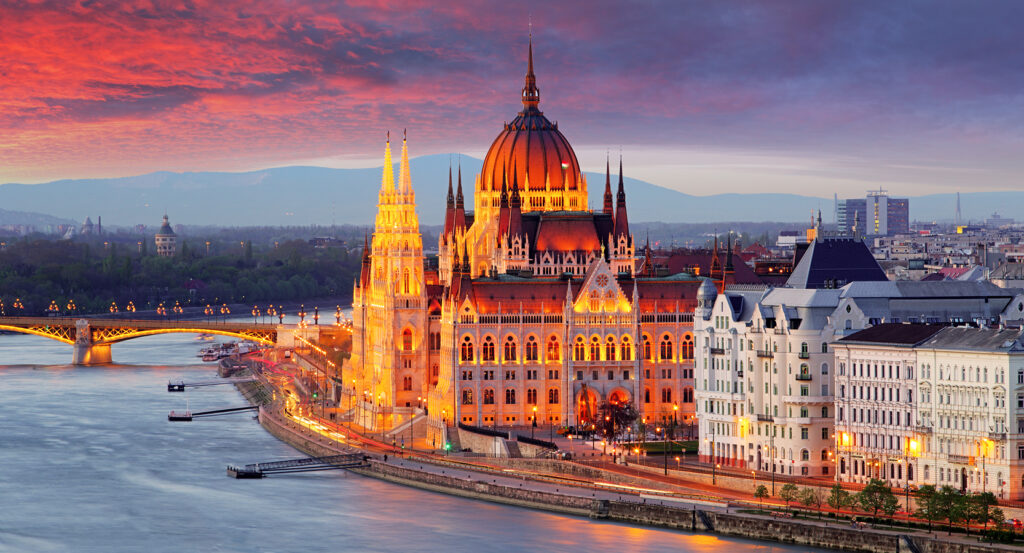
Why you should experience Óbuda in Budapest, Hungary.
Óbuda is Budapest's neighborhood of ancient origins and riverside charm, where Roman ruins, historic town squares, Danube waterfronts, cultural landmarks, hillside views, and centuries of layered history create one of the capital's most fascinating districts.
Occupying the northern portion of Buda along the western bank of the Danube, the neighborhood unfolds through cobblestone streets, Baroque-era buildings, archaeological sites, residential communities, riverside promenades, and cultural venues that reveal a story stretching back nearly two thousand years. Unlike many parts of Budapest defined primarily by nineteenth-century growth, Óbuda preserves visible traces of multiple civilizations and eras, creating an atmosphere where ancient history and modern city life coexist. The district balances historic preservation with contemporary residential development, offering visitors both cultural depth and everyday authenticity. Along the border of neighboring Rózsadomb, hillside neighborhoods, historic villas, and green spaces blend seamlessly into Óbuda's landscape, reinforcing its role as one of Budapest's most historically significant districts.
What you should know about Óbuda.
Óbuda is best known for Aquincum, the ancient Roman city that served as the capital of Lower Pannonia and remains one of the most important archaeological sites in Central Europe.
Founded by the Romans during the first century AD, Aquincum developed into a major military, administrative, and commercial center along the frontier of the Roman Empire. At its height, the city contained public baths, amphitheaters, temples, residential districts, and sophisticated infrastructure that reflected the importance of Roman civilization in the region. The remains of Aquincum provide some of the most extensive evidence of Roman urban life found anywhere in Hungary, offering remarkable insight into a period that predates the Hungarian state by centuries. This ancient legacy profoundly shaped Óbuda's identity, distinguishing it from every other district in Budapest. Today, visitors experience a neighborhood where Roman ruins, medieval heritage, and modern urban life converge in one of Europe's most historically layered settings.
How to fold Óbuda into your trip.
Óbuda is an ideal centerpiece for a day spent exploring Budapest's ancient history, riverside landscapes, and northern districts.
Begin at the Aquincum Museum and Archaeological Park, where remarkably preserved Roman ruins provide an unforgettable introduction to the district before exploring its surrounding neighborhoods. From there, continue through Óbuda's historic town center and riverside areas before making your way toward landmarks that showcase the area's diverse heritage. Aquincum, Fő Square, and the Óbuda Danube Promenade all sit within easy reach, creating a natural progression between ancient history, Baroque architecture, and waterfront scenery. As the afternoon unfolds, the district rewards exploration with hidden courtyards, local cafés, cultural venues, and views that reveal why Óbuda remains one of Budapest's most rewarding neighborhoods to discover. Óbuda fits naturally into that rhythm of discovery, serving as both the birthplace of urban life in Budapest and one of the city's most historically significant districts.
Where your story begins.
Foresyte Travel reveals places that feel extraordinary long before you arrive.
Experience premium editorial crafted for luxury travelers.





































































































