
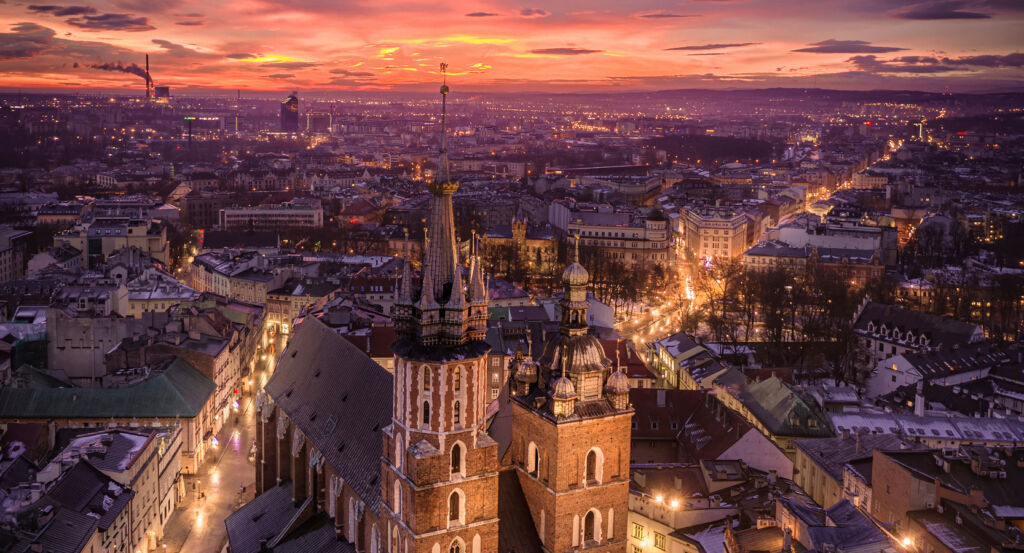
Why you should experience Hotel Campanile in Kraków, Poland.
Hotel Campanile is a functional, city-facing base that treats Kraków as a place to be navigated confidently rather than curated delicately, offering a stay defined by clarity, access, and dependable rhythm.
Positioned along a major corridor with straightforward connections into the Old Town and beyond, the hotel operates with an understanding that not every traveler wants to feel cocooned or ceremonial. Arrival is clean and efficient. You move from street to interior without friction, immediately sensing that this is a place designed to support momentum rather than interrupt it. Public interiors are open, legible, and practical. There is space to orient yourself, to pause briefly, to plan the next move, but no attempt to hold you longer than necessary. Seating is purposeful, circulation is wide and intuitive, and lighting prioritizes visibility and alertness over mood. The atmosphere feels urban and pragmatic, aligning more with the cadence of movement than with retreat. Guest rooms extend this logic of straightforward comfort. Layouts are sensibly proportioned, offering enough room to unpack, reset, and move. Beds are built for reliable rest, not indulgence, but consistency, which becomes essential when days are full and schedules unpredictable. The design language is restrained and contemporary, keeping the room visually quiet so your attention can reset. Windows often look out onto city streets or arterial views, reinforcing the sense that you are staying within Kraków's active structure. Bathrooms are clean, efficient, and easy to use, supporting routine. Across the hotel, the experience feels dependable and unambiguous. Hotel Campanile is ideal for travelers who value predictability, mobility, and the ability to move through Kraków with confidence.
What you should know about Hotel Campanile.
Hotel Campanile is structured around tempo management, the idea that a good city hotel should help regulate the pace of your day rather than define it, and that philosophy shapes the stay in subtle but important ways.
The hotel does not attempt to slow you down through design cues or atmosphere. Instead, it maintains a neutral, steady tone that allows you to choose your own speed. Spaces behave consistently every time you encounter them. You don't need to interpret the environment or adjust to shifting moods. This predictability reduces cognitive load, especially valuable in a city as layered and navigationally dense as Kraków. Circulation paths are direct and forgiving. You are never forced into tight transitions or unclear routes, which matters after long days of walking, meetings, or transit. Acoustic conditions are tuned to soften the city. Exterior noise registers as distant presence rather than intrusion, maintaining awareness of place while protecting rest. Lighting avoids extremes, supporting early departures and late returns. Materials are chosen for durability and ease rather than visual statement, reinforcing the sense that this is a hotel designed to work reliably over time. Service culture mirrors this operational clarity. Interactions are efficient, courteous, and appropriately brief. Assistance is available. Guests are trusted to move autonomously, which subtly reinforces confidence and independence. Another understated advantage of Hotel Campanile is how it supports mixed-purpose stays. Business and leisure overlap easily here because the environment does not push you toward any one mode of behavior. You can move quickly when needed, rest. The hotel does not try to interpret Kraków or soften its edges. It gives you a stable platform from which to engage the city directly, on your own terms.
How to fold Hotel Campanile into your trip.
Hotel Campanile works best when you treat it as a logistical anchor, a place that supports full days of movement, exploration, and return.
Begin your mornings decisively. Wake, orient, and step out. The hotel's location and structure make it easy to enter the city's flow quickly, whether you're heading toward the Old Town, business districts, or transit routes. Use the hotel strategically throughout the day. One of its strengths is how easily it absorbs short, functional returns. Come back to reset, reorganize, or pause briefly without feeling like you're interrupting an experience. Then move on. Afternoons can stretch longer because your base doesn't require ceremony or preparation. Explore museums deeply, walk neighborhoods without agenda, or let the city pull you farther than planned, knowing your return is simple and predictable. Evenings benefit from the same flexibility. Dine where it feels right, attend events, or end the day early. Returning to the hotel feels straightforward rather than anticlimactic, a clean landing rather than a retreat. Over multiple nights, this rhythm compounds. Kraków becomes easier to read because your accommodation remains consistent. You stop managing logistics and start moving instinctively. Business travelers benefit from the hotel's efficiency, clarity, and ability to absorb fragmented schedules. Leisure travelers gain freedom, the ability to prioritize experience over environment. Anchoring your stay at Hotel Campanile allows Kraków to be experienced as a city in motion rather than a series of staged moments. The hotel does not compete with the city or attempt to elevate it through narrative. It stays reliable, legible, and out of the way, which, in the context of travel, becomes its quiet advantage.
Where your story begins.
Foresyte Travel reveals places that feel extraordinary long before you arrive.
Experience premium editorial crafted for luxury travelers.





































































































