
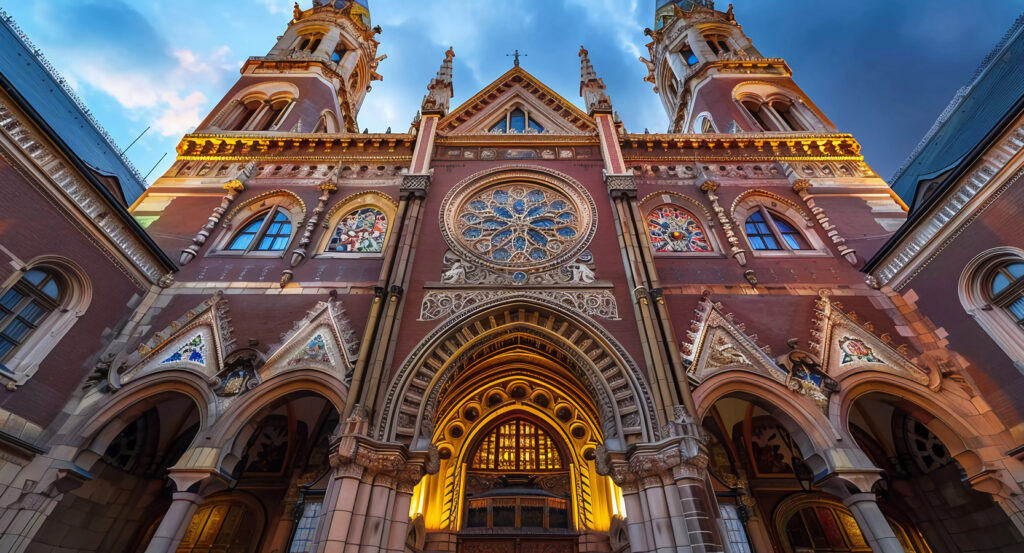
Why you should experience Hungarian Jewish Museum and Archives in Budapest, Hungary.
Hungarian Jewish Museum and Archives at Dohány Street Synagogue is the heartbeat that keeps Budapest's Jewish Quarter alive with memory and meaning.
Tucked beside the grand Dohány Street Synagogue, the museum flows seamlessly into one of the most sacred sites in Europe, bridging art, ritual, and remembrance. Its galleries unfold like quiet prayers, illuminated by shafts of soft light that fall across Torah scrolls, silver menorahs, and ceremonial textiles that once adorned the synagogues of pre-war Hungary. Each artifact feels personal, not preserved behind glass but suspended in reverence, a fragment of lives once lived, of communities that shaped the soul of this city. What strikes you most isn't grandeur, but intimacy. Even among the displays of ancient manuscripts or intricately wrought ornaments, there's a palpable hum of continuity, the stubborn, beautiful insistence of a culture that endures.
What you should know about Hungarian Jewish Museum and Archives.
The museum was born from resilience, created in 1916 in defiance of Europe's growing turmoil.
It began as a modest collection of Judaica assembled by Hungarian scholars and rabbis who recognized the urgency of preservation, not of relics, but of identity. When the synagogue was expanded in the 1930s, the museum was rebuilt alongside it, embodying the fusion of scholarship and faith. During World War II, much of its collection was hidden or scattered; after liberation, survivors retrieved pieces from basements, attics, and fields, reassembling the story of a people one artifact at a time. Today, the museum's strength lies not in quantity, but in humanity. You'll find wedding contracts inked in delicate Hebrew script, brass spice boxes shaped like miniature towers, and Shabbat lamps blackened by centuries of use, each one a testimony to life persisting through darkness. One section displays the correspondence and photographs of Hungarian Jews deported during the Holocaust, grounding history in individual faces. Another honors the postwar renaissance of Jewish life in Hungary, documenting a cultural revival that continues to unfold in the same streets once marked by tragedy. The museum itself is a survivor, its walls holding both the ache and triumph of continuity.
How to fold Hungarian Jewish Museum and Archives into your trip.
Begin your visit through the main entrance of Dohány Street Synagogue complex, where the museum sits quietly to one side, its modest façade belying the power within.
Give yourself time, an hour, more if you wish to linger with the details. Start with the Judaica collection on the ground floor; the craftsmanship here, filigree silverwork, embroidered Torah mantles, and carved wood from vanished synagogues, reveals how artistry once served faith. Move next into the exhibits that trace Jewish life across Hungary's countryside, families, festivals, and traditions rendered in objects as humble as a spice box or as haunting as a child's prayer book. The upper galleries lead naturally into the Holocaust Memorial spaces, where silence becomes the museum's loudest voice. Afterward, step into the synagogue courtyard, where the Emanuel Tree shimmers in remembrance, its metal leaves catching the light as though whispering the names inscribed upon them. Visit late in the day, when the sun slants low through the museum's arched windows, turning the air gold. Hungarian Jewish Museum and Archives at Dohány Street Synagogue isn't just a historical archive, it's a living memory, a reminder that even after unspeakable loss, beauty and belief can still stand side by side.
Where your story begins.
Foresyte Travel reveals places that feel extraordinary long before you arrive.
Experience premium editorial crafted for luxury travelers.





































































































