
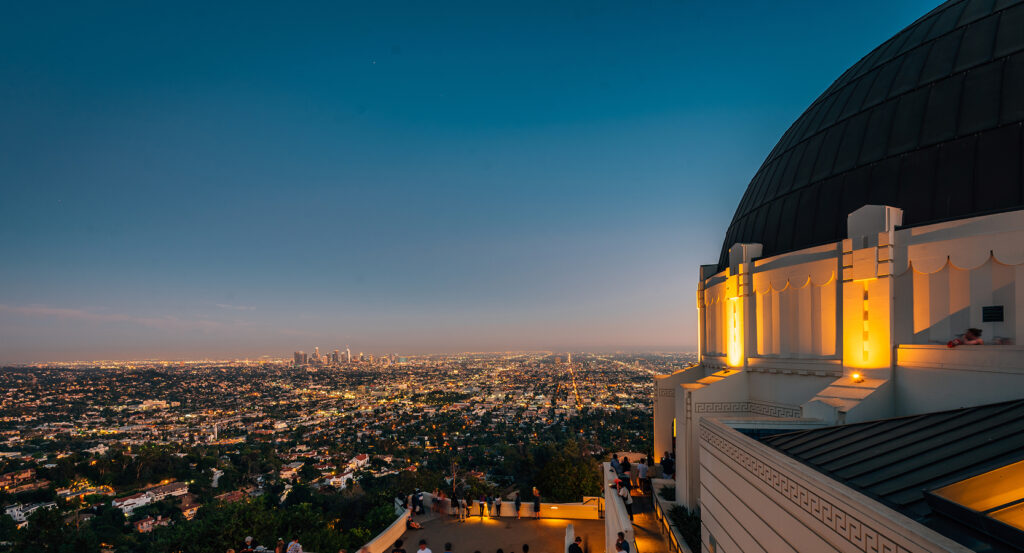
Why you should experience El Prado Avenue in Los Angeles, California.
El Prado Avenue is a refined corridor where Old Torrance's civic heritage, historic architecture, commercial vitality, and walkable streets define one of the South Bay's most distinguished thoroughfares.
Running through Old Torrance between Downtown Torrance and Southwood, the corridor connects civic buildings, neighborhood restaurants, boutiques, museums, hotels, and established residential districts that collectively reflect Torrance's origins as one of Southern California's earliest comprehensively planned industrial communities. Landscaped medians, mature street trees, preserved early twentieth-century commercial buildings, pedestrian-friendly sidewalks, and thoughtfully maintained public spaces preserve a corridor shaped by City Beautiful planning, railroad expansion, and sustained municipal stewardship. City agencies, preservation organizations, cultural institutions, local businesses, and residents continue reinforcing El Prado Avenue's importance while supporting commerce, culture, hospitality, and everyday mobility throughout Central Torrance. The result is an experience defined by architectural continuity, civic pride, and the enduring character of Old Torrance.
What you should know about El Prado Avenue.
El Prado Avenue is best known for serving as the ceremonial spine of Old Torrance, linking Torrance Boulevard, Cabrillo Avenue, Post Avenue, Sartori Avenue, and surrounding streets while connecting the city's historic commercial district with its principal civic institutions and public gathering spaces. The corridor originated with the founding of Torrance in 1912, when landscape architects Frederick Law Olmsted Jr. and John Charles Olmsted, working with planner Charles Henry Cheney, designed the community according to City Beautiful planning principles that emphasized broad boulevards, landscaped public spaces, and coordinated civic architecture. El Prado Avenue provides direct access to the Torrance Historical Society Museum, Torrance City Hall, and the Old Torrance Historic District, whose collection of early twentieth-century commercial and civic buildings reflects the city's nationally recognized planning heritage. The City of Torrance continues coordinating historic streetscape preservation, Complete Streets improvements, accessibility upgrades, roadway rehabilitation, pedestrian enhancements, and urban forestry initiatives because El Prado Avenue functions simultaneously as a civic corridor, commercial boulevard, cultural destination, and neighborhood main street.
Torrance Historical Society Museum, housed within the 1974 former Main Branch Library building, preserves archives documenting the city's founding, industrial development, and planned-community design while reinforcing El Prado Avenue's historical identity. Wilson Park, opened in 1974 a short distance from the corridor, serves as one of Torrance's principal public recreation spaces through athletic facilities, community events, and the city's popular weekly farmers market. Torrance Cultural Arts Center, dedicated in 1990, strengthens the corridor's civic and cultural role through galleries, performance venues, and educational programming serving the South Bay. Torrance Transit bus routes integrate El Prado Avenue with the wider city, regional employment centers, and neighboring South Bay communities while supporting convenient access to civic, commercial, and cultural destinations.
How to fold El Prado Avenue into your trip.
El Prado Avenue works as an exploration of Torrance's civic heritage, historic downtown, and cultural institutions.
Begin at Torrance Historical Society Museum, where photographs, archival collections, and exhibits introduce the planned-community vision that established El Prado Avenue as the centerpiece of Old Torrance. Continue to Old Torrance Historic District, where preserved storefronts, civic buildings, and walkable streets reveal the enduring influence of early twentieth-century urban planning. Conclude at Torrance Cultural Arts Center, where galleries, performance spaces, and community programming provide a fitting finale reflecting El Prado Avenue's continuing role as one of Torrance's foremost civic corridors. The progression moves naturally from local history to preserved architecture before concluding with contemporary arts, revealing why El Prado Avenue continues expressing the enduring character of Old Torrance.
Where your story begins.
Foresyte Travel reveals places that feel extraordinary long before you arrive.
Experience premium editorial crafted for luxury travelers.





































































































