
Why Glendale matters.
Glendale is a foothill enclave where the Verdugo region's metropolitan character meets former rancho land, early streetcar suburbs and a dense civic center rising beneath mountain neighborhoods shaped by successive waves of twentieth-century settlement.
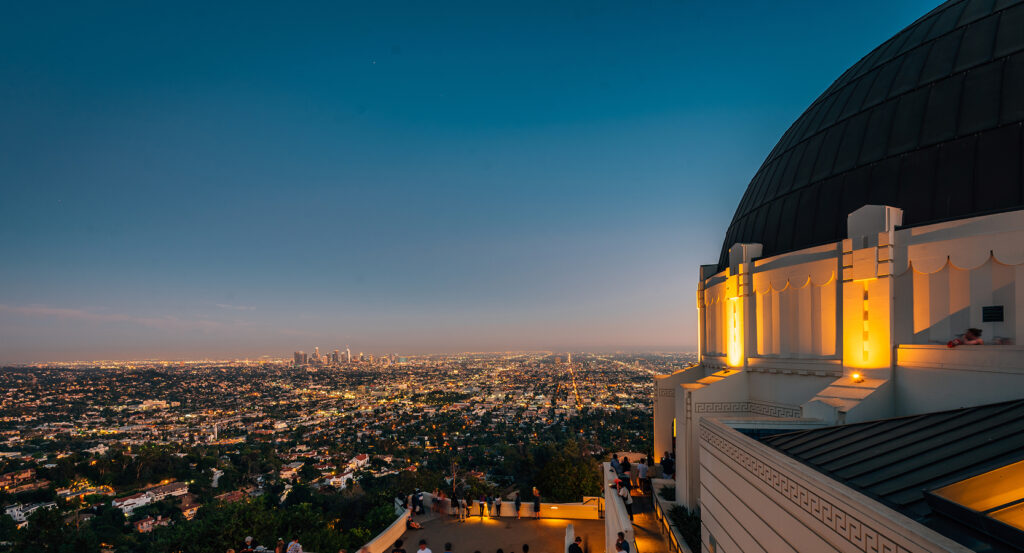
Positioned between Burbank, Eagle Rock, and La Cañada Flintridge, the neighborhood occupies the broad southern face of the Verdugo Mountains, where an urbanized valley floor rises through residential foothills before narrowing into steep canyons and mountain ridges. Craftsman houses, Spanish Colonial Revival residences, interwar apartment buildings and commercial towers create pronounced changes in scale across terrain extending from compact southern blocks to secluded hillside streets. Brand Boulevard supplies the primary encounter through a long north-south axis where storefronts, theaters and substantial commercial buildings concentrate the urban fabric before the street climbs toward the foothills. Glendale Avenue creates a secondary passage farther east, crossing older residential and commercial blocks before approaching increasingly irregular streets shaped by the Verdugo slopes. The result is a neighborhood whose metropolitan center, architectural variety and abrupt mountain topography preserve the physical consequences of more than a century of expansion across the former Rancho San Rafael.
What defines Glendale.
Glendale is best known for developing from Rancho San Rafael into an independent city whose early growth followed the breakup of one immense Spanish-era holding and the arrival of electric transportation from Los Angeles. José María Verdugo received title to Rancho San Rafael in 1798, encompassing most of present-day Glendale along with territory extending into Burbank, Eagle Rock and Highland Park. His death in 1831 transferred the rancho to Julio and Catalina Verdugo, who divided the property between themselves in 1861. The Great Partition of 1871 dissolved Rancho San Rafael into smaller holdings, opening former ranch acreage to increasingly intensive settlement. Six landowners subsequently contributed property for a 150-acre townsite filed as the Town of Glendale in 1887. Electric transportation accelerated the transition after improvement associations secured a route along Brand Boulevard and the Los Angeles Interurban Railway absorbed the local venture before construction. Service reached Glendale by 1904, with a depot at Brand Boulevard and 4th Street, now Broadway, followed by electrified tracks extending north toward Casa Verdugo. Glendale incorporated in 1906 across 1,486 acres, then expanded through nine annexations to more than 7,000 acres by 1920. Another ten annexations during the following decade enlarged the city to 12,294 acres, extending municipal territory across residential subdivisions created during one of Southern California's fastest periods of metropolitan expansion.
Armenian settlement created a separate chapter whose scale eventually made Glendale one of the principal centers of Armenian life in the United States. Armenian presence in Glendale and neighboring Tropico reaches the opening years of the twentieth century, when visiting philanthropist S. M. Minasian promoted Southern California settlement and families including the Pampians established local households. Glendale newspapers referenced Armenian residents by 1919, yet the community remained comparatively small for several subsequent decades. Fewer than 5,000 Armenian residents lived in the city in 1970, representing four percent of its population. Immigration accelerated during the following twelve years as Armenians arrived from Iran, Lebanon, Syria and other parts of the diaspora amid political upheaval across the Middle East. By 1982, 45,000 Armenians represented 24 percent of Glendale's population, a demographic change accompanied by expanding churches, newspapers, professional businesses, restaurants and retailers. Later migration after the dissolution of the Soviet Union deepened connections with Armenia itself, adding another substantial population to communities formed through earlier Middle Eastern migration. Armenian institutions and businesses subsequently spread across central and southern Glendale, embedding diaspora culture within commercial streets and residential districts that had been constructed generations before the population shift.
How Glendale fits.
Glendale works as the anchor for an outing connecting an aviation terminal central to early transcontinental flight, a 1904 mansion transformed into an arts institution and a rescued Victorian residence associated with silent-film actor Nell Shipman.
Begin at Grand Central Air Terminal, the surviving centerpiece of an airport established as Glendale Municipal Airport in 1923 and rededicated under its better-known name in 1929. Architect Henry L. Gogerty designed the terminal through a combination of Spanish Colonial Revival architecture and Zig-zag Moderne ornament, including a control tower decorated with winged pilot figures. Grand Central became the first Southern California airport providing transcontinental passenger service between Los Angeles and New York, and the field supported aircraft work associated with Jack Northrop and Howard Hughes. Cal-Aero Technical Institute later trained pilots and mechanics during World War II, extending the property's importance from commercial aviation into wartime instruction. The airport closed in 1959 after its shortened runway became unsuitable for newer aircraft, and Walt Disney Company later undertook an extensive rehabilitation of the surviving terminal. Continue to Brand Library & Art Center, housed within El Miradero, the mansion Leslie C. Brand completed in 1904 after encountering the East Indian Pavilion at Chicago's 1893 Columbian Exposition. Saracenic architecture gives the residence crenellated arches, bulbous domes and minarets combining Moorish, Spanish and Indian influences. Brand died there in 1925, and his widow remained until 1945 under a bequest directing that the property eventually become a public park and library. El Miradero entered that role in 1956, followed by an arts addition dedicated in October 1969 for exhibitions, lectures, concerts and studio work. Conclude at Doctors House Museum & Gazebo, a Queen Anne-Eastlake residence constructed 1888 on East Wilson Avenue. Four physicians owned the two-story house in succession, creating its enduring name, and silent-film actor Nell Shipman later occupied it with her family during the early twentieth century. Demolition threatened the residence in 1979, prompting local preservation advocates to organize the Glendale Historical Society and relocate the structure to Brand Park. Thousands of volunteer hours went into its restoration before the society dedicated the house to Glendale in September 1982. The progression moves from Glendale's formative role in commercial aviation through Leslie Brand's architectural patronage and culminates in the preservation of an 1880s residence, connecting technological ambition, private wealth and architectural stewardship across three distinct chapters of the city's development.
Where your story begins.
Foresyte Travel reveals places that feel extraordinary long before you arrive.
Enjoy editorial crafted for luxury travelers.
Foresyte may earn a commission when you book.





































































































