
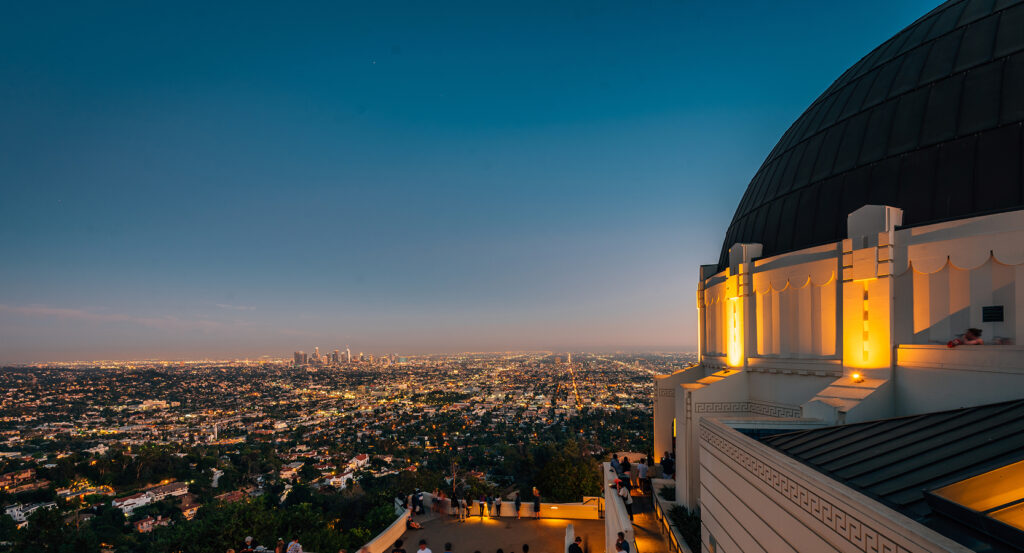
Why Magnolia Street matters.
Magnolia Street is a welcoming corridor where West Adams' architectural heritage, neighborhood character, cultural legacy, and residential continuity define one of Central Los Angeles' most distinctive local streets.
Running through West Adams between Jefferson Park and University Park, the corridor connects historic residences, neighborhood businesses, churches, schools, and community institutions that collectively reflect the evolution of one of Los Angeles' oldest residential districts. Mature street trees, preserved Craftsman and Victorian homes, landscaped parkways, pedestrian-friendly sidewalks, and thoughtfully maintained public spaces preserve a corridor shaped by early suburban planning, historic preservation, and sustained neighborhood stewardship. Municipal agencies, preservation organizations, neighborhood associations, educational institutions, and residents continue reinforcing Magnolia Street's importance while supporting education, recreation, commerce, and civic life throughout West Adams. The result is an experience defined by architectural elegance, cultural continuity, and the enduring character of West Adams.
What defines Magnolia Street.
Magnolia Street is best known for traversing the historic neighborhoods of West Adams, occupying land formerly associated with the 4,439-acre Rancho La Cienega o Paso de la Tijera, granted in 1843 by Governor Manuel Micheltorena to Vicente Sánchez, before subdivision during the 1880s established one of Los Angeles' earliest streetcar suburbs. The corridor developed rapidly following expansion of the Los Angeles Railway streetcar system, which encouraged construction of distinguished residential neighborhoods featuring Victorian, Craftsman, Colonial Revival, and Mission Revival architecture throughout the late nineteenth and early twentieth centuries. West Adams became home to prominent civic leaders, business owners, educators, and cultural figures while preserving one of Southern California's richest collections of historic residential architecture through successive generations. Continued investment by the City of Los Angeles, designation of multiple Historic Preservation Overlay Zones, neighborhood revitalization initiatives, and stewardship of architectural resources have reinforced Magnolia Street's importance as a corridor linking residential heritage, educational institutions, community organizations, and historic neighborhoods.
The West Adams Terrace Historic Preservation Overlay Zone, adopted in 2003, protects an exceptional concentration of early twentieth-century residential architecture immediately associated with the corridor. St. John's Cathedral, completed in 1925, remains one of Los Angeles' most distinguished Gothic Revival churches while serving generations of congregants and preserving an important civic presence within West Adams. The William Andrews Clark Memorial Library, completed in 1926 and operated by UCLA, preserves internationally significant collections of seventeenth- and eighteenth-century English literature, history, and fine printing near Magnolia Street. Leslie N. Shaw Park provides neighborhood recreation facilities, athletic courts, playgrounds, and public open space that continue strengthening community life throughout the surrounding district.
How Magnolia Street fits.
Magnolia Street works as an exploration of West Adams' architectural heritage, cultural institutions, and neighborhood traditions.
Begin at William Andrews Clark Memorial Library, where distinguished architecture, rare collections, and landscaped grounds introduce the scholarly and historical character surrounding Magnolia Street before continuing through West Adams. Continue to St. John's Cathedral, where remarkable Gothic Revival architecture, stained glass, and a century of community history provide deeper insight into one of the neighborhood's defining civic institutions. Conclude at Leslie N. Shaw Park, where open green spaces, recreation facilities, and neighborhood gathering areas provide a memorable finale celebrating the community-centered public spaces that continue shaping West Adams. The progression moves naturally from literary heritage to architectural history before concluding with neighborhood recreation, revealing why Magnolia Street continues expressing the enduring character of West Adams.
Where your story begins.
Foresyte Travel reveals places that feel extraordinary long before you arrive.
Enjoy editorial crafted for luxury travelers.
Foresyte may earn a commission when you book.





































































































