
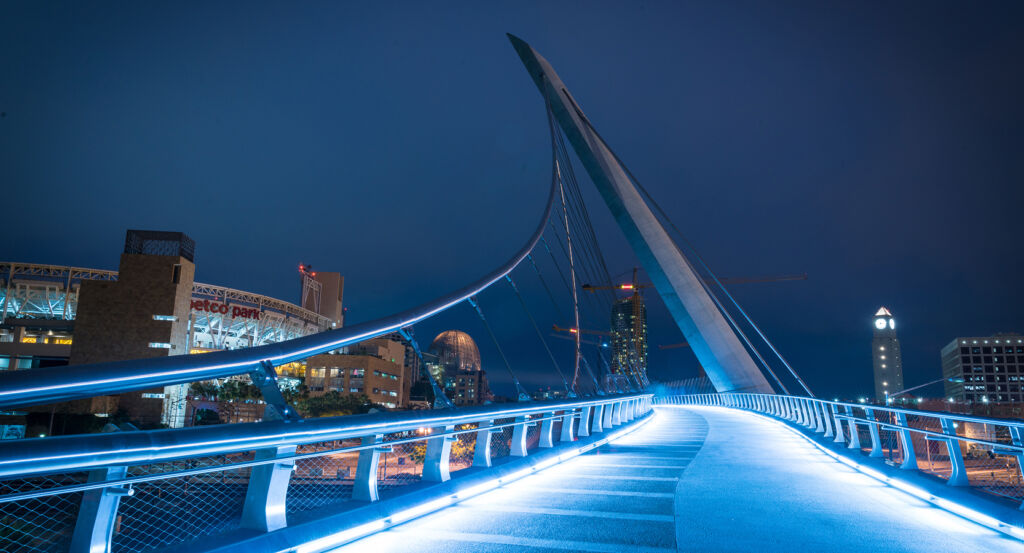
Why you should experience Napa Street in San Diego, California.
Napa Street is a graceful corridor where Mission Hills' architectural refinement, canyon landscapes, residential heritage, and enduring elegance converge along one of San Diego's most distinguished hillside streets.
Running through Mission Hills between Old Town and Middletown, the corridor follows elevated terrain overlooking canyons, connecting historic residences, neighborhood institutions, mature landscapes, and panoramic viewpoints that collectively reflect more than a century of carefully planned development. Craftsman homes, Spanish Colonial Revival estates, California bungalows, jacarandas, Moreton Bay figs, coast live oaks, and sandstone retaining walls establish a streetscape where architecture and topography remain inseparable. Throughout the corridor, thoughtful preservation, exceptional craftsmanship, and a deeply rooted residential tradition reinforce an atmosphere shaped by generations of architectural stewardship. The result is an experience defined by timeless character, hillside beauty, and one of Mission Hills' most memorable neighborhood corridors.
What you should know about Napa Street.
Napa Street is best known for extending through Mission Hills, whose residential development accelerated after 1908 when streetcar expansion opened the surrounding mesas and canyon rims to some of San Diego's most ambitious early twentieth-century homebuilding. The corridor preserves an exceptional concentration of Craftsman, Prairie School, Spanish Colonial Revival, and Period Revival residences distinguished by hand-laid brick, exposed rafter tails, decorative leaded-glass windows, clinker-brick chimneys, and finely crafted redwood millwork. Architects including Richard Requa, William Templeton Johnson, Emmor Brooke Weaver, and Louis Gill contributed to the neighborhood's architectural character through residences that responded to the dramatic hillside terrain with carefully integrated site planning and enduring craftsmanship. Mature California sycamores, coast live oaks, jacarandas, Allen's hummingbirds, western fence lizards, and monarch butterflies continue enriching the corridor's established urban canopy. Together, these architectural movements, influential designers, traditional building materials, and native ecology establish Napa Street as a defining expression of Mission Hills' historical evolution.
Mission Hills became nationally recognized for its residential architecture because designers treated the area's steep topography as an asset, incorporating terraces, garden courts, stone retaining walls, and broad verandas that responded directly to the canyon landscape surrounding Napa Street. Original redwood framing, hand-troweled stucco, decorative wrought iron, clay roof tile, and artisan masonry remain visible throughout many surviving homes, preserving construction techniques that characterized Southern California's finest residential commissions during the early twentieth century. The neighborhood's reputation for architectural excellence has endured through the continued survival of these carefully detailed residences, allowing successive generations to experience an unusually complete collection of historically significant domestic design. Together, the canyon-responsive planning, enduring construction materials, and remarkably intact architectural fabric demonstrate how Napa Street developed within one of San Diego's most cohesive and enduring residential landscapes.
How to fold Napa Street into your trip.
Napa Street works as an exploration of Mission Hills' architecture, gardens, and historic character.
Begin at Presidio Park, where sweeping overlooks and preserved landscapes introduce the elevated terrain that shaped Mission Hills' development. Continue to Heritage County Park, where restored Victorian residences deepen appreciation for San Diego's residential architectural traditions. Conclude at Junípero Serra Museum, where the Mission Revival landmark provides the historical payoff by interpreting the earliest chapters of European settlement overlooking the valley below. The progression moves naturally from the surrounding landscape through preserved residential architecture before culminating in one of San Diego's most historically significant hilltop sites, creating an experience that fully reflects the character of Napa Street.
Where your story begins.
Foresyte Travel reveals places that feel extraordinary long before you arrive.
Experience premium editorial crafted for luxury travelers.





































































































