
Why Neolokal matters.
Neolokal is a MICHELIN-starred contemporary Turkish restaurant where Karaköy's Ottoman financial heritage meets Maksut Aşkar's revival of Anatolian culinary traditions, the preservation of endangered regional ingredients and an influential approach to sustainable gastronomy.
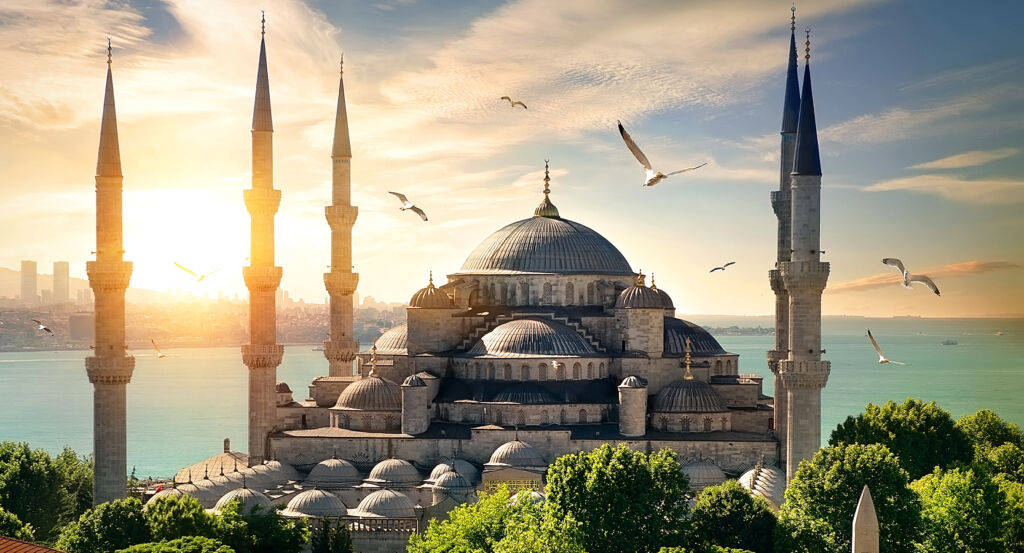
Positioned within SALT Galata on Bankalar Caddesi, the restaurant occupies an elevated setting in Istanbul's former financial district, between the historic commercial streets of Karaköy, the steep approaches to Galata Tower and the southern waterfront overlooking the Golden Horn. Its dining room combines the expansive proportions of the former Ottoman Bank headquarters with contemporary furnishings, restrained lighting and an expansive arrangement of windows. A spacious terrace extends the restaurant toward the surrounding cityscape, providing views of Istanbul's historic peninsula, mosque domes and the distinctive topography of the Golden Horn. The building's preserved stonework and carefully restored architectural details establish a connection between nineteenth-century institutional architecture and contemporary hospitality. Inside, the arrangement of tables and service spaces accommodates an elaborate tasting-menu progression within a sophisticated but welcoming environment. The result is a distinguished restaurant whose historic architectural setting and panoramic outlook reinforce its relationship with Istanbul's commercial and cultural development.
What defines Neolokal.
Neolokal is best known for establishing Maksut Aşkar among the leading figures of contemporary Anatolian gastronomy through a sustained commitment to endangered recipes, regional ingredients and culinary preservation. Born in İskenderun and raised in Antakya, Aşkar developed his understanding of food within the multicultural traditions of southeastern Anatolia, where Turkish, Arab and broader Mediterranean influences have shaped domestic cooking for generations. He subsequently moved to Istanbul to study tourism and hotel management, gaining professional experience in restaurants and bars during his education. His early creative interests extended into food design, producing edible installations for museums, galleries and cultural events. These projects encouraged him to explore the relationship between culinary preparation, memory and the presentation of familiar ingredients. Aşkar began his professional career as a chef in 2007, developing his technical repertoire through successive restaurant ventures. He established three restaurants before creating Neolokal, gaining experience in both culinary entrepreneurship and the management of professional kitchens. His earlier work attracted recognition from Istanbul's restaurant community, including a Chef of the Year distinction from Time Out in 2014. Neolokal opened that year within SALT Galata, introducing a restaurant devoted to the contemporary reinterpretation of Anatolian cooking. The project developed around Aşkar's conviction that regional recipes and agricultural knowledge constitute an essential part of Turkey's cultural inheritance. Its kitchen began examining preparations that had diminished in everyday use, reconnecting them with ingredients, preservation methods and techniques associated with their original communities. Relationships with small producers became central to the enterprise, extending the restaurant's influence into the agricultural networks responsible for maintaining traditional crops. This approach also introduced a broader understanding of sustainability encompassing cultural continuity, biodiversity and responsible sourcing. International recognition followed as Neolokal became increasingly associated with the development of modern Turkish fine dining. The restaurant entered The World's 50 Best Restaurants extended rankings, reaching sixty-third place in 2023 and ninety-first in 2024. Its most consequential distinction arrived with the inaugural MICHELIN Guide Istanbul selection, announced in October 2022 for the 2023 guide. Neolokal received one MICHELIN star and became the first restaurant in Turkey to earn the MICHELIN Green Star for sustainable gastronomy. The dual recognition established the significance of its culinary achievements and agricultural commitments within an international restaurant classification. Further distinctions followed through Gault&Millau, including four toques and Restaurant of the Year recognition in 2024. Aşkar subsequently extended his professional activities through Foxy, a bistro specializing in Turkish natural wines, and O Anatolian Cafe & Bakery at Rotterdam's Fenix Museum. These projects expanded his engagement with regional products and introduced Anatolian culinary traditions to additional audiences. Neolokal continues to hold one MICHELIN star and a MICHELIN Green Star in the 2026 selection, preserving its position among Istanbul's most consequential contemporary restaurants.
Maksut Aşkar's cooking develops through the relationship between Anatolian domestic traditions, endangered regional ingredients and contemporary techniques that preserve the character of familiar preparations. His tasting menu establishes a progression through seasonal vegetables, seafood, grains, meat and traditional desserts, emphasizing ingredients sourced through direct relationships with producers. The meal begins with sourdough bread accompanied by cheese and fig cream and Memecik olive oil, introducing an olive variety closely associated with western Anatolia. Marinated bonito provides a distinctive expression of Turkish coastal cooking, accompanied by pepper-dolma cream, bottarga, vine leaf and sourdough crisp. The preparation connects familiar ingredients from stuffed-vegetable traditions with the concentrated salinity of cured fish roe and the delicate texture of marinated seafood. Olive oil-braised winter vegetables develop a complementary interpretation of the region's vegetable cookery, incorporating carefully prepared sauces that concentrate seasonal flavors. Handmade erişte introduces another important Anatolian tradition through noodles accompanied by red shrimp, shrimp sauce, red-pepper skin and lemon oil. The composition connects the substantial texture of traditional pasta with the sweetness of shellfish and the aromatic character of citrus. Seasonal fish extends the maritime progression through olive oil-braised chard, sweet green beans and a creamy terbiye sauce enriched with lemon and parsley oil. Its preparation draws upon the Turkish tradition of enriching soups and sauces with carefully balanced acidic ingredients, producing a delicate accompaniment to the fish. Slow-cooked lamb shoulder provides a substantial expression of the agricultural landscape, accompanied by a preparation inspired by homemade meatballs, üveyik wheat with leek and apple, and a charred vegetable salad. The combination brings together traditional grain cultivation, slow cooking and the familiar flavors of Anatolian family kitchens. Desserts preserve the same connection with regional confectionery, including keşkül-ü fukara accompanied by caramelized milk ice cream, dried fruit, fruit leathers and nuts. Pistachio-flavored tulumba tatlısı introduces a contrasting final preparation through the crisp texture of fried pastry and the richness of Antep pistachio ice cream. Turkish coffee and tea complete the progression, maintaining a direct connection with the country's longstanding hospitality traditions. The wine program concentrates on Turkish producers, with pairings selected to complement the contrasting acidity, richness and aromatic complexity of individual courses. A dedicated vegetarian menu extends the kitchen's agricultural emphasis through preparations centered on seasonal plants and regional produce. Neolokal's distinction emerges from this integration of culinary memory, accomplished contemporary technique and direct engagement with Anatolia's agricultural resources, preserving traditional flavors through an ambitious modern restaurant program.
How Neolokal fits.
Neolokal works as the dining culmination of an exploration connecting Istanbul's medieval religious architecture, nineteenth-century financial institutions and the expansive infrastructure of its historic port, placing the restaurant within the layered commercial landscape of Karaköy.
Begin at Arap Mosque, the historic religious complex whose architectural origins reflect the successive Latin, Genoese and Ottoman chapters of Galata's development. The building incorporates elements associated with a medieval Dominican church established during the fourteenth century, including a distinctive square bell tower that became a minaret following the Ottoman conquest of Constantinople. Its Gothic architectural features preserve the influence of western European religious communities that occupied the Genoese commercial colony. Subsequent Ottoman alterations introduced Islamic religious furnishings and decorative elements, creating an unusual architectural synthesis within the surrounding district. The mosque's position among narrow commercial streets preserves an important connection with Galata's medieval urban geography. Continue to Kamondo Stairs, the celebrated pedestrian staircase associated with the prominent Camondo banking family. Constructed during the nineteenth century, the stairway connects Bankalar Caddesi with the higher streets of Galata through an unusual arrangement of curved flights and intermediate landings. Its distinctive form combines practical urban circulation with the architectural ambitions of the district's prosperous financial establishment. The Camondo family played a significant role in Ottoman banking and commercial life, contributing to the development of Galata as an important center of international finance. The staircase remains one of the district's most recognizable surviving expressions of nineteenth-century urban design. Conclude at Galata Bridge, the historic crossing connecting Karaköy with Eminönü across the Golden Horn. Successive bridges have occupied this strategic location since the nineteenth century, reflecting the expansion of Istanbul's commercial districts and the growing importance of direct connections between the historic peninsula and Galata. The present bridge opened in 1994, incorporating roadway and pedestrian circulation above a lower level occupied by restaurants and commercial premises. Its position provides expansive views toward Süleymaniye Mosque, the New Mosque and the waterfront neighborhoods surrounding the estuary. The crossing preserves a central relationship between Istanbul's maritime geography, commercial transportation and everyday urban life. The progression connects Galata's medieval religious inheritance with the financial ambitions of its nineteenth-century merchants and concludes at a defining crossing of the Golden Horn, establishing the broader historical setting surrounding Neolokal.
Where your story begins.
Foresyte Travel reveals places that feel extraordinary long before you arrive.
Enjoy editorial crafted for luxury travelers.
Foresyte may earn a commission when you book.





































































































