
Why The Small Cafe matters.
The Small Cafe is a convivial breakfast-and-lunch café where Naples' waterfront neighborhood character meets a locally rooted operation, patio dining and an all-day menu built around American breakfast staples and substantial sandwiches.
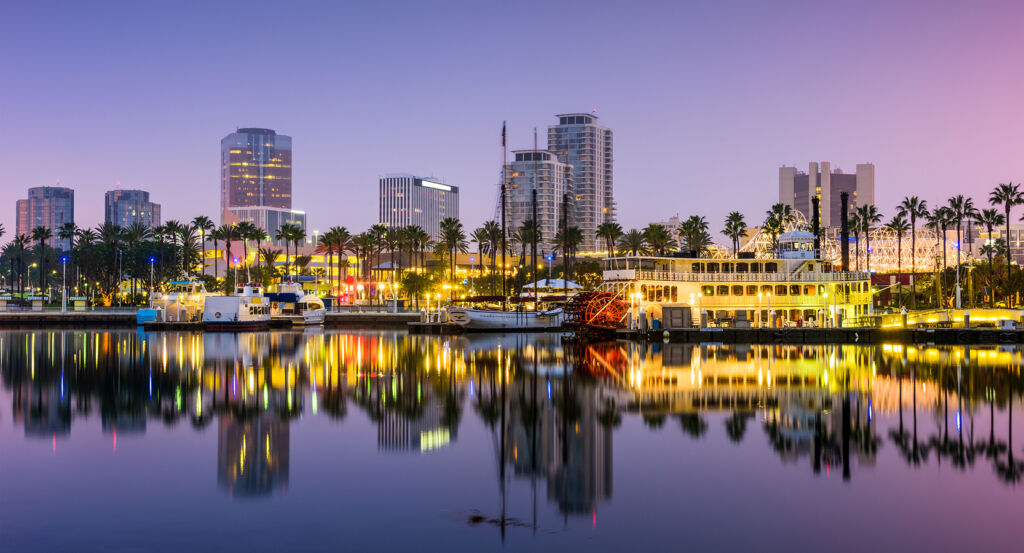
Set along East 2nd Street near Ravenna Drive and just steps from La Bella Fontana di Napoli, the café occupies the commercial threshold of Naples between Belmont Shore and Alamitos Bay, with the neighborhood's canal-cut islands extending south toward Marine Stadium and the Peninsula reaching southeast between the bay and Pacific Ocean. The modest storefront keeps the dining room close to the street and preserves the neighborhood scale of the surrounding commercial strip. Indoor tables share service with a dog-friendly outdoor patio, extending the dining area into Southern California's mild coastal climate. Breakfast remains the dominant daily format, with the operation opening in the morning and closing after lunch seven days a week. The result is a compact neighborhood café whose patio, daytime schedule and proximity to Naples' waterways place a straightforward Long Beach breakfast tradition beside one of the city's most distinctive coastal districts.
What defines The Small Cafe.
The Small Cafe is best known for maintaining a neighborhood breakfast-and-lunch tradition that current ownership traces back more than three decades. Carrie Small operated the café before longtime Long Beach residents Melanie and Jake acquired it, preserving both its name and its small-town approach to neighborhood dining. The Small Café Melanie Overett formalized her ownership through Ellevan, LLC in December 2020, marking a clear generational turn for a business already established within the surrounding community. The café subsequently retained its emphasis on breakfast and lunch, with service now concentrated between 7 a.m. and 2 p.m. throughout the week. Its current format combines indoor seating with a dog-friendly patio and maintains breakfast and lunch as equally developed halves of the daytime operation. The continuity is unusually literal: the original proprietor's surname survives on the storefront after the ownership transition, leaving the café's founding association embedded in the business itself.
How The Small Cafe fits.
The Small Cafe works as the anchor for a Long Beach outing connecting the engineered Italianate waterways of Naples, a saltwater lagoon reshaped for twentieth-century recreation and the Olympic rowing course excavated from the Alamitos Bay estuary.
Begin at The Colonnade, where the present strip of landscaped ground preserves a major alteration to Arthur M. Parsons' canal community. Parsons raised $500,000 from investors, acquired marshland from the Alamitos Land Company and began construction of Naples on August 23, 1905, using dredging, concrete bulkheads and fill to raise new islands above high tide. The Colonnade itself remained a canal until the 1933 Long Beach earthquake damaged the developers' wooden seawalls; reconstruction between 1937 and 1939 used federal Works Progress Administration, county, city and property-owner funding to replace them with concrete, and the waterway was filled during the work. Continue to Colorado Lagoon, part of the Recreation Park property acquired in 1923 and originally open directly into the northwestern end of Alamitos Bay. A bulkhead and tide gate installed in 1929 permitted Colorado Street to cross the bay corner and regulated water depth for high-diving competitions, with a multistory diving platform later used during the 1932 Olympic Trials. The saltwater site now encompasses an 18-acre tidal lagoon hydraulically connected with Alamitos Bay and the Pacific through a 900-foot underground concrete culvert constructed after the earlier open channel disappeared during freeway development. Conclude at Marine Stadium, created from estuary land first dredged in 1925 and extended for the rowing events of the 1932 Olympic Games. The finished course became the first purpose-built artificial Olympic rowing course in the United States, with enough width for four crews to race abreast, and later hosted the 1968 and 1976 United States men's Olympic rowing trials and the 1984 women's trials. Five days of Olympic racing in 1932 drew 121,000 spectators to the 2,000-meter course, embedding the waterway in Long Beach's early international sporting history. The progression moves from the dredging and seawall engineering that created Naples through the controlled tidal landscape of Colorado Lagoon and culminates in Marine Stadium, where reshaping Alamitos Bay produced a purpose-built course for Olympic rowing.
Where your story begins.
Foresyte Travel reveals places that feel extraordinary long before you arrive.
Enjoy editorial crafted for luxury travelers.





































































































