
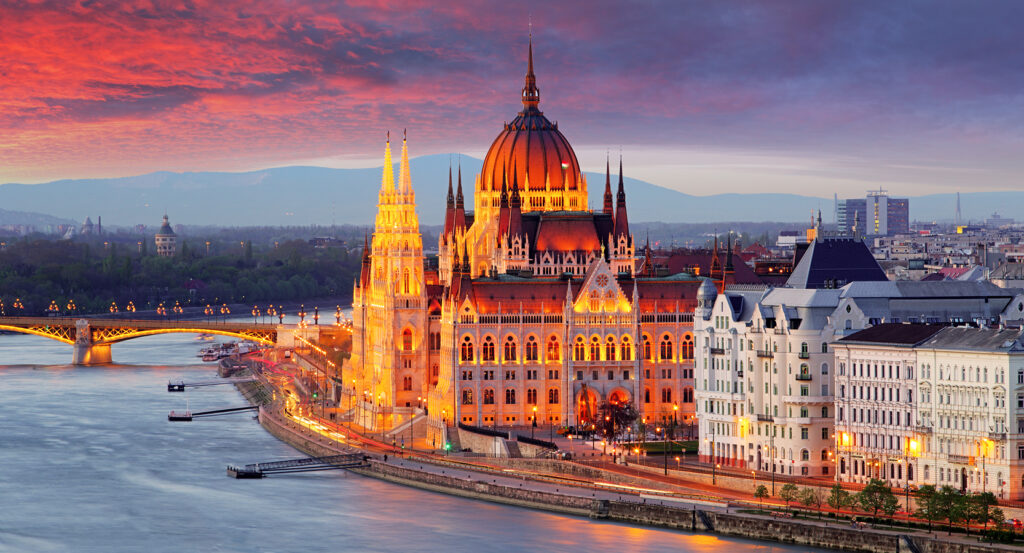
Why you should experience Újpest in Budapest, Hungary.
Újpest is Budapest's neighborhood of industry and identity, where historic town centers, riverside landscapes, sporting traditions, community pride, cultural institutions, and working-class heritage create one of the capital's most distinctive northern districts.
Located along the eastern bank of the Danube in northern Budapest, the neighborhood unfolds through residential avenues, public squares, historic churches, industrial landmarks, riverside areas, and local gathering places that reflect more than a century of independent development and urban growth. Unlike many districts that emerged directly from Budapest's expansion, Újpest cultivated its own character long before becoming part of the capital, creating a strong sense of local pride that remains visible today. The district balances its industrial roots with ongoing revitalization efforts, offering visitors an authentic perspective on everyday life beyond the city's tourist core. Along the border of neighboring Angyalföld, residential communities, commercial corridors, and transportation links blend seamlessly into Újpest's landscape, reinforcing its role as an important gateway to northern Budapest.
What you should know about Újpest.
Újpest is best known for being one of Hungary's most important historic industrial centers, a district whose rapid nineteenth-century growth transformed it from a small settlement into one of the country's leading manufacturing hubs.
Founded in 1838 as a newly established community outside the boundaries of Pest, Újpest quickly attracted factories, workshops, merchants, and workers seeking opportunities during Hungary's industrial expansion. Its strategic location along transportation routes and the Danube fueled extraordinary economic growth, helping the town become one of the largest and most prosperous industrial municipalities in the country before its incorporation into Budapest in 1950. This industrial success shaped the district's architecture, demographics, and civic identity, many elements of which remain visible today. Beyond its economic legacy, Újpest is also known for its passionate sporting culture, strong local traditions, and enduring sense of community that distinguishes it from many other districts of the capital. Visitors experience a neighborhood where industrial heritage, local pride, and modern urban life continue to coexist.
How to fold Újpest into your trip.
Újpest is an ideal centerpiece for a day spent exploring Budapest's industrial heritage, local culture, and northern districts.
Begin the morning in Szent István Square, where historic architecture and local life provide an introduction to the district before exploring its surrounding streets and landmarks. From there, continue toward cultural institutions, riverside spaces, and community gathering places that reveal the neighborhood's unique character. Szent István Square, Újpest Town Hall, and the Danube Riverside Promenade all sit within easy reach, creating a natural progression between civic heritage, architectural landmarks, and waterfront scenery. As the afternoon unfolds, the district rewards exploration with local cafés, historic streetscapes, cultural venues, and insights into a side of Budapest often overlooked by international visitors. Újpest fits naturally into that rhythm of discovery, serving as both a symbol of Hungary's industrial rise and one of Budapest's most community-oriented districts.
Where your story begins.
Foresyte Travel reveals places that feel extraordinary long before you arrive.
Experience premium editorial crafted for luxury travelers.





































































































