
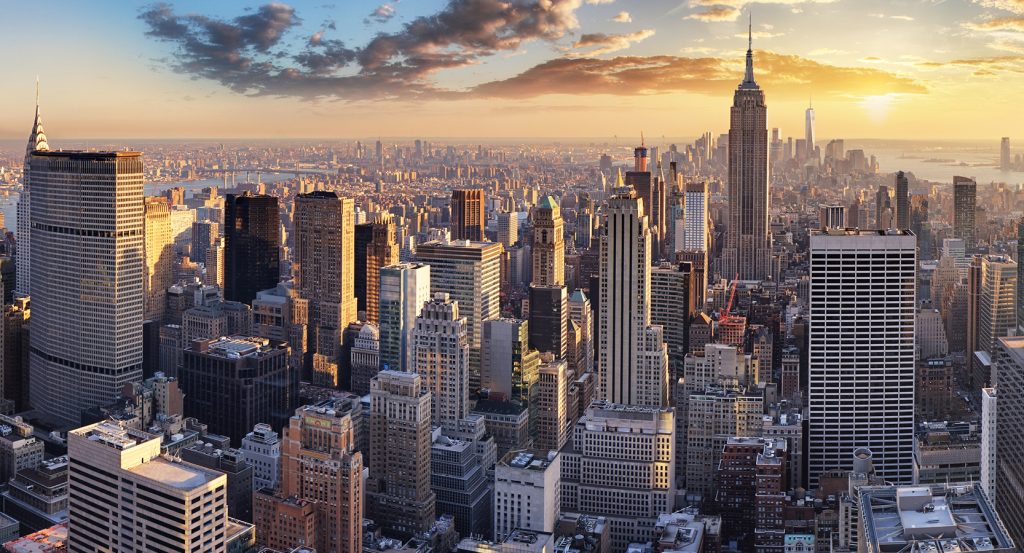
Why you should experience 1st Avenue in New York, NY.
1st Avenue is a historic corridor where Sunset Park's industrial heritage, New York Harbor's maritime economy, and Brooklyn's manufacturing legacy converge within one of the borough's most consequential waterfront districts.
Running along Brooklyn's western waterfront through Sunset Park, the avenue passes historic factory complexes, freight infrastructure, maritime facilities, and surviving industrial buildings that collectively reflect more than a century of continuous commercial development. The corridor preserves successive layers of late nineteenth-century warehouse construction, reinforced-concrete industrial architecture, adaptive reuse, and contemporary maritime facilities while illustrating the evolution of Brooklyn's working waterfront. Walking along 1st Avenue reveals a streetscape where engineering, logistics, manufacturing, and maritime commerce remain closely interconnected. The result is a corridor where Brooklyn's industrial character continues shaping one of New York Harbor's most significant working waterfronts.
What you should know about 1st Avenue.
1st Avenue is best known for forming the principal north-south artery through Sunset Park's waterfront manufacturing district, where industrial expansion accelerated during the late nineteenth century as deep-water harbor access, expanding freight rail infrastructure, and steamship commerce transformed Brooklyn into one of the nation's leading centers of manufacturing and distribution. Developers established extensive complexes of factories, warehouses, loft buildings, rail yards, and marine terminals that supported manufacturers, exporters, importers, and shipping firms while defining the avenue's long-standing industrial character. Continued investment in municipal bulkheads, street improvements, freight rail connections, utility infrastructure, and port facilities reinforced the corridor's importance throughout the twentieth century while sustaining Brooklyn's role within regional and international commerce. Subsequent adaptive reuse, industrial preservation, and maritime reinvestment have enabled 1st Avenue to retain an exceptional record of Brooklyn's waterfront development while continuing to support active industrial and logistics operations.
Between 1890 and 1910, Irving T. Bush assembled Bush Terminal into an integrated industrial complex comprising more than 200 loft buildings, 25 million square feet of warehouse and factory space, an internal freight railroad exceeding 100 miles of track, and steamship piers that established one of the world's earliest fully integrated industrial parks directly fronting 1st Avenue. Between 1918 and 1919, architect Cass Gilbert designed the Brooklyn Army Terminal, introducing twin reinforced-concrete warehouse buildings linked by an advanced internal rail-and-freight handling system that modernized military logistics while extending the avenue's role within New York Harbor's industrial economy. During the early twenty-first century, redevelopment of the South Brooklyn Marine Terminal restored active maritime operations by supporting cargo handling, offshore wind infrastructure, and port logistics, continuing the commercial waterfront tradition that has defined 1st Avenue for well over a century. Together, these engineering achievements, industrial enterprises, maritime investments, and logistical innovations demonstrate how 1st Avenue evolved as the organizing spine of Brooklyn's historic working waterfront.
How to fold 1st Avenue into your trip.
1st Avenue is best experienced through an afternoon exploring Brooklyn's waterfront, industrial heritage, and public green spaces.
Begin at Bush Terminal Piers Park, where restored shoreline habitats, fishing piers, and sweeping views across New York Harbor introduce the neighborhood's maritime setting. Continue to Industry City, where rehabilitated factory buildings now house designers, artists, retailers, and restaurants while preserving Brooklyn's manufacturing legacy. Conclude at Sunset Park, where elevated lawns and panoramic harbor vistas provide a memorable finale overlooking one of New York City's most historically significant industrial waterfronts. The progression moves naturally from the shoreline to adaptive industrial reuse before concluding with expansive views across the harbor, revealing how 1st Avenue connects Brooklyn's maritime history with its continuing waterfront renaissance.
Where your story begins.
Foresyte Travel reveals places that feel extraordinary long before you arrive.
Experience premium editorial crafted for luxury travelers.







































































































